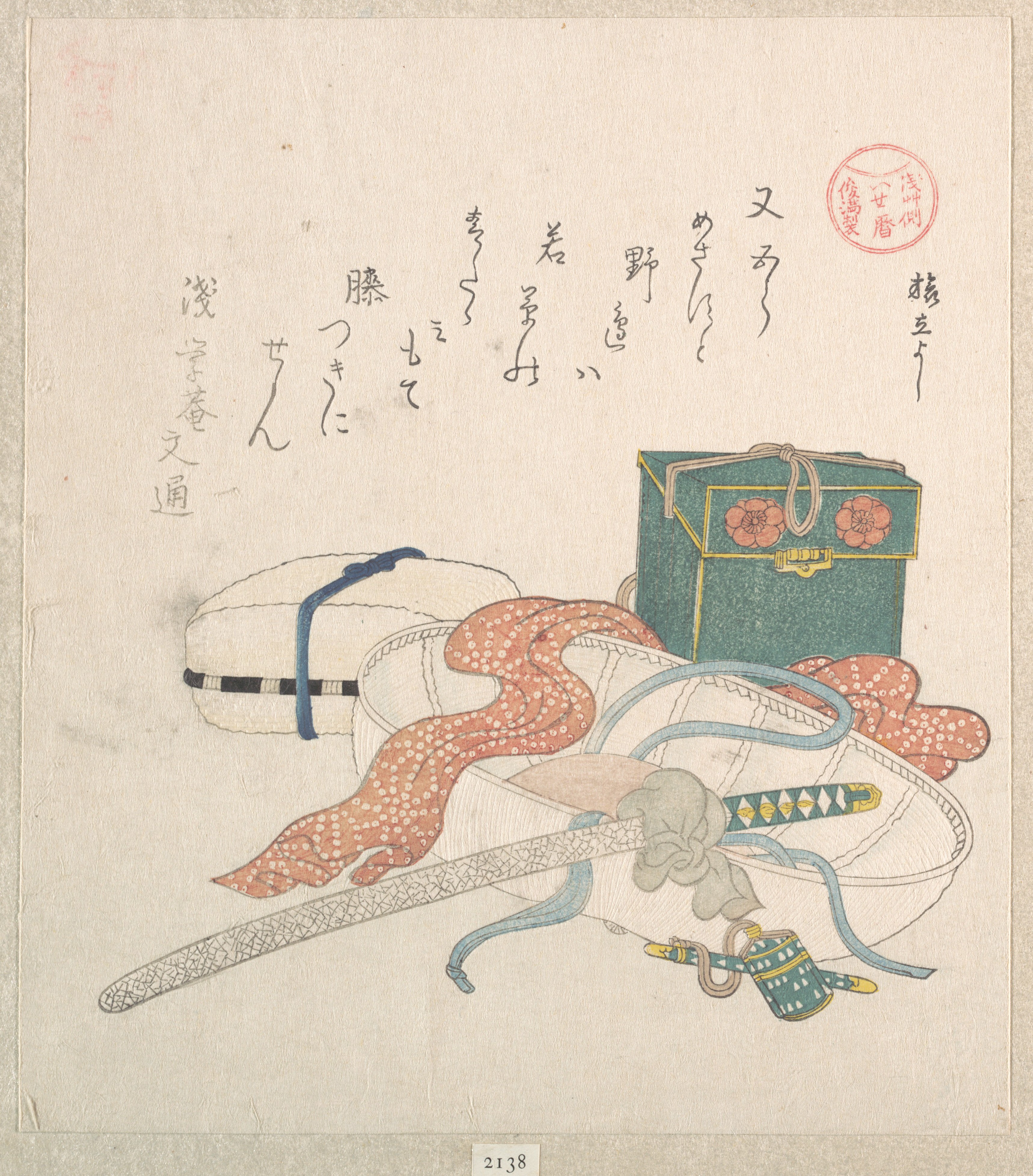
Outfit for Travel
by Kubo Shunman
- Date:
- 19th century
- Medium:
- Woodblock print (surimono); ink and color on paper
- Source:
- Metropolitan Museum of Art
Description
Outfit for Travel, in the Metropolitan Museum of Art and dated to around 1800, is one of Kubo Shunman's quietly inventive object-centered surimono. Rather than depict a traveler in the act of journeying, the print presents a careful arrangement of the items that would constitute such a journey: clothing, possibly footwear and a hat, and accessories laid out so that they together imply the absent figure. This kind of metonymic composition was a favored strategy of refined Edo ukiyo-e surimono, where the kyoka circle's poems could play on objects as condensed signs for whole experiences. Travel in particular was a popular kyoka-e subject because it stood at the intersection of seasonal change, social ritual, and the practical realities of pilgrimage or visiting in early nineteenth-century Japan. Shunman's drawing is precise and unhurried, with each item articulated through controlled line and quiet color. The arrangement keeps generous empty space on the sheet, which would have accommodated the inscribed verses without crowding the image. Surimono of this kind were typically commissioned for occasions such as New Year, anniversaries, or formal greetings between poets, and the recipient would have unpacked the picture's allusions slowly, in dialogue with the printed poems. For collectors approaching Kubo Shunman, Outfit for Travel exemplifies the way he turned ordinary equipment into a vehicle for literary contemplation, a hallmark of his contribution to the kyoka-e tradition.
More Prints by Kubo Shunman

Righteousness (Gi), from the series "Five Designs for the Katsushika Poetry Circle (Katsushika goban)"
early 1810s
Color woodblock print; shikishiban, surimono

Soga no Goro, Oiso no Tora, and Kewaizaka no Shosho
1809
Color woodblock print; surimono
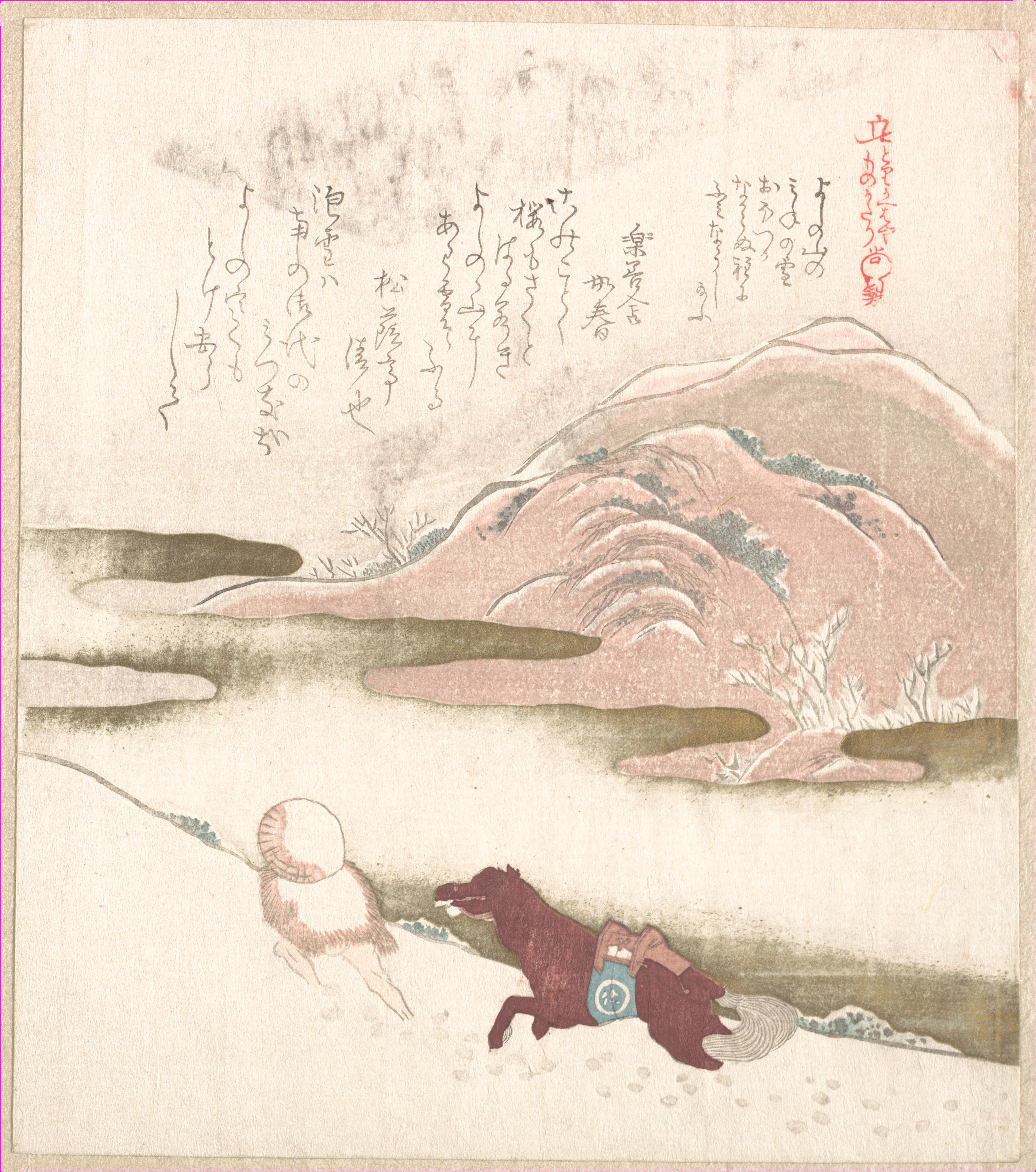
Snowy Landscape
19th century
Woodblock print (surimono); ink and color on paper
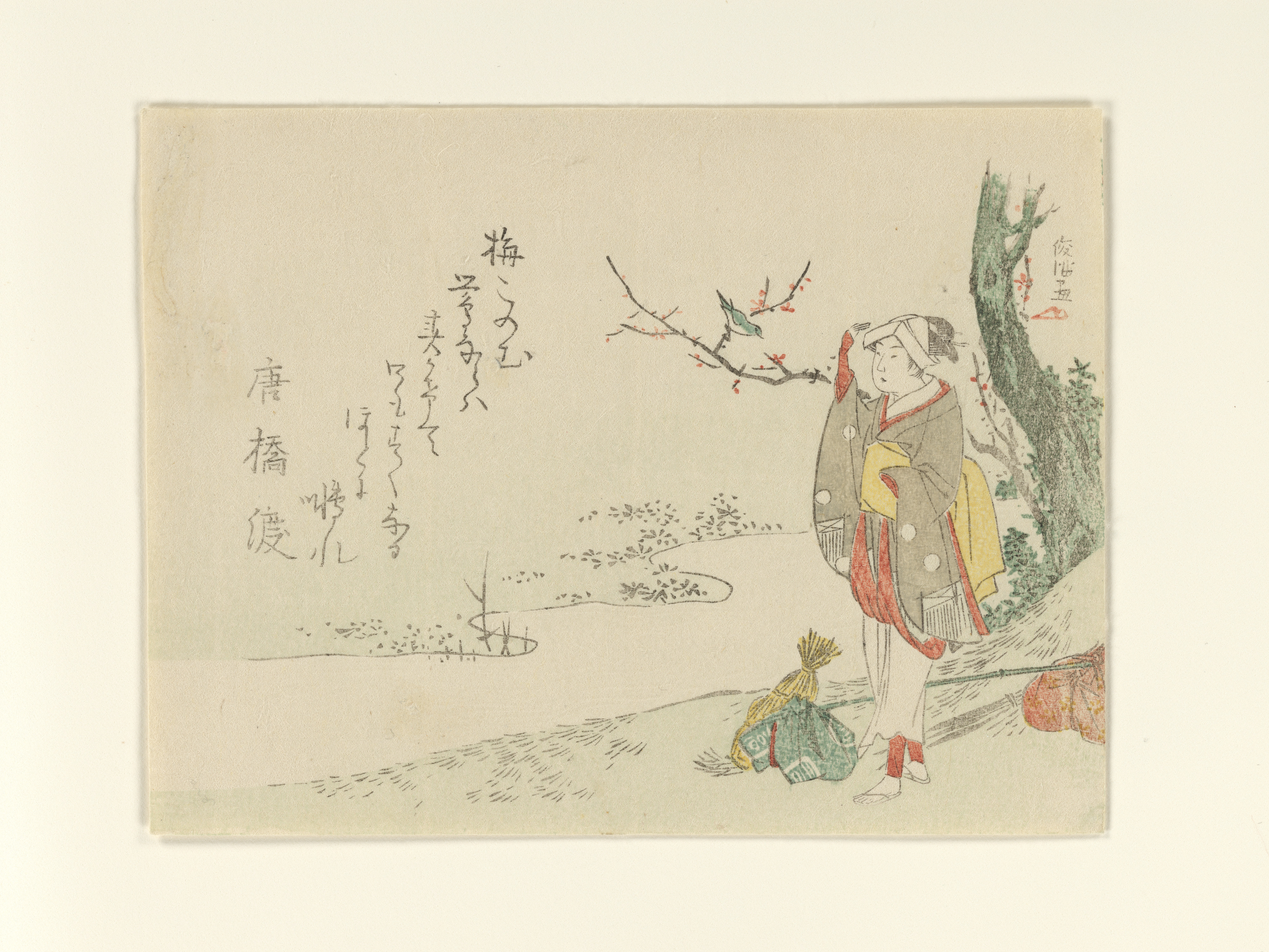
Traveling Woman Pauses to Listen to a Warbler
1797
Woodblock print (surimono); ink and color on paper
Frequently Asked Questions
Outfit for Travel was created by Kubo Shunman (窪俊満) in 19th century.