
Passage 158 (Hyaku gojuhachi dan), from the series "Essays in Idleness for the Asakusa Group (Asakusagawa Tsurezuregusa)"
by Kubo Shunman
- Date:
- early 19th century
- Medium:
- Color woodblock print; shikishiban, surimono
- Source:
- Art Institute of Chicago
Description
Passage 158 (Hyaku gojuhachi dan), in the Art Institute of Chicago, is another sheet from Shunman's Asakusagawa Tsurezuregusa series for the Asakusa poetry circle - one of perhaps two hundred and forty-three prints if the project covered every section of Yoshida Kenko's text, though it is uncertain how many were actually produced. The shikishiban format and early-nineteenth-century dating align with Shunman's other surimono for the Asakusa group, and the visual conventions are consistent: a sparing composition, muted palette, careful embossing, integrated kyoka inscriptions. As with Passage 237, the specific imagery would have been determined by the content of Tsurezuregusa Section 158 itself, with Shunman extracting from the original prose a single image, motif, or scene that could anchor the kyoka commentary. The Asakusa group's project of illustrating Tsurezuregusa in surimono is a remarkable example of late-Edo literary practice: a classical text reactivated by a contemporary poetry circle, mediated through a designer of Shunman's caliber, and circulated in a form that combined classical reverence with avant-garde luxury production. For modern viewers, the project reveals the depth of literary engagement that surimono made possible. The Art Institute of Chicago's collection preserves several Passages from the series, and their study together provides one of the clearest windows into the most ambitious literary illustration of Shunman's career.
More Prints by Kubo Shunman

Righteousness (Gi), from the series "Five Designs for the Katsushika Poetry Circle (Katsushika goban)"
early 1810s
Color woodblock print; shikishiban, surimono

Soga no Goro, Oiso no Tora, and Kewaizaka no Shosho
1809
Color woodblock print; surimono
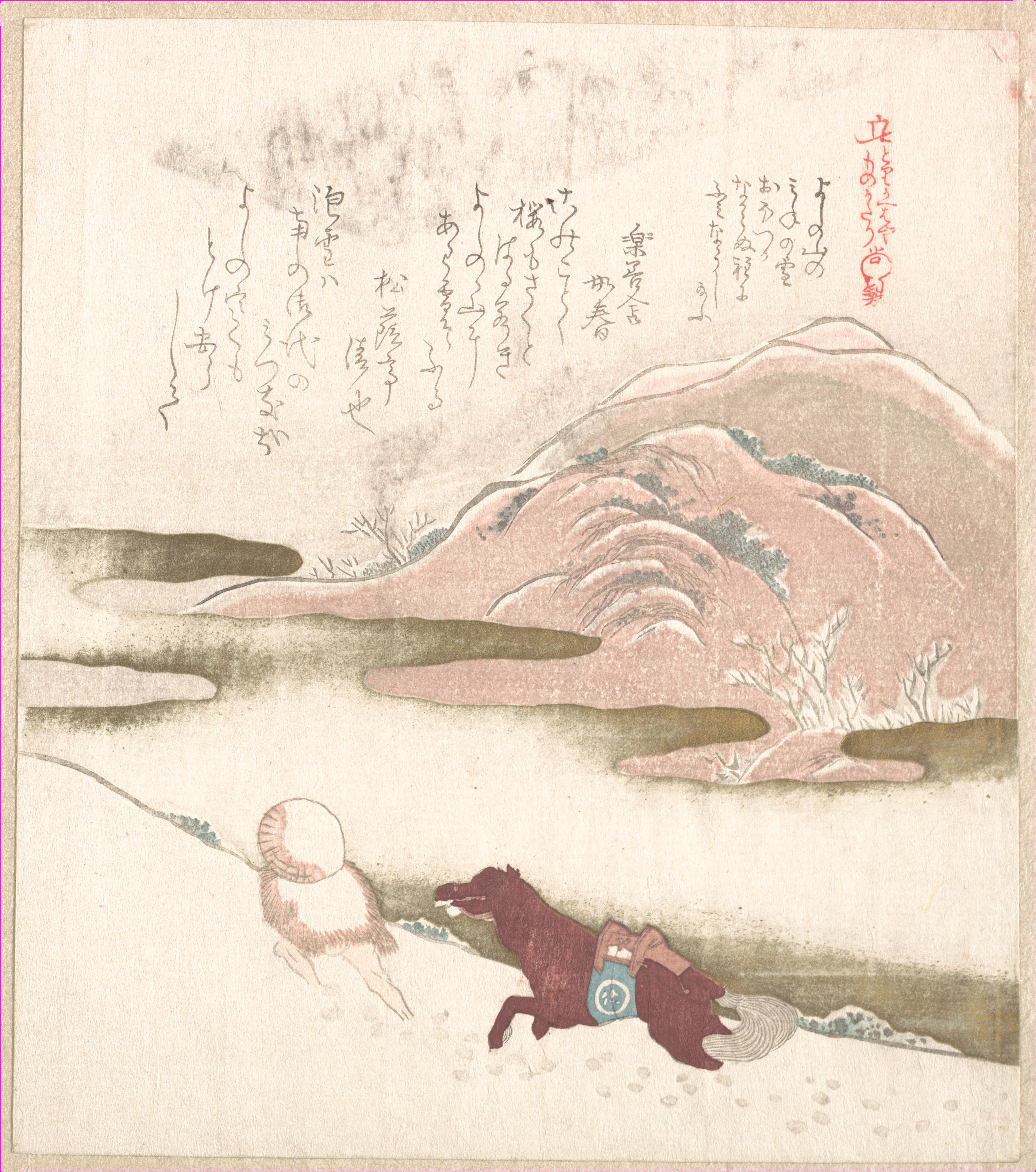
Snowy Landscape
19th century
Woodblock print (surimono); ink and color on paper
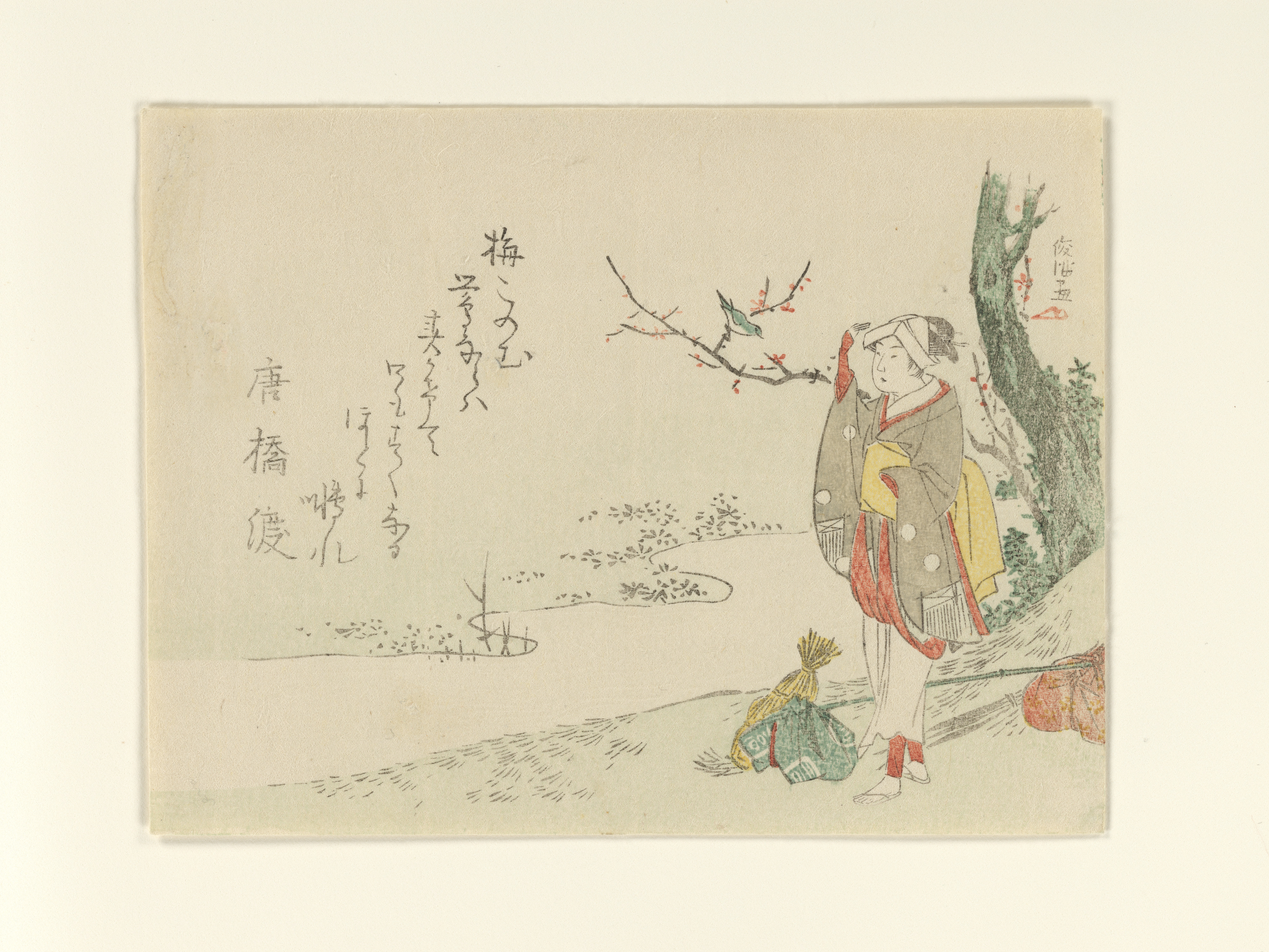
Traveling Woman Pauses to Listen to a Warbler
1797
Woodblock print (surimono); ink and color on paper
Frequently Asked Questions
Passage 158 (Hyaku gojuhachi dan), from the series "Essays in Idleness for the Asakusa Group (Asakusagawa Tsurezuregusa)" was created by Kubo Shunman (窪俊満) in early 19th century.