
Passage 237 (Nihyaku sanjunana dan), from the series "Essays in Idleness for the Asakusa Group (Asakusagawa Tsurezuregusa)"
by Kubo Shunman
- Date:
- early 19th century
- Medium:
- Color woodblock print; shikishiban, surimono
- Source:
- Art Institute of Chicago
Description
Held by the Art Institute of Chicago, this shikishiban surimono illustrates Passage 237 of Tsurezuregusa (Essays in Idleness), the fourteenth-century miscellany of observations and reflections by the Buddhist priest Yoshida Kenko, here adapted by Shunman for the Asakusa kyoka group as part of the series Essays in Idleness for the Asakusa Group (Asakusagawa Tsurezuregusa). Tsurezuregusa was a touchstone of classical Japanese prose and a favorite text for late-Edo poetry circles, who admired its blend of erudition, melancholy, wit, and aesthetic sensibility. By assigning each passage of the work its own surimono illustration, the Asakusa group constructed a kind of illustrated commonplace book of Kenko's reflections, with each sheet pairing the original passage's contents with kyoka commentary. Shunman's image for Passage 237 would have related to whatever specific observation Kenko offers there - the surviving Tsurezuregusa text covers an enormous range of subjects, from court dress to drinking to the autumn moon, and the image accordingly varies. The composition follows Shunman's mature surimono conventions: a single carefully placed motif or small group of figures, substantial unprinted white space, and integrated kyoka inscriptions. The series as a whole is one of the most ambitious surimono projects of the early nineteenth century, and the Art Institute of Chicago's holdings of multiple sheets allow it to be studied as the coherent project its commissioning circle conceived.
More Prints by Kubo Shunman

Righteousness (Gi), from the series "Five Designs for the Katsushika Poetry Circle (Katsushika goban)"
early 1810s
Color woodblock print; shikishiban, surimono

Soga no Goro, Oiso no Tora, and Kewaizaka no Shosho
1809
Color woodblock print; surimono
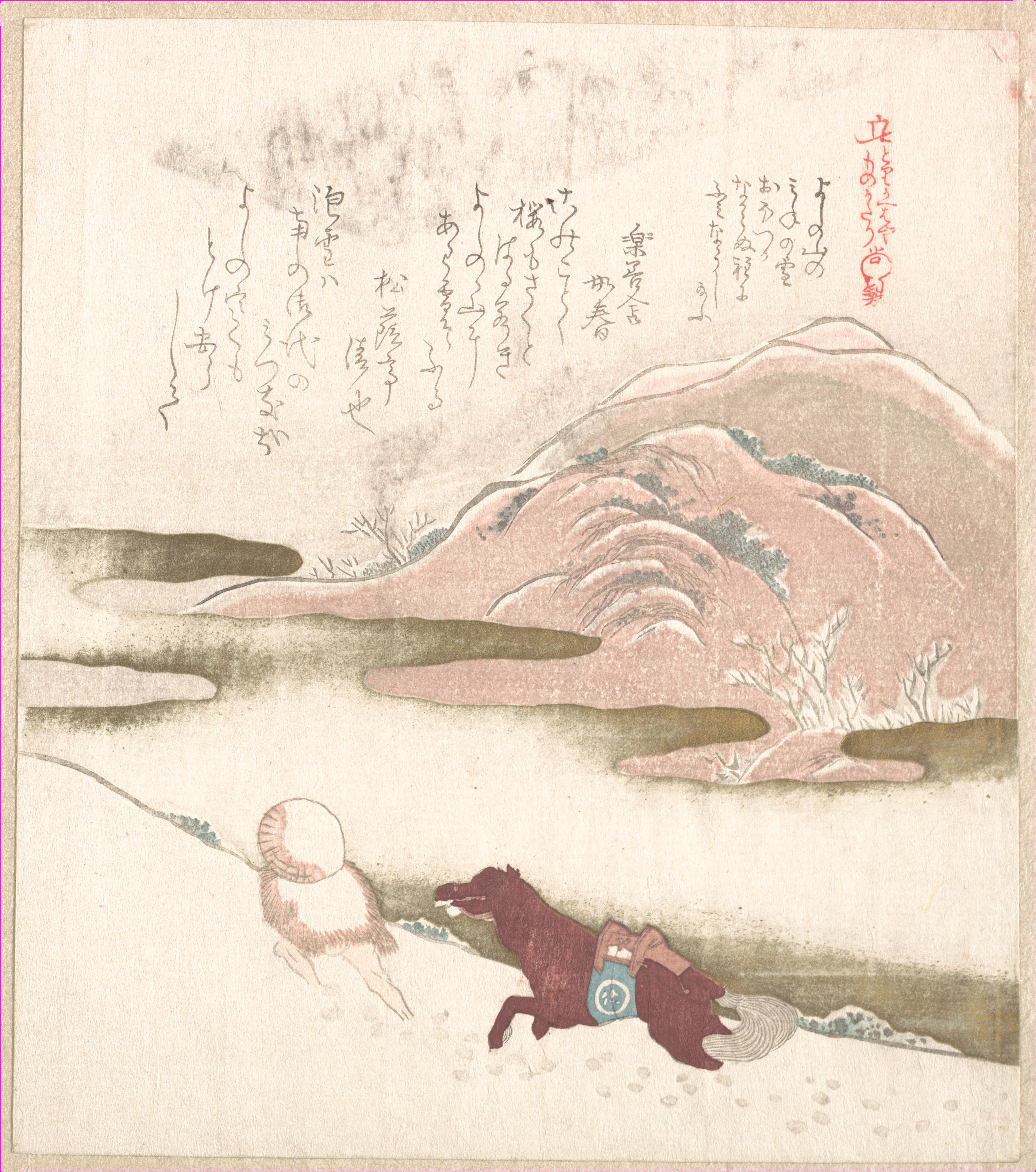
Snowy Landscape
19th century
Woodblock print (surimono); ink and color on paper
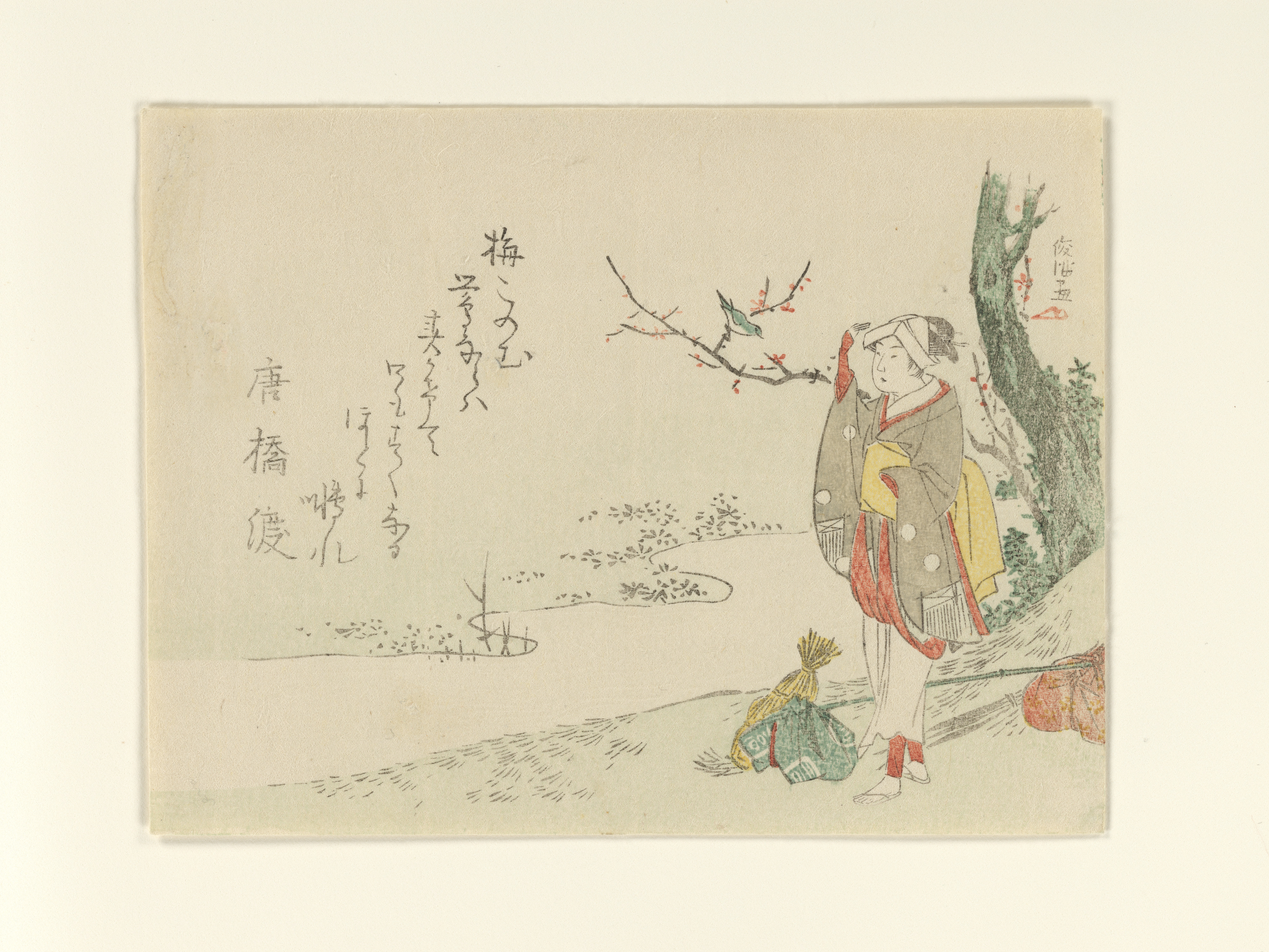
Traveling Woman Pauses to Listen to a Warbler
1797
Woodblock print (surimono); ink and color on paper
Frequently Asked Questions
Passage 237 (Nihyaku sanjunana dan), from the series "Essays in Idleness for the Asakusa Group (Asakusagawa Tsurezuregusa)" was created by Kubo Shunman (窪俊満) in early 19th century.