
Peacock, Pine Tree, and Peonies, from the series "A Set of Three Petals (San hira no uchi)"
by Kubo Shunman
- Date:
- 1810s
- Medium:
- Color woodblock print; shikishiban, surimono
- Source:
- Art Institute of Chicago
Description
Peacock, Pine Tree, and Peonies, from Kubo Shunman's series A Set of Three Petals (San hira no uchi), assembles a compact emblem of auspiciousness for the kyoka circle that commissioned the sheet. The peacock, an exotic bird with continental associations, is paired with the pine, a long-standing symbol of longevity and steadfastness, and with peonies, the so-called king of flowers tied in East Asian iconography to wealth and high station. Read together they form a triad of good wishes, the kind of motif a kyoka poet might unfold across the witty thirty-one syllables of a verse printed alongside the image. Shunman, an Edo ukiyo-e designer who specialized in surimono and kyoka-e, was uniquely positioned to translate this dense symbolic vocabulary into a quiet, balanced picture. The print, issued around 1810 and now in the collection of the Art Institute of Chicago, shows his characteristic restraint with color and his fine line work, with the bird's plumage rendered through small, controlled strokes rather than ostentatious display. Surimono of this period were privately commissioned and printed in small editions for kyoka clubs and individual patrons, which gave designers like Shunman freedom to refine details that the commercial market could not support. For collectors, the sheet illustrates the way Kubo Shunman's poetics-driven sensibility shaped even straightforward auspicious subjects, drawing the peacock, pine, and peony into a structure as compressed and allusive as the poems they accompanied.
More Prints by Kubo Shunman

Righteousness (Gi), from the series "Five Designs for the Katsushika Poetry Circle (Katsushika goban)"
early 1810s
Color woodblock print; shikishiban, surimono

Soga no Goro, Oiso no Tora, and Kewaizaka no Shosho
1809
Color woodblock print; surimono
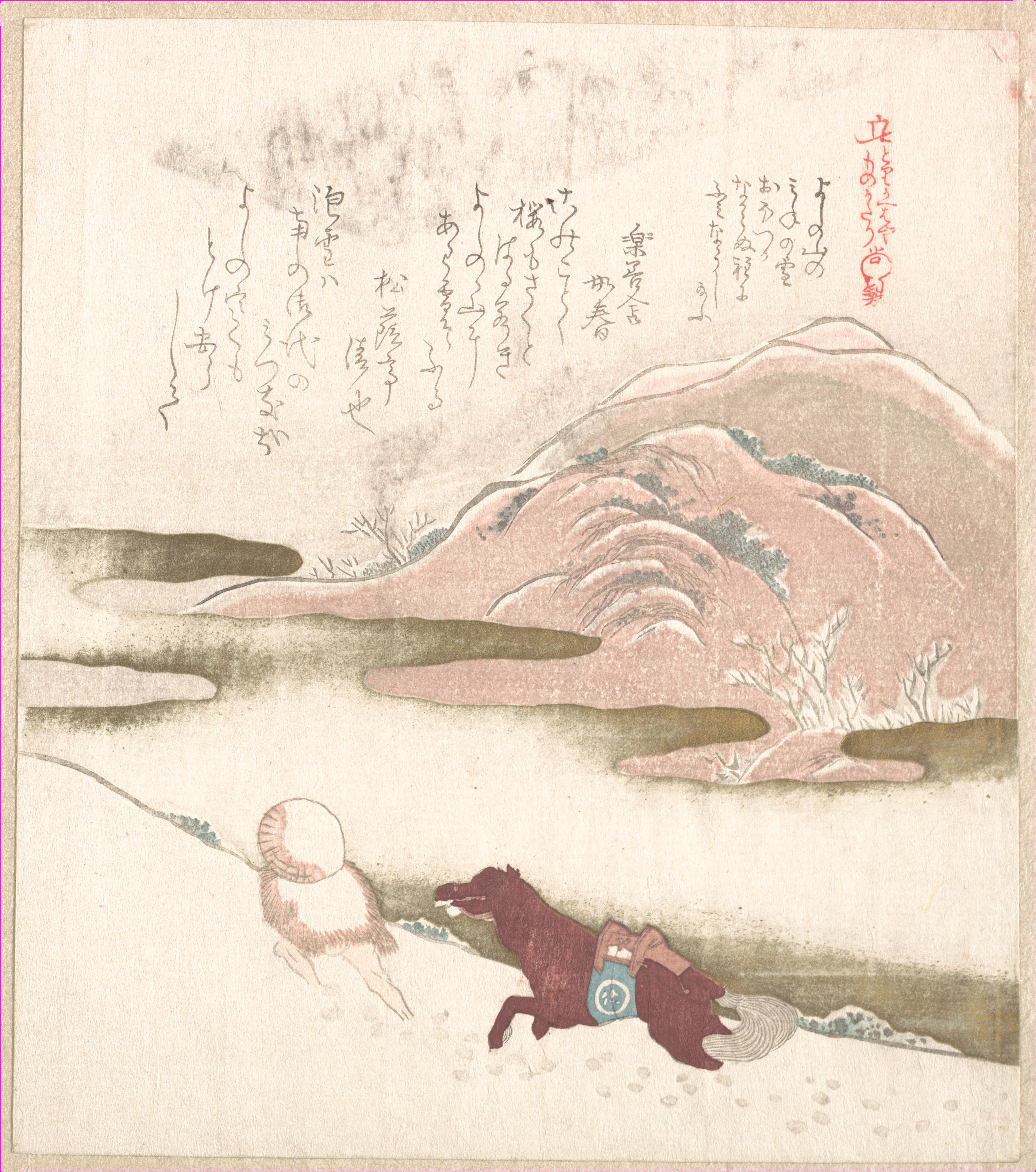
Snowy Landscape
19th century
Woodblock print (surimono); ink and color on paper
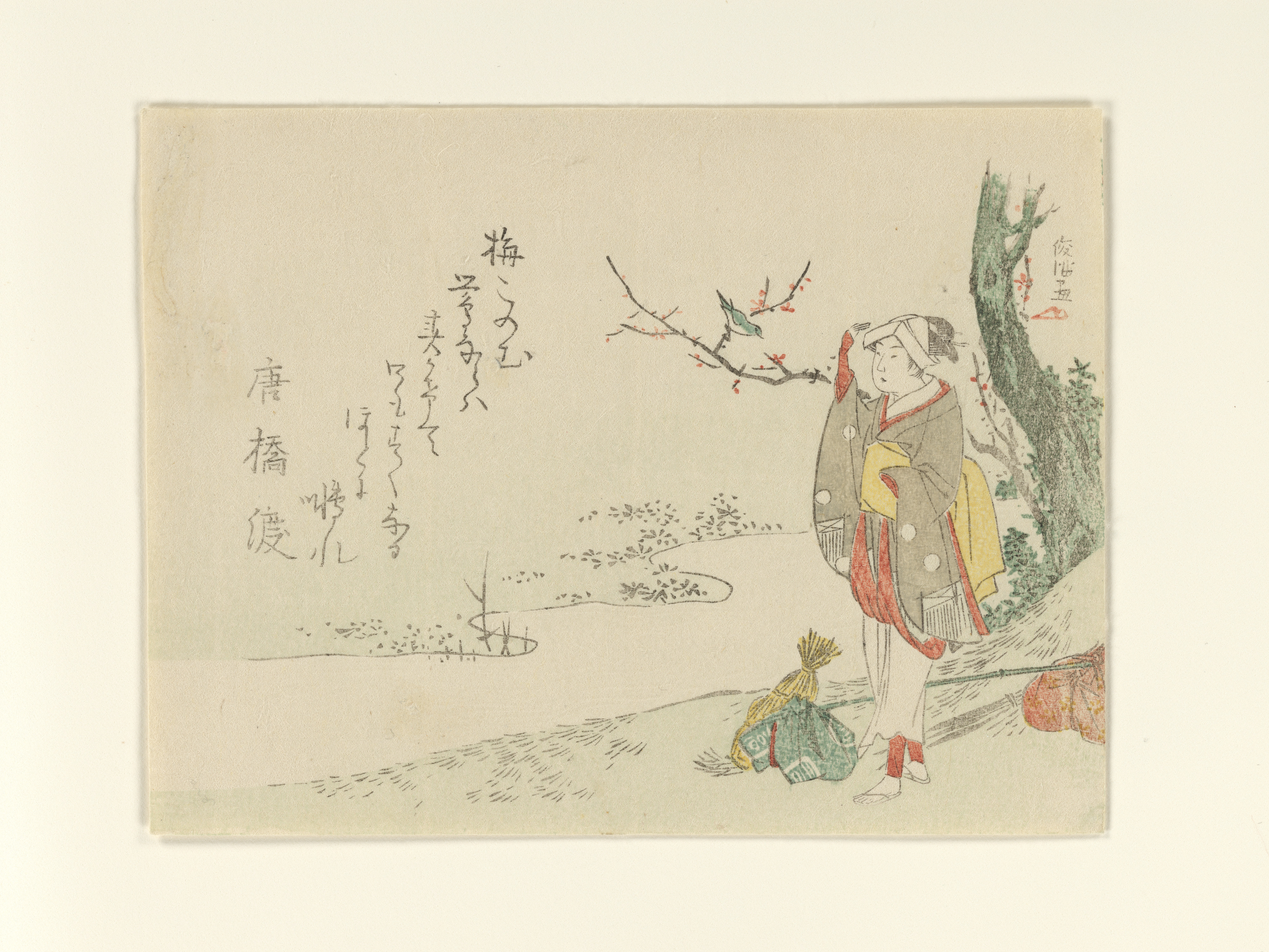
Traveling Woman Pauses to Listen to a Warbler
1797
Woodblock print (surimono); ink and color on paper
Frequently Asked Questions
Peacock, Pine Tree, and Peonies, from the series "A Set of Three Petals (San hira no uchi)" was created by Kubo Shunman (窪俊満) in 1810s.