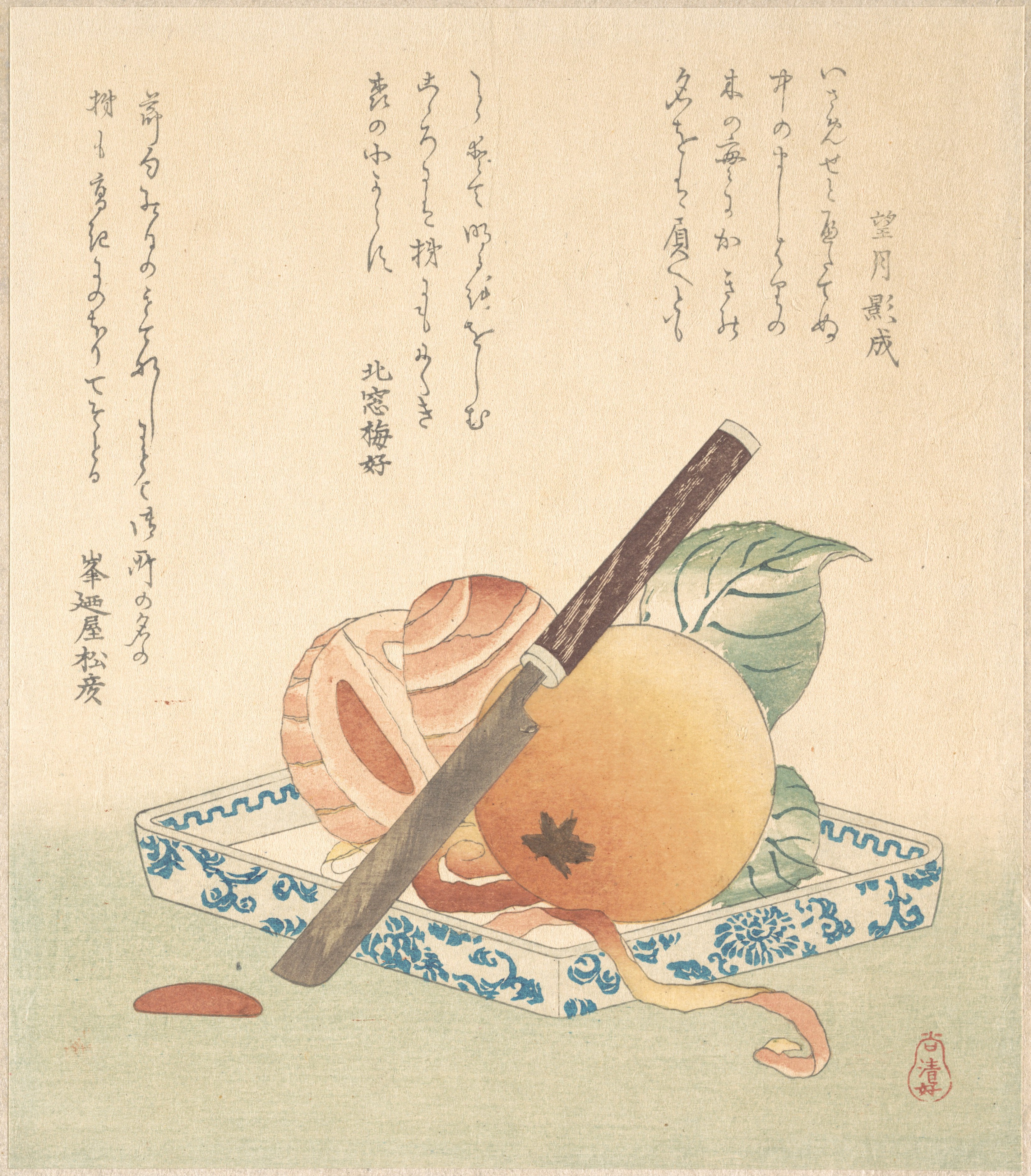
Persimmons on a Plate
by Kubo Shunman
- Date:
- 19th century
- Medium:
- Woodblock print (surimono); ink and color on paper
- Source:
- Metropolitan Museum of Art
Description
Persimmons on a Plate is a small still-life surimono by Kubo Shunman, dated to around 1800 and held by the Metropolitan Museum of Art. The persimmon, kaki, is one of the iconic autumn fruits of Japan, ripening as the air cools and lending itself to a long line of haiku, kyoka, and waka treatments. Shunman, whose career as an Edo ukiyo-e designer was shaped by his deep involvement with kyoka poetry circles, repeatedly turned to such fruits and household objects as the visual axis of his surimono. Here he arranges several persimmons on a plate, allowing their rounded forms and warm color to anchor the composition without crowding the sheet. The drawing is precise and the palette restrained, and the surrounding empty space leaves ample room for inscribed verses. This is the essence of the kyoka-e mode: a quiet image whose seasonal and tactile specificity provides the kyoka poet with a clearly defined target for wordplay and feeling. The printing typical of refined surimono, with subtle gradations and likely embossed or metallic passages, would have rewarded close handling in the small circles for whom such designs were made. For collectors approaching Kubo Shunman, Persimmons on a Plate offers a clear instance of his characteristic union of botanical and culinary detail with literary culture, all delivered within the spare, intimate frame of a single surimono sheet.
More Prints by Kubo Shunman

Righteousness (Gi), from the series "Five Designs for the Katsushika Poetry Circle (Katsushika goban)"
early 1810s
Color woodblock print; shikishiban, surimono

Soga no Goro, Oiso no Tora, and Kewaizaka no Shosho
1809
Color woodblock print; surimono
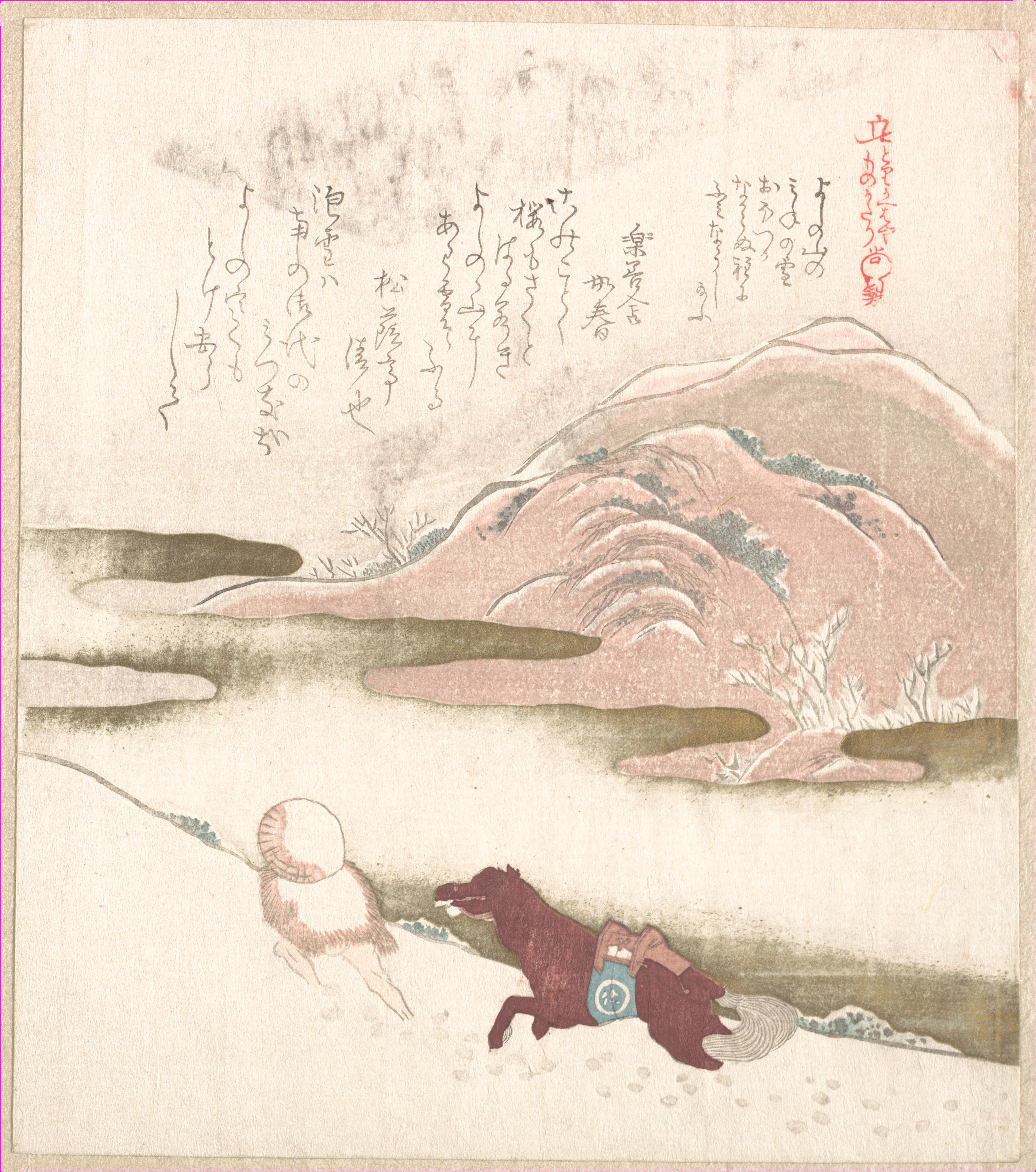
Snowy Landscape
19th century
Woodblock print (surimono); ink and color on paper
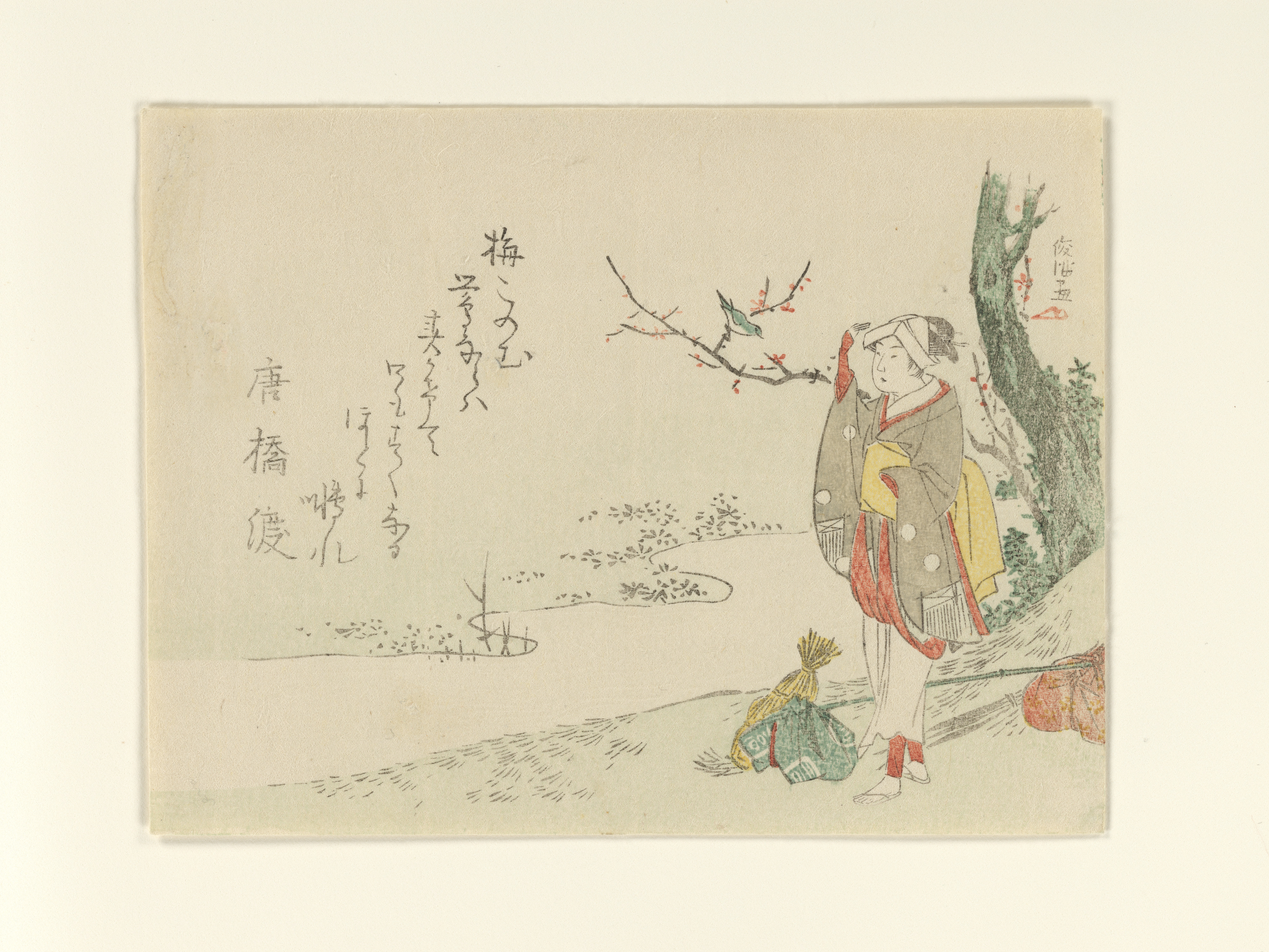
Traveling Woman Pauses to Listen to a Warbler
1797
Woodblock print (surimono); ink and color on paper
Frequently Asked Questions
Persimmons on a Plate was created by Kubo Shunman (窪俊満) in 19th century.