
Preparing Seven Herbs on the Seventh Day of the New Year
by Kubo Shunman
- Date:
- 1798
- Medium:
- Color woodblock print; surimono
- Source:
- Art Institute of Chicago
Description
Preparing Seven Herbs on the Seventh Day of the New Year, dated 1798 and in the collection of the Art Institute of Chicago, depicts the ritual preparation of nanakusa-gayu - the seven-herb rice porridge eaten on the seventh day of the New Year (Jinjitsu, January 7) as a folk-medicinal observance meant to ward off illness and promote longevity. The ceremony, which entailed chopping the seven specified herbs in a prescribed order while reciting verses, had been part of Japanese New Year custom for centuries and offered a natural subject for surimono made to circulate among kyoka circles around the New Year. Shunman pictures women and household figures engaged in the herb-cutting, the wooden chopping board and the bunches of greens carefully rendered, the auspicious occasion underscored by the inscribed kyoka. The image belongs to the tradition of nenchu gyoji-e (pictures of annual observances), but the surimono format gives it an intimacy that the commercial print marketplace rarely permitted: this is not a public celebration but a small domestic ritual, witnessed at close range. The 1798 dating places the print in the period when Shunman was deepening his commitment to surimono production, with the formula of seasonal observance plus kyoka inscription becoming a signature mode. The Art Institute of Chicago's preservation of the print with its inscriptions intact allows the full poetic and visual occasion to be reconstructed.
More Prints by Kubo Shunman

Righteousness (Gi), from the series "Five Designs for the Katsushika Poetry Circle (Katsushika goban)"
early 1810s
Color woodblock print; shikishiban, surimono

Soga no Goro, Oiso no Tora, and Kewaizaka no Shosho
1809
Color woodblock print; surimono
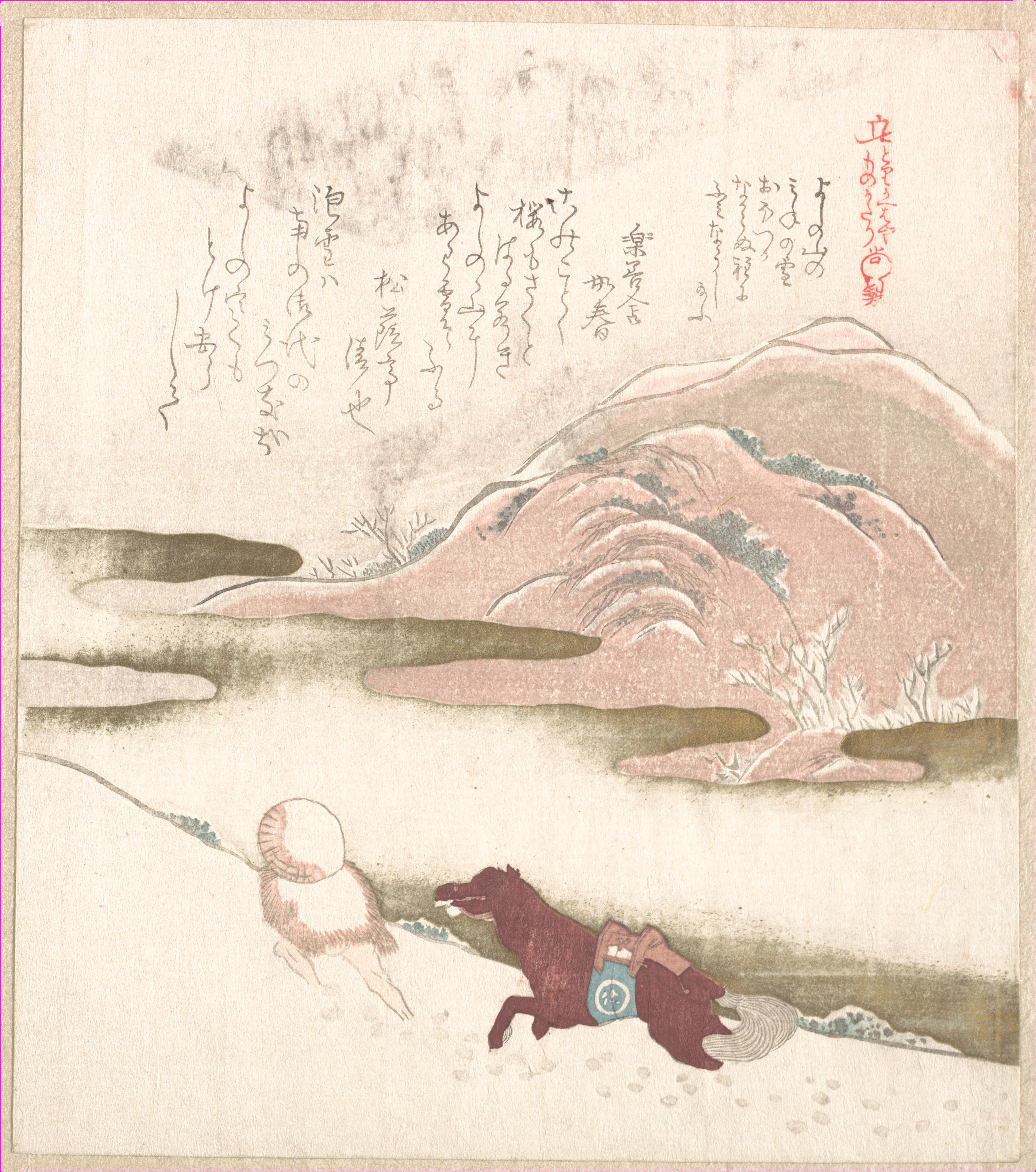
Snowy Landscape
19th century
Woodblock print (surimono); ink and color on paper
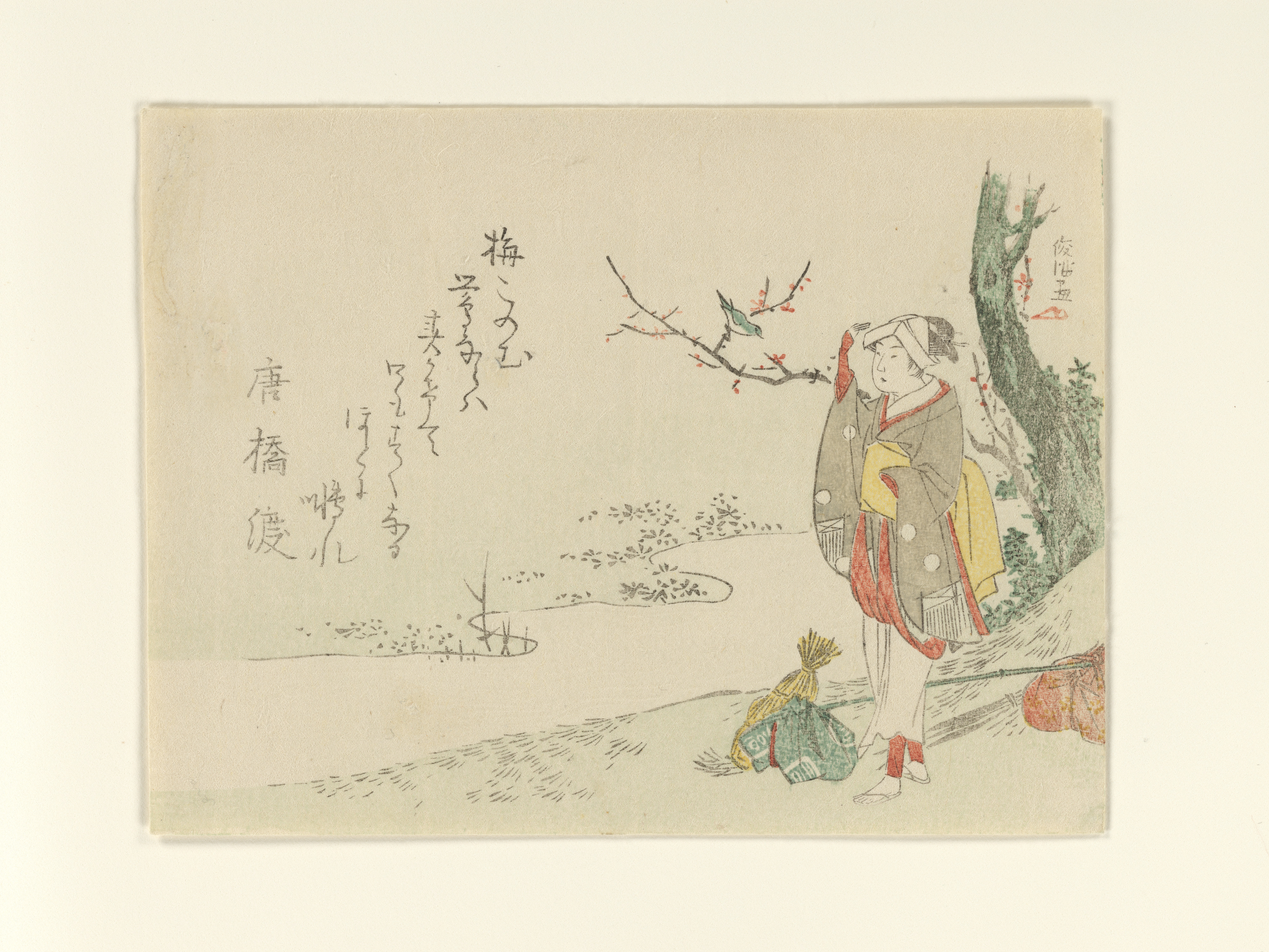
Traveling Woman Pauses to Listen to a Warbler
1797
Woodblock print (surimono); ink and color on paper
Frequently Asked Questions
Preparing Seven Herbs on the Seventh Day of the New Year was created by Kubo Shunman (窪俊満) in 1798.