
Woman and two boys gathering abalone, from the series "The Tosa Diary (Tosa nikki)"
by Kubo Shunman
- Date:
- 1810s
- Medium:
- Color woodblock print; shikishiban, surimono
- Source:
- Art Institute of Chicago
Description
Woman and Two Boys Gathering Abalone belongs to Kubo Shunman's surimono series based on The Tosa Diary (Tosa nikki), the tenth-century travel journal traditionally attributed to Ki no Tsurayuki. Shunman, who moved easily between visual design and kyoka poetry, used the Tosa nikki as a literary armature for a sequence of seasonal and coastal vignettes, transposing its courtly itinerary into the elegant, slightly ironic register prized by the kyoka clubs of Edo. In this sheet, dated to about 1810 and now in the Art Institute of Chicago, a woman and two young boys are shown engaged in the everyday labor of gathering abalone from a rocky shore. The motif draws together fishing-village realism, classical poetic associations with seaweed and shellfish, and the gentle humor of a kyoka-e in which an ancient diary's high-cultural travel narrative is glimpsed through humble local activity. Shunman's drawing is measured, with the figures arranged in a triangular cluster against open space, and his color is held to a few quiet tones, characteristic of the restrained palette of refined Edo ukiyo-e surimono. The print's typical luxury surimono features, including delicate gradations and likely metallic or embossed passages, would have rewarded close handling by the poets and patrons who received it. For viewers approaching Kubo Shunman, the work models how the kyoka-e tradition recast canonical Japanese literature in contemporary visual terms while preserving its seasonal and emotional sensitivity.
More Prints by Kubo Shunman

Righteousness (Gi), from the series "Five Designs for the Katsushika Poetry Circle (Katsushika goban)"
early 1810s
Color woodblock print; shikishiban, surimono

Soga no Goro, Oiso no Tora, and Kewaizaka no Shosho
1809
Color woodblock print; surimono
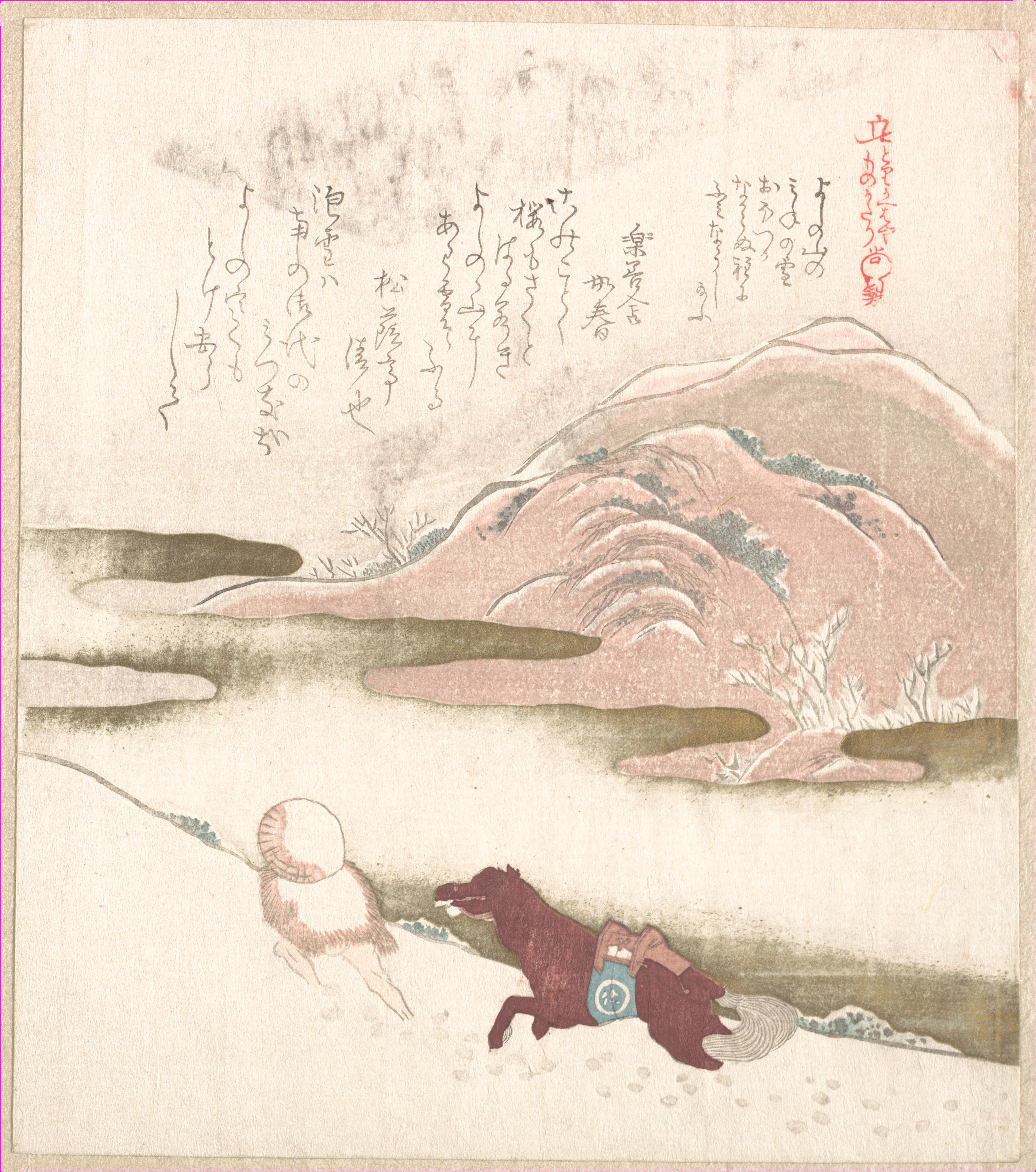
Snowy Landscape
19th century
Woodblock print (surimono); ink and color on paper
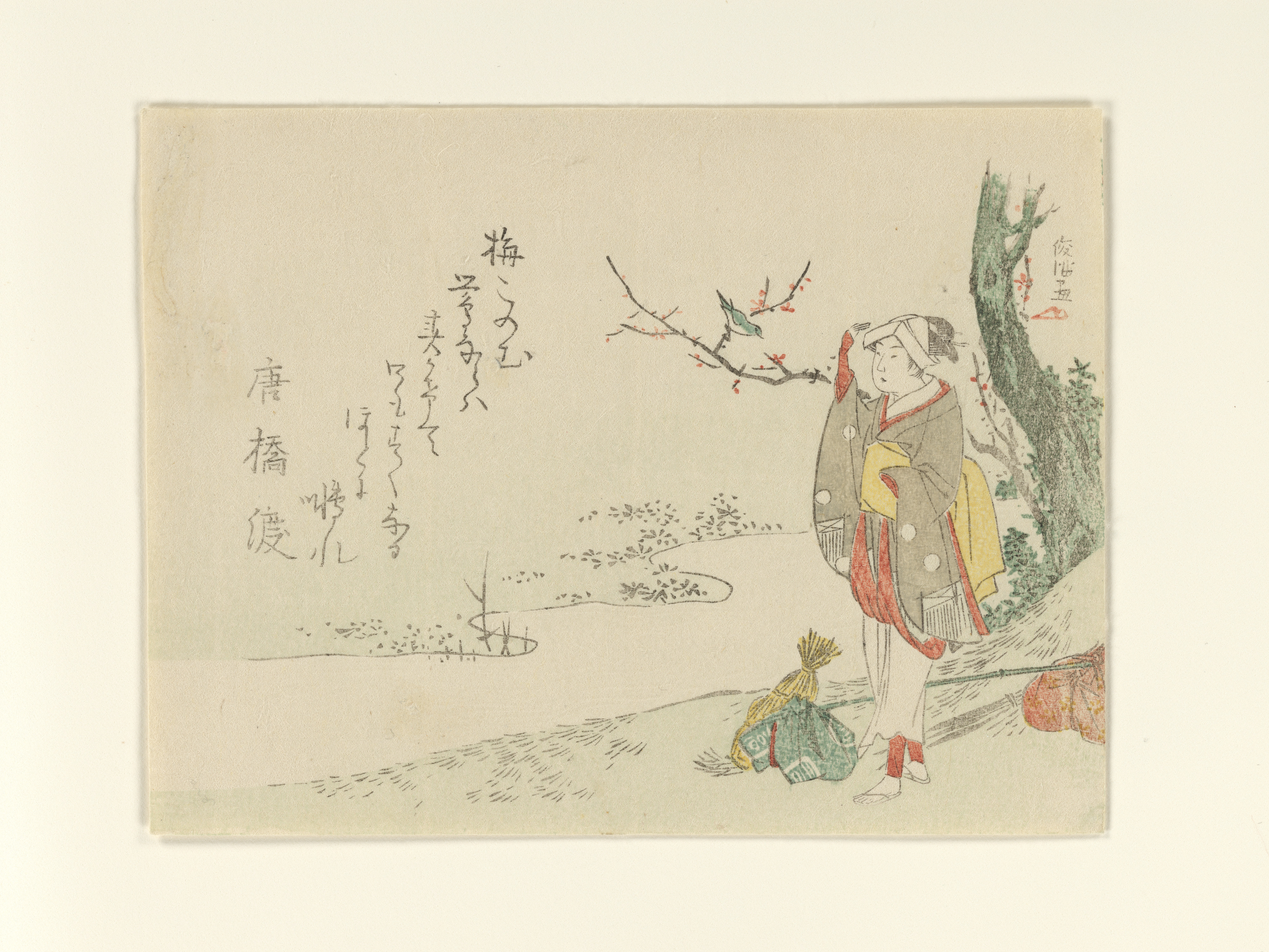
Traveling Woman Pauses to Listen to a Warbler
1797
Woodblock print (surimono); ink and color on paper
Frequently Asked Questions
Woman and two boys gathering abalone, from the series "The Tosa Diary (Tosa nikki)" was created by Kubo Shunman (窪俊満) in 1810s.