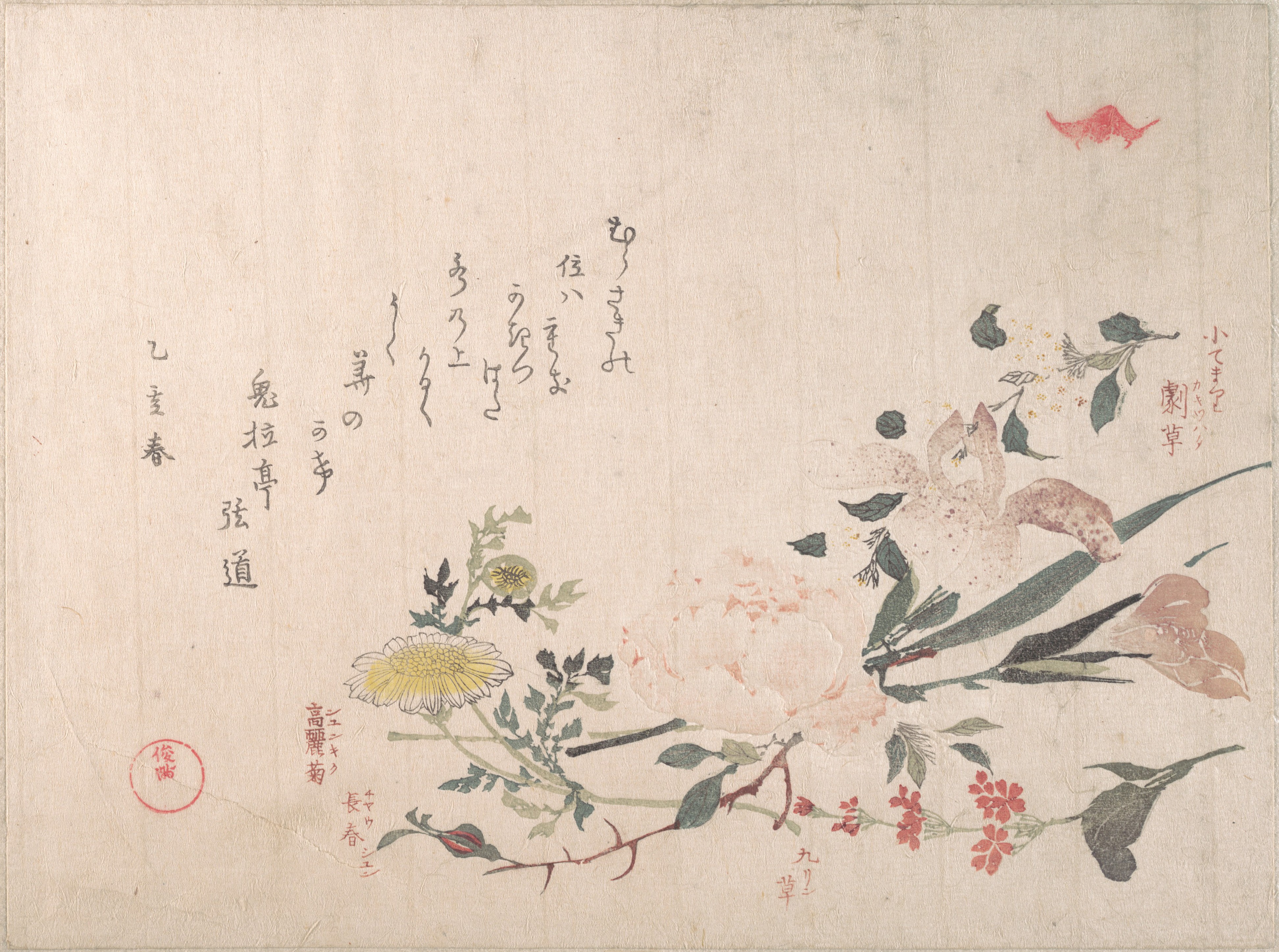
Rose, Iris, Primrose and Daisy
by Kubo Shunman
- Date:
- 1815
- Medium:
- Woodblock print (surimono); ink and color on paper
- Source:
- Metropolitan Museum of Art
Description
Rose, Iris, Primrose and Daisy, dated to around 1815 and preserved at the Metropolitan Museum of Art, gathers four cultivated blossoms into a single composition that exemplifies Kubo Shunman's late surimono practice. By the second decade of the nineteenth century, Shunman had become one of the most sought-after designers for the privately commissioned, deluxe prints that Edo poetry clubs distributed among their members, and floral still lifes of this kind sat at the heart of that economy. Within Edo ukiyo-e, surimono operated as a distinct, refined branch of the medium: small editions, expensive papers, generous metallic and embossed effects, and accompanying kyoka verses that linked image and text. This print's four flowers are not merely decorative; they function as seasonal and symbolic anchors that would have keyed kyoka responses from the patrons who shared the sheet. The Met's classification of the work as a polychrome surimono underscores the technical investment poured into such commissions, where blind-printed gauffrage and carefully balanced pigments produced tactile surfaces rarely matched in commercial publishing. Shunman's compositional discipline, learned from his early association with Katsukawa Shunsho and later honed through his own circle, is visible in the way the blossoms are spaced rather than crowded, each flower given air and structural weight. The result is a quietly intellectual image that prizes botanical observation, poetic association, and craftsmanship in equal measure, offering a representative example of how late Edo surimono used floral subjects to host literary sociability while keeping ukiyo-e's visual language at the highest level of refinement.
More Prints by Kubo Shunman

Righteousness (Gi), from the series "Five Designs for the Katsushika Poetry Circle (Katsushika goban)"
early 1810s
Color woodblock print; shikishiban, surimono

Soga no Goro, Oiso no Tora, and Kewaizaka no Shosho
1809
Color woodblock print; surimono
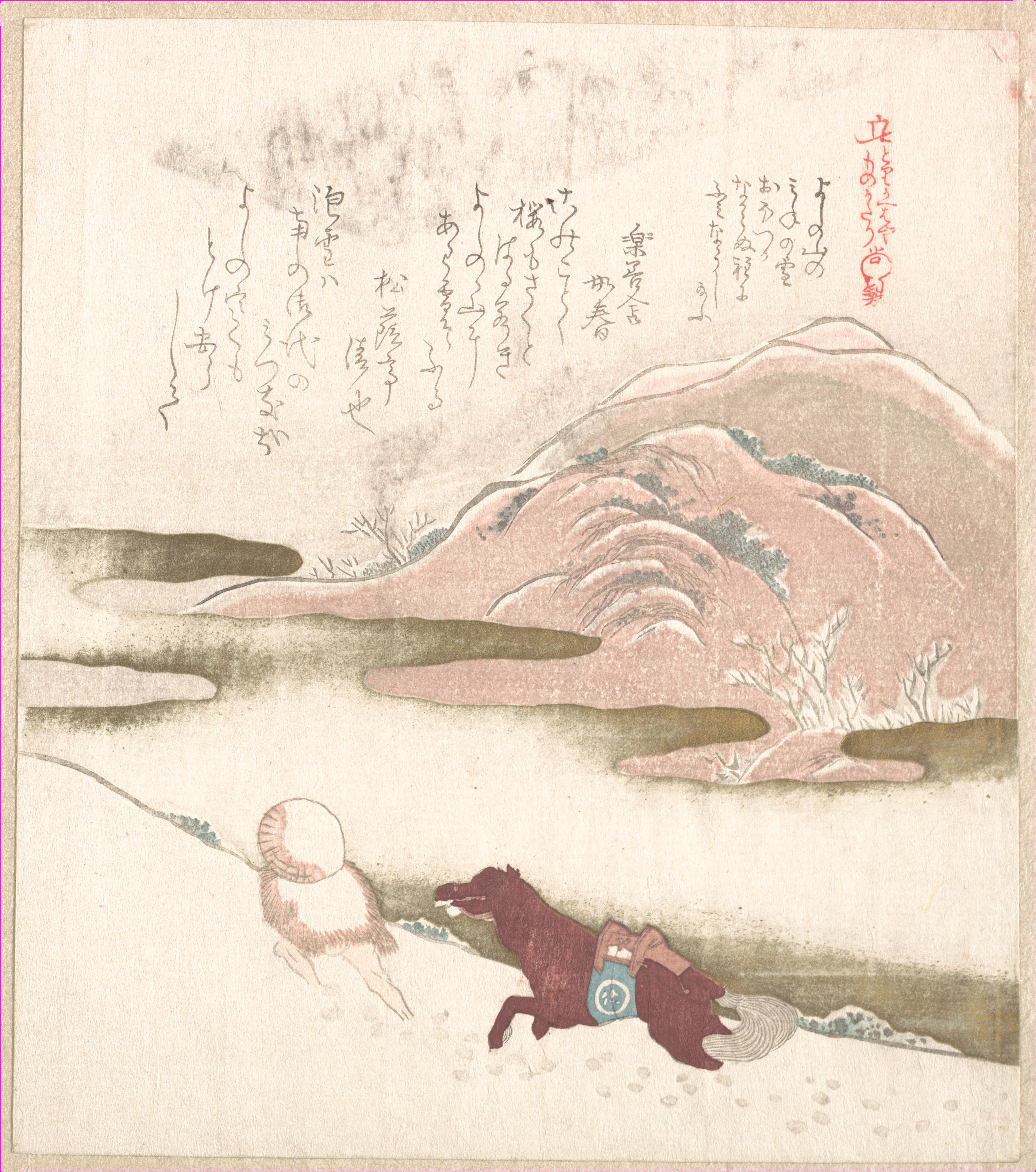
Snowy Landscape
19th century
Woodblock print (surimono); ink and color on paper
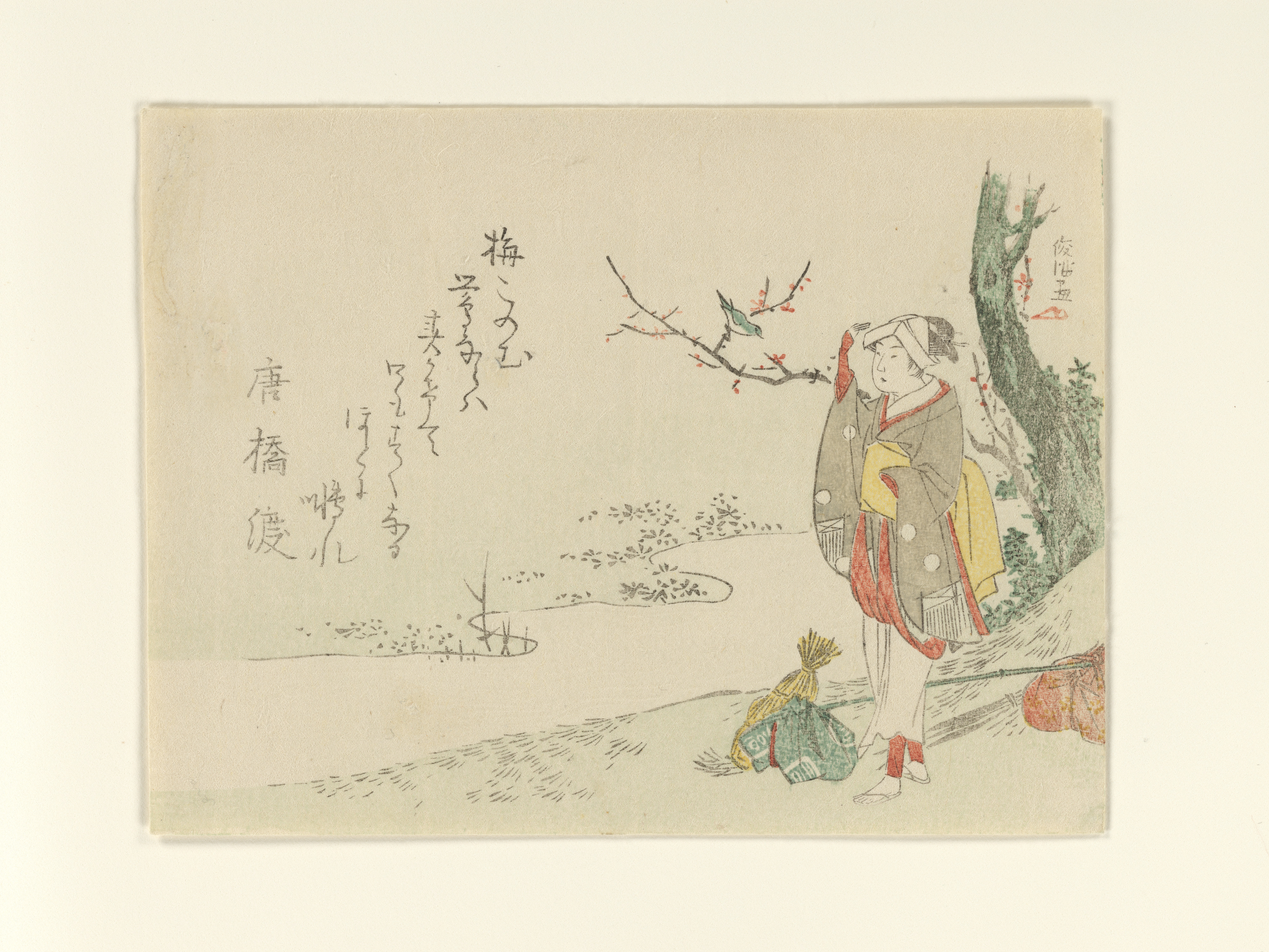
Traveling Woman Pauses to Listen to a Warbler
1797
Woodblock print (surimono); ink and color on paper
More Birds & Flowers Prints
Frequently Asked Questions
Rose, Iris, Primrose and Daisy was created by Kubo Shunman (窪俊満) in 1815.
Rose, Iris, Primrose and Daisy depicts birds & flowers.