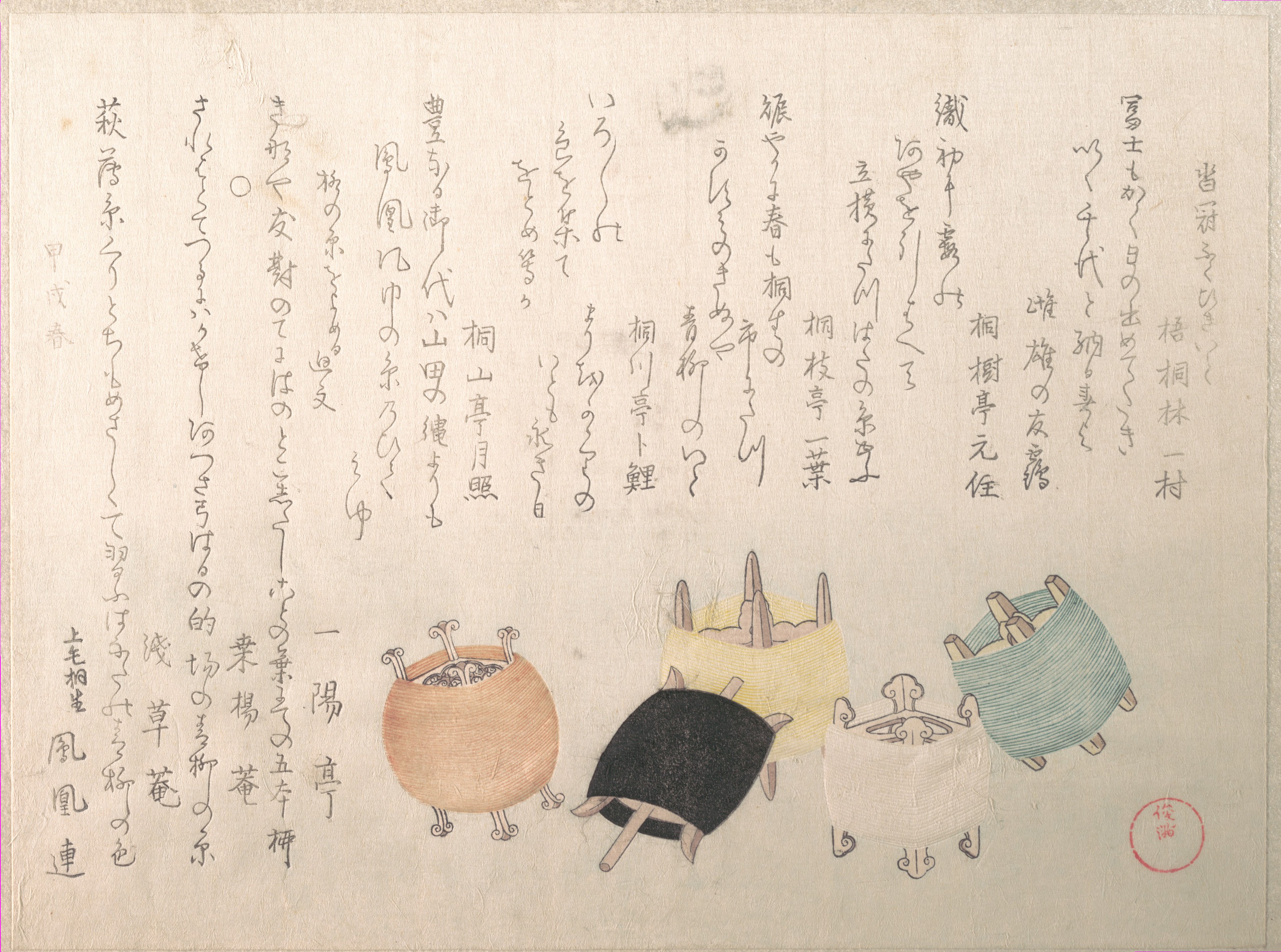
Spools
by Kubo Shunman
- Date:
- 1814
- Medium:
- Woodblock print (surimono); ink and color on paper
- Source:
- Metropolitan Museum of Art
Description
Spools, dated to around 1814 and held by the Metropolitan Museum of Art, is one of Kubo Shunman's most concentrated still life designs and a fine example of the object-centered surimono that he helped popularize within Edo ukiyo-e. The composition focuses on a tidy arrangement of thread spools, a humble subject that becomes, in Shunman's hands, an opportunity for refined pattern-making, controlled palette, and precise compositional balance. By the second decade of the nineteenth century, surimono devoted to everyday objects had become a vital sub-genre, prized by the kyoka poets who commissioned and exchanged the sheets, and Shunman was among its most accomplished practitioners. The Met's record identifies the work as a polychrome surimono, a classification that reflects the elevated production values associated with these privately published prints, where careful registration, occasional embossing, and the use of high-grade paper produced surfaces of unusual tactile interest. Within Edo ukiyo-e, such still lifes operated parallel to the better-known traditions of bijinga and yakusha-e, opening a more meditative channel in which the material culture of textile work, writing, and seasonal ritual carried both poetic and decorative weight. Spools also fits naturally within a broader strand of Shunman's practice in which textile-related implements recur as a quiet motif, hinting at the labor of women and the rhythms of domestic life without making them an explicit subject. The result is a print that rewards close looking, demonstrating how surimono could elevate the smallest objects into images of sustained interest.
More Prints by Kubo Shunman

Righteousness (Gi), from the series "Five Designs for the Katsushika Poetry Circle (Katsushika goban)"
early 1810s
Color woodblock print; shikishiban, surimono

Soga no Goro, Oiso no Tora, and Kewaizaka no Shosho
1809
Color woodblock print; surimono
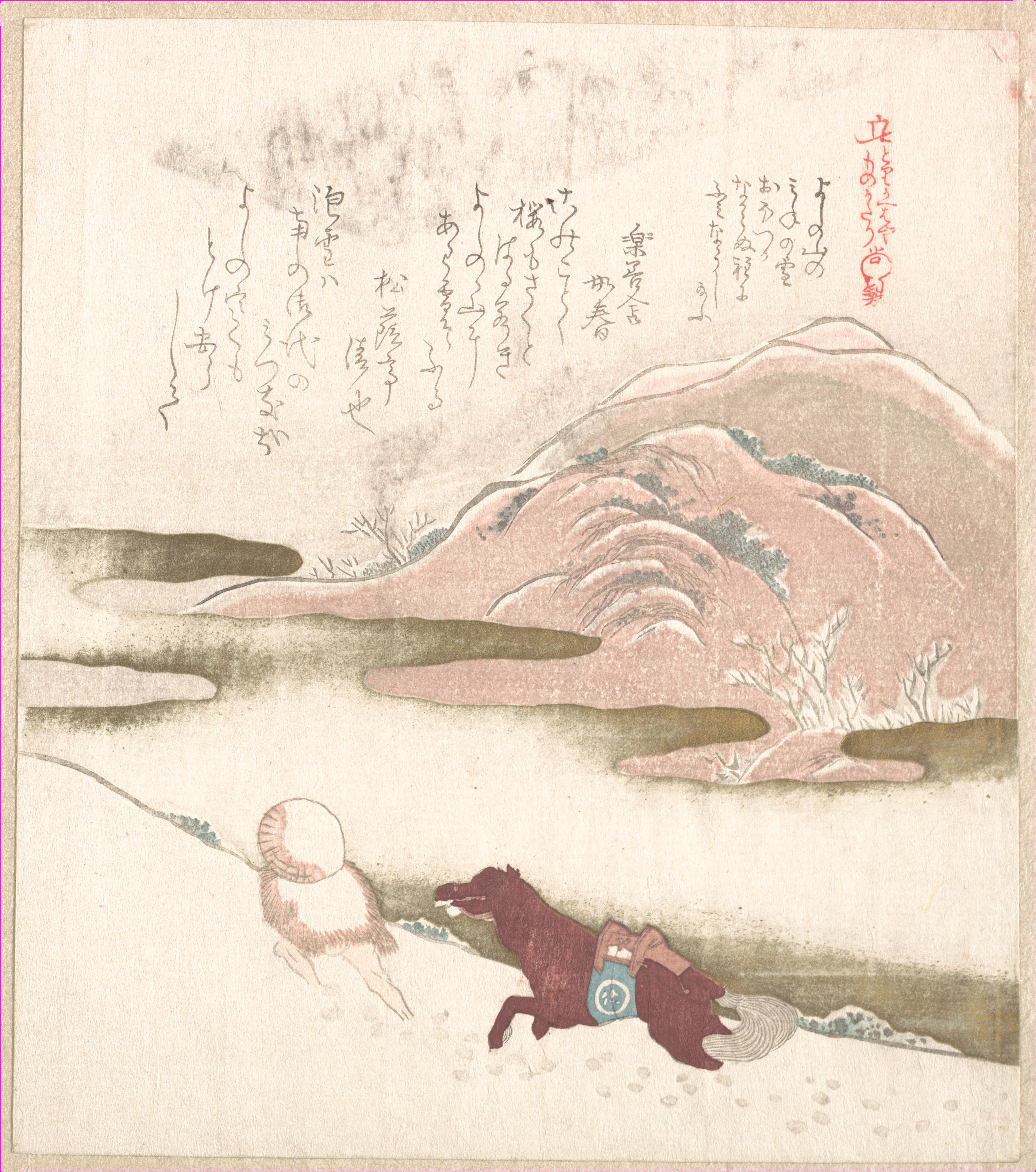
Snowy Landscape
19th century
Woodblock print (surimono); ink and color on paper
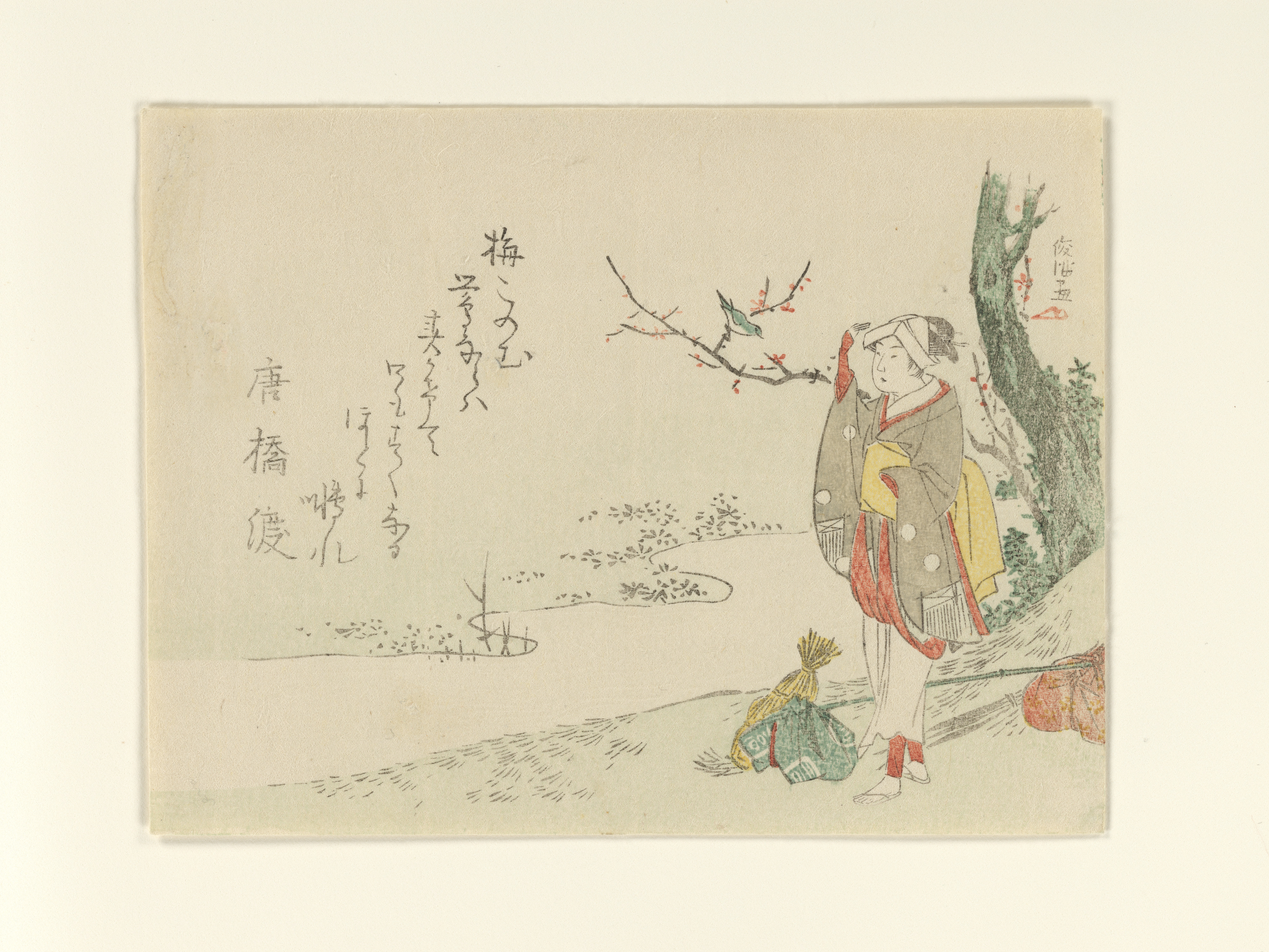
Traveling Woman Pauses to Listen to a Warbler
1797
Woodblock print (surimono); ink and color on paper
Frequently Asked Questions
Spools was created by Kubo Shunman (窪俊満) in 1814.