
Taking Food to Rice Planters
by Kubo Shunman
- Date:
- late 18th/early 19th century
- Medium:
- Color woodblock print; surimono
- Source:
- Art Institute of Chicago
Description
Taking Food to Rice Planters, a color woodblock surimono in the Art Institute of Chicago, treats a humble seasonal subject - women bringing meals out to peasants planting rice in flooded paddies - with the refinement that surimono commissions demanded. The image belongs to the long-standing tradition of pictures of the four seasons of agricultural labor (shiki kosaku-e), which had classical antecedents in Chinese and Japanese painting alike. Shunman's contribution is to translate that pictorial tradition into the surimono format, where it becomes available to kyoka poets as a vehicle for verses on early summer, rice cultivation, and rural simplicity. The composition is sparing, with a few precisely drawn figures set against a landscape compressed into colored bands and the inscribed kyoka filling the upper portion of the sheet. The technique includes the muted, opalescent palette typical of Shunman's surimono, and almost certainly involved blind embossing in the textiles, baskets, and rice-plant foliage. The juxtaposition of subject and technique - peasant labor rendered with the most expensive print methods available, for an audience of urban literati - is characteristic of surimono culture, which delighted in such gentle ironies. The Art Institute of Chicago's classification of the print as late eighteenth or early nineteenth century places it within Shunman's transitional period, when his commercial bijin-ga practice was tapering off and his surimono activity was beginning to dominate his output.
More Prints by Kubo Shunman

Righteousness (Gi), from the series "Five Designs for the Katsushika Poetry Circle (Katsushika goban)"
early 1810s
Color woodblock print; shikishiban, surimono

Soga no Goro, Oiso no Tora, and Kewaizaka no Shosho
1809
Color woodblock print; surimono
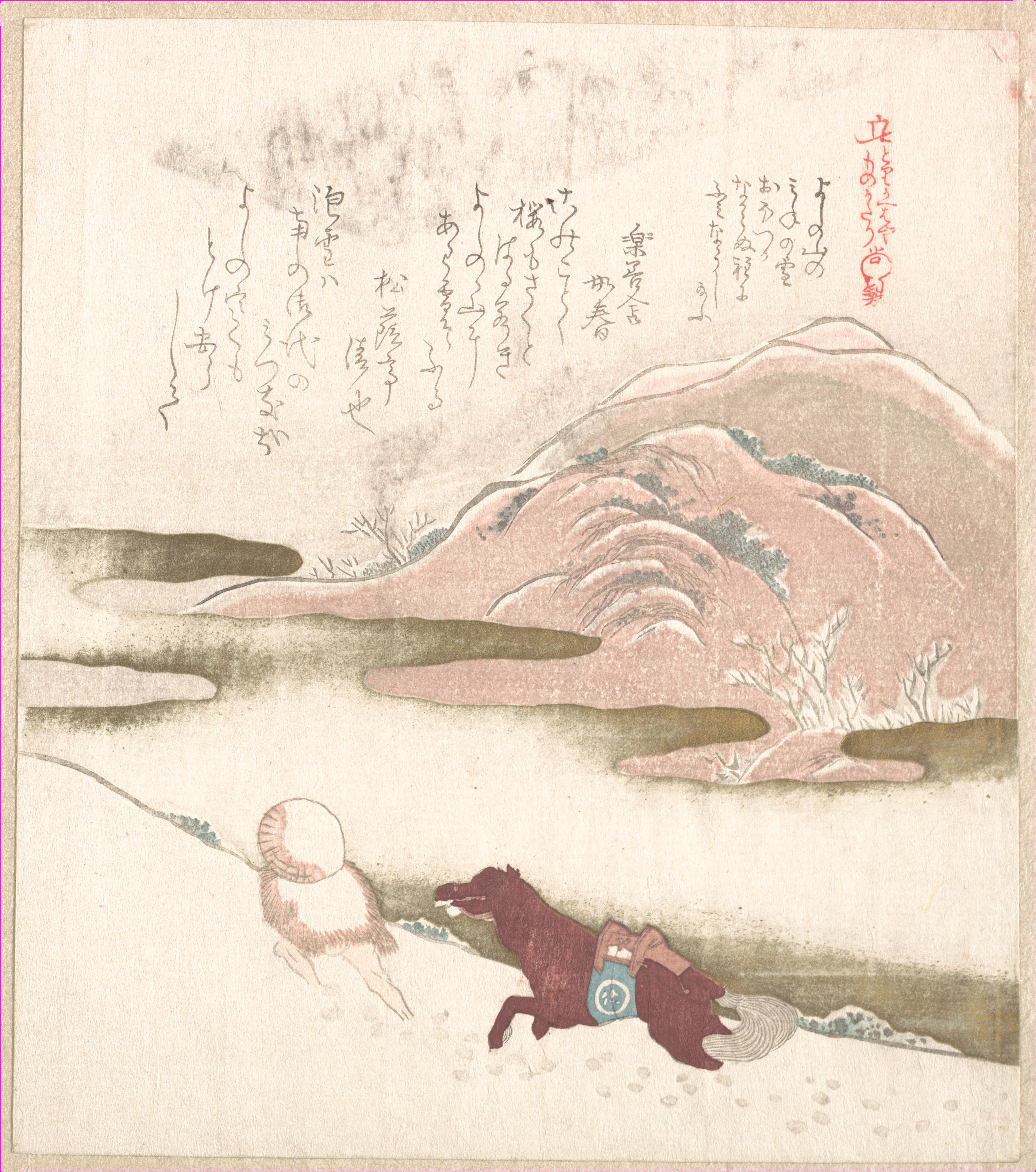
Snowy Landscape
19th century
Woodblock print (surimono); ink and color on paper
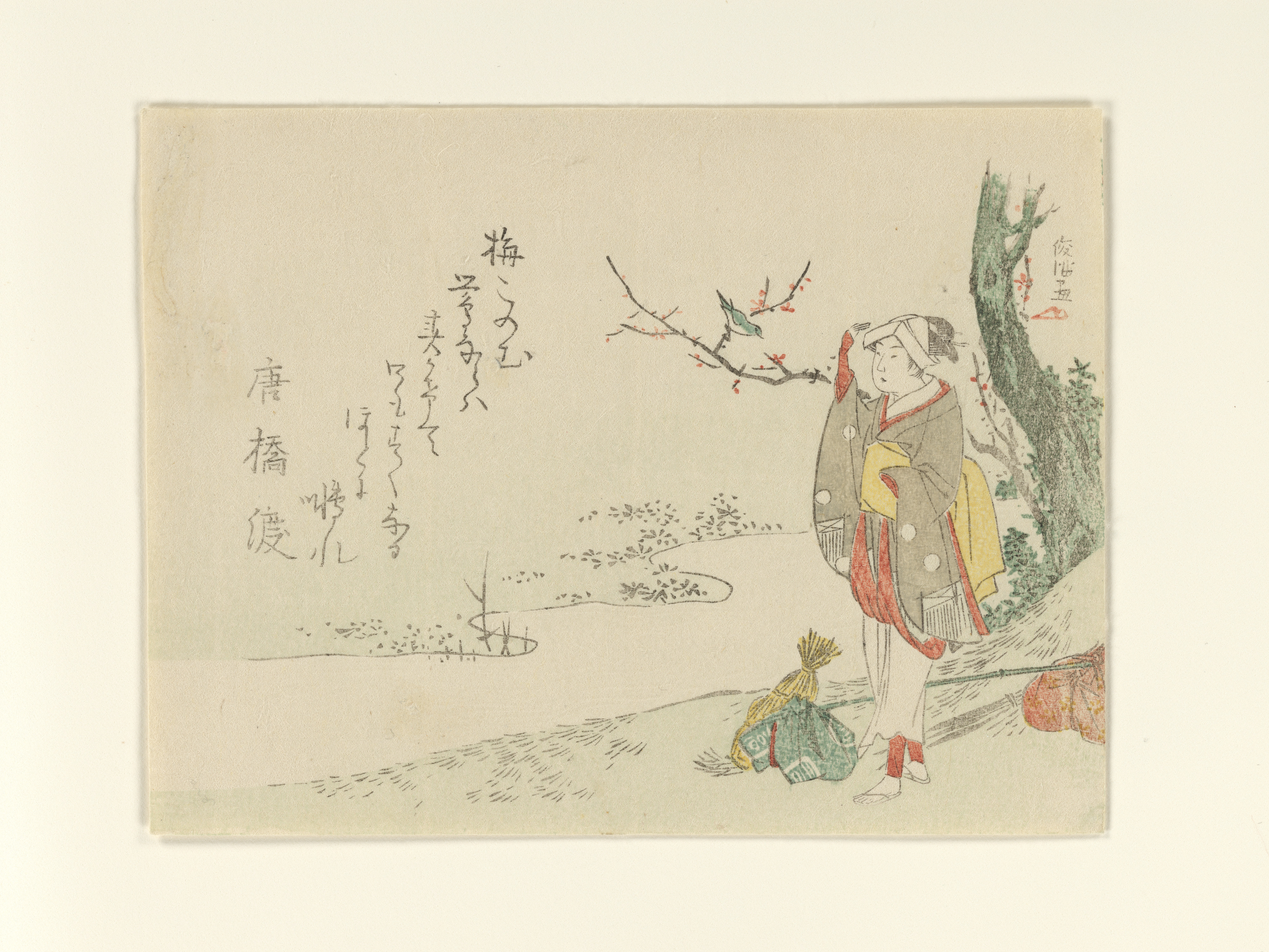
Traveling Woman Pauses to Listen to a Warbler
1797
Woodblock print (surimono); ink and color on paper
Frequently Asked Questions
Taking Food to Rice Planters was created by Kubo Shunman (窪俊満) in late 18th/early 19th century.