
Tale of the Bamboo Cutter by Kose no Omi (Kose no Omi ga Taketori monogatari), from the series "A Picture Contest for the Sono Poetry Circle (Sono-ren e-awase)"
by Kubo Shunman
- Date:
- c. 1804/18
- Medium:
- Color woodblock print; shikishiban, surimono
- Source:
- Art Institute of Chicago
Description
From the series A Picture Contest for the Sono Poetry Circle (Sono-ren e-awase), this shikishiban surimono in the Art Institute of Chicago depicts the Tale of the Bamboo Cutter (Taketori monogatari) as imagined by the classical court painter Kose no Omi - a layered conceit characteristic of late-Edo kyoka culture. The Taketori monogatari, often considered the earliest surviving Japanese narrative, tells the story of Kaguya-hime, the moon princess found inside a stalk of bamboo, and was a favorite subject of classical illustration. Shunman's surimono treats it doubly: as an illustration of the tale and as a citation of an earlier painter's treatment of the tale, the Sono-ren poets evidently delighting in this nested form of reference. The series title indicates that the print is one in a sequence designed as a competition (e-awase) within the Sono poetry circle, with members judging or contributing kyoka to accompany each picture. The shikishiban format and dating to around 1804-1818 place the print in Shunman's mature surimono period, when his work for specific poetry circles was at its richest. The palette is restrained, the composition spare, and the inscribed kyoka above the image work in counterpoint with the classical narrative below - a calibrated balance of high and low cultural registers that defined the kyoka aesthetic. The Art Institute of Chicago holds significant portions of the Sono-ren series, allowing it to be studied as a coherent project rather than as scattered sheets.
More Prints by Kubo Shunman

Righteousness (Gi), from the series "Five Designs for the Katsushika Poetry Circle (Katsushika goban)"
early 1810s
Color woodblock print; shikishiban, surimono

Soga no Goro, Oiso no Tora, and Kewaizaka no Shosho
1809
Color woodblock print; surimono
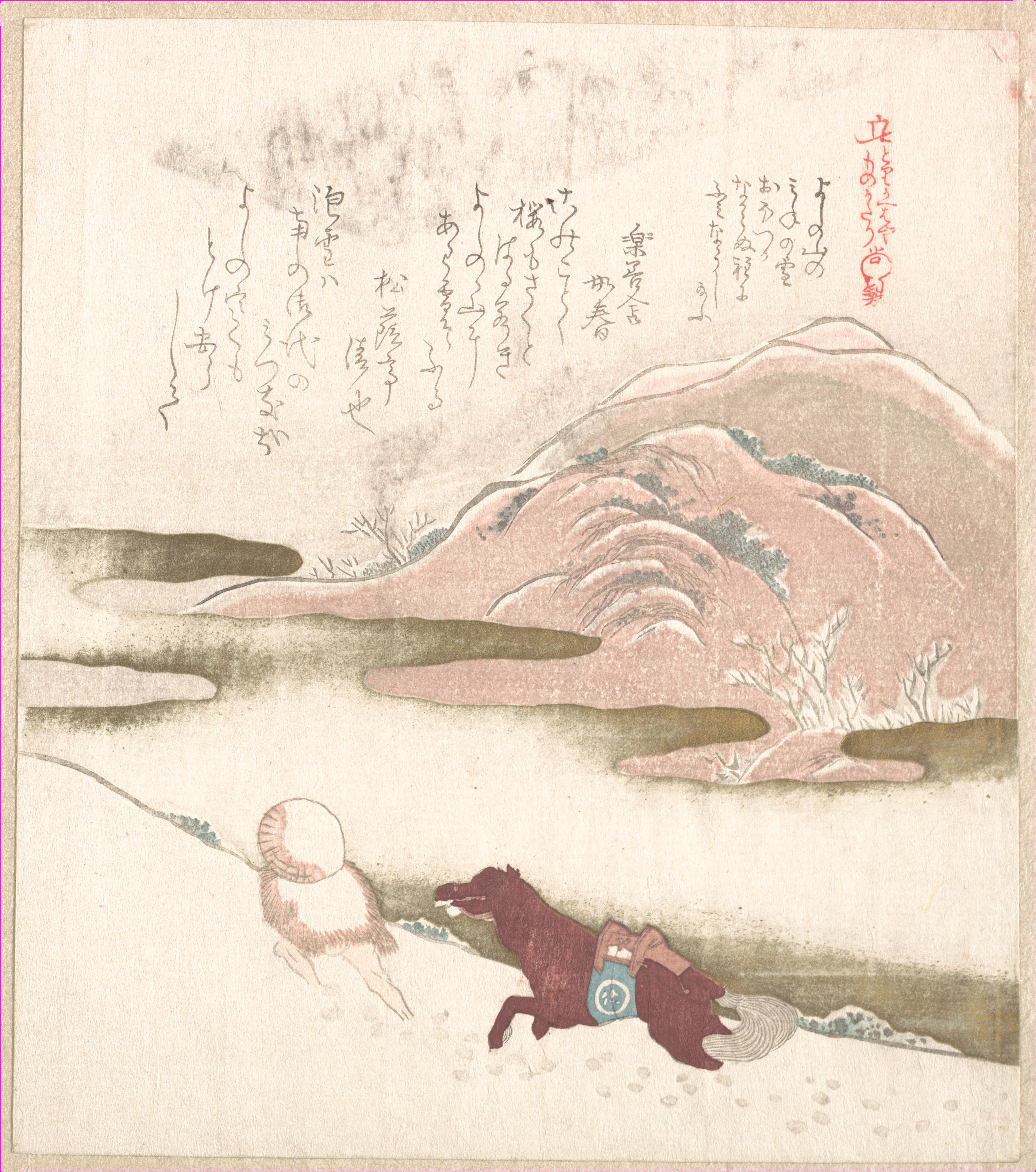
Snowy Landscape
19th century
Woodblock print (surimono); ink and color on paper
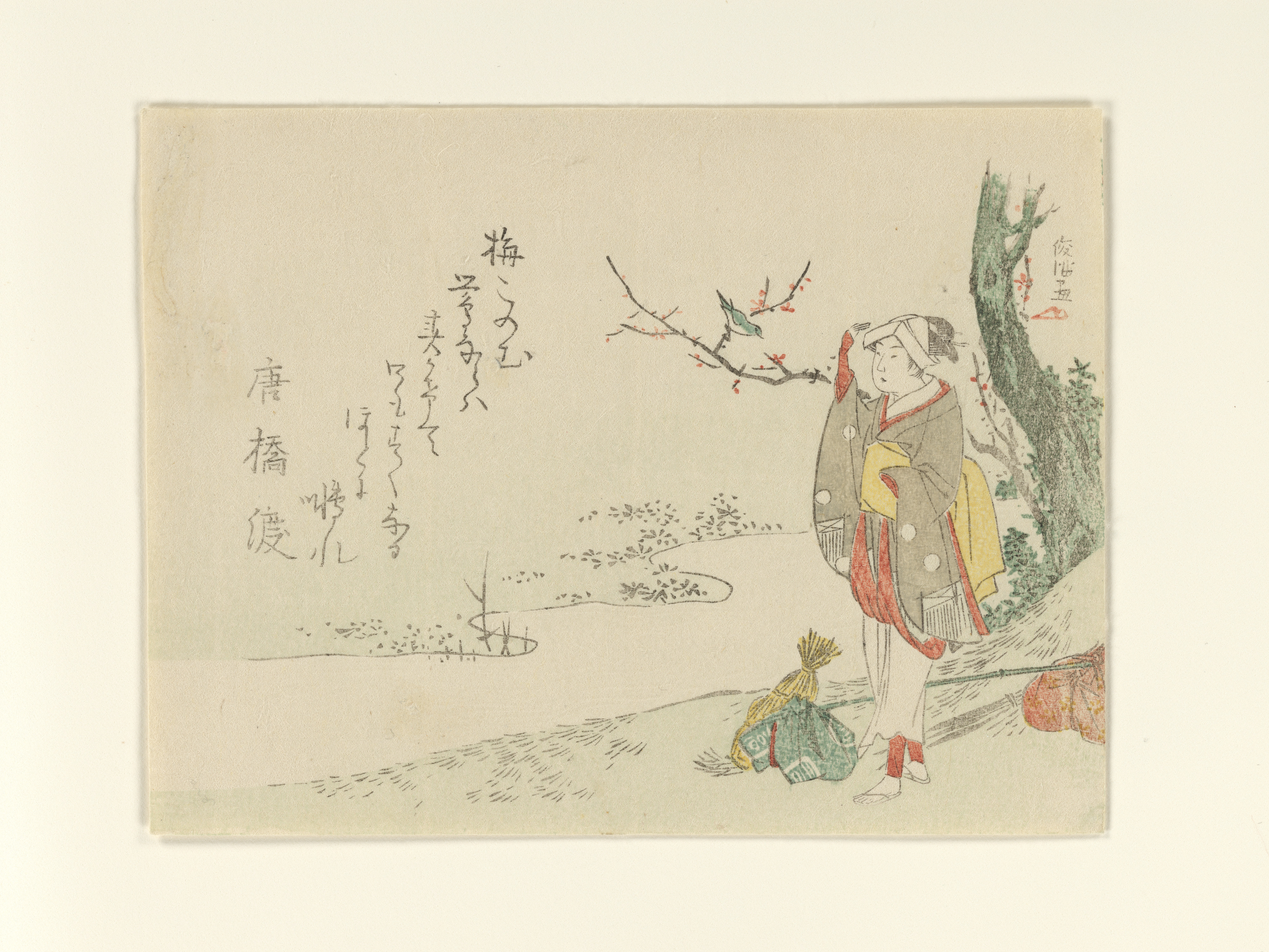
Traveling Woman Pauses to Listen to a Warbler
1797
Woodblock print (surimono); ink and color on paper
Frequently Asked Questions
Tale of the Bamboo Cutter by Kose no Omi (Kose no Omi ga Taketori monogatari), from the series "A Picture Contest for the Sono Poetry Circle (Sono-ren e-awase)" was created by Kubo Shunman (窪俊満) in c. 1804/18.