
The Common Marigold and The Rajoman Flowers
by Kubo Shunman
- Date:
- early 19th century
- Medium:
- Color woodblock print; surimono
- Source:
- Art Institute of Chicago
Description
Held by the Art Institute of Chicago, The Common Marigold and The Rajoman Flowers is an early-nineteenth-century surimono in Shunman's still-life mode, juxtaposing two flowers - the marigold and the rajoman (a name for a variety of poppy or related plant) - with the close, almost botanical attention that his late surimono so often display. The pairing of flowers in surimono was a favorite kyoka conceit, allowing poets to compose verses on contrasts of color, season, fragrance, or symbolic meaning, and Shunman's image provides exactly the kind of careful visual framing that such verses required. The marigold and rajoman are rendered in their characteristic hues, with the soft mineral pigments and possible blind embossing typical of surimono production, and the composition leaves substantial space for kyoka inscriptions. Botanical surimono like this one descend in part from the Chinese painting tradition of bird-and-flower (kacho) imagery, which Japanese designers had long absorbed and adapted, but the surimono format and the integrated kyoka give the genre a specifically Edo character: the flowers are not generalized symbols but particular plants observed by a particular community of poets in a particular season. The Art Institute of Chicago's group of flower surimono by Shunman is one of the strongest sub-collections within its broader Shunman holdings, and this print is a representative example of the genre at its most distilled.
More Prints by Kubo Shunman

Righteousness (Gi), from the series "Five Designs for the Katsushika Poetry Circle (Katsushika goban)"
early 1810s
Color woodblock print; shikishiban, surimono

Soga no Goro, Oiso no Tora, and Kewaizaka no Shosho
1809
Color woodblock print; surimono
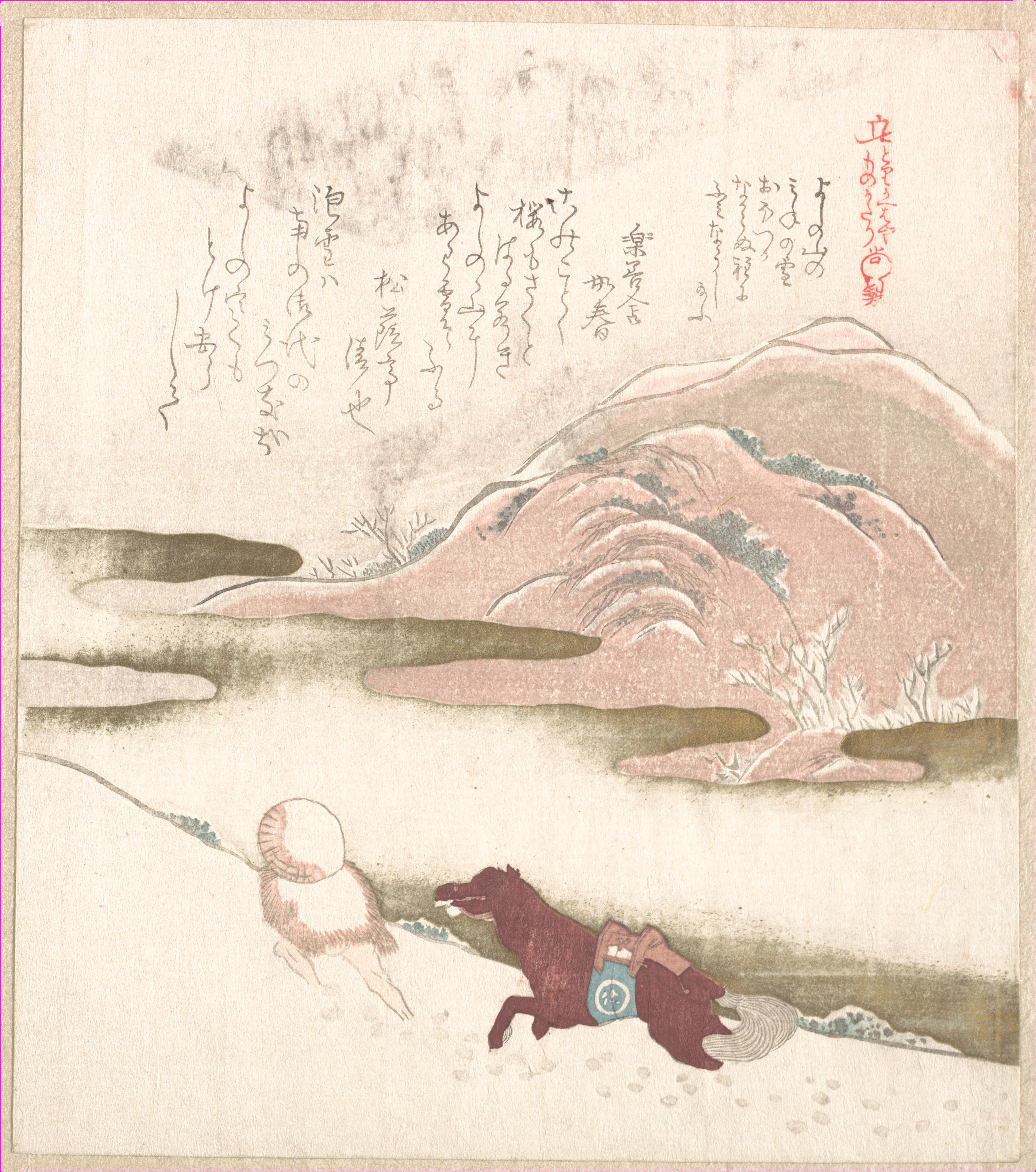
Snowy Landscape
19th century
Woodblock print (surimono); ink and color on paper
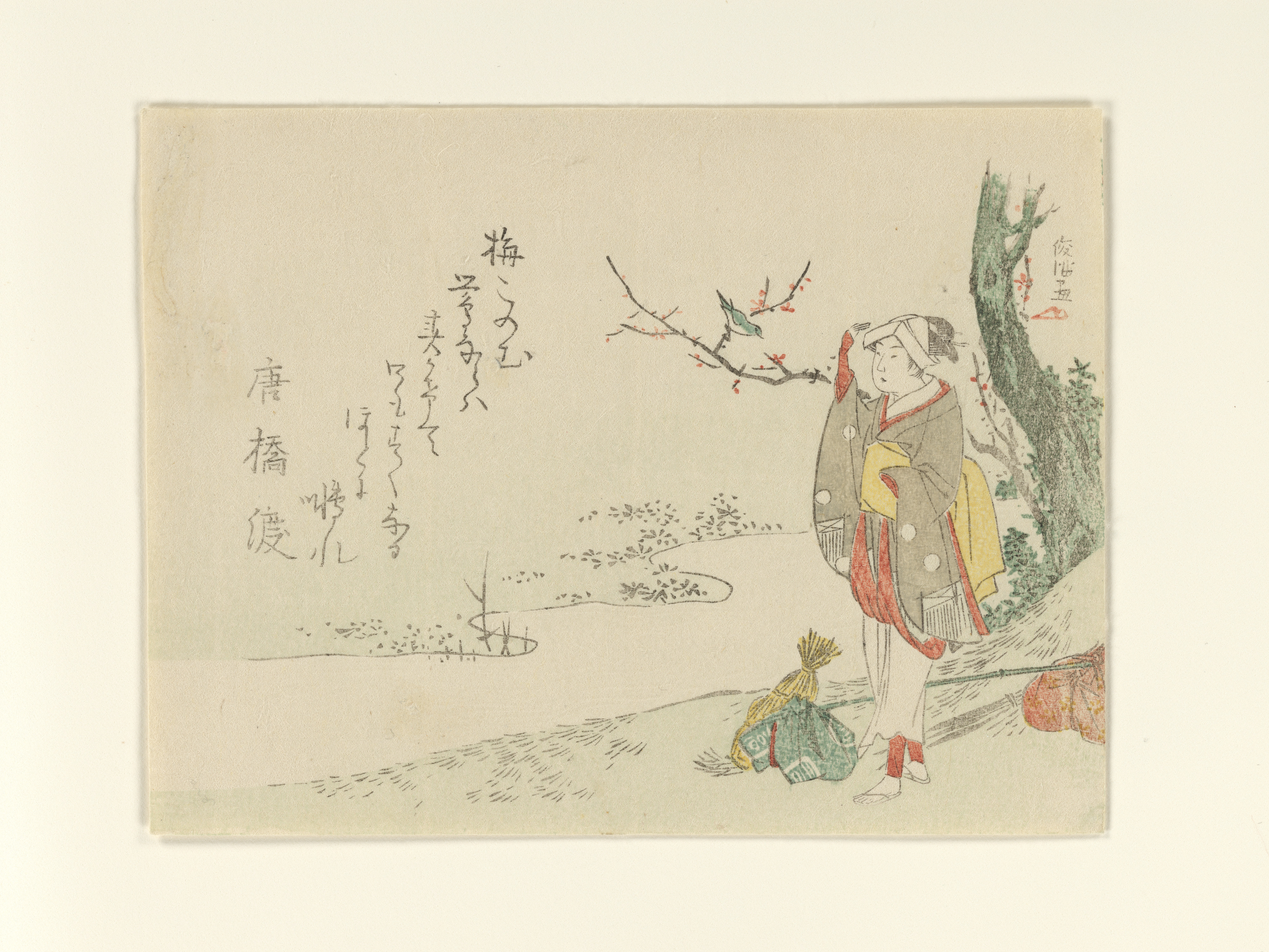
Traveling Woman Pauses to Listen to a Warbler
1797
Woodblock print (surimono); ink and color on paper
More Birds & Flowers Prints
Frequently Asked Questions
The Common Marigold and The Rajoman Flowers was created by Kubo Shunman (窪俊満) in early 19th century.
The Common Marigold and The Rajoman Flowers depicts birds & flowers.