
The Noda Jewel River, from a hexaptych depicting the Six Jewel Rivers
by Kubo Shunman
- Date:
- c. 1781/89
- Medium:
- Color woodblock print; sheet from oban hexaptych
- Source:
- Art Institute of Chicago
Description
From a celebrated hexaptych in the collection of the Art Institute of Chicago, The Noda Jewel River is one of six oban sheets that together comprise Shunman's ambitious treatment of the Mu Tamagawa, or Six Jewel Rivers - a canonical set of poetic place-names long associated with classical waka. Made around 1781-1789, during Shunman's bijin-ga period under the influence of his teacher Kitao Shigemasa and the broader Kiyonaga style, this set is among the most ambitious commercial print projects of his career. The Noda Jewel River, in Mutsu Province, was associated in poetry with the call of the plover; Shunman pairs the literary reference with a contemporary genre scene set on the riverbank, populating the image with elegant women in fashionable dress and a landscape distilled into a few decisive horizontal bands of color. Each of the six prints functions independently but reads as part of a coordinated suite, with shared figure types and complementary color choices building visual coherence across the hexaptych. The project belongs to a long tradition of associating individual ukiyo-e prints with specific poetic locales, but the breadth and consistency of Shunman's treatment is unusual. The Art Institute of Chicago holds multiple sheets from the series, allowing the suite to be studied as a coherent whole rather than as scattered fragments, and the Noda print typifies Shunman's ability to fuse classical allusion with contemporary urban genre - the literary register made comprehensible through everyday figures.
More Prints by Kubo Shunman

Righteousness (Gi), from the series "Five Designs for the Katsushika Poetry Circle (Katsushika goban)"
early 1810s
Color woodblock print; shikishiban, surimono

Soga no Goro, Oiso no Tora, and Kewaizaka no Shosho
1809
Color woodblock print; surimono
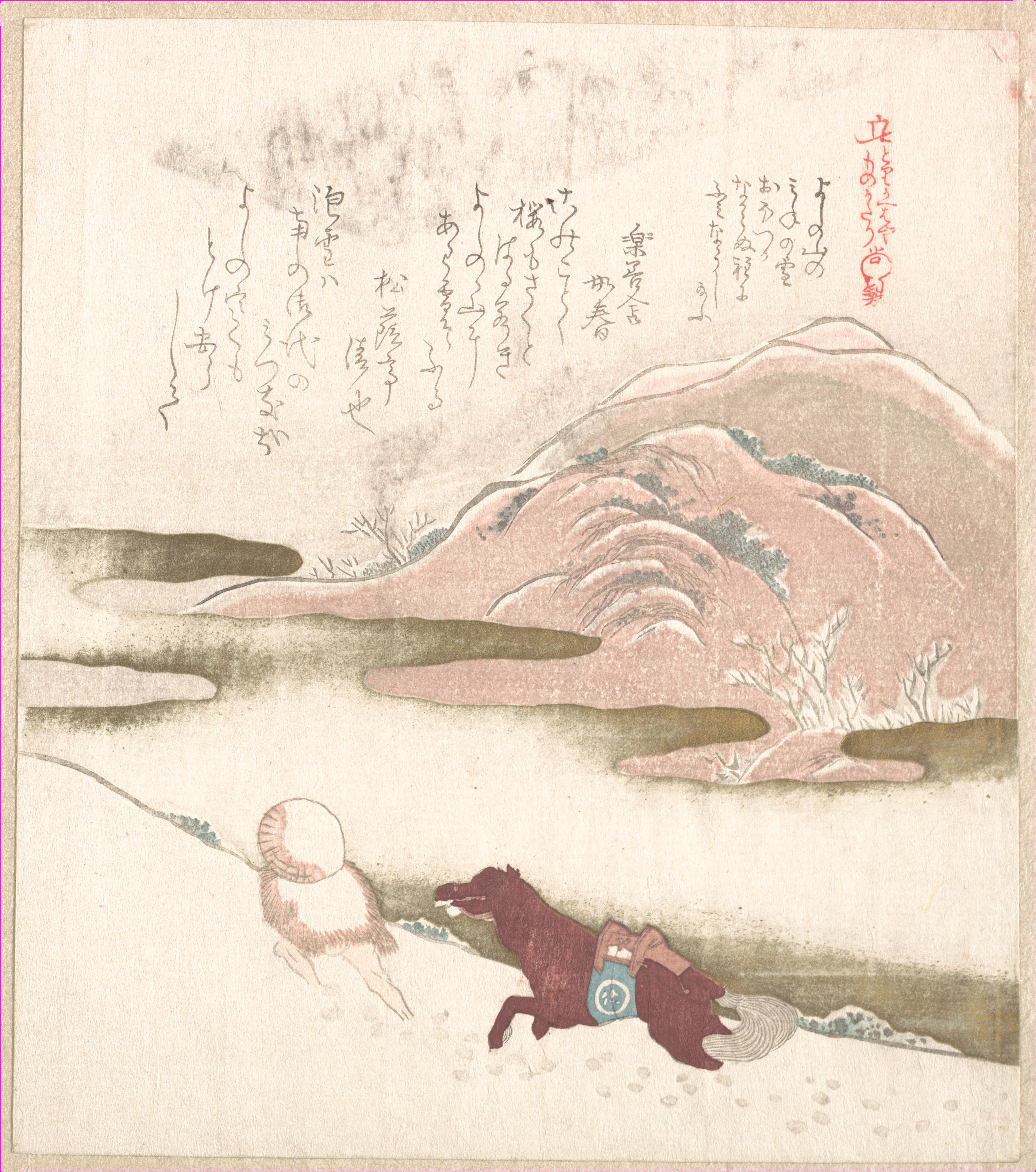
Snowy Landscape
19th century
Woodblock print (surimono); ink and color on paper
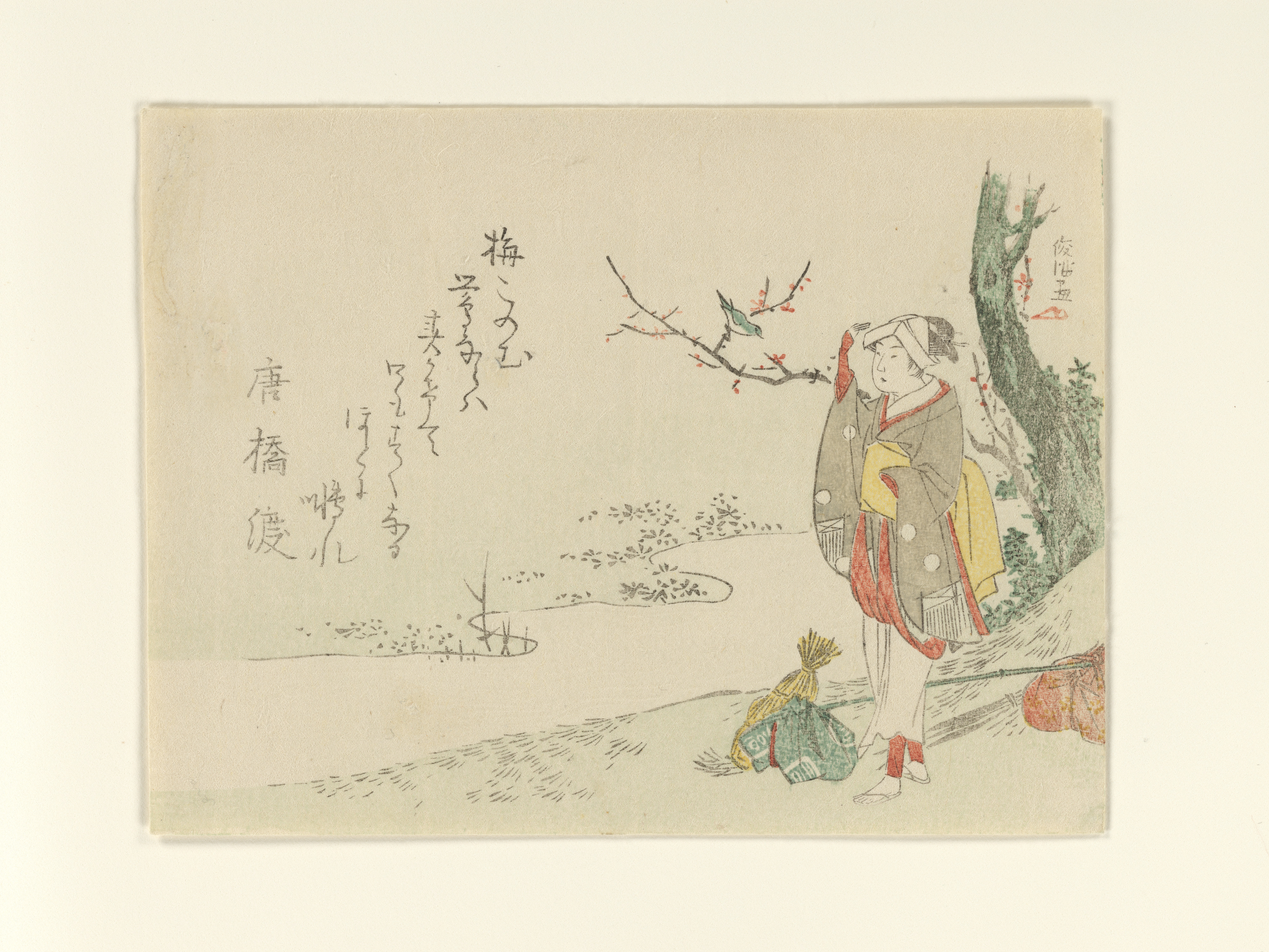
Traveling Woman Pauses to Listen to a Warbler
1797
Woodblock print (surimono); ink and color on paper
Frequently Asked Questions
The Noda Jewel River, from a hexaptych depicting the Six Jewel Rivers was created by Kubo Shunman (窪俊満) in c. 1781/89.