
The Wedded Rocks (Meoto Iwa) by Futamigaura
by Kubo Shunman
- Date:
- early 19th century
- Medium:
- Color woodblock print; surimono
- Source:
- Art Institute of Chicago
Description
The Wedded Rocks (Meoto Iwa) by Futamigaura, in the Art Institute of Chicago, depicts one of the most iconic landscape sites in Japanese popular and religious culture: the two sea-rocks at Futamigaura on the coast of Ise Province, joined by a great straw rope (shimenawa) marking them as a sacred pair and traditionally associated with the Shinto creator deities Izanagi and Izanami. The site was a pilgrimage destination connected to the Grand Shrine of Ise and was widely depicted in ukiyo-e meisho-e and shrine-visit prints. Shunman's surimono treatment, dated to the early nineteenth century, distills the landscape into its essentials: the two rocks, the linking rope, the surrounding water, the sky. The composition is austere, with substantial unprinted space framing the central motif, and the kyoka inscriptions presumably link the image to themes of marital harmony, sacred bonds, or seasonal pilgrimage. The Wedded Rocks were also associated with the New Year sunrise - viewing the sun rise between the rocks at the spring equinox was considered especially auspicious - and the print may have been commissioned for a New Year occasion. Shunman's late style suits the subject perfectly: the quiet meditative landscape, reduced to its sacred geometry, becomes a vehicle for poetry rather than a record of place. The Art Institute of Chicago's holding of this surimono is among the most evocative landscape works in its Shunman group.
More Prints by Kubo Shunman

Righteousness (Gi), from the series "Five Designs for the Katsushika Poetry Circle (Katsushika goban)"
early 1810s
Color woodblock print; shikishiban, surimono

Soga no Goro, Oiso no Tora, and Kewaizaka no Shosho
1809
Color woodblock print; surimono
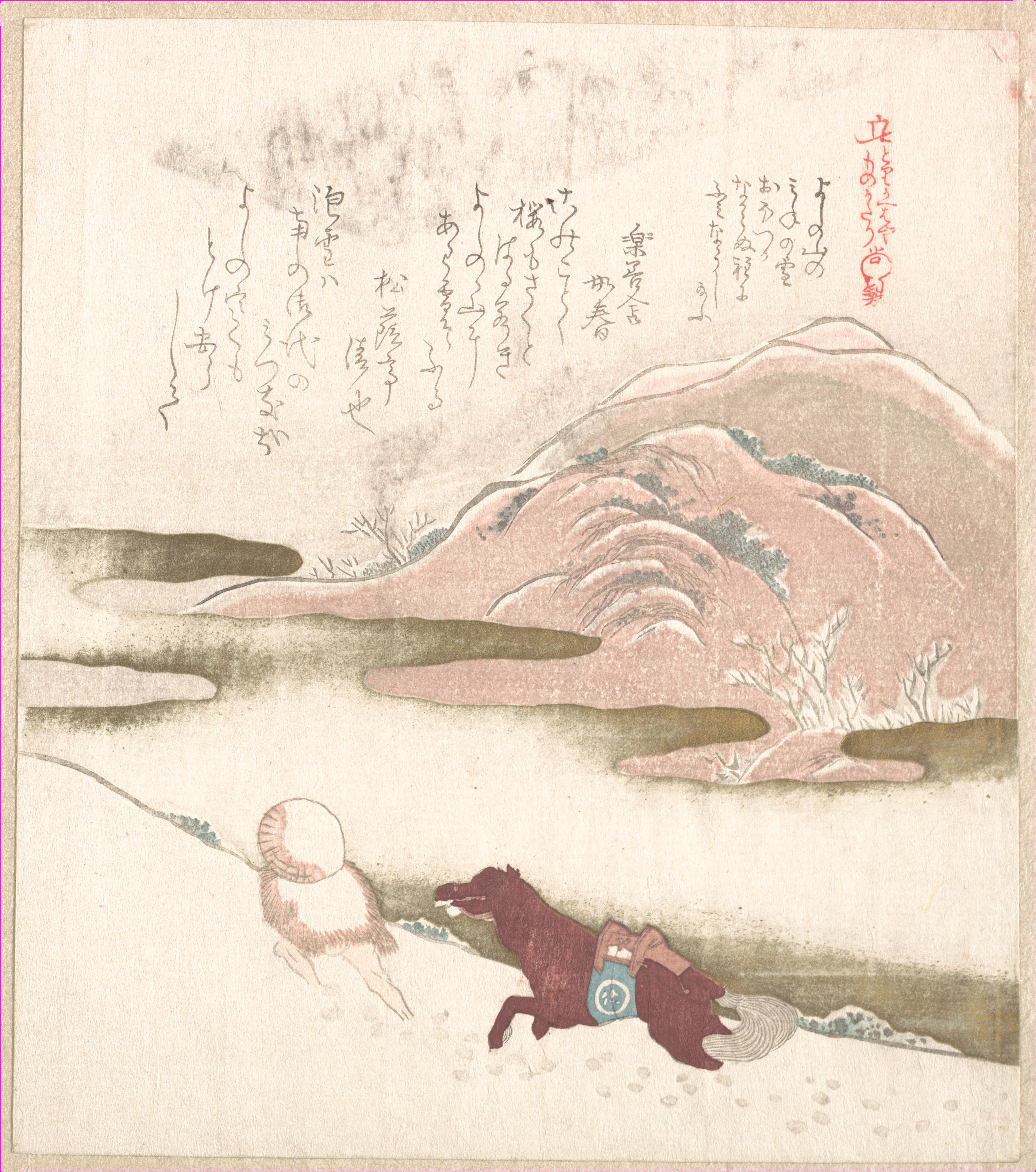
Snowy Landscape
19th century
Woodblock print (surimono); ink and color on paper
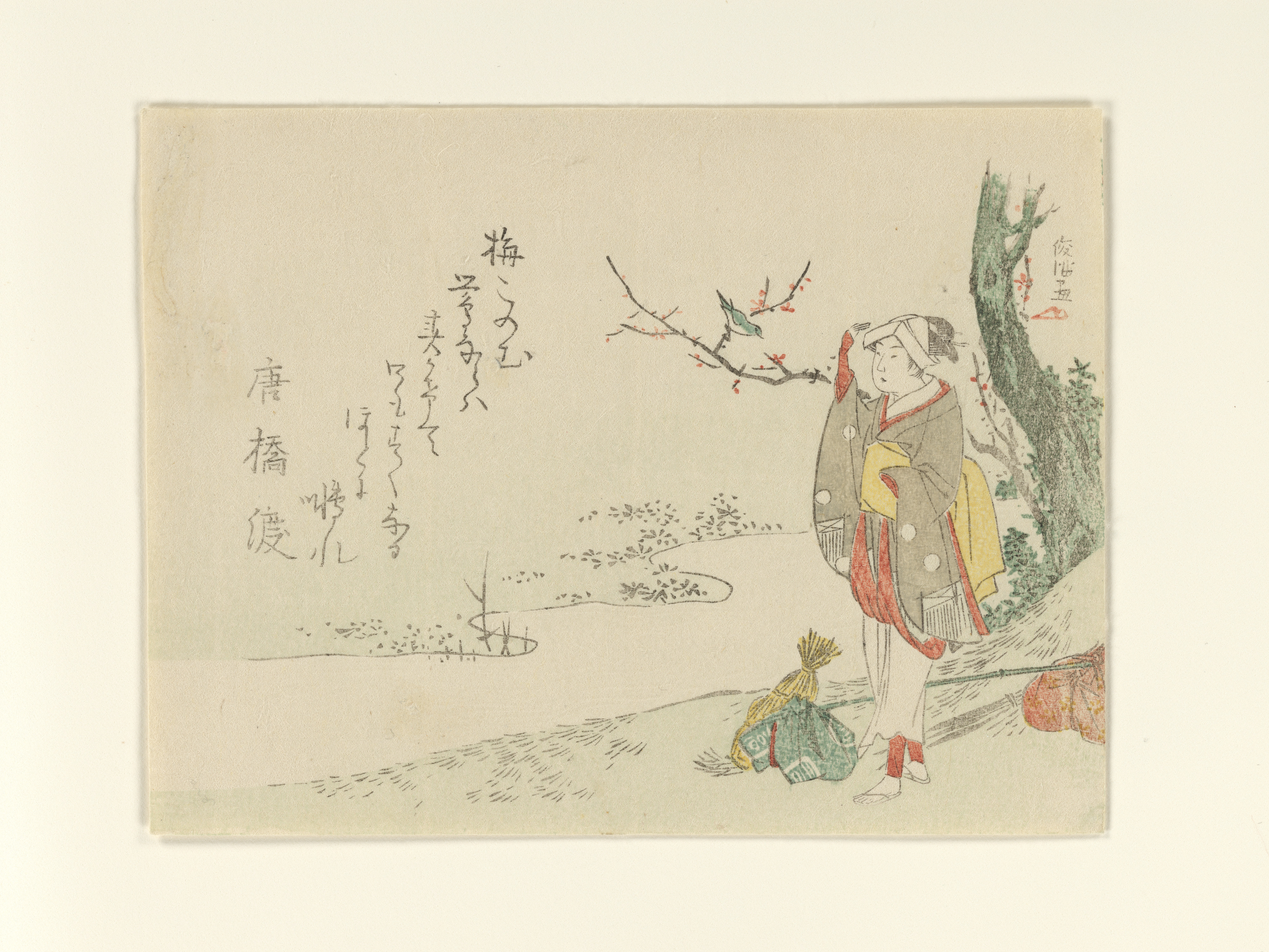
Traveling Woman Pauses to Listen to a Warbler
1797
Woodblock print (surimono); ink and color on paper
Frequently Asked Questions
The Wedded Rocks (Meoto Iwa) by Futamigaura was created by Kubo Shunman (窪俊満) in early 19th century.