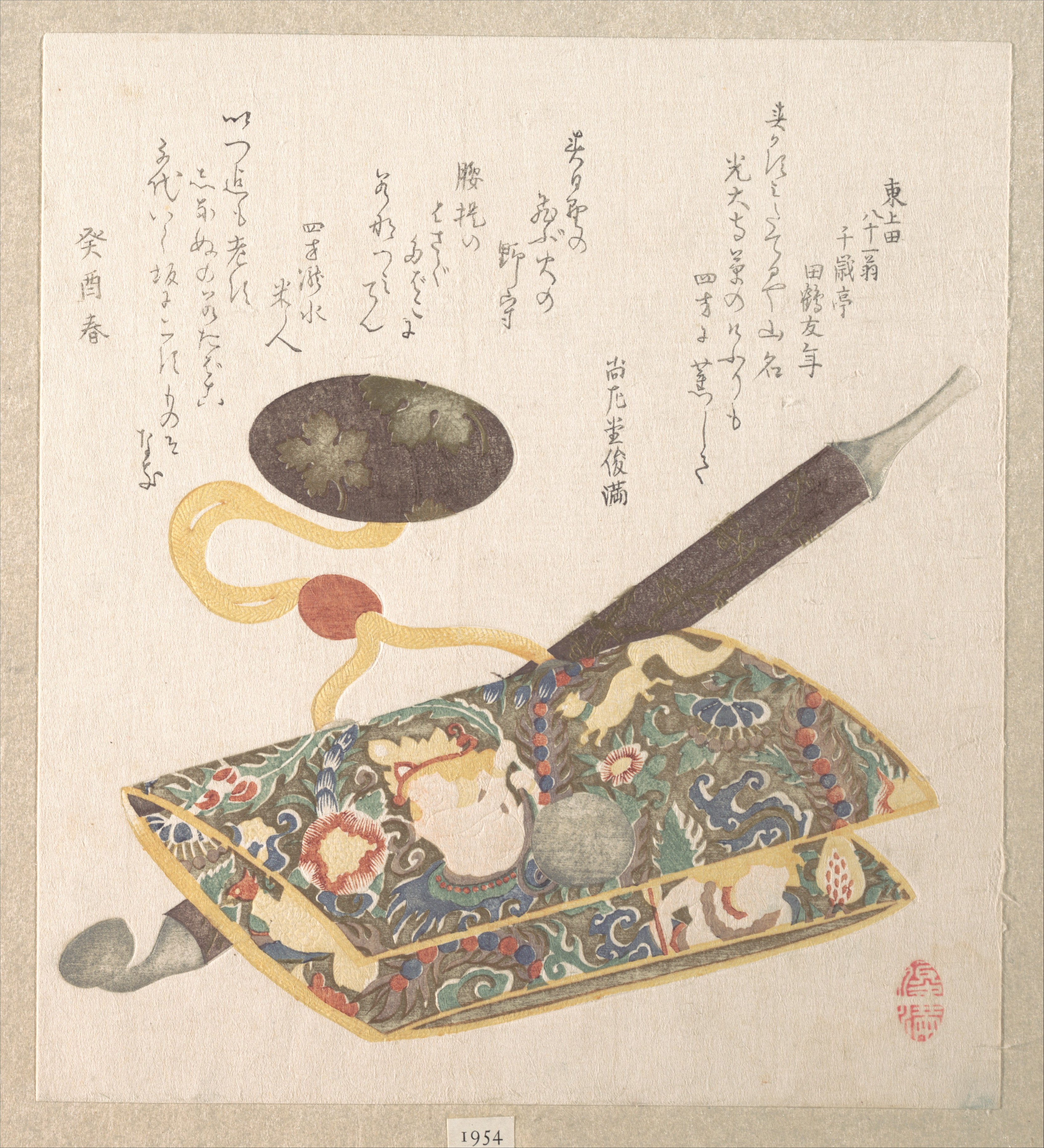
Tobacco Pouch and Pipe
by Kubo Shunman
- Date:
- 1813
- Medium:
- Woodblock print (surimono); ink and color on paper
- Source:
- Metropolitan Museum of Art
Description
Tobacco Pouch and Pipe, dated 1813 and held by the Metropolitan Museum of Art, is a fine example of the still-life surimono that Kubo Shunman made central to his late output. By the time he composed this picture, he had become one of the foremost designers serving the kyoka poetry circles of Edo, and his preferred vehicle was the small, intricately printed surimono, often built around carefully observed everyday objects rather than figures. The tobacco pouch and pipe were familiar Edo accessories, signaling both leisure and a certain stylish self-presentation, particularly within the urbane male sociability of the kyoka clubs. By isolating them on the sheet, Shunman invites close attention to material qualities, the soft drape of the pouch's textile, the lacquered or metal fittings, the slender shape of the kiseru pipe, while leaving conceptual room for the accompanying kyoka to play on associations of smoke, transience, intimacy, or shared evenings. Such object-centered designs are a hallmark of his kyoka-e work and reflect a broader Edo ukiyo-e interest in compressing meaning into a single still-life motif. The printing typical of surimono in this period would have included subtle gradations and likely embossed or metallic passages that catch the light on close inspection, marking the sheet as a private gift rather than a commercial print. The work captures the conversational, club-based texture of the world that supported Kubo Shunman's mature career.
More Prints by Kubo Shunman

Righteousness (Gi), from the series "Five Designs for the Katsushika Poetry Circle (Katsushika goban)"
early 1810s
Color woodblock print; shikishiban, surimono

Soga no Goro, Oiso no Tora, and Kewaizaka no Shosho
1809
Color woodblock print; surimono
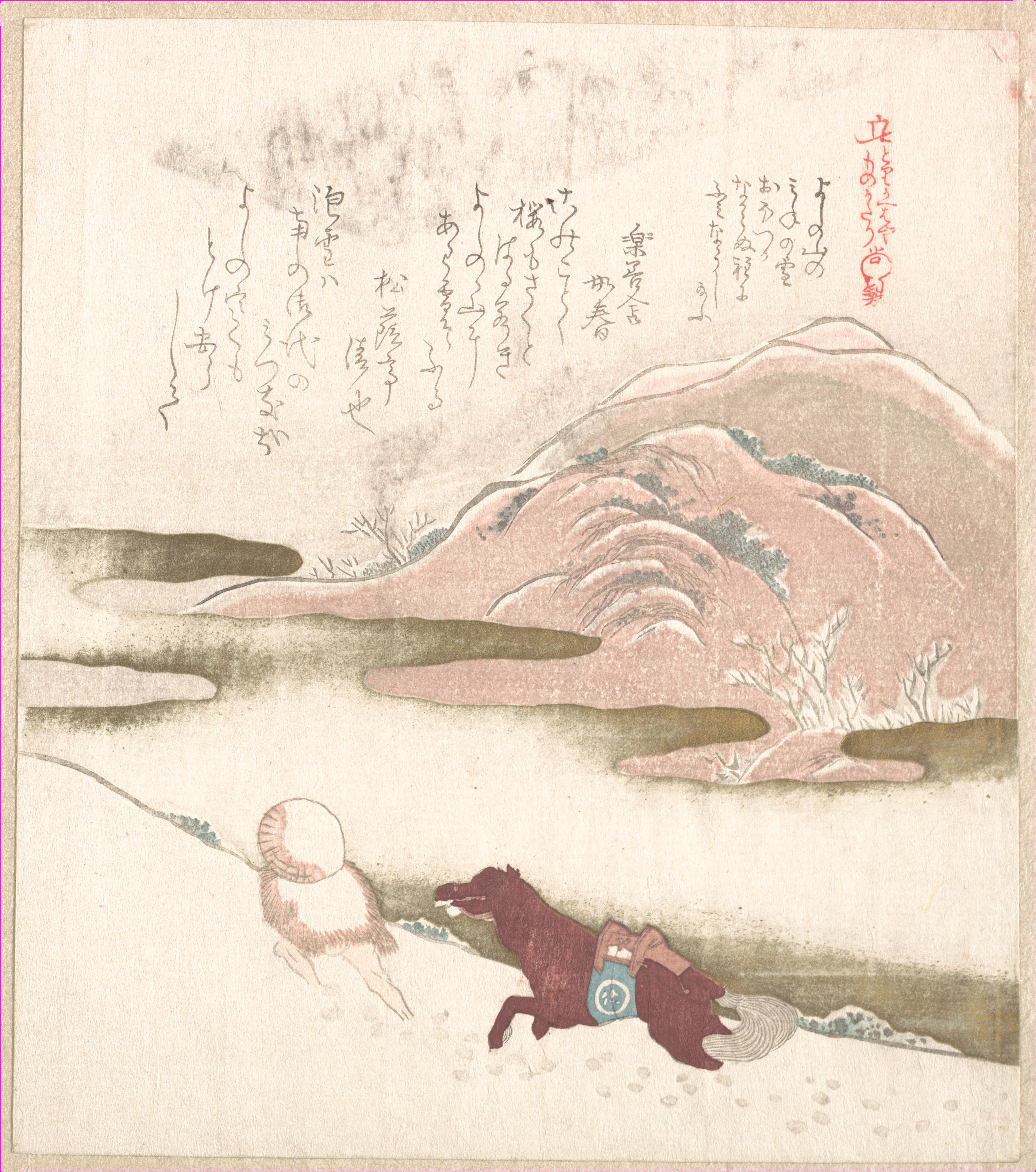
Snowy Landscape
19th century
Woodblock print (surimono); ink and color on paper
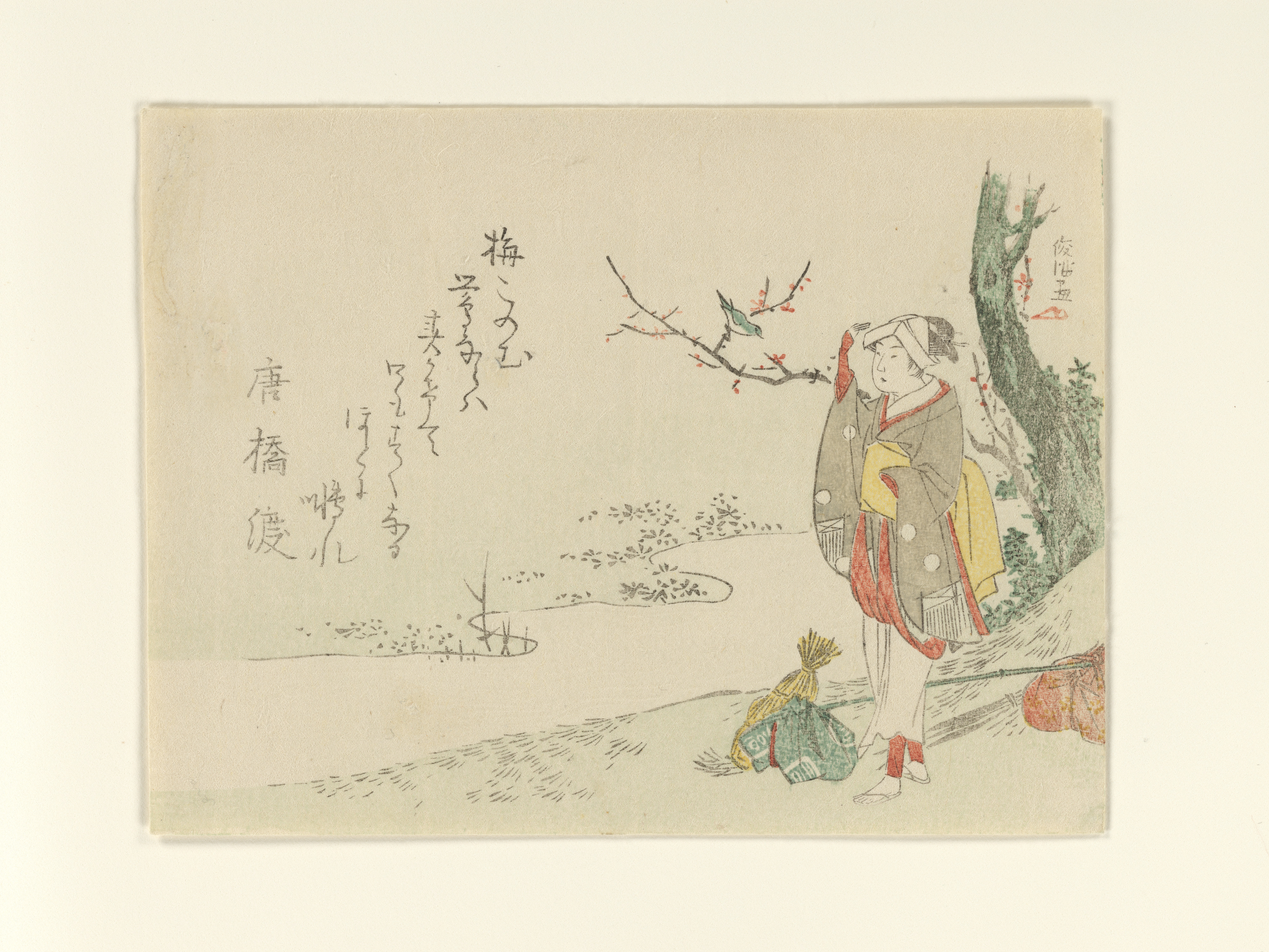
Traveling Woman Pauses to Listen to a Warbler
1797
Woodblock print (surimono); ink and color on paper
Frequently Asked Questions
Tobacco Pouch and Pipe was created by Kubo Shunman (窪俊満) in 1813.