
Viewing Votive Plaques at Mukojima
by Kubo Shunman
- Date:
- c. 1785/89
- Medium:
- Color woodblock print; center sheet of oban triptych
- Source:
- Art Institute of Chicago
Description
Viewing Votive Plaques at Mukojima, in the Art Institute of Chicago, survives as the center sheet of an oban triptych dating to around 1785-1789 and depicts an Edo genre scene that would have been immediately recognizable to contemporary audiences: visitors to a shrine or temple at Mukojima, on the east bank of the Sumida River, examining the votive plaques (ema) that worshippers hung as petitions or thanks-offerings. Mukojima was a fashionable destination in late-Edo leisure culture, famous for its cherry blossoms and waterfront views, and it features in many ukiyo-e prints as a stage for elegantly dressed women and their attendants. Shunman's surviving center sheet shows the kind of compositional control characteristic of his commercial period: figures grouped to lead the eye into the architectural setting, costumes rendered with careful textile detail, and a landscape background compressed into a few decisive horizontal bands. As the middle panel of a triptych the design originally extended beyond the surviving sheet, with figures and architecture continuing across the right and left panels in ways now lost to us. The print exemplifies Shunman's ability to fold famous-places (meisho-e) subjects into elegant bijin-ga, a synthesis that defined the most ambitious late-Edo single-sheet prints. The Art Institute of Chicago's holding of the center sheet permits study of Shunman's compositional priorities even in the absence of the full triptych.
More Prints by Kubo Shunman

Righteousness (Gi), from the series "Five Designs for the Katsushika Poetry Circle (Katsushika goban)"
early 1810s
Color woodblock print; shikishiban, surimono

Soga no Goro, Oiso no Tora, and Kewaizaka no Shosho
1809
Color woodblock print; surimono
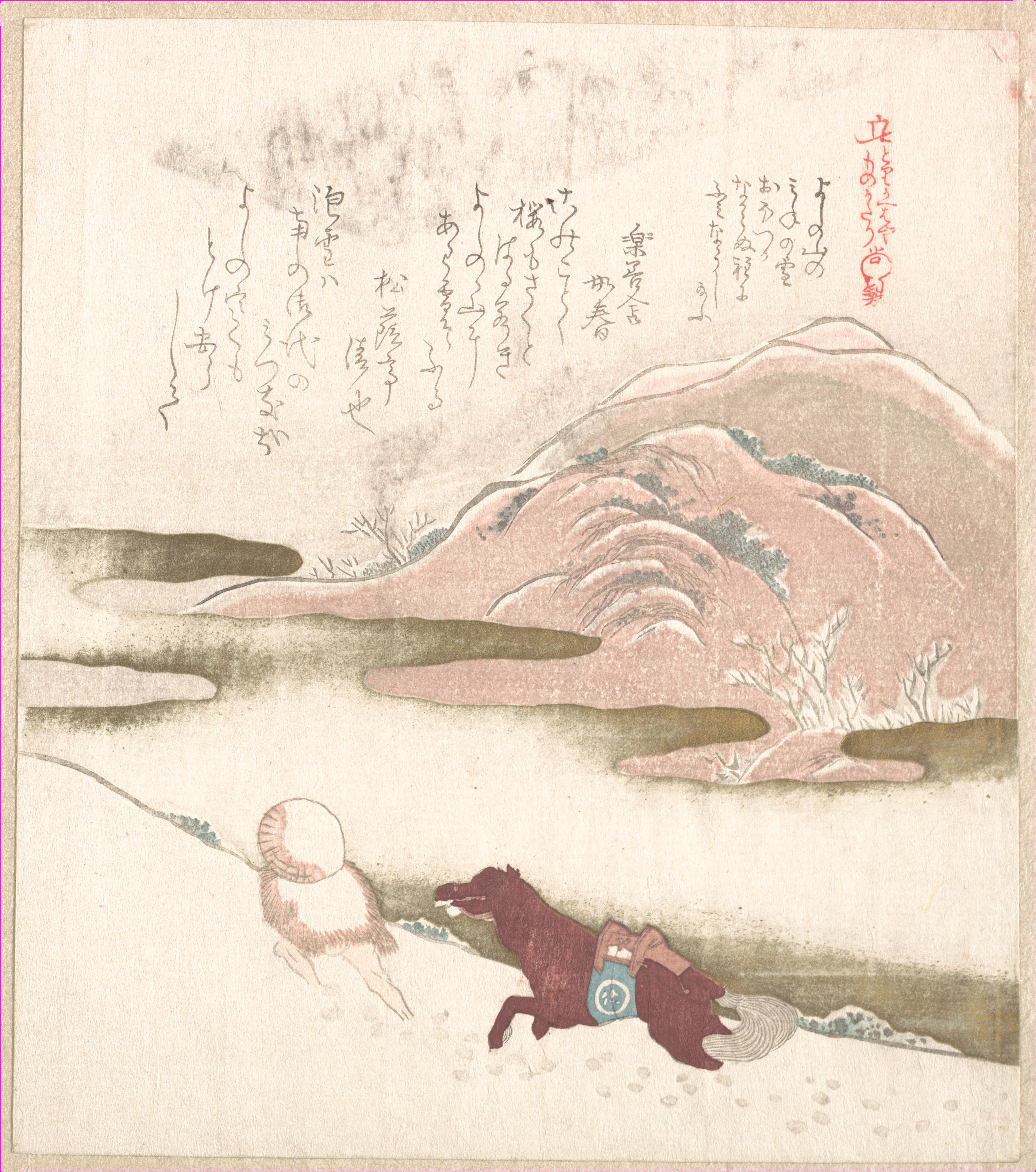
Snowy Landscape
19th century
Woodblock print (surimono); ink and color on paper
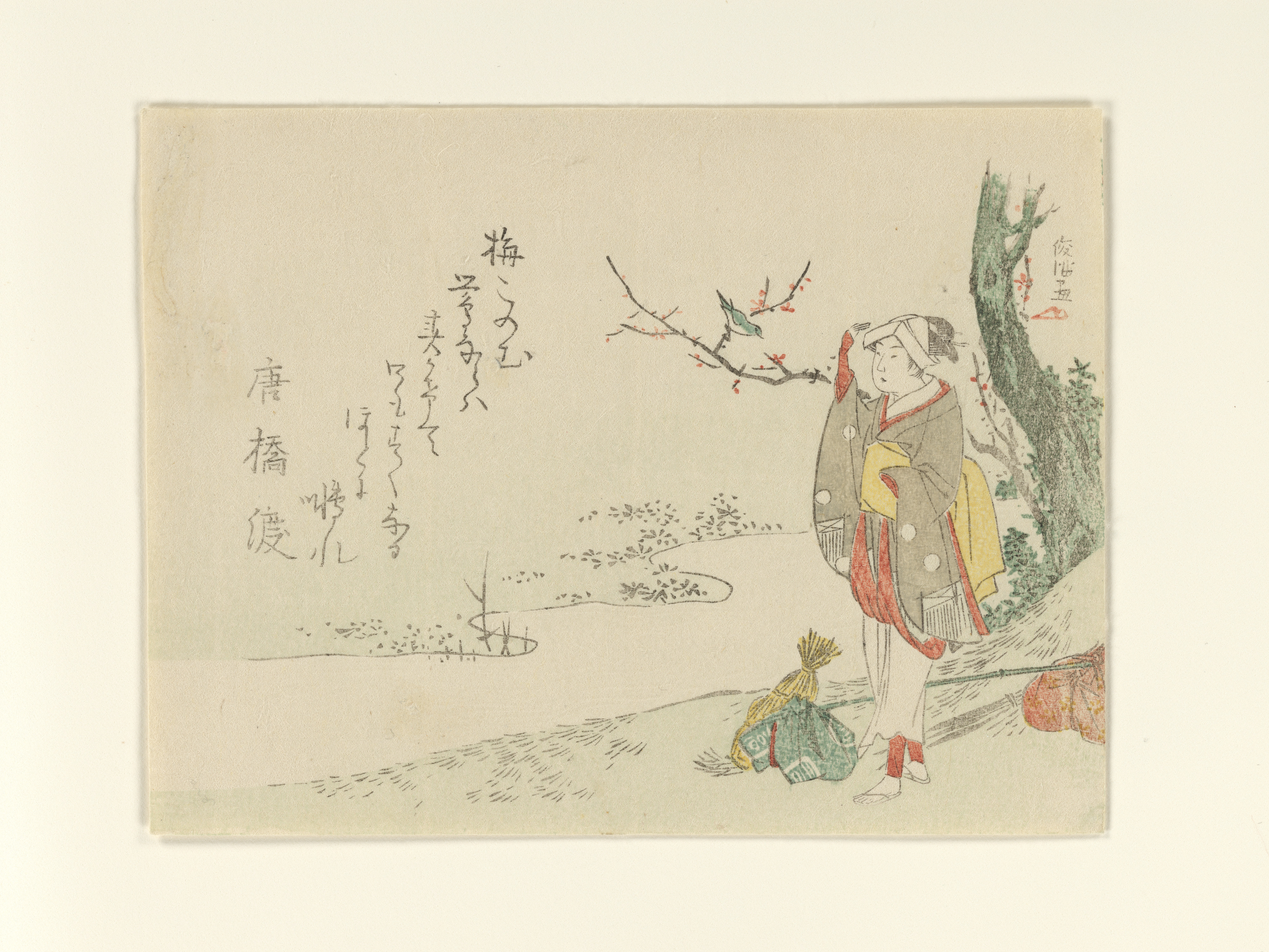
Traveling Woman Pauses to Listen to a Warbler
1797
Woodblock print (surimono); ink and color on paper
Frequently Asked Questions
Viewing Votive Plaques at Mukojima was created by Kubo Shunman (窪俊満) in c. 1785/89.