
Visitors to Enoshima, from the album "Mountains of the Four Quarters (Yomo no yama)"
by Kubo Shunman
- Date:
- early 19th century
- Medium:
- Color woodblock print; surimono, page from an album
- Source:
- Art Institute of Chicago
Description
From the album Mountains of the Four Quarters (Yomo no yama) in the Art Institute of Chicago, Visitors to Enoshima depicts pilgrims or sightseers visiting Enoshima, the small island off the coast of Sagami Province (modern Kanagawa Prefecture) celebrated for its Buddhist temples, its shrine to the goddess Benzaiten, and its scenic views. Enoshima was one of the most popular pilgrimage and tourism destinations in late-Edo Japan, accessible from Edo by an easy multi-day journey, and it features extensively in the meisho-e tradition of famous-places prints. Shunman's treatment, embedded in an album of surimono, gives the scene a quieter and more literary cast than the commercial Enoshima prints of his contemporaries: figures small in a compressed landscape, the island's distinctive silhouette indicated economically, the kyoka above linking the journey to seasonal or poetic occasions. The Yomo no yama album appears to have collected surimono on themes of mountains, viewing places, and travel from across Shunman's career, organizing them into a meditative sequence on the landscape as a subject for poetry. As a page from an album rather than a freestanding sheet, the print would have been bound and consulted within the larger sequence, the cumulative effect of dozens of small landscape images building into a coherent statement about Edo travel culture and its poetic representation. The Art Institute of Chicago's preservation of pages from this album is invaluable for understanding the album surimono tradition.
More Prints by Kubo Shunman

Righteousness (Gi), from the series "Five Designs for the Katsushika Poetry Circle (Katsushika goban)"
early 1810s
Color woodblock print; shikishiban, surimono

Soga no Goro, Oiso no Tora, and Kewaizaka no Shosho
1809
Color woodblock print; surimono
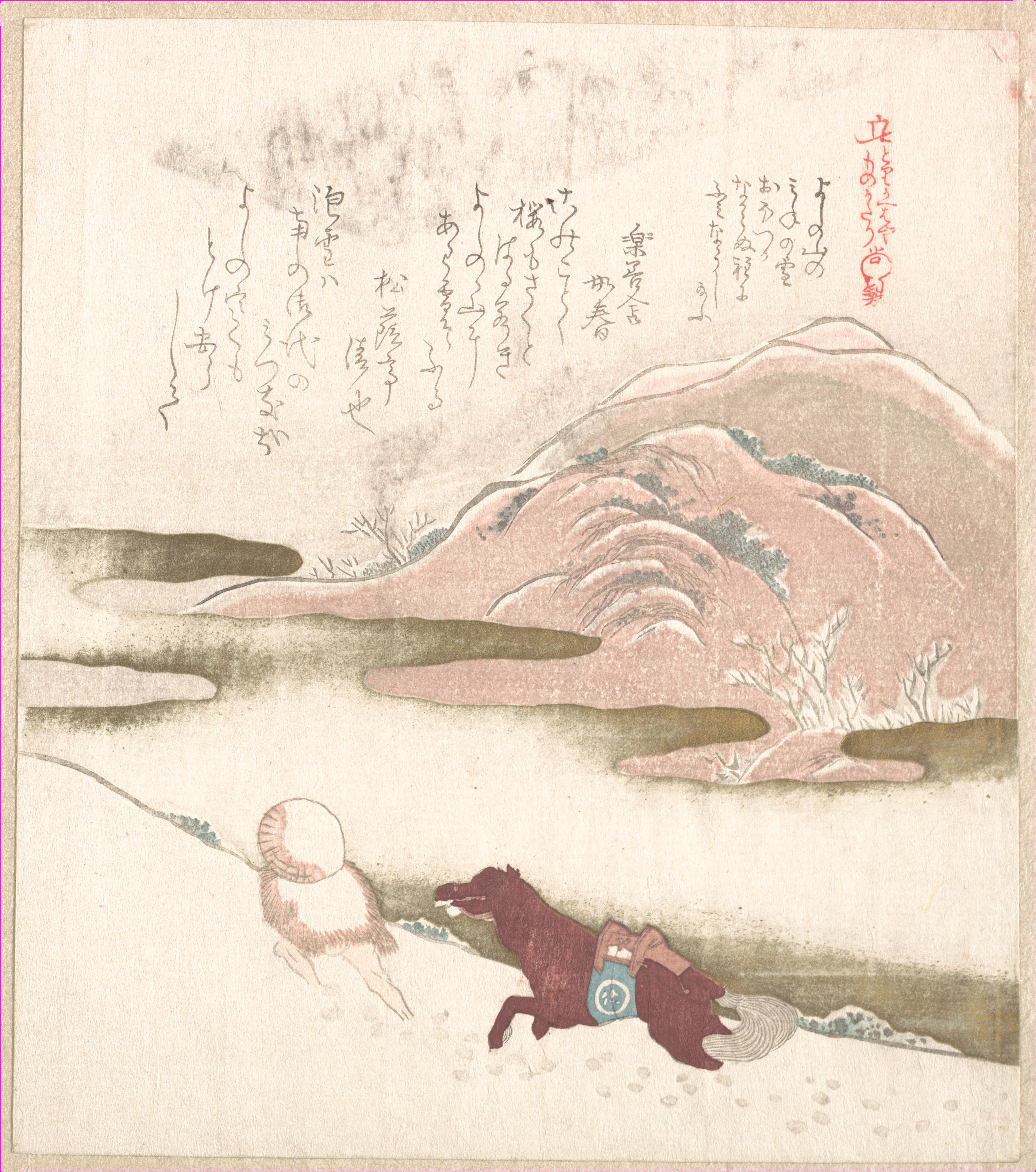
Snowy Landscape
19th century
Woodblock print (surimono); ink and color on paper
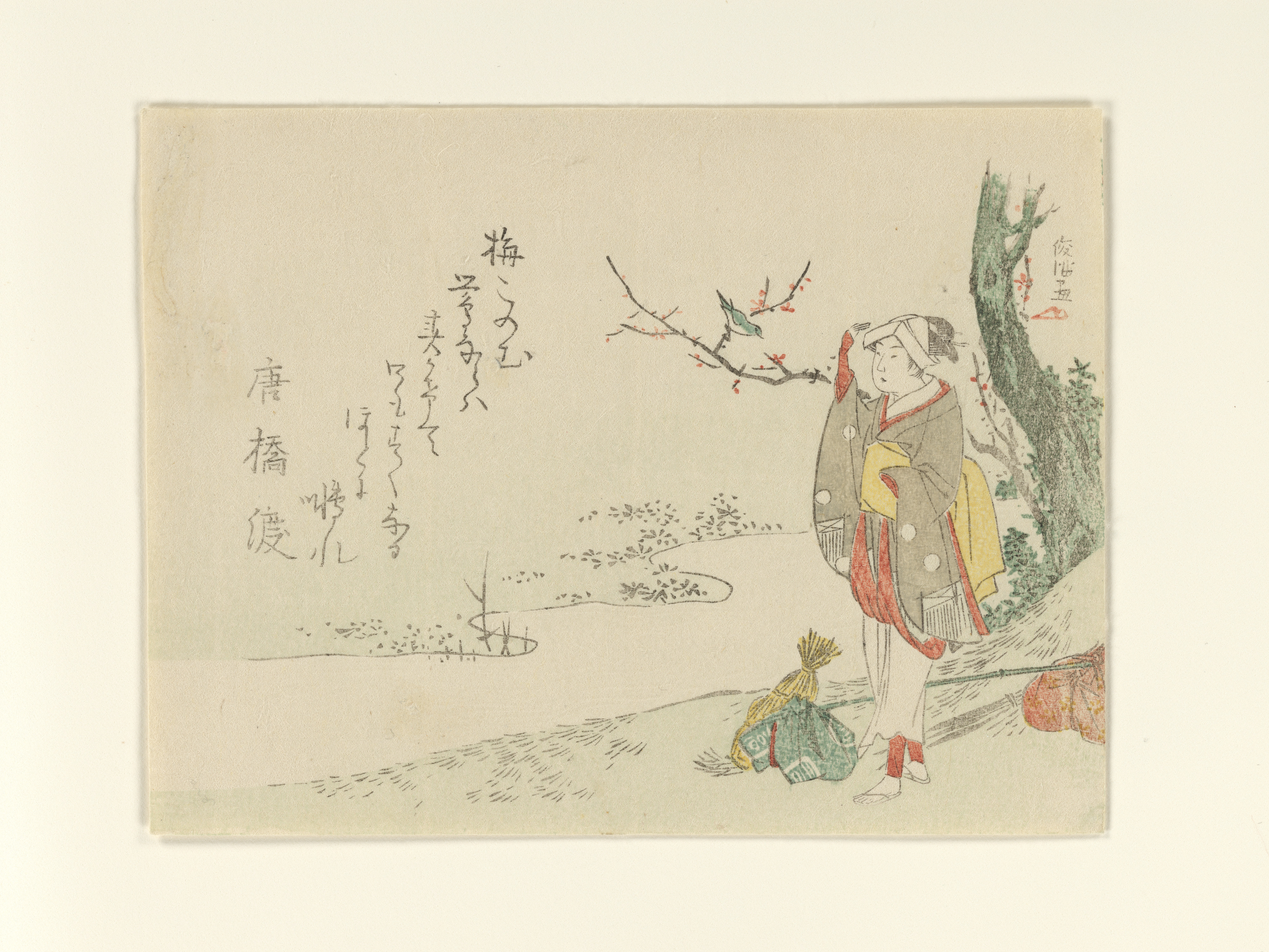
Traveling Woman Pauses to Listen to a Warbler
1797
Woodblock print (surimono); ink and color on paper
Frequently Asked Questions
Visitors to Enoshima, from the album "Mountains of the Four Quarters (Yomo no yama)" was created by Kubo Shunman (窪俊満) in early 19th century.