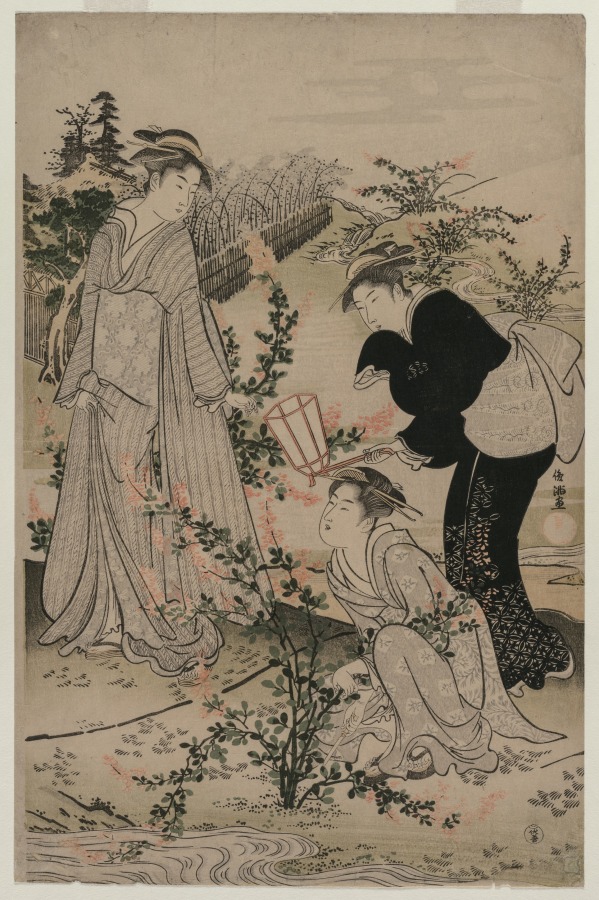
Women Cutting Branches of Bush Clover; The Noji Tama River in Omi Province, from an untitled series of the Six Tama Rivers
by Kubo Shunman
- Date:
- late 1780s
- Medium:
- color woodblock print
- Source:
- Cleveland Museum of Art
Description
Women Cutting Branches of Bush Clover; The Noji Tama River in Omi Province, dated to around 1787 and held by the Cleveland Museum of Art, belongs to one of Kubo Shunman's most celebrated projects, an untitled series treating the classical theme of the Six Tama Rivers (Mu Tamagawa). The Six Tama Rivers were a well-established poetic topos drawn from waka tradition, with each river associated with a specific province, season, and lyrical motif, and Edo ukiyo-e designers frequently revisited the set as a way to align their work with classical literary precedent. The Noji Tama River in Omi Province carried associations with autumnal bush clover (hagi), and Shunman's design uses that link to organize figures, plants, and setting into a coherent meditation on seasonal poetry. The Cleveland Museum's record provides authoritative grounding for the attribution and series identification, allowing the print to be studied alongside the other sheets that compose Shunman's Mu Tamagawa set. Stylistically, the work shows the slender, refined figural type that Shunman developed early in his career and the calm, almost recessive coloration he often preferred to the high-key palettes of his contemporaries. Within his broader output, the series is a touchstone for understanding how he engaged with classical literature through ukiyo-e's medium, while also demonstrating the influence of his close association with poets such as Ota Nanpo. For viewers interested in how Edo ukiyo-e absorbed and visualized waka traditions, this sheet stands among the more substantial examples produced in the late eighteenth century.
More Prints by Kubo Shunman

Righteousness (Gi), from the series "Five Designs for the Katsushika Poetry Circle (Katsushika goban)"
early 1810s
Color woodblock print; shikishiban, surimono

Soga no Goro, Oiso no Tora, and Kewaizaka no Shosho
1809
Color woodblock print; surimono
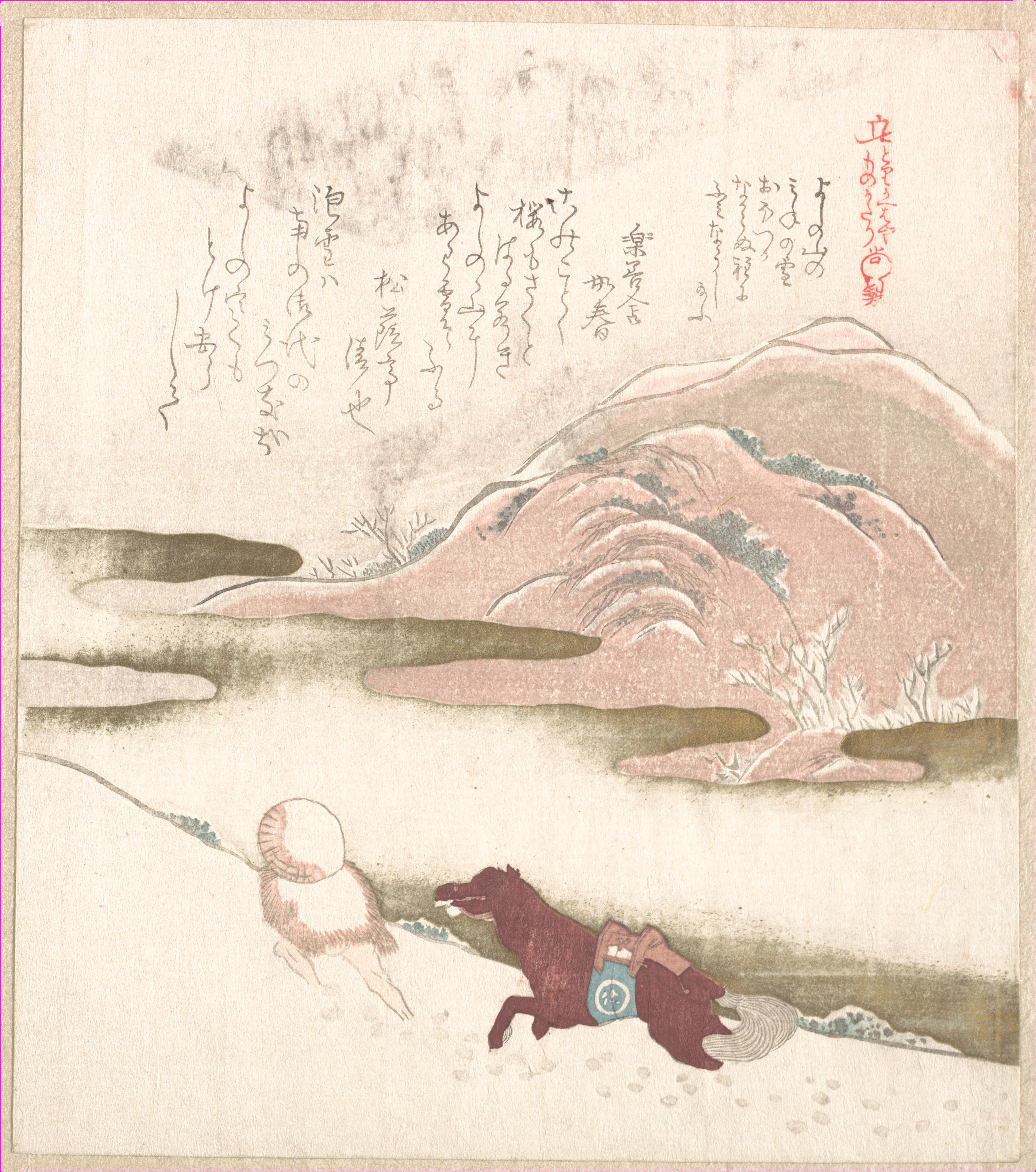
Snowy Landscape
19th century
Woodblock print (surimono); ink and color on paper
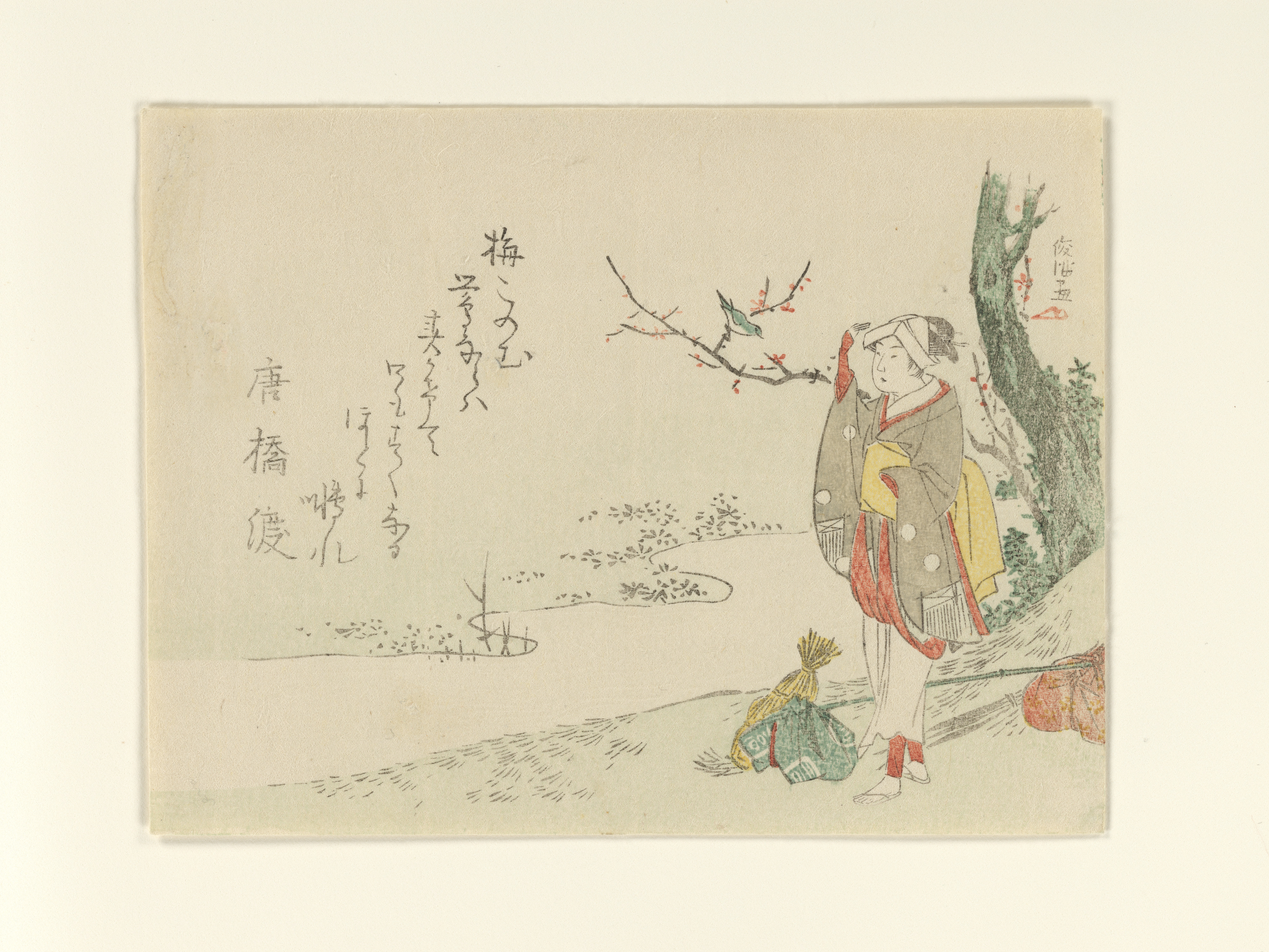
Traveling Woman Pauses to Listen to a Warbler
1797
Woodblock print (surimono); ink and color on paper
Frequently Asked Questions
Women Cutting Branches of Bush Clover; The Noji Tama River in Omi Province, from an untitled series of the Six Tama Rivers was created by Kubo Shunman (窪俊満) in late 1780s.