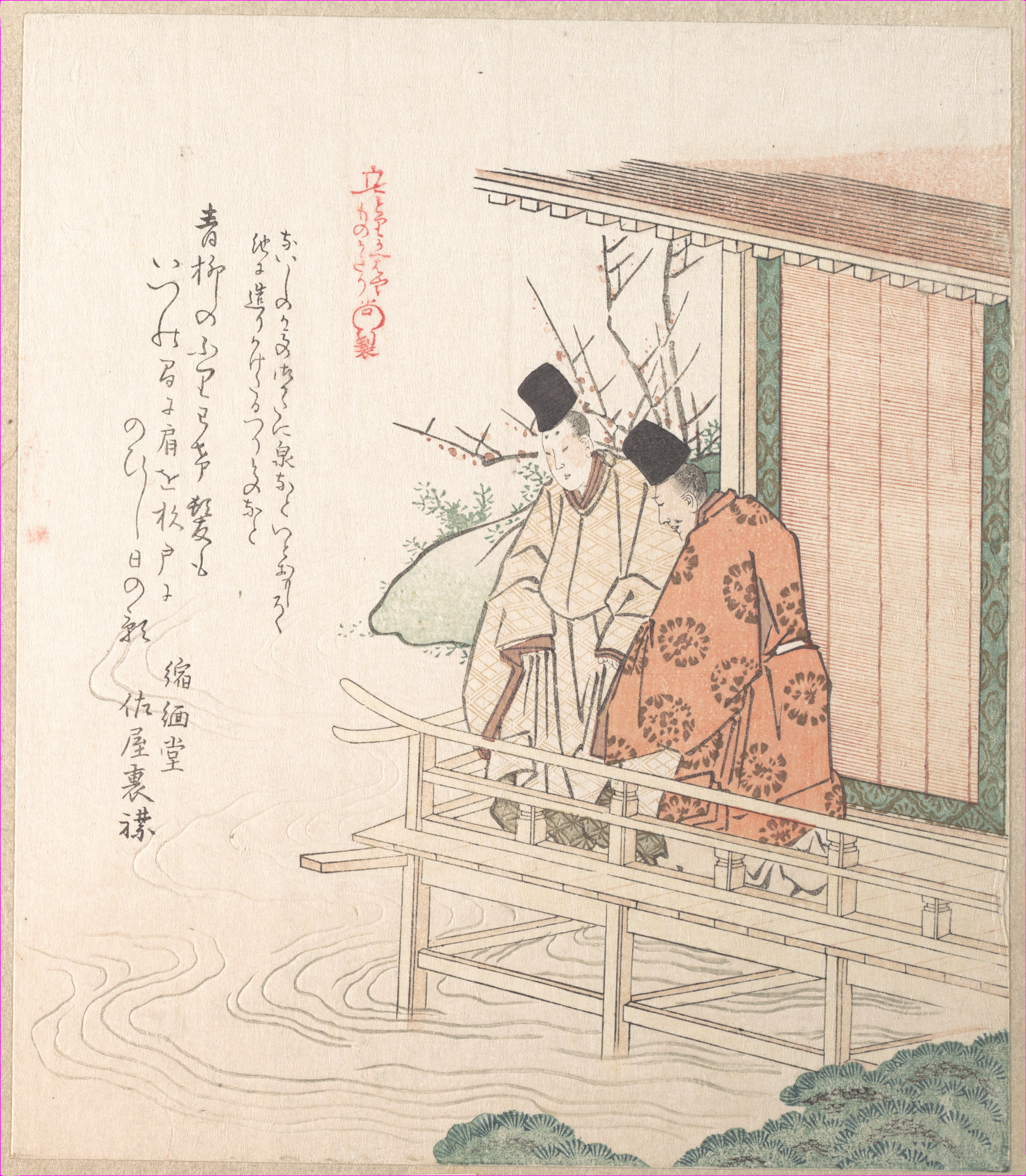
Young Nobleman and His Attendant
by Kubo Shunman
- Date:
- 19th century
- Medium:
- Woodblock print (surimono); ink and color on paper
- Source:
- Metropolitan Museum of Art
Description
Young Nobleman and His Attendant, in the collection of the Metropolitan Museum of Art and dated around 1800, illustrates Kubo Shunman's capacity to treat aristocratic subjects with the same understated sensitivity he brought to plant studies and Yoshiwara scenes. The picture pairs a young man of evident high standing with a single attendant, a familiar compositional unit in Japanese narrative imagery, often drawn from the world of the Heian classics or from the more recent court-derived rituals that remained a touchstone for Edo cultural life. Shunman's handling avoids overt theatricality. The figures stand or move in a measured rhythm, their robes drawn with the economical, calligraphic line that distinguished his Edo ukiyo-e from the more decorative styles favored by some of his contemporaries. The palette is restrained, with carefully chosen colors and ample empty space, suggesting that the print may have been conceived in the surimono register or in a closely related kyoka-e mode, where the picture is designed to coexist with verse. The motif also carried a built-in literary resonance, since such pairings frequently invoke episodes from the Tale of Genji or from the Tales of Ise, both of which were frequent reference points for the kyoka poets who patronized Shunman. For modern collectors, the work demonstrates how Kubo Shunman could distill aristocratic subject matter into a compact image whose decorum supports the layered allusiveness of the kyoka world without ever shouting its sources.
More Prints by Kubo Shunman

Righteousness (Gi), from the series "Five Designs for the Katsushika Poetry Circle (Katsushika goban)"
early 1810s
Color woodblock print; shikishiban, surimono

Soga no Goro, Oiso no Tora, and Kewaizaka no Shosho
1809
Color woodblock print; surimono
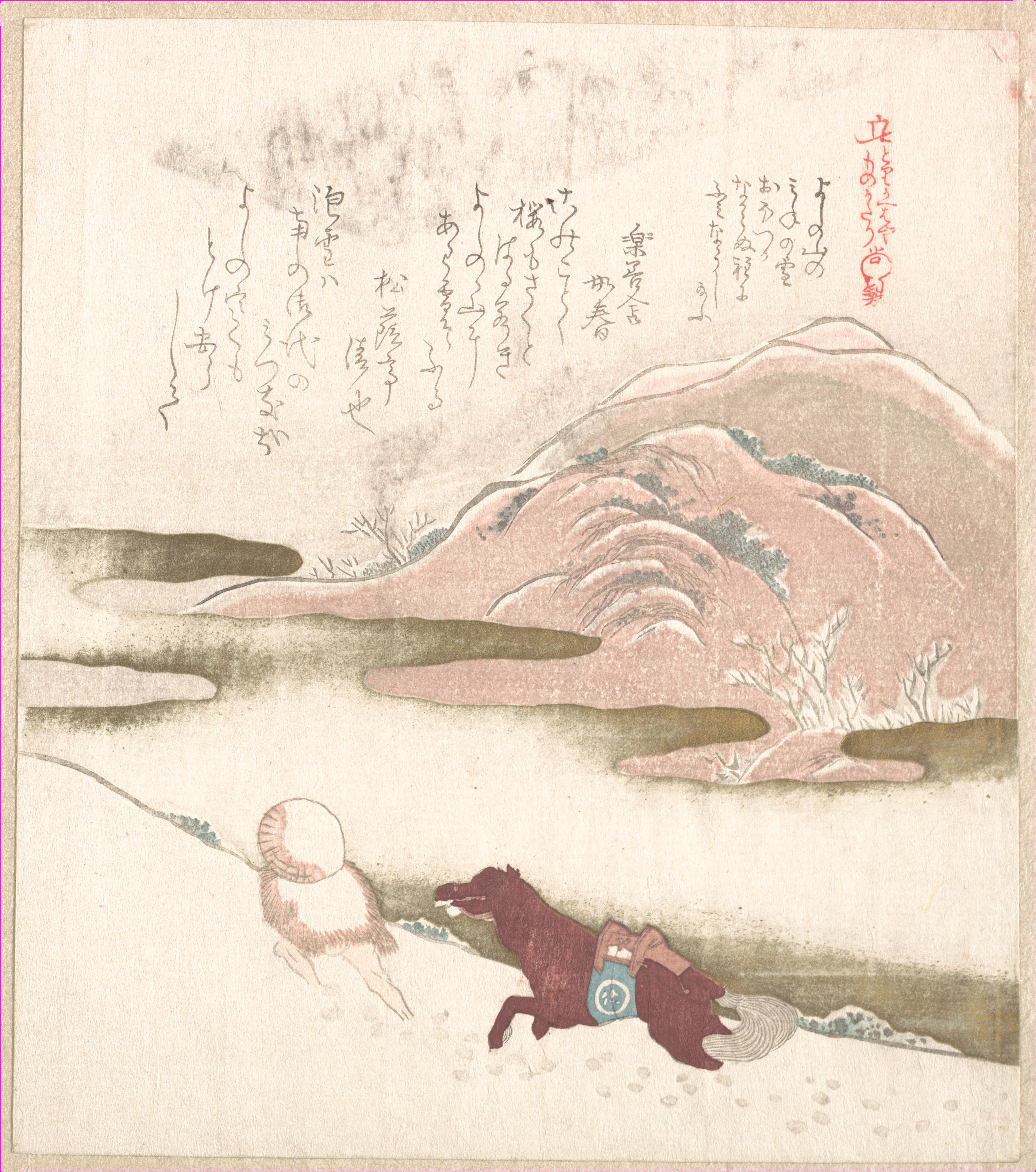
Snowy Landscape
19th century
Woodblock print (surimono); ink and color on paper
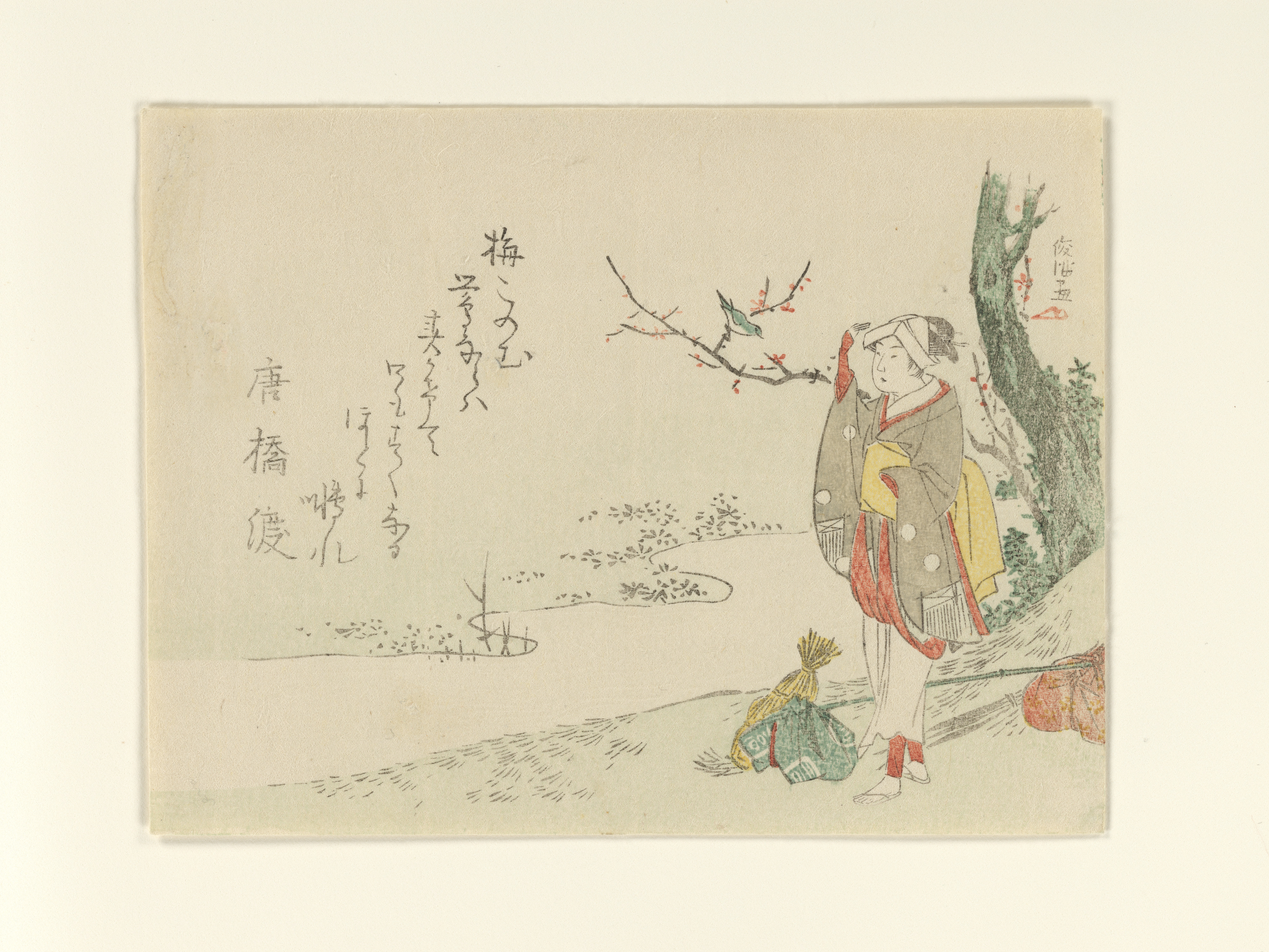
Traveling Woman Pauses to Listen to a Warbler
1797
Woodblock print (surimono); ink and color on paper
Frequently Asked Questions
Young Nobleman and His Attendant was created by Kubo Shunman (窪俊満) in 19th century.