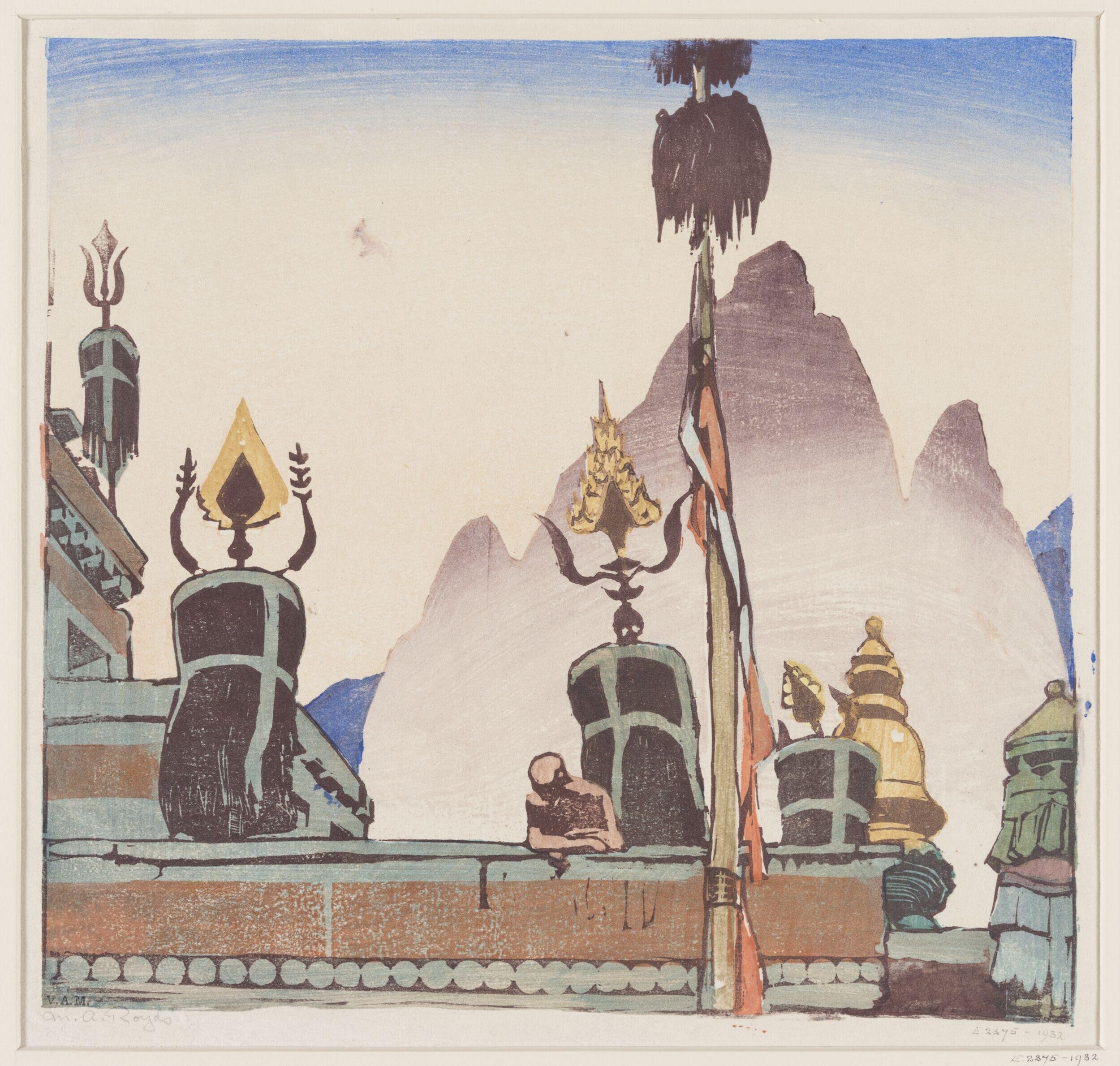
Gompa Top
by Mabel Royds
- Date:
- circa 1920-1930
- Medium:
- Colour woodcut print on paper
- Source:
- Victoria and Albert Museum
Description
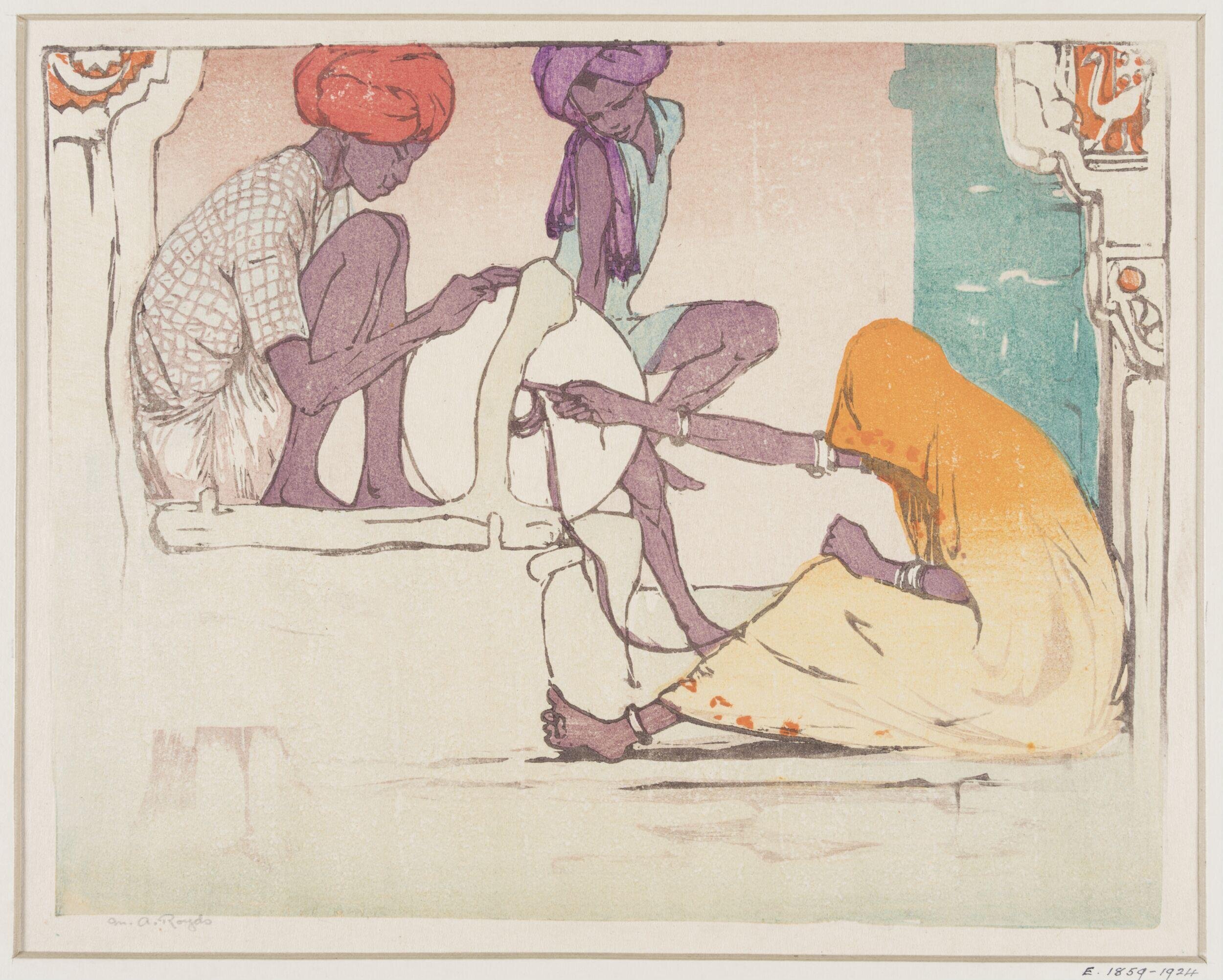
Gompa Top, circa 1920-1930, is one of Mabel Royds's most distinctively Himalayan colour woodcuts, acquired by the Victoria and Albert Museum in 2016 (E.212-2016). The title refers to a Tibetan Buddhist monastery (gompa), and the image depicts a hilltop monastic complex of the kind that Royds and her husband Ernest Stephen Lumsden encountered on their journeys across the Himalayas and Tibetan plateau in the late 1910s and 1920s — Lumsden's etchings of the same region include several views of Tibetan monasteries that share the subject matter directly. Royds's woodcut reduces the architecture to a small number of flat planar shapes printed in saturated water-based colour from separate blocks on dampened paper, with the white-washed walls, the red and ochre architectural details, and the dark window openings of a typical gompa rendered as bold colour blocks rather than illusionistic perspective. The print is one of the most often-cited of her Himalayan works and exemplifies her ability to translate the architecture and atmosphere of high-altitude Tibetan Buddhist sites into the Anglo-Japanese colour woodcut language she had absorbed from the British revival of the 1890s and 1900s.
More Prints by Mabel Royds
Featured in Collections
Curated cross-cuts that include this print.
Frequently Asked Questions
Gompa Top was created by Mabel Royds in circa 1920-1930.