Biography
Mabel Allington Royds (1874–1941) was an English painter and colour woodcut printmaker whose mature work, produced largely in Edinburgh between roughly 1912 and the late 1930s, occupies a distinctive place in the British colour woodcut revival of the early twentieth century. Working in a medium that British artists of her generation had reinvented after the Japanese model — the so-called "Anglo-Japanese" colour woodcut associated with John Dickson Batten, Frank Morley Fletcher, William Giles, Allen Seaby, and the Society of Graver-Printers in Colour — Royds developed a personal style that combined direct observation, restrained colour, and the simplified planar composition that came naturally to the multi-block water-based technique. Her best-known prints emerged from her travels in India and the Himalayas, including Tibet, undertaken with her husband, the etcher Ernest Stephen Lumsden, and she returned repeatedly to a recognizable cast of motifs: porters and animal handlers, market figures, hill villages, and the everyday fauna and flora of the places she visited.
Royds was born in 1874 in Little Barford, Bedfordshire. She enrolled at the Slade School of Fine Art, University College London, in the early 1890s, following the standard curriculum of antique and life drawing under Henry Tonks, in the years when Augustus and Gwen John, William Orpen, and others of the "Slade generation" were her contemporaries. She afterward spent time in Paris, where she trained with the painter and printmaker Walter Sickert, and she later taught for several years at Havergal College in Toronto, Canada.
In 1911 Royds settled in Edinburgh, where she took up a teaching position at the Edinburgh College of Art — then directed by Frank Morley Fletcher, one of the principal figures who had introduced the Japanese colour-woodcut method to Britain — and it was in this milieu that she took up the colour woodcut that would define her career. In 1913 she married Ernest Stephen Lumsden, who was already established as a leading British etcher. The combination of teaching and a settled domestic base in Edinburgh, paired with extended foreign travels, became the structural pattern of her professional life. The marriage was both personal and artistic: Lumsden's etchings of India and the Himalayas share their subject matter with several of Royds's most important woodcuts, and the two clearly worked from a shared body of sketches and direct experience.
Royds's woodcuts were produced as multi-block colour prints in the Anglo-Japanese manner: a separate block carved for each colour, printed by hand on dampened Japanese-style paper with water-based pigments, and registered with the kentō notch system introduced into Britain in the 1890s through Frank Morley Fletcher's teaching. Unlike the more traditionalist British colour woodcut artists, Royds pushed the technique into broader, more painterly planes of colour, allowed visible grain and brush-stroke marks, and reduced her palette to a small number of distinctive saturated hues rather than imitating the atmospheric broken colour that Fletcher's and Seaby's followers preferred. The result is an instantly recognizable graphic identity in which figures and animals are reduced to a few essential silhouettes and the colour is deployed at the level of design rather than illusion.
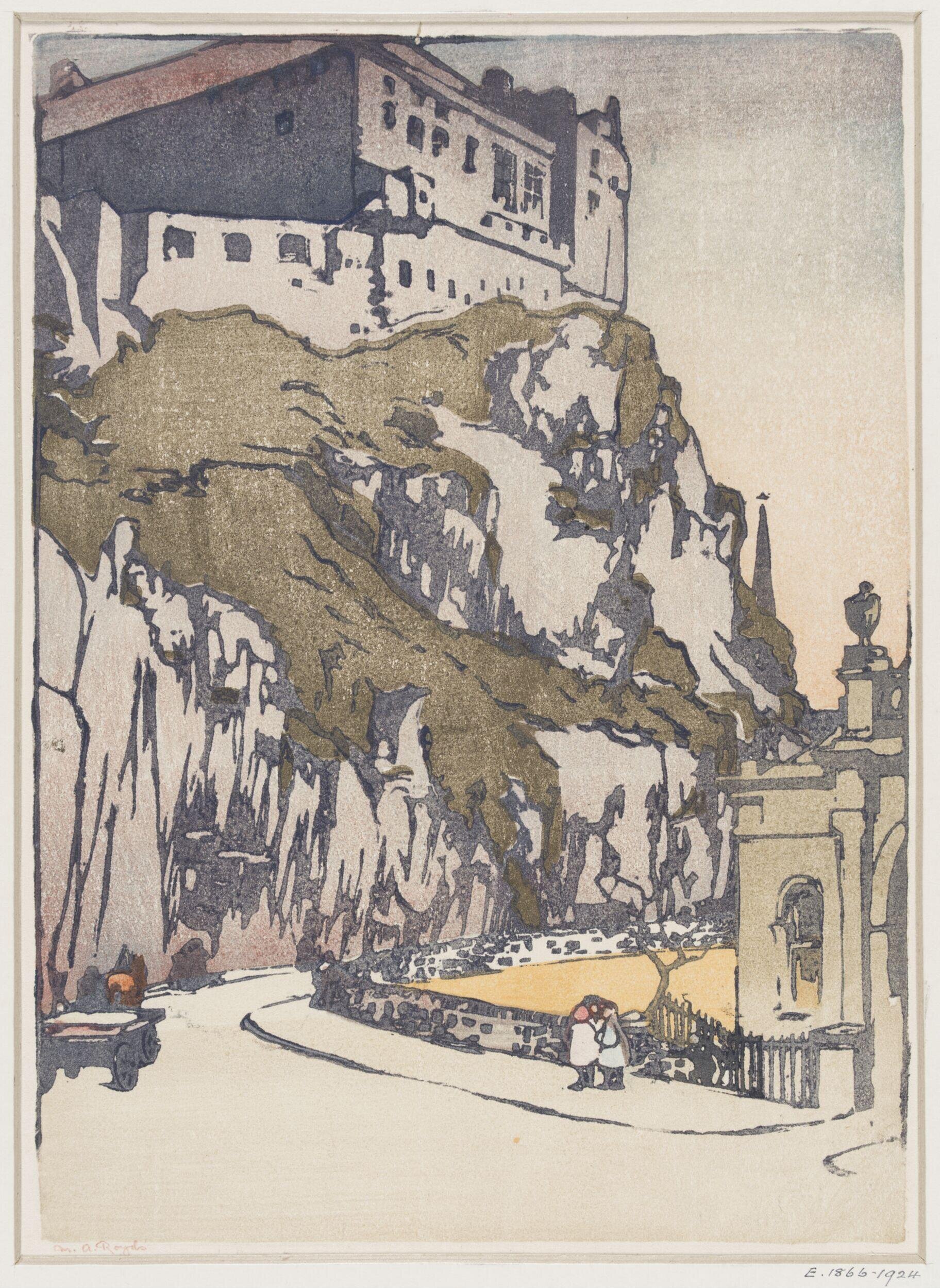
The earliest of her surviving prints date from her first years in Edinburgh: Edinburgh Castle (1911) is one of the few Royds woodcuts on a Scottish subject; Girl and Goat (circa 1912) and Chestnut Burrs (circa 1912) treat pastoral and natural-history motifs typical of British colour woodcut at the period; The Tightrope Dancer (circa 1913) is a more ambitious figure subject and Sunspots (circa 1913) exemplifies the pure-landscape strand of the movement. The most distinctive group of her prints came out of her extended travels in South Asia. Between 1913 and the late 1920s she and Lumsden made multiple journeys to India and the Himalayas. The Sword Grinder (Jodhpur) of circa 1918-1920 depicts an itinerant sword-grinder at work; Donkey Boy (circa 1924) a young handler with his donkey; The House-top (circa 1920) and The Goatherd (circa 1920) hill-village scenes drawn from direct observation rather than picturesque convention. Ghosts (1922) is a more poetic image of a procession of veiled figures, while Gompa Top (circa 1920-1930) translates Himalayan monastic architecture into a flat, planar colour woodcut. Boat Builders (circa 1920-1930), Prickly Pear Cactus (circa 1924), and Grapes (circa 1936) extend the range into plant motifs and coastal subjects across her mature decades.
Royds exhibited with the Society of Graver-Printers in Colour, the Society of Scottish Artists, and the Society of Graphic Art in London. Her prints entered public collections including the Victoria and Albert Museum and the National Galleries of Scotland. She died in Edinburgh in 1941. Her woodcuts were under-recognised in the post-war decades but began to recover critical attention from the 1970s and 1980s onward through scholarship on the British colour woodcut revival. Within the longer comparative history of the colour woodcut, Royds is best understood as one of the small group of British artists who absorbed the Japanese technical model through the Anglo-Japanese movement and then adapted it to non-Japanese subject matter — particularly the Indian and Himalayan scenes that defined her mature production — placing her in the wider company of figures like Bertha Lum, Helen Hyde, and Emma Bormann who were doing comparable work in other Western centres during the same decades.
Key Facts
- Active Period
- 1874–1941
- Nationality
- 🇯🇵Japan
- Movement
- Shin-hanga
- Works Indexed
- 14
Frequently Asked Questions
Mabel Allington Royds (1874–1941) was an English painter and colour woodcut printmaker whose mature work, produced largely in Edinburgh between roughly 1912 and the late 1930s, occupies a distinctive place in the British colour woodcut revival of the early twentieth century. Working in a medium that British artists of her generation had reinvented after the Japanese model — the so-called "Anglo-Japanese" colour woodcut associated with John Dickson Batten, Frank Morley Fletcher, William Giles, Allen Seaby, and the Society of Graver-Printers in Colour — Royds developed a personal style that combined direct observation, restrained colour, and the simplified planar composition that came naturally to the multi-block water-based technique. Her best-known prints emerged from her travels in India and the Himalayas, including Tibet, undertaken with her husband, the etcher Ernest Stephen Lumsden, and she returned repeatedly to a recognizable cast of motifs: porters and animal handlers, market figures, hill villages, and the everyday fauna and flora of the places she visited.
Mabel Royds was active from 1874 to 1941. They were associated with the Shin-hanga movement.
Mabel Royds's work was shaped by the Shin-hanga tradition in Japanese woodblock printmaking. Shin-hanga: ## What is Shin-hanga? Shin-hanga (新版画), literally "new prints," is the early twentieth-century revival of the collaborative Japanese woodblock workshop, organized between roughly 1915 and 1960 by the Tokyo publisher Watanabe Shōzaburō (1885–1962) and a handful of competing houses.
Mabel Royds's prints frequently feature mythology, children, castles.
Original prints by Mabel Royds can be found in collections including Victoria and Albert Museum.
Woodblock Prints by Mabel Royds (14)
Edinburgh Castle
1911
Colour woodcut on paper (printing ink on woodcut)
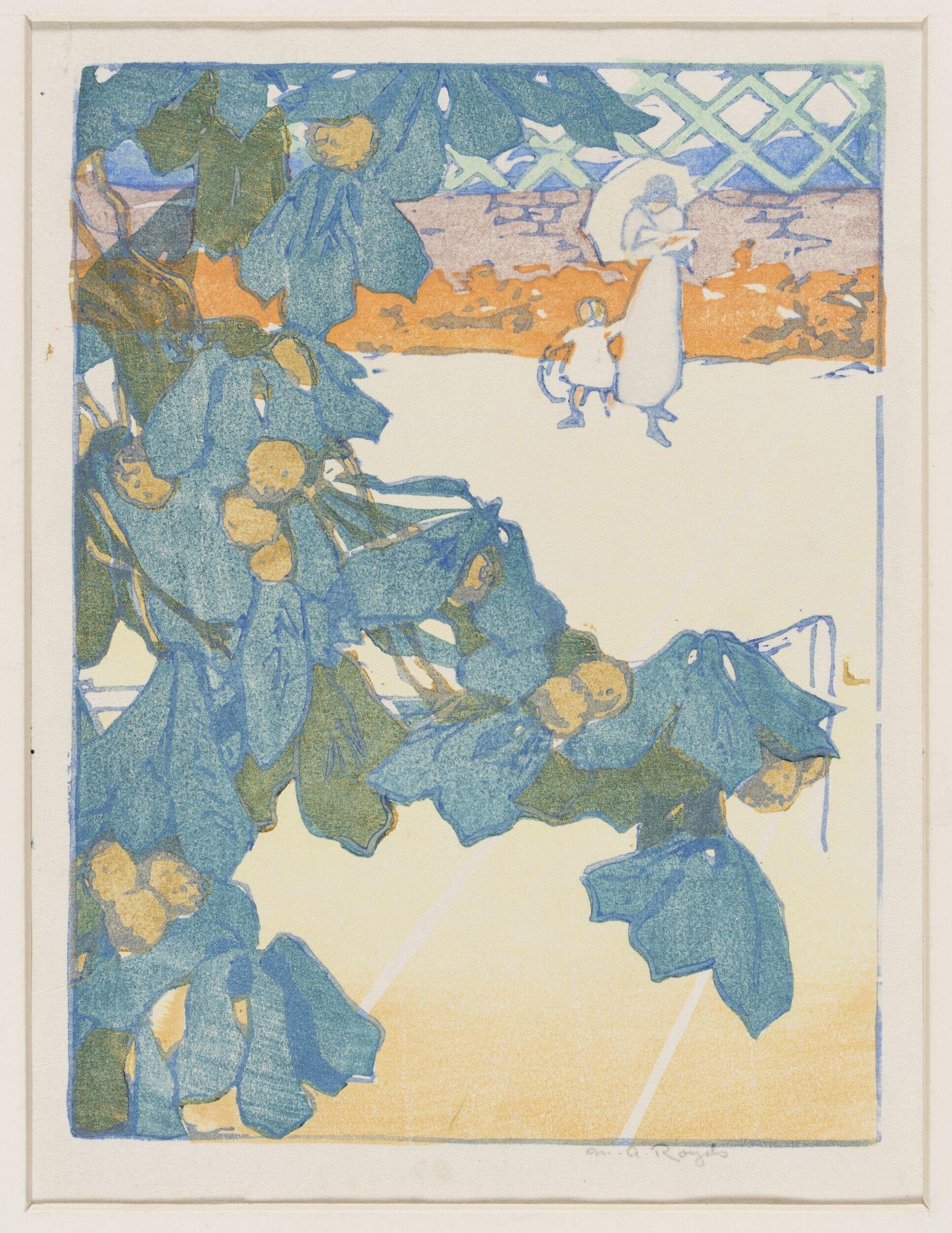
Chestnut Burrs
circa 1912
Colour woodcut print on paper
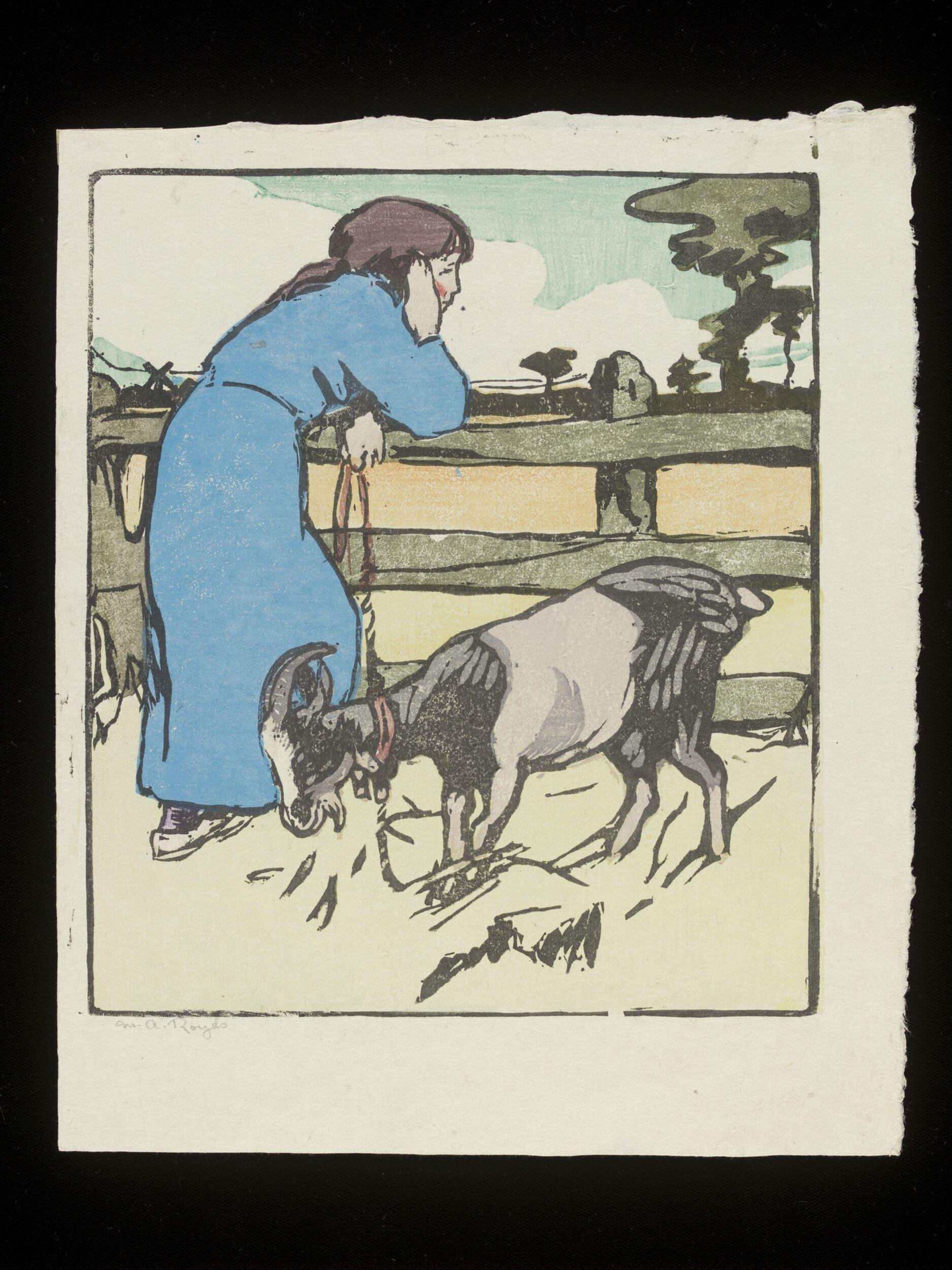
Girl and Goat
circa 1912
Colour woodcut print on paper
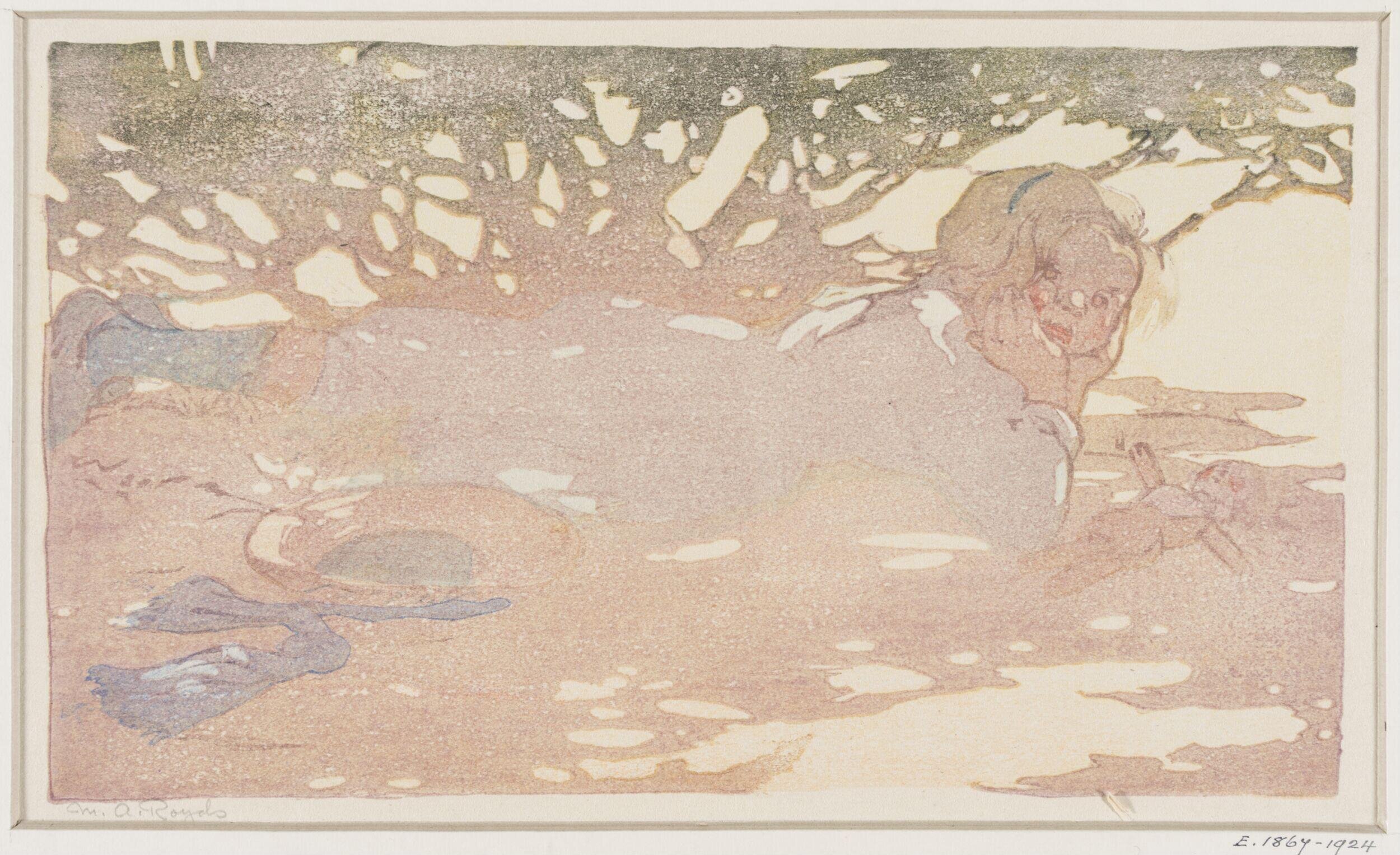
Sunspots
circa 1913
Colour woodcut on paper (printing ink on woodcut)
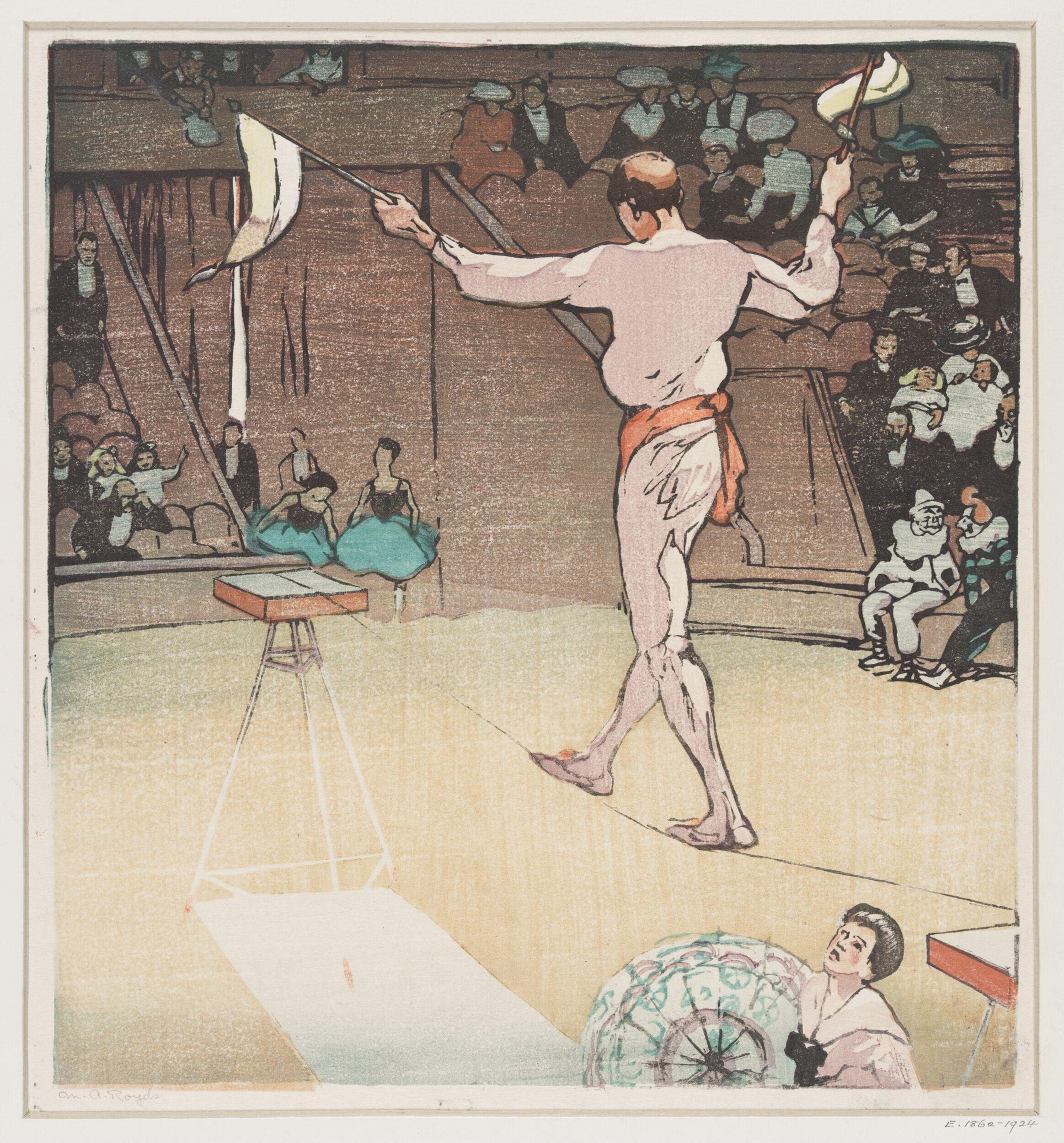
The Tightrope Dancer
circa 1913
Colour woodcut print on paper
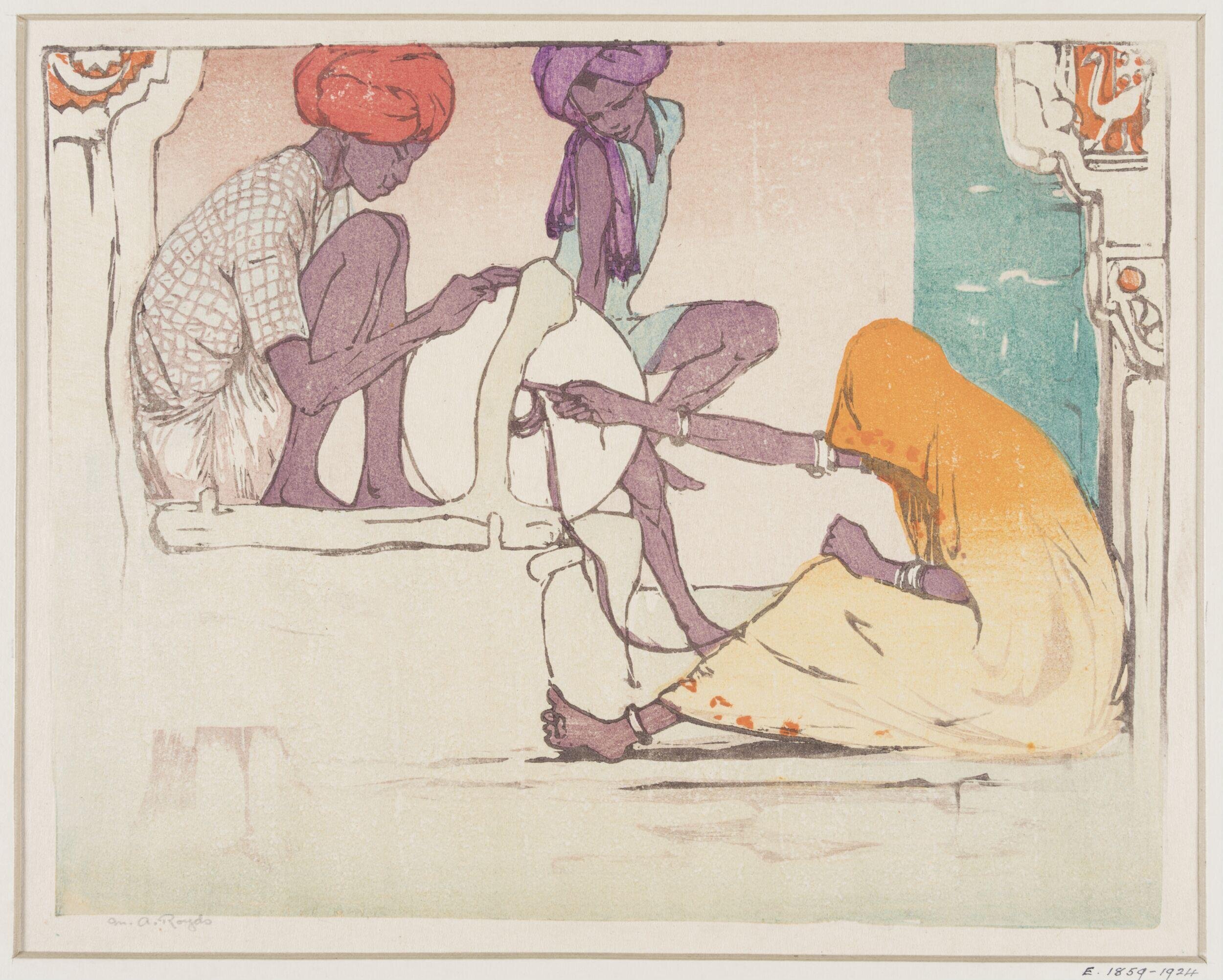
The Sword Grinder (Jodhpur)
circa 1918-1920
Colour woodcut on paper (printing ink on woodcut)
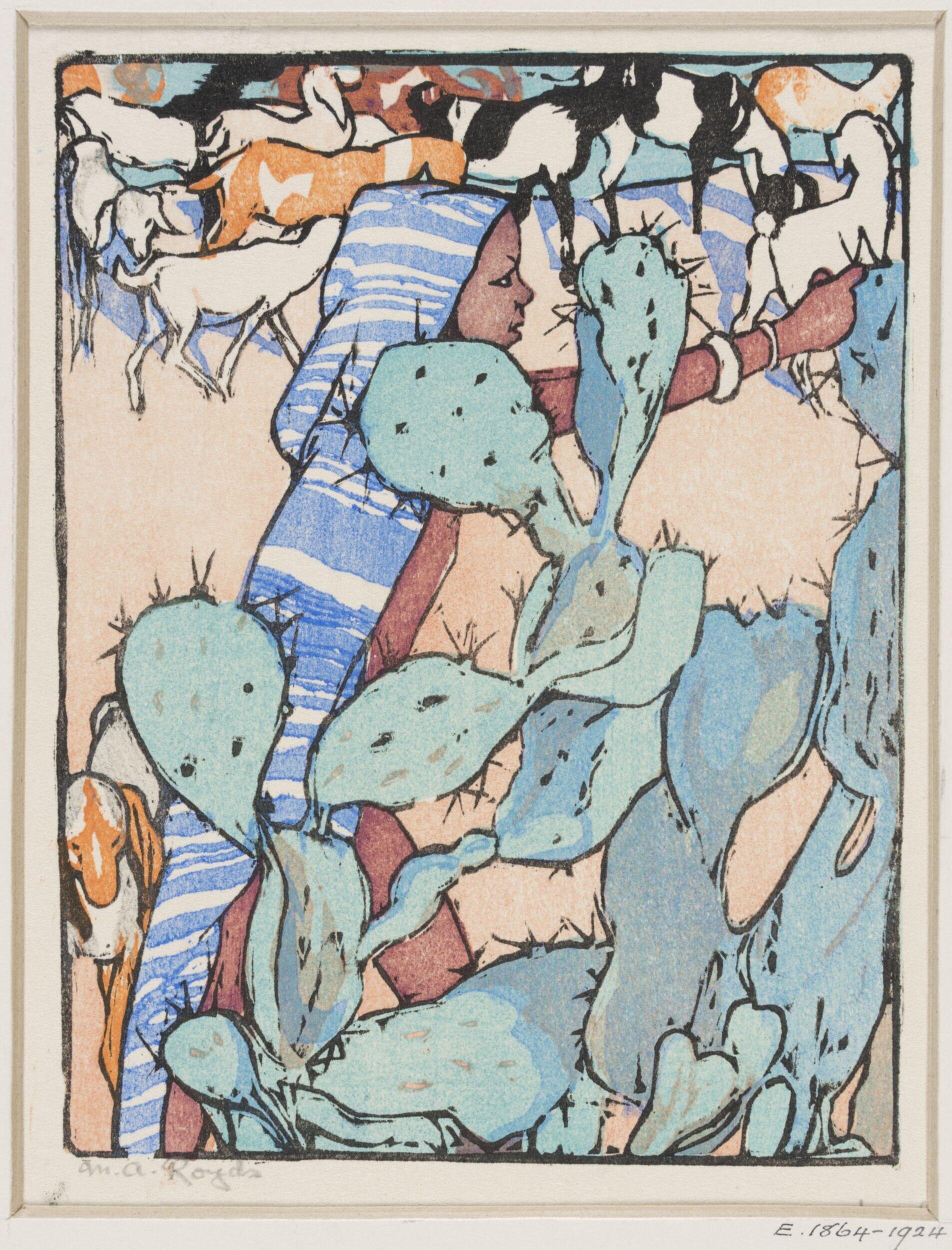
The Goatherd
circa 1920
Colour woodcut on paper (printing ink)
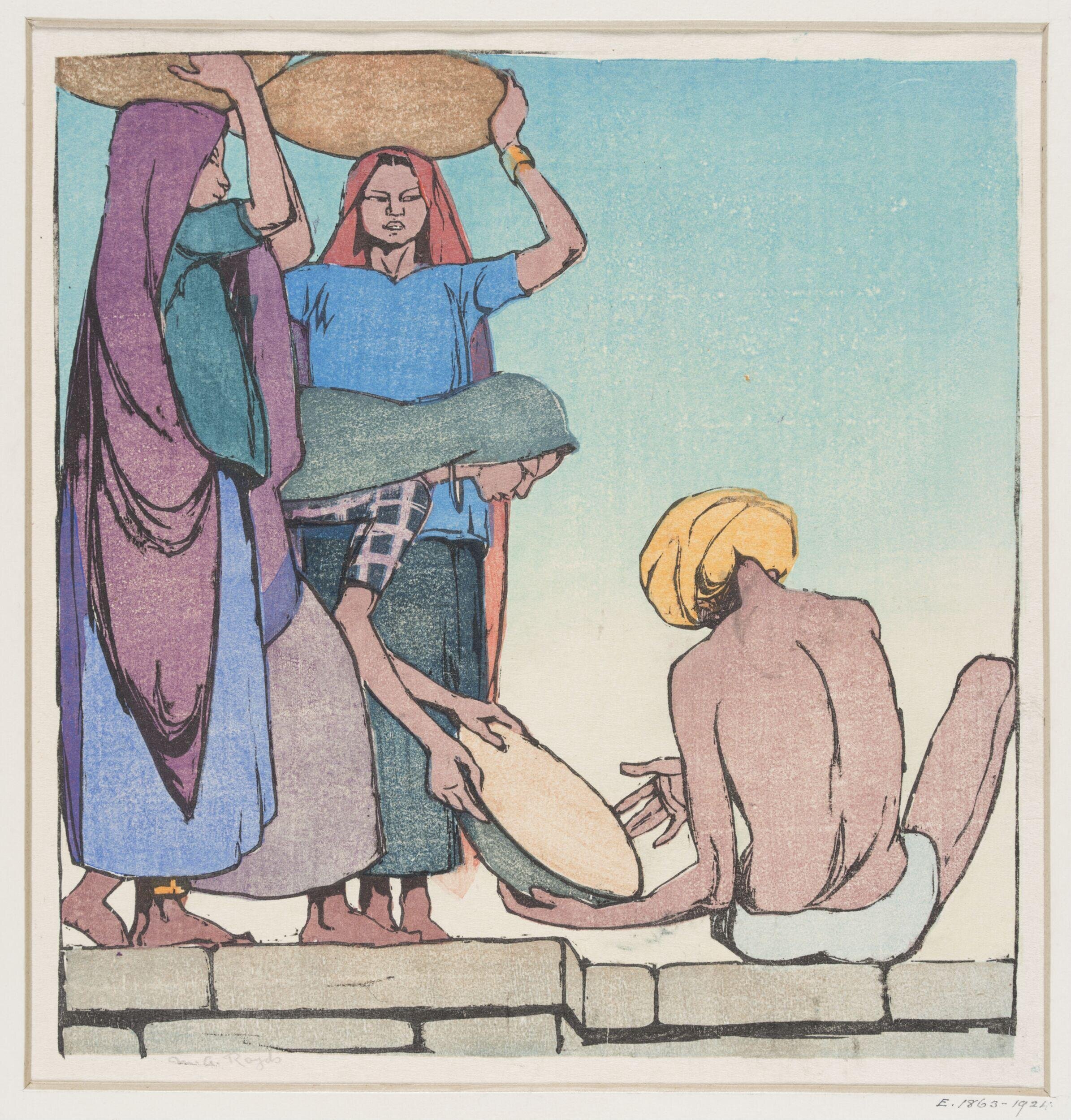
The House-top
circa 1920
Colour woodcut on paper (printing ink on wood)
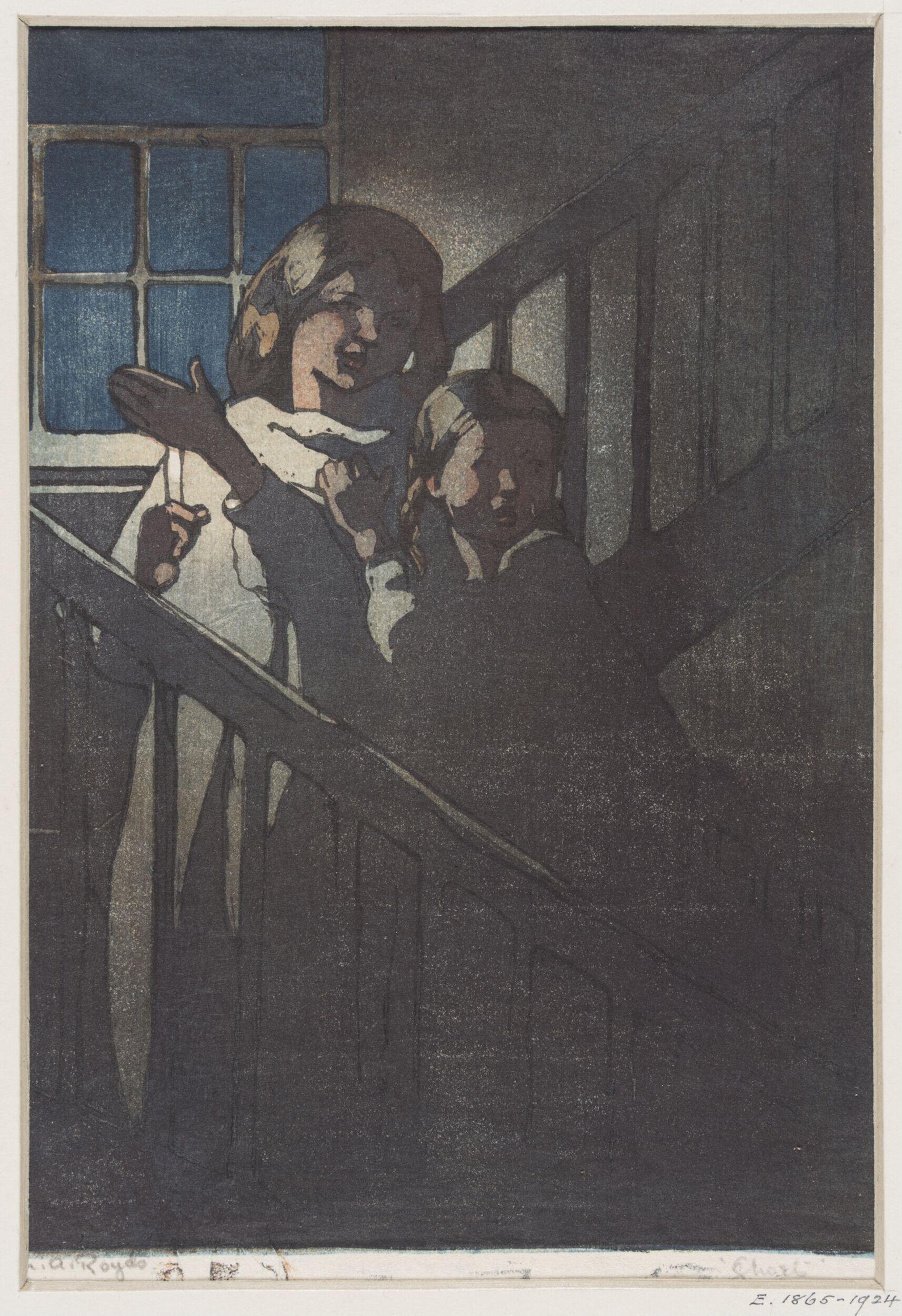
Ghosts
1922
Colour woodcut on paper (printing ink)
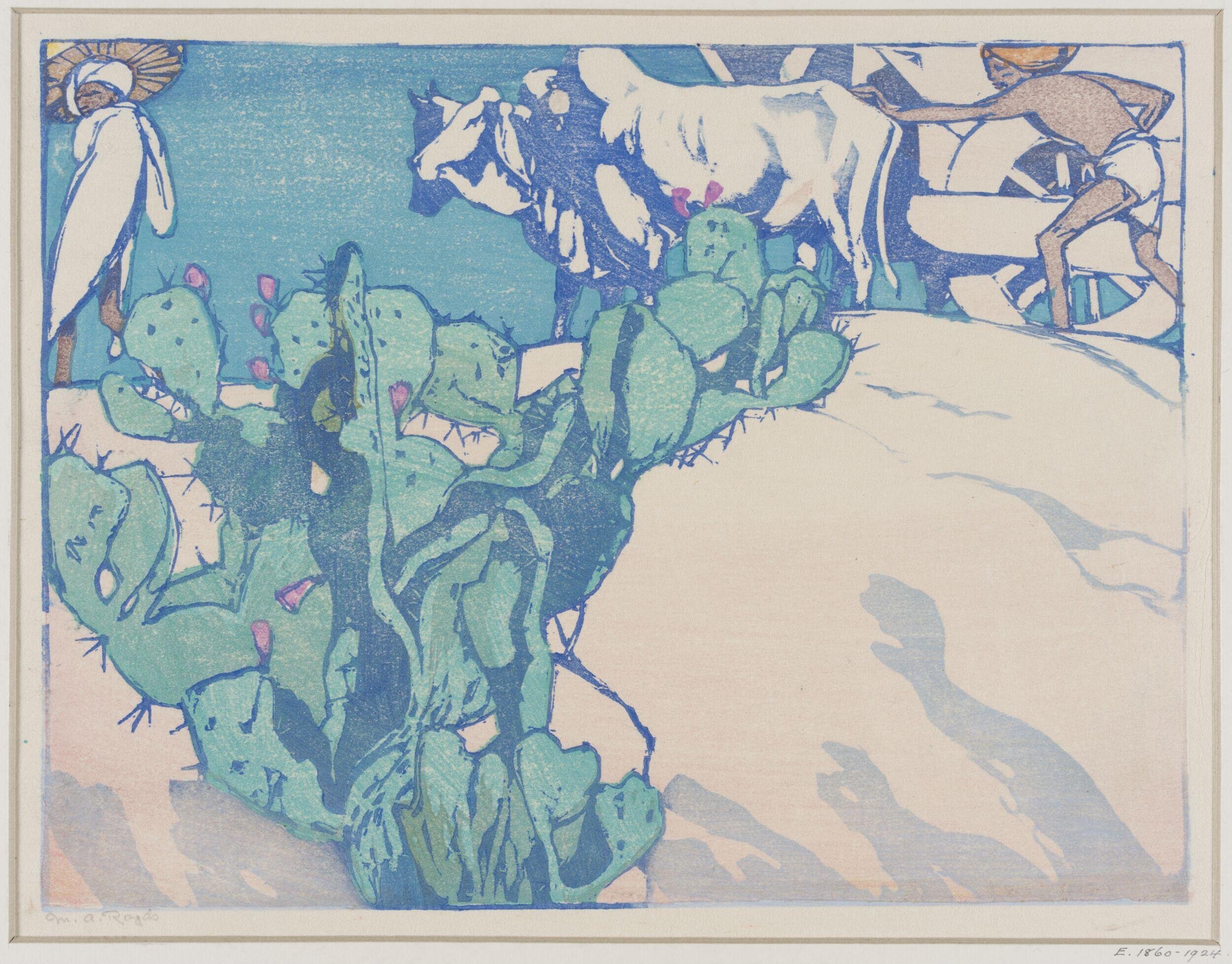
Prickly Pear Cactus
circa 1924
Colour woodcut print on paper
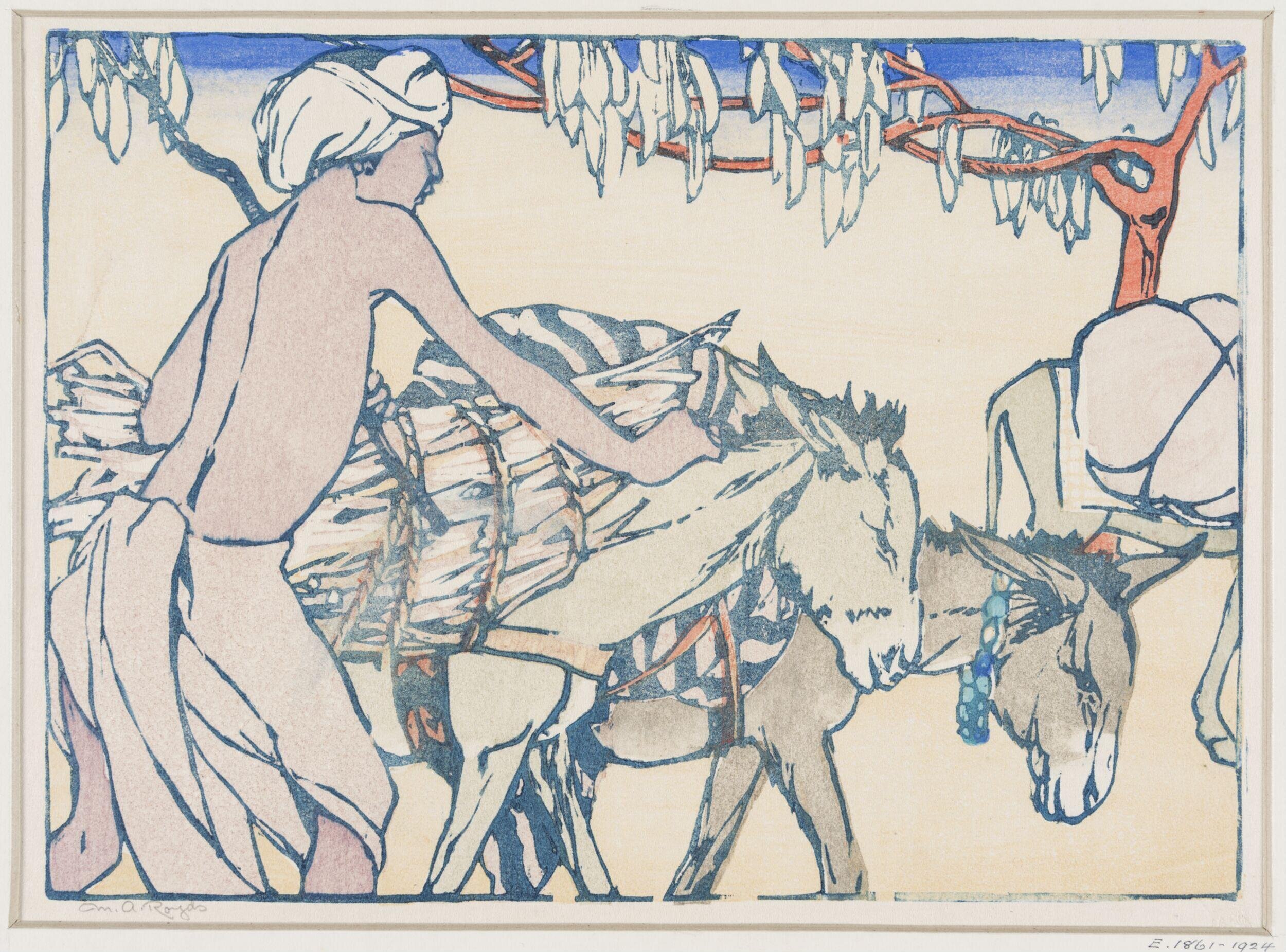
Donkey Boy
circa 1924
Colour woodcut on paper
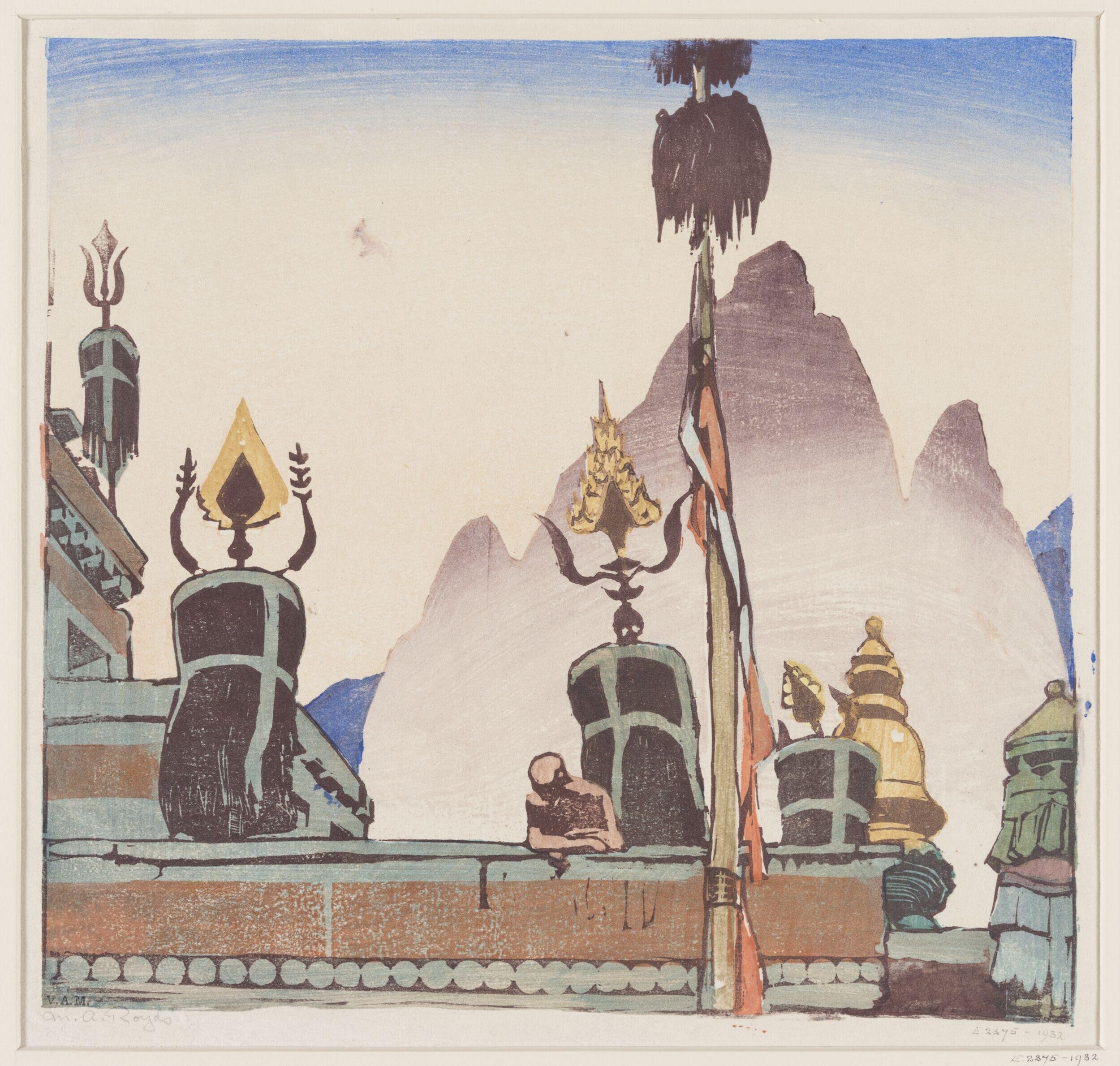
Gompa Top
circa 1920-1930
Colour woodcut print on paper
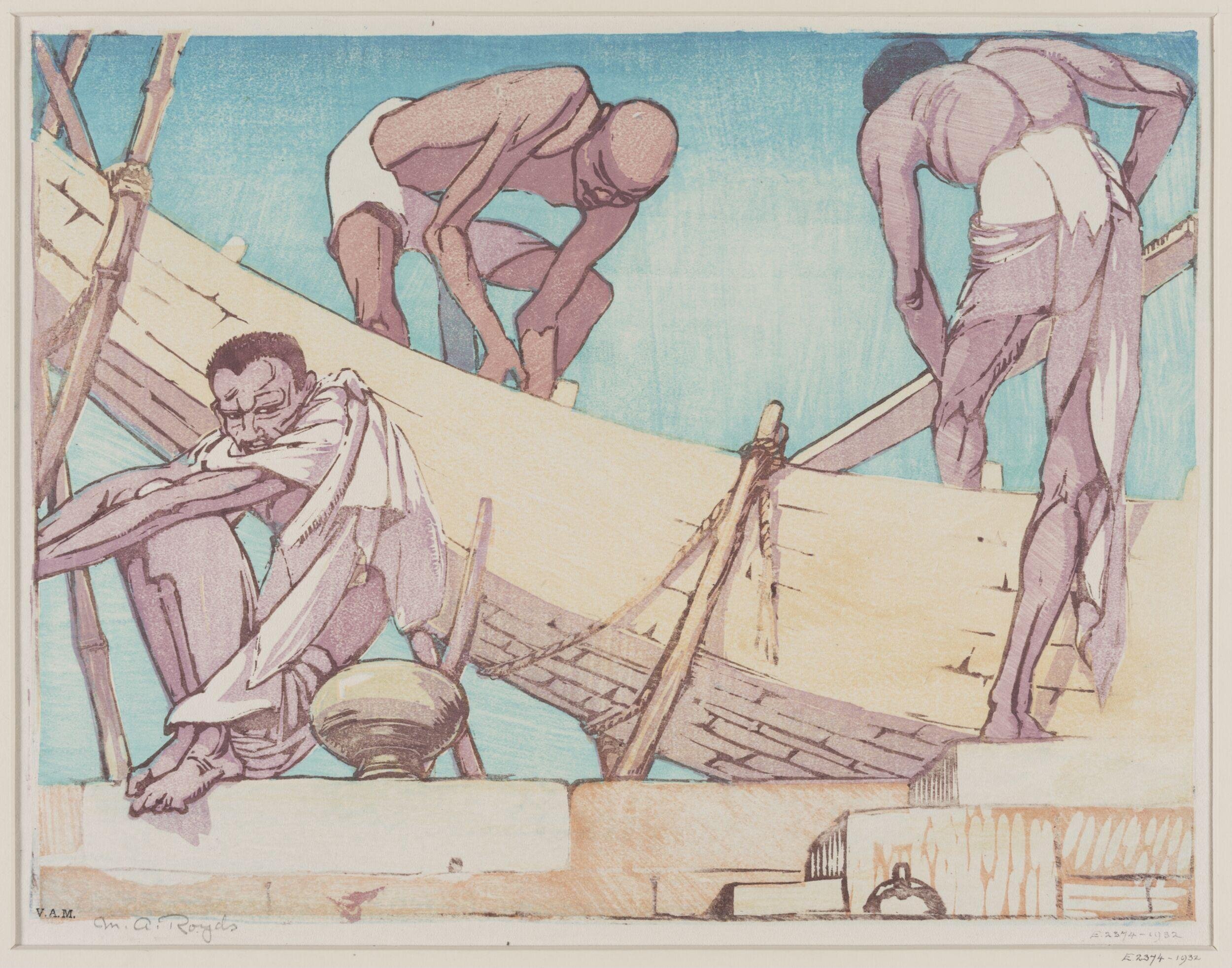
Boat Builders
circa 1920-1930
Colour woodcut print on paper
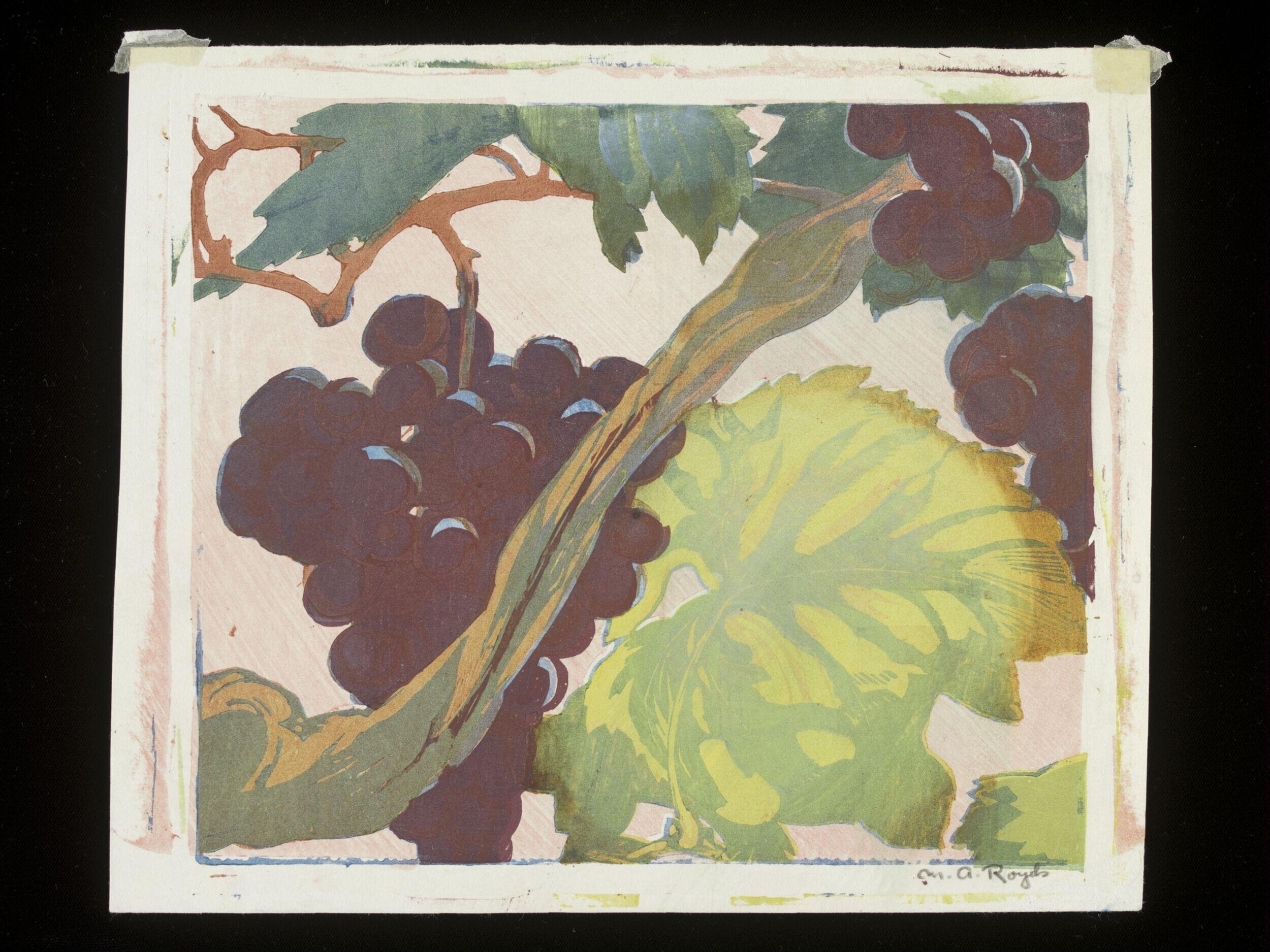
Grapes
circa 1936
Colour woodcut print on paper