
Kanda vegetable market
- Medium:
- Mokuhanga (Japanese woodblock)
- Image courtesy of
- Saru Gallery
Description
The Kanda district of Tokyo housed one of the city's principal produce markets, and this print likely captures the bustle of vendors, customers, and stacked crates of seasonal vegetables that defined the neighborhood's daily rhythm. Maekawa's approach to such genre scenes typically favored compressed, frieze-like compositions where figures are arranged in unaffected postures rather than picturesque tableaux. The mokuhanga technique here would have employed flat areas of color printed from cherry-wood blocks, with hand-rubbed baren impressions producing the soft, slightly granular surface characteristic of sosaku-hanga work. Senpan's market scenes belong to a broader interest among creative-print artists in the unidealized textures of urban working life — produce sellers, bathhouses, neighborhood streets — subjects the older ukiyo-e tradition had largely overlooked. As a co-editor of the journal HANGA and a founding member of the Japan Creative Print Association, Senpan helped establish the principle that a printmaker should design, carve, and print the work himself, and these market subjects exemplify the movement's commitment to ordinary life as worthy of artistic attention.
More Prints by Maekawa Senpan


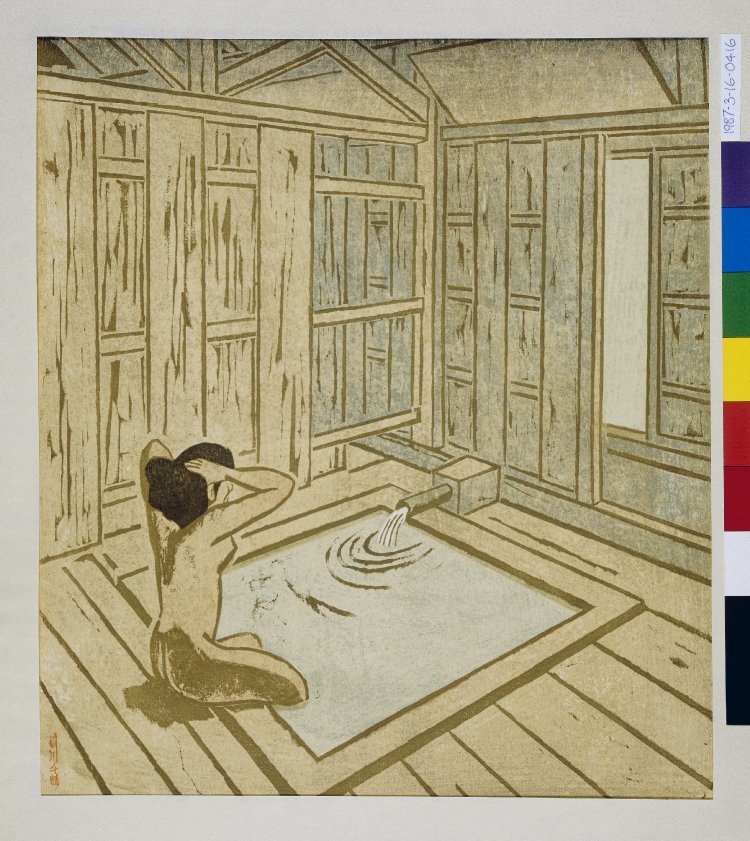

More Market Scenes Prints
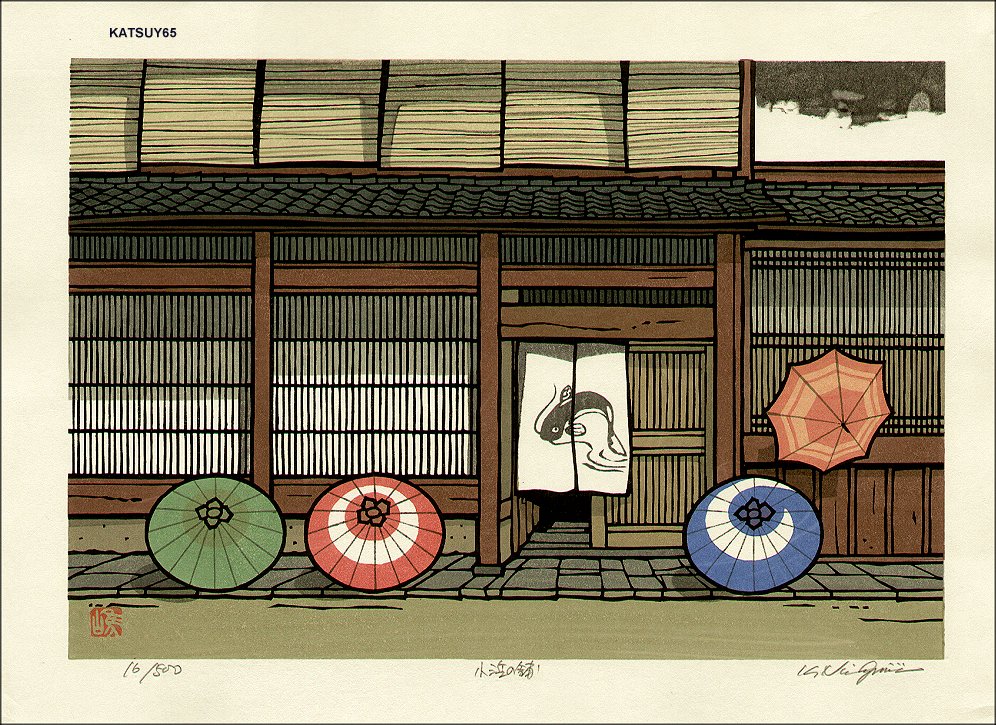
Shop in Obama, Fukui Prefecture
Woodblock print

Mariko: Famous Tea Shop (Mariko, meibutsu chamise), from the series "Fifty-three Stations of the Tokaido Road (Tokaido gojusan tsugi no uchi)," also known as the Hoeido Tokaido
c. 1833/34
Color woodblock print; oban
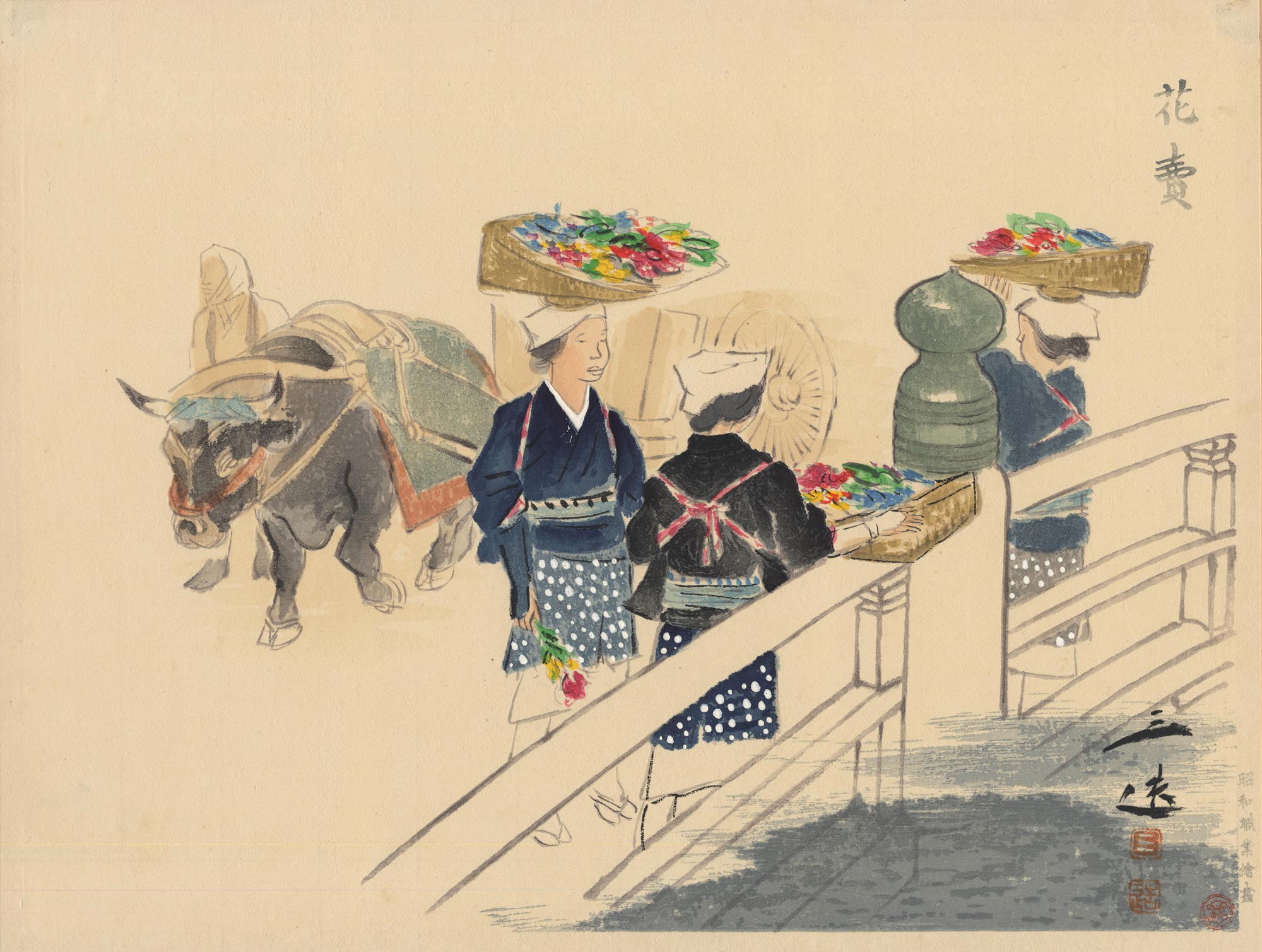
Street Vendor
行商人
c. 1940
Color woodblock print
Corner Shop
Shōwa period, 1977
Woodblock print; ink and color on paper
Featured in Collections
Curated cross-cuts that include this print.
Frequently Asked Questions
Kanda vegetable market was created by Maekawa Senpan (前川千帆).
Kanda vegetable market depicts market scenes and food & drink.