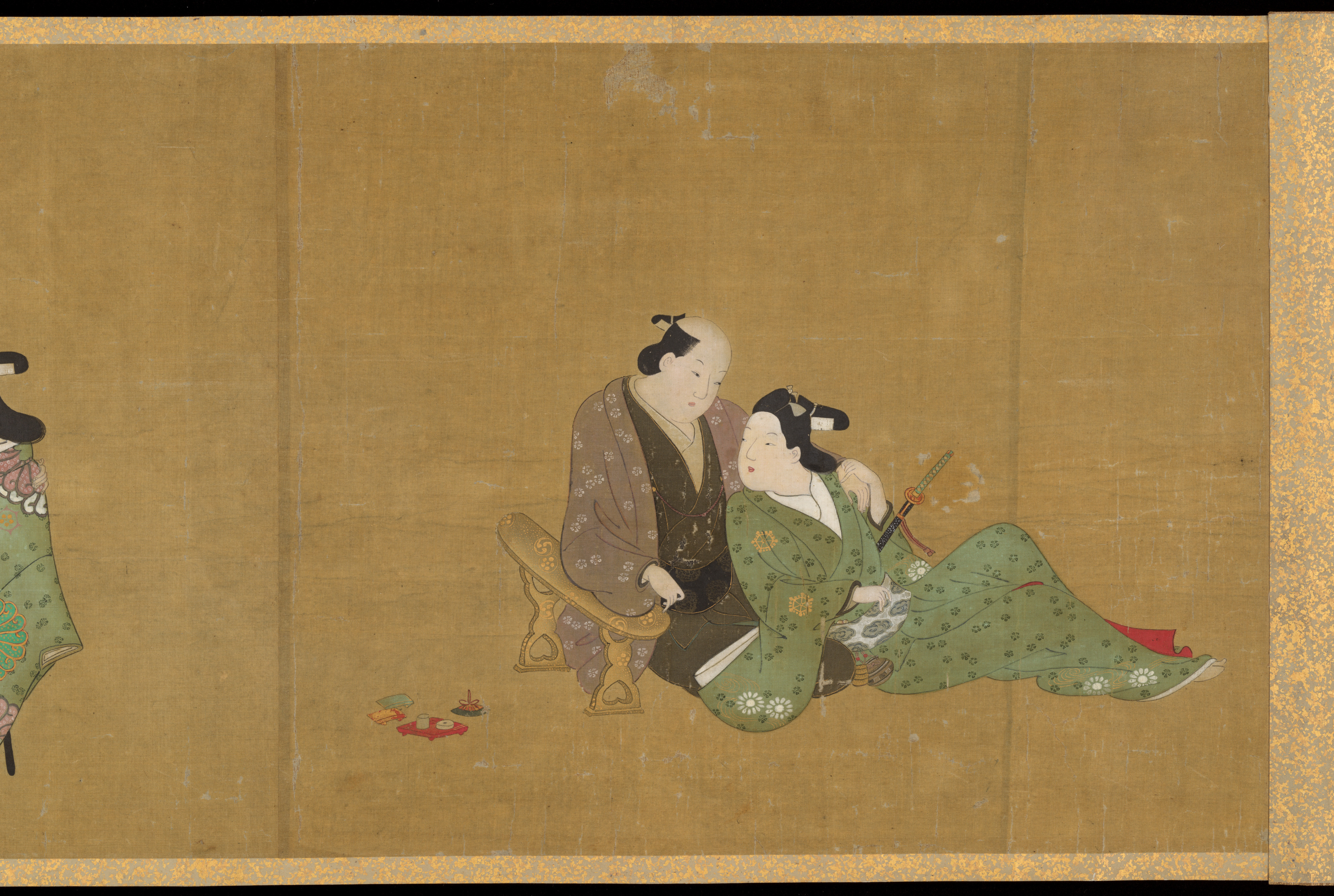
Handscroll of Ten Homoerotic (Nanshoku) Scenes
- Date:
- Early 18th century (1700-1733)
- Medium:
- Handscroll; ink and colors on silk
- Source:
- Metropolitan Museum of Art
Description
Acquired by the Metropolitan Museum of Art in 2022 and dated to the early eighteenth century, this handscroll in ink and colors on silk depicts ten scenes of nanshoku (male homoerotic) intimacy and represents an exceptionally important survival of Chōshun's contribution to the shunga tradition. Nanshoku, the aesthetic and erotic interest in relations between men and youths, had deep cultural roots in samurai, Buddhist, and theatrical contexts, and it was depicted in painting and print throughout the Edo period as a recognized category alongside heterosexual shunga. The handscroll format, intended for private viewing by an individual or a small group, allowed Chōshun to develop a sustained narrative sequence through ten linked scenes, each unrolling a new tableau of intimate encounter as the viewer progressed through the scroll. The use of silk as the support, the elaborate textile patterning of the figures' garments, and the careful architectural settings that frame each scene mark the work as a high-end commission, almost certainly produced for a discriminating Edo patron with the financial means to acquire a painted erotic scroll by one of the period's most accomplished masters. The Met's acquisition has made the work newly accessible to scholarship and brings into sharper focus Chōshun's role in the painted shunga tradition, alongside the better-known shunga of his contemporaries working in woodblock print.
More Prints by Miyagawa Chōshun


Frequently Asked Questions
Handscroll of Ten Homoerotic (Nanshoku) Scenes was created by Miyagawa Chōshun (宮川長春) in Early 18th century (1700-1733).