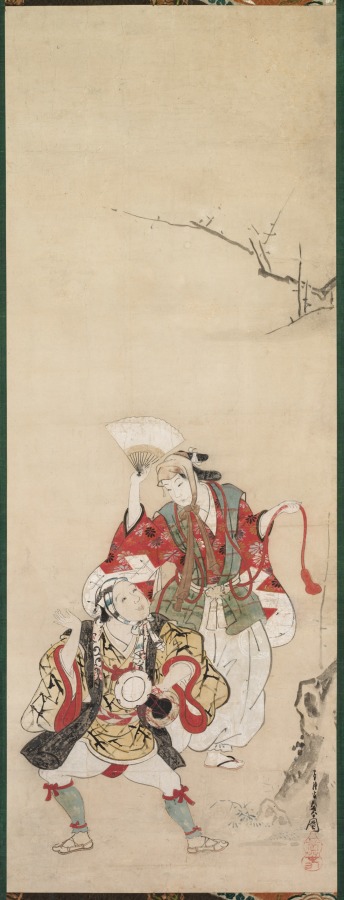
Spring Dancers (Manzai)
- Date:
- early to mid-1700s
- Medium:
- Hanging scroll; ink and color on paper
- Source:
- Cleveland Museum of Art
Description
Held at the Cleveland Museum of Art and dated to the early to mid 1700s, Spring Dancers (Manzai) is a hanging scroll in ink and color on paper that captures the celebratory ritual of manzai, the New Year's entertainment tradition in which itinerant performers visited households to perform auspicious dances and comic dialogues. Manzai performers typically worked in pairs, with one taking the role of the dignified tayū and the other the comic saizō, and their visits at the start of the lunar year were believed to bring good fortune for the months ahead. Chōshun's choice to depict manzai performers reflects the broader ukiyo-e interest in the calendar of seasonal entertainments and street performances that gave structure to Edo urban life. The hanging-scroll format and the ink-and-color-on-paper medium place this work among the more affordable category within Chōshun's painted output, distinct from his most lavish silk scrolls for elite patrons, suggesting it was perhaps produced for a townsman patron who valued seasonal subjects rendered in his recognizable hand. The composition demonstrates Chōshun's skill at capturing performative movement and at organizing two figures into a dynamic visual exchange, with the careful description of the dancers' costumes, instruments, and gestures conveying the specific cultural valence of the manzai tradition.
More Prints by Miyagawa Chōshun


More Spring Prints

Frequently Asked Questions
Spring Dancers (Manzai) was created by Miyagawa Chōshun (宮川長春) in early to mid-1700s.
Spring Dancers (Manzai) depicts spring.