
Male Figure
- Date:
- Edo period (1615-1868)
- Medium:
- Hanging scroll cut from rollers; ink and colors on silk
- Source:
- Art Institute of Chicago
Description
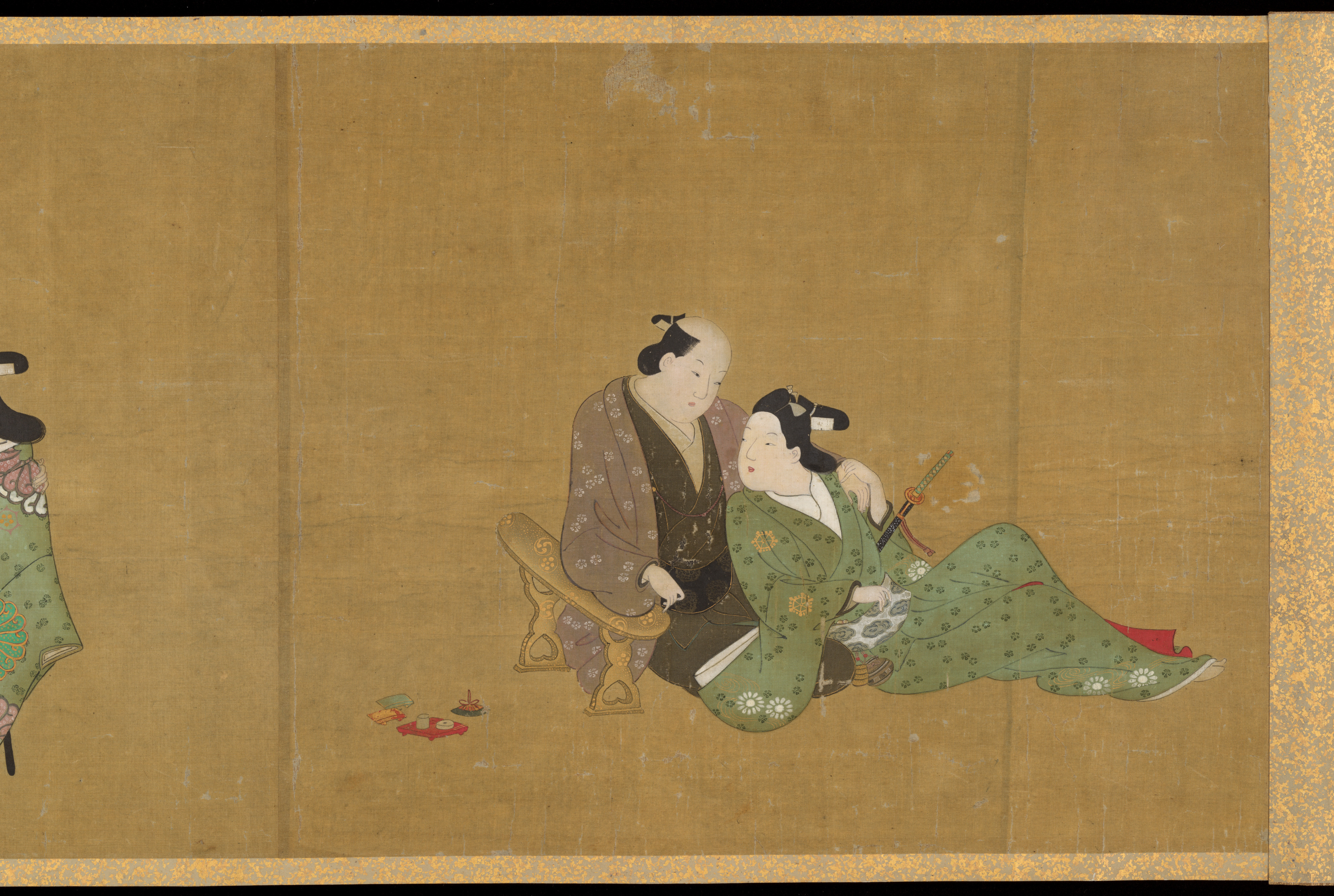
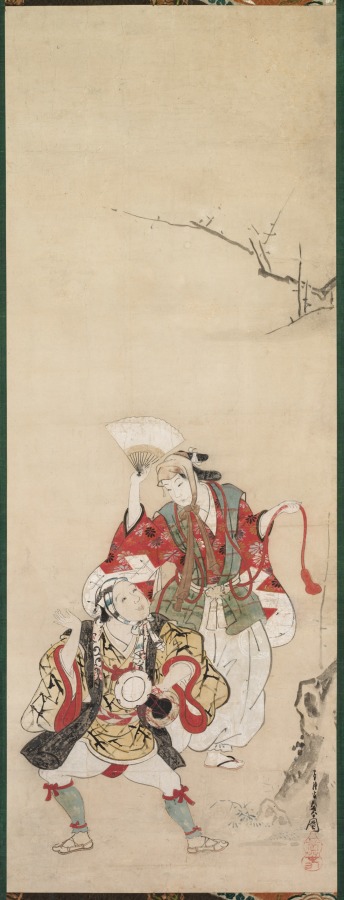
Held in the Art Institute of Chicago, Male Figure is a hanging scroll cut from its original rollers, in ink and colors on silk, that represents Miyagawa Chōshun's treatment of a single male subject in the bijin-ga tradition that more commonly featured women. Edo-period ukiyo-e painters periodically produced single-figure scrolls of young men, often actors, dandies, or the wakashū (beautiful young men) who occupied a recognized aesthetic and erotic category in early-modern Japanese culture, and Chōshun's Male Figure belongs to this broader tradition. The work's condition, cut from its mounting rollers, is typical of nineteenth- and twentieth-century Western collecting practice, in which Japanese scrolls were sometimes dismounted to facilitate display in Western frames or for conservation purposes. The figure is rendered with Chōshun's characteristic attention to garment construction, with the layered fabric described through carefully observed contour and pattern. The work's presence in the Art Institute's collection helps document the breadth of Chōshun's subject matter beyond the female courtesans for which he is most celebrated, and it offers important comparative material for understanding the gendered iconography of high-Genroku and Kyōhō-period painting.
More Prints by Miyagawa Chōshun

Frequently Asked Questions
Male Figure was created by Miyagawa Chōshun (宮川長春) in Edo period (1615-1868).