
Fujitsubo (from In the Garden of Genji)
藤壺
- Medium:
- Aquatint, deep etching, gold leaf
- Image courtesy of
- Hiroaki Miyayama Official Site — In the Garden of Genji
Description
Fujitsubo names the empress in whose Heian-court chamber wisteria (fuji) bloomed — Genji's stepmother and the object of his forbidden attachment; she resembles his deceased mother and bears him a son who will be raised as the emperor's. The character is closely identified with the wisteria of her palace residence. Miyayama's plate for Fujitsubo concentrates on cascading wisteria as the emblematic carrier, the pendulous panicles described in deep etched line and aquatint, with gold leaf applied to flat passages of the surrounding ground. The technique unites contemporary intaglio process with the decorative idiom of medieval and Edo-period Genji-e, in which botanical motifs encoded the volumes of the romance. Within In the Garden of Genji, the Fujitsubo sheet belongs to the cluster of prints in which a single named flower carries the chapter's literary content; the wisteria here functions both as the character's identifying flora and as a marker of the courtly setting in which the clandestine attachment unfolds.
More Prints by Hiroaki Miyayama


More Gardens Prints
![[Garden of] Taj Mahal, No. 1 (Taji Maharu no niwa, dai ichi) by Hiroshi Yoshida](https://www.artic.edu/iiif/2/230993a7-d4f0-c979-c267-127d48e1ef1c/full/843,/0/default.jpg)
[Garden of] Taj Mahal, No. 1 (Taji Maharu no niwa, dai ichi)
Taji Maharu no niwa, dai ichi
1931
Color woodblock print; oban

Kiyozumi Garden in Moonlight
January 1938
Woodblock print, ink and color on paper

Moon over Kiyosumi Garden (Tsuki no Kiyosumien)
1938
Color woodblock print; oban
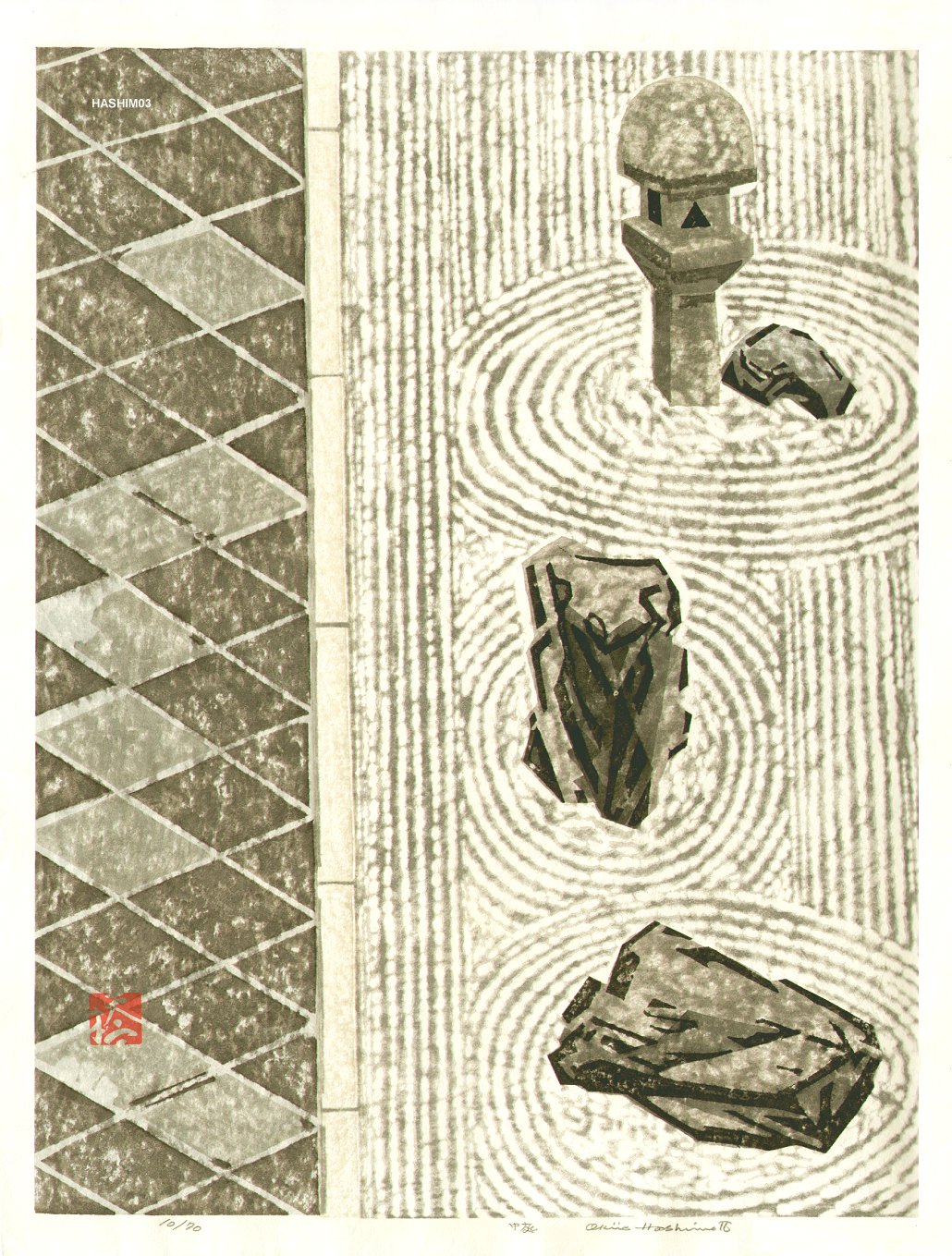
Rock garden
10/70, 1966
Woodblock print
Frequently Asked Questions
Fujitsubo (from In the Garden of Genji) (藤壺) was created by Hiroaki Miyayama (宮山 広明).
Fujitsubo (from In the Garden of Genji) depicts gardens and literary.