
Momiji-no-ga (from In the Garden of Genji)
紅葉賀
- Medium:
- Aquatint, deep etching, gold leaf
- Image courtesy of
- Hiroaki Miyayama Official Site — In the Garden of Genji
Description
The seventh chapter centers on the autumn excursion at which Genji performs the Seigaiha — the Blue Sea Waves dance — during a festival staged for the retired emperor. The chapter's title, which can be read as viewing the autumn leaves, names both the festival and the visual register of crimson maples that frames the courtly scene. Miyayama's print for the chapter activates this autumnal iconography: maple leaves rendered in deep etching, aquatint passages giving tonal weight to the foliage, and gold leaf applied across the ground, the gilded surface drawing on the screen-painting tradition's use of background gold to signal both season and atmosphere. The treatment of red maple as central motif distinguishes the sheet from the predominantly floral plates in the cycle and aligns with the chapter's autumn coding. Within In the Garden of Genji, Momiji-no-ga represents Miyayama's broader use of seasonal markers — alongside botanical emblems — to encode each chapter of the romance in a discrete pictorial unit.
More Prints by Hiroaki Miyayama


More Gardens Prints
![[Garden of] Taj Mahal, No. 1 (Taji Maharu no niwa, dai ichi) by Hiroshi Yoshida](https://www.artic.edu/iiif/2/230993a7-d4f0-c979-c267-127d48e1ef1c/full/843,/0/default.jpg)
[Garden of] Taj Mahal, No. 1 (Taji Maharu no niwa, dai ichi)
Taji Maharu no niwa, dai ichi
1931
Color woodblock print; oban

Kiyozumi Garden in Moonlight
January 1938
Woodblock print, ink and color on paper

Moon over Kiyosumi Garden (Tsuki no Kiyosumien)
1938
Color woodblock print; oban
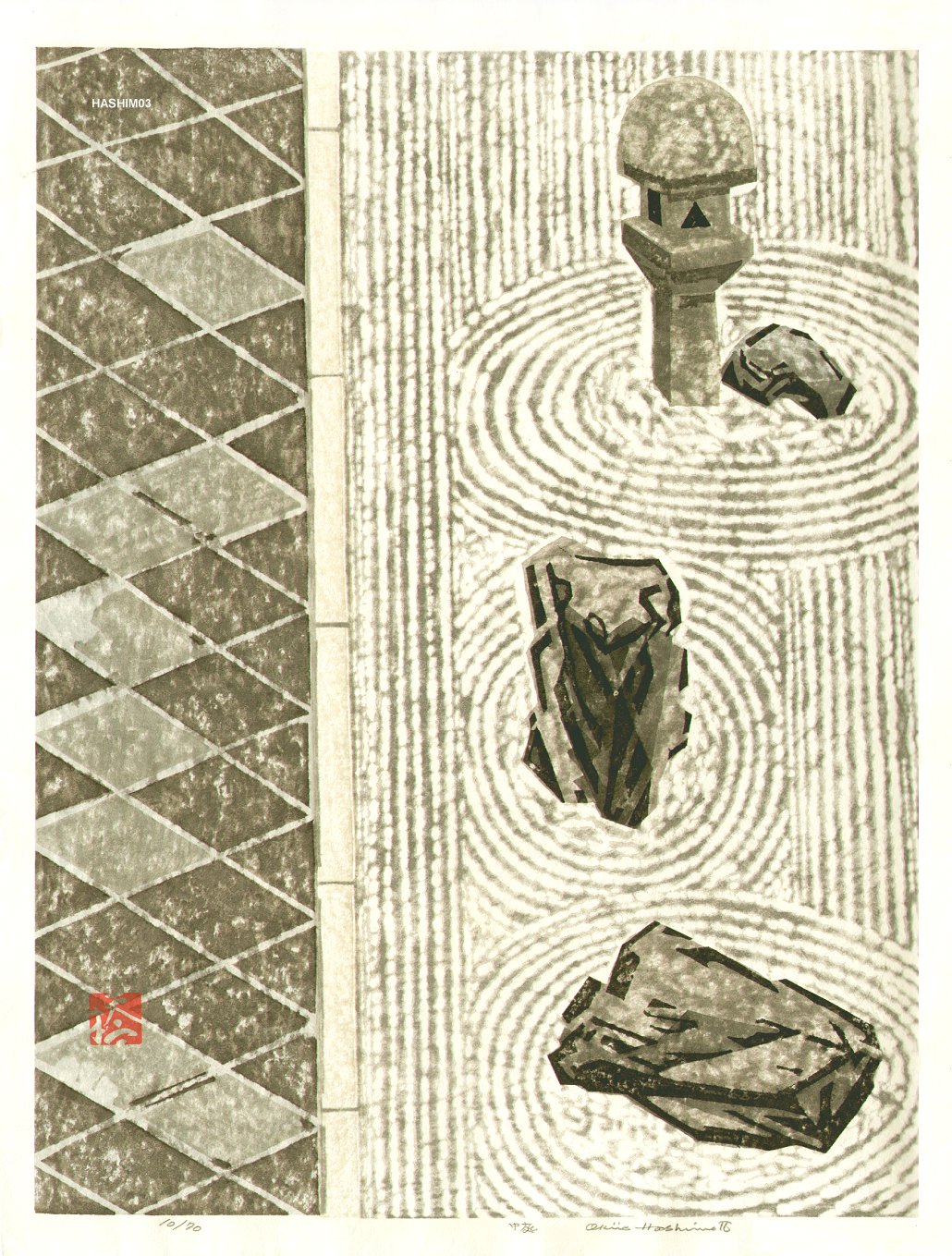
Rock garden
10/70, 1966
Woodblock print
Frequently Asked Questions
Momiji-no-ga (from In the Garden of Genji) (紅葉賀) was created by Hiroaki Miyayama (宮山 広明).
Momiji-no-ga (from In the Garden of Genji) depicts gardens, autumn foliage, and literary.