
Yomogiu (from In the Garden of Genji)
蓬生
- Medium:
- Aquatint, deep etching, gold leaf
- Image courtesy of
- Hiroaki Miyayama Official Site — In the Garden of Genji
Description
The fifteenth chapter, often translated as a waste of weeds or the wormwood patch, describes the rediscovery of Suetsumuhana, a former lover Genji had forgotten during his years of exile, living in a dilapidated mansion overgrown with wormwood (yomogi) and other weeds. Miyayama's print likely focuses on the tangled vegetation that gives the chapter its name — the feathery, deeply lobed mugwort leaf rendered through the dense bitten line of deep etching against gold leaf. The contrast between weed and gold ground carries the chapter's central image: a noble household reduced to ruin yet preserving an inner dignity. Within the series Yomogiu offers Miyayama an opportunity for a more graphically dense plate; where chapters such as Suma or Akashi favour open expanses, Yomogiu typically fills its sheet with overlapping foliage in the manner of a Rinpa grass-and-flower screen.
More Prints by Hiroaki Miyayama
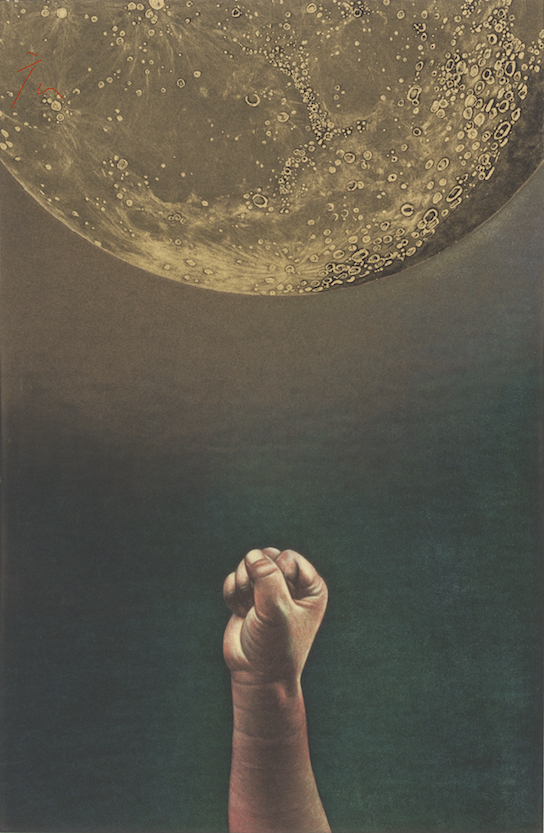


More Gardens Prints
![[Garden of] Taj Mahal, No. 1 (Taji Maharu no niwa, dai ichi) by Hiroshi Yoshida](https://www.artic.edu/iiif/2/230993a7-d4f0-c979-c267-127d48e1ef1c/full/843,/0/default.jpg)
[Garden of] Taj Mahal, No. 1 (Taji Maharu no niwa, dai ichi)
Taji Maharu no niwa, dai ichi
1931
Color woodblock print; oban

Kiyozumi Garden in Moonlight
January 1938
Woodblock print, ink and color on paper

Moon over Kiyosumi Garden (Tsuki no Kiyosumien)
1938
Color woodblock print; oban
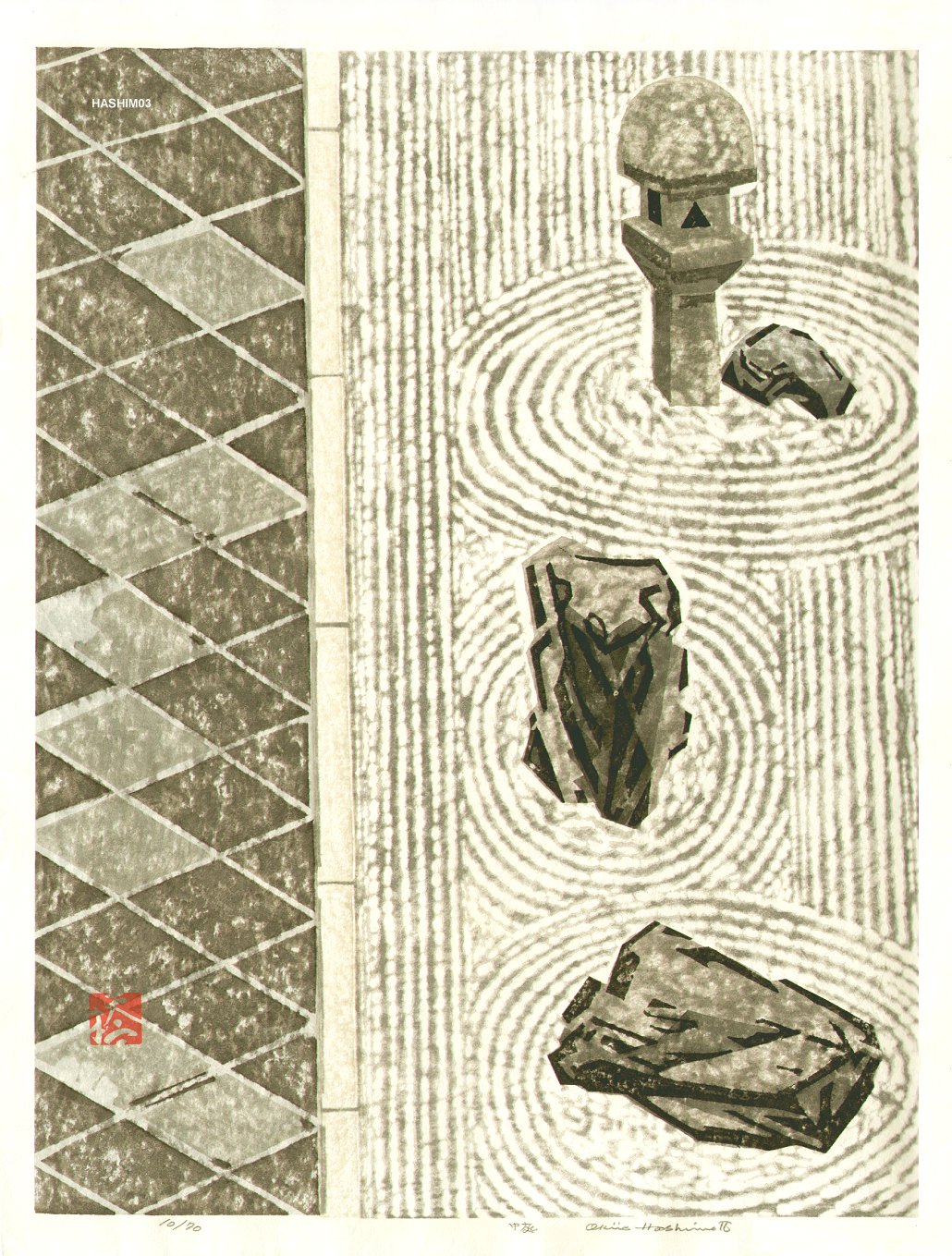
Rock garden
10/70, 1966
Woodblock print
Frequently Asked Questions
Yomogiu (from In the Garden of Genji) (蓬生) was created by Hiroaki Miyayama (宮山 広明).
Yomogiu (from In the Garden of Genji) depicts gardens and literary.