
Gate of Sofukuji Temple, Nagasaki
- Medium:
- Mokuhanga (Japanese woodblock)
- Image courtesy of
- Saru Gallery
Description
Sofukuji is a Chinese-style Obaku Zen temple in Nagasaki, founded in 1629 by Chinese merchants from Fujian and built in a Ming-dynasty architectural idiom rather than the Japanese temple style. Its First Gate (Daiippomon) and Second Gate (Sanmon, completed in 1696) are designated National Treasures and present unusual architectural features for a Japanese print subject: red-painted columns, intricate bracketing, and the curved gable forms of southern Chinese temple architecture. A mokuhanga treatment would call attention to these distinguishing features through carving precise enough to register the geometric complexity of the bracket arms and the calligraphic plaques, with color likely emphasizing the vermillion timbers against neutral roof tiles. The print belongs to the meisho-e tradition of famous-place imagery, but selects a site whose foreign-influenced architecture sets it apart from the standard temple subjects of Kyoto or Nara, locating the work in Nagasaki's distinctive history of foreign exchange.
More Prints by Nakagawa Isaku


More Temples & Shrines Prints
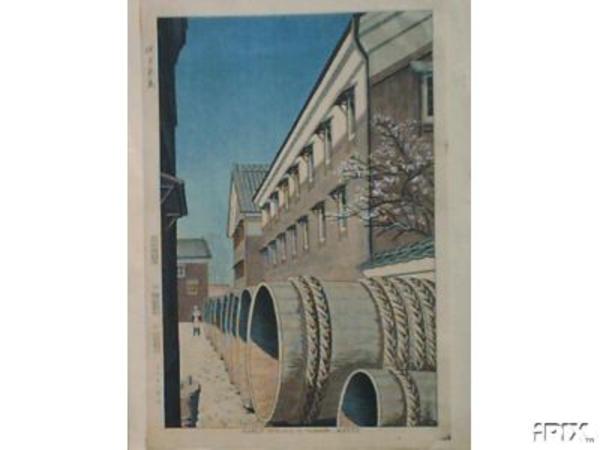
Fushimi Inari Temple
伏見稲荷
Woodblock print

The Compound of the Tenman Shrine at Kameido in the Snow (Kameido Tenmangu keidai no yuki), from the series "Famous Places in the Eastern Capital (Toto meisho)"
c. 1832/38
Color woodblock print; oban
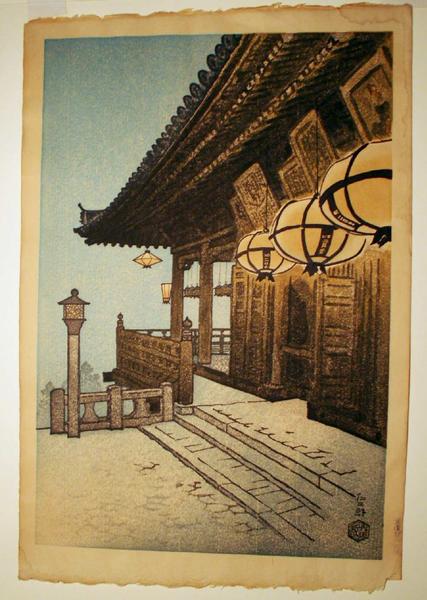
Temple with lanterns
Woodblock print

A Section of the Byodo Temple at Uji (Uji Byodoin no ichibu), from the series "Souvenirs of Travel, Second Series (Tabi miyage dai nishu)"
Uji Byodoin no ichibu
1921
Color woodblock print; oban
Featured in Collections
Curated cross-cuts that include this print.
Frequently Asked Questions
Gate of Sofukuji Temple, Nagasaki was created by Nakagawa Isaku (中川伊作).
Gate of Sofukuji Temple, Nagasaki depicts temples & shrines.