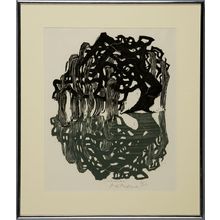
Solitude, Shôwa period,
- Medium:
- Woodblock print
- Source:
- Harvard Art Museum
- Image courtesy of
- Harvard Art Museum
Description
Solitude is a thematic work from Matsubara's Shōwa-period output that engages directly with the psychological and spiritual dimension her prints consistently address. The subject — isolation experienced as both condition and chosen state — recurs across her career and connects her work to the broader sosaku-hanga interest in interior experience over narrative or documentary function. The composition likely presents a single figure or a landscape rendered without human presence, using the formal language of emptiness and open ground that Japanese visual culture associates with meditative withdrawal. Matsubara's carving technique gives her prints a textural directness that prevents such subjects from resolving into sentimentality: the gouge marks read as physical labor, the product of sustained attention to the resistant surface of the block. Whether the image shows a solitary figure in a natural setting, a spare interior, or an unpopulated landscape, the print's title situates it within a long tradition of Japanese artistic reflection on aloneness as a condition of both suffering and insight.
More Prints by Naoko Matsubara

More Landscapes Prints

Lake Kugushi in Wakasa Province (Wakasa Kugushiko), from the series Souvenirs of Travel I (Tabi miyage dai isshu)"
Wakasa Kugushiko
1920
Color woodblock print; oban
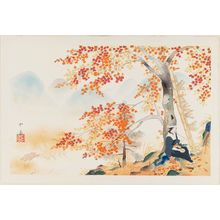
Autumn Maple Leaves at Takao, from the album Eight Views of Kyoto (Kyôto hakkei)
Woodblock print

The Beach at Kaiganji in Sanuki Province (Sanuki Kaiganji no hama), from the series "Collection of Views of Japan II, Kansai Edition (Nihon fukei shu II Kansai hen)"
1934
Color woodblock print; oban

Tea Kettle, section of a sheet from the series "Mirror of Stone Rubbings of Views of the Provinces" (Kohon meihitsu ishizuri kagami)
n.d.
Woodblock print; ishizuri-e, section of harimaze sheet
Featured in Collections
Curated cross-cuts that include this print.
Frequently Asked Questions
Solitude, Shôwa period, was created by Naoko Matsubara (松原直子).
Solitude, Shôwa period, depicts landscapes and trees.