
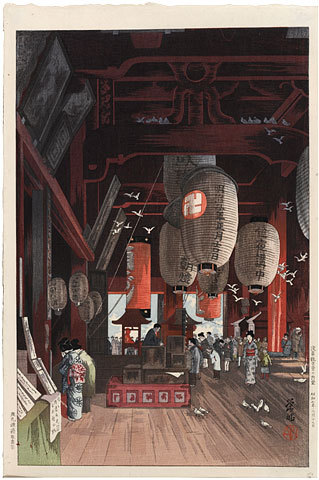
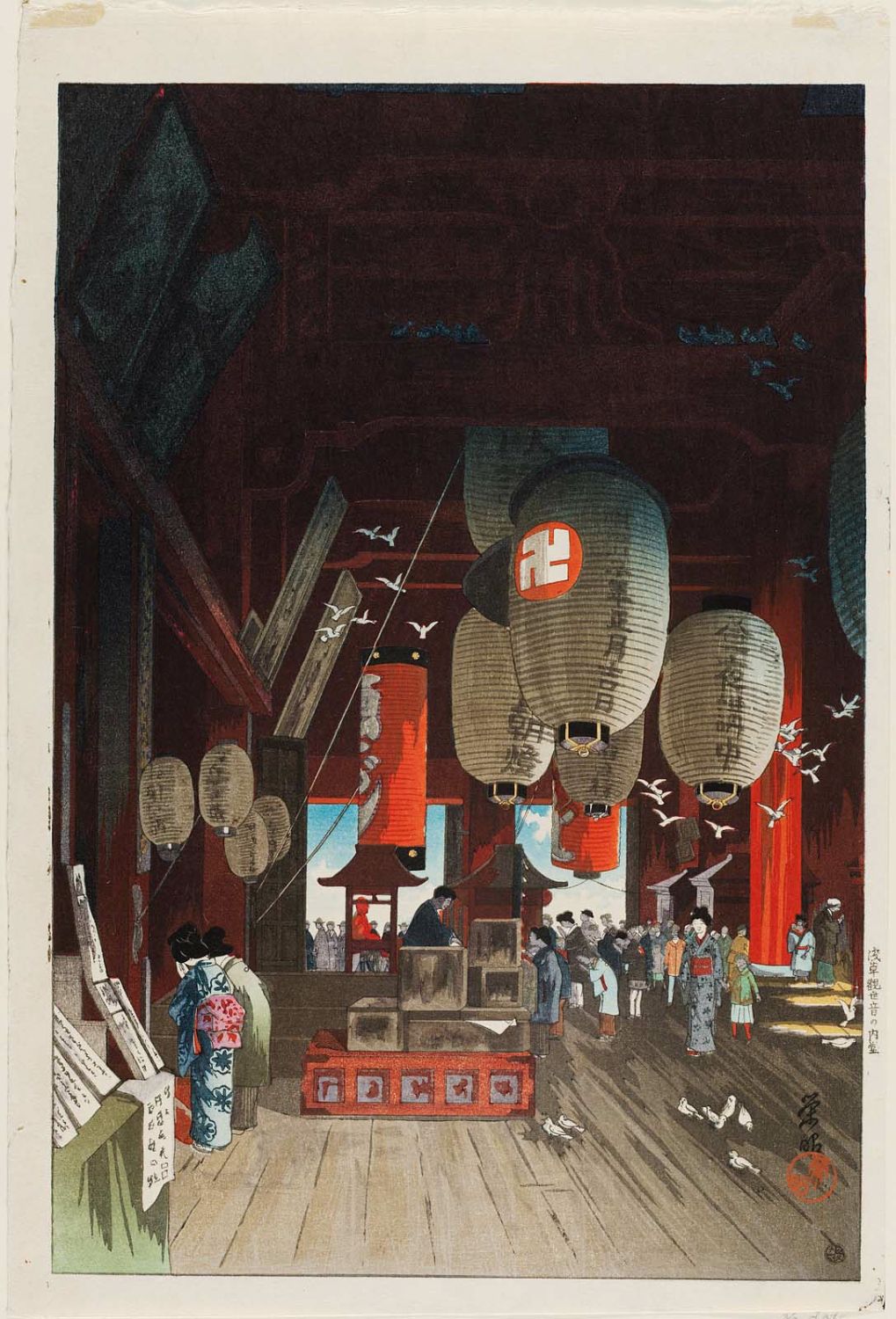
Interior of Asakusa Kannon Temple - 浅草観世音の内堂
- Source:
- ukiyo-e.org
Description
Interior of Asakusa Kannon Temple (浅草観世音の内堂) is a woodblock print by Narazaki Eisho documented through ukiyo-e.org from a published collection record, depicting the dimly lit inner hall of Sensô-ji in Tokyo's Asakusa district. The print continues Narazaki Eisho's interest in the great Buddhist temple as a subject, presenting the worship hall from within rather than as an exterior monument. Visitors stand or kneel in reverence before the curtained altar, their figures small against the soaring timber columns and the deep coffered ceiling overhead. Hanging votive lanterns and ornamental metal fittings catch the available light, while the recesses of the sanctuary fall into shadow, producing a strongly atmospheric reading of sacred space. The composition demonstrates the technical refinement that Narazaki Eisho carried over from the kuchi-e tradition of woodblock-printed literary frontispieces of the late Meiji period, in which delicate line, restrained color, and intimate psychological framing were prized over bold graphic statement. Here those same values are turned toward architectural reportage: the carver translates the artist's drawing into precisely registered impressions of beam, panel, and pillar, while the printer builds up the murky interior through layered gradations of brown, grey, and warm ochre. As a Meiji-Taisho woodblock subject extending into the Shôwa period, the print contributes to a broader twentieth-century interest among Japanese printmakers in documenting the country's living religious heritage at a moment of rapid urban modernization in Tokyo. The F seal visible on the impression marks it as a known studio printing, and the work survives as a quiet, observed record of devotional practice at one of the most heavily visited Buddhist sites in Japan, by an artist whose name remains closely associated with the Asakusa precinct.
More Prints by Narazaki Eisho

Featured in Collections
Curated cross-cuts that include this print.
Frequently Asked Questions
Interior of Asakusa Kannon Temple - 浅草観世音の内堂 was created by Narazaki Eisho (楢崎栄昌).