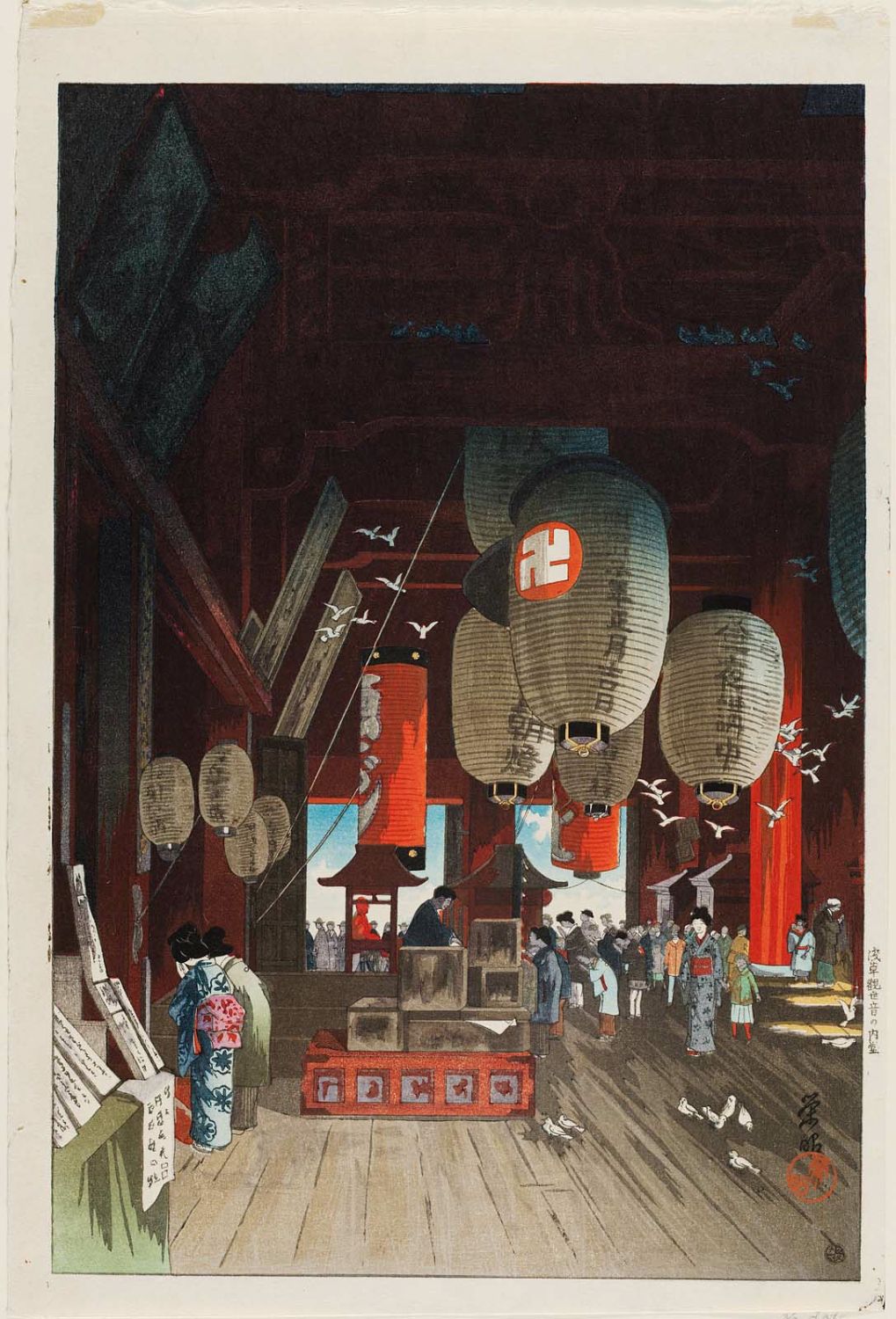
Interior of the Kannon Temple at Asakusa (Asakusa Kannon-dô no naidô)
- Date:
- Japanese, Taishô era–Shôwa era, 20th century
- Medium:
- Woodblock print
- Source:
- mfa
Description
Interior of the Kannon Temple at Asakusa (Asakusa Kannon-dô no naidô), a woodblock print by Narazaki Eisho, shows the darkened wooden interior of a temple hall lit by a row of large hanging paper lantern lamps marked with the manji symbol, suspended over a red offertory chest and wooden collection boxes. Doves or pigeons scatter across the worn plank floor and wheel through the shadowy upper rafters, while visitors in kimono and Western-style coats move along the hall and pause at a rack of paper omikuji fortunes on the left; sunlit red temple gates and a further pagoda-roofed structure are visible through the open doorway beyond. The palette is dominated by deep browns, blacks, and red-orange against the pale grey lanterns and a strip of bright blue sky in the background.
More Prints by Narazaki Eisho
More Urban Scenes Prints
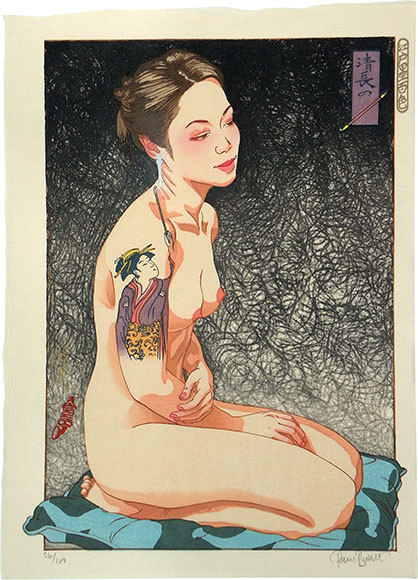
A Hundred Shades of Ink of Edo: Kiyonaga's Pipe (Edo zumi hyaku shoku: Kiyonaga no kiseru)
Woodblock print

View of Kabuki Theater from Matsuya (Ginza Matsuya yori Kabukiza), no. 3 from the series "Pictures of Ginza, First Series (Gashu Ginza dai isshu)"
1928
Color lithograph

Distant View of Mitsukoshi Movie Theater in Shinjuku from the Sixth Floor of Hoteiya (Hoteiya rokkai kara Shinjuku Mitsukoshi Musashi no kan enbo zu), no. 1 from the series "Scenery of Shinjuku (Gashu Shinjuku fukei)"
1930
Color lithograph
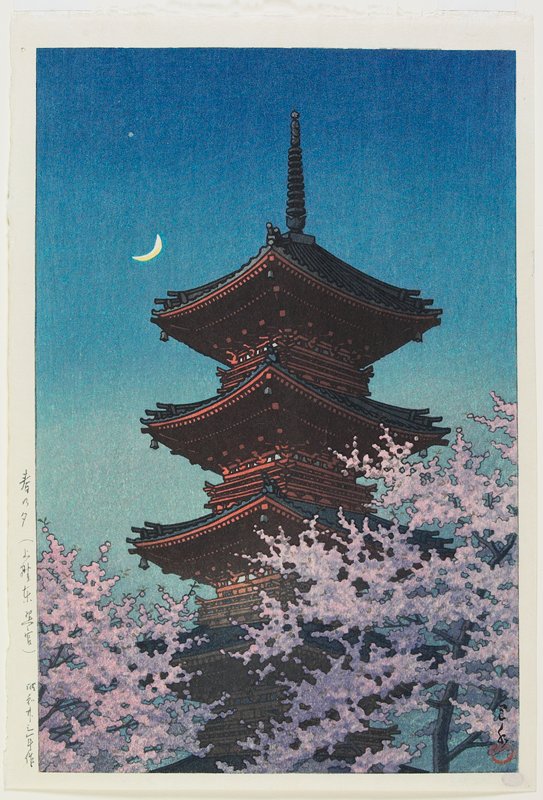
Spring Dusk at the Tōshō Shrine in Ueno
1948
Woodblock print, ink and color on paper
Featured in Collections
Curated cross-cuts that include this print.
Frequently Asked Questions
Interior of the Kannon Temple at Asakusa (Asakusa Kannon-dô no naidô) was created by Narazaki Eisho (楢崎栄昌) in Japanese, Taishô era–Shôwa era, 20th century.
Interior of the Kannon Temple at Asakusa (Asakusa Kannon-dô no naidô) depicts urban scenes, temples & shrines, and religious, set at Asakusa.