
Biography
Narazaki Eishō (楢崎栄昌, 1864-1936) was a Japanese printmaker of the late Meiji through early Shōwa periods who is remembered chiefly for a small body of designs made within the shin-hanga ("new print") movement. He trained in woodblock printmaking under the painter Kobayashi Eitaku (1843-1890), and he worked at Japan's government Printing Bureau in Tokyo, where he took up Western copperplate engraving in the tradition of the Italian engraver Edoardo Chiossone (1833-1898). He used several art names during his career, working under Furo and Fuyō before becoming best known as Eishō, and he appears to have begun designing woodblock prints for the export market around 1916.
In the early 1930s Narazaki collaborated with the celebrated Tokyo publisher Watanabe Shōzaburō on a small group of shin-hanga prints. The best known of these is Inside Asakusa Kannon Temple (1932), a view of the great temple's lantern-hung interior; he also depicted landmarks of modern Tokyo such as the new Imperial Diet Building and the Meiji Shrine. Beyond these architectural subjects he worked in the bird-and-flower tradition, as in his kingfisher perched among snow-laden reeds of about 1920, and treated other nature studies as well.
His prints favor atmospheric effect over topographic precision, with soft bokashi gradations across skies and water and a restrained palette of muted blues, grays, and earth tones warmed by occasional accents of lantern light. Because his output was modest and his shin-hanga collaboration with Watanabe brief, surviving examples are comparatively scarce, and the full scope of his work has yet to be comprehensively catalogued in Western scholarship. He should not be confused with Narazaki Muneshige, the twentieth-century art historian and scholar of ukiyo-e and shin-hanga.
Key Facts
- Nationality
- 🇯🇵Japan
- Movement
- Shin-hanga
- Works Indexed
- 16
Frequently Asked Questions
Narazaki Eishō (楢崎栄昌, 1864-1936) was a Japanese printmaker of the late Meiji through early Shōwa periods who is remembered chiefly for a small body of designs made within the shin-hanga ("new print") movement. He trained in woodblock printmaking under the painter Kobayashi Eitaku (1843-1890), and he worked at Japan's government Printing Bureau in Tokyo, where he took up Western copperplate engraving in the tradition of the Italian engraver Edoardo Chiossone (1833-1898). He used several art names during his career, working under Furo and Fuyō before becoming best known as Eishō, and he appears to have begun designing woodblock prints for the export market around 1916.
Narazaki Eisho's work was shaped by the Shin-hanga tradition in Japanese woodblock printmaking. Shin-hanga: ## What is Shin-hanga? Shin-hanga (新版画), literally "new prints," is the early twentieth-century revival of the collaborative Japanese woodblock workshop, organized between roughly 1915 and 1960 by the Tokyo publisher Watanabe Shōzaburō (1885–1962) and a handful of competing houses.
Narazaki Eisho's prints frequently feature temples & shrines, urban scenes, landscapes, snow scenes, birds & flowers, religious.
Original prints by Narazaki Eisho can be found in collections including Scholten Japanese Art, Chazen Museum of Art, mfa, Japanese Art Open Database.
Woodblock Prints by Narazaki Eisho (16)
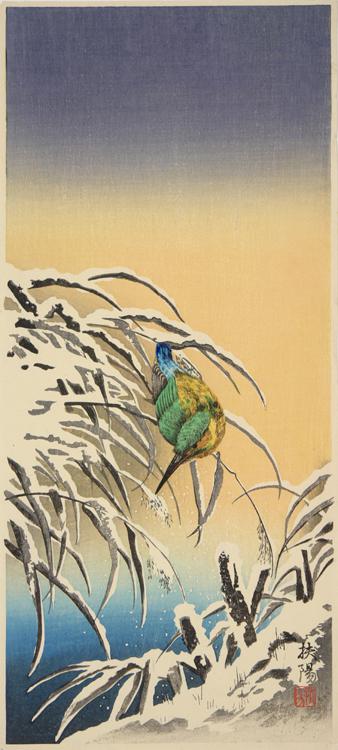
Kingfisher on Snowladden Reeds
1912-1936
Color woodblock print

Narazaki Eisho (Narazaki Eishô)
Shôwa period, 1926-1989
Woodblock print
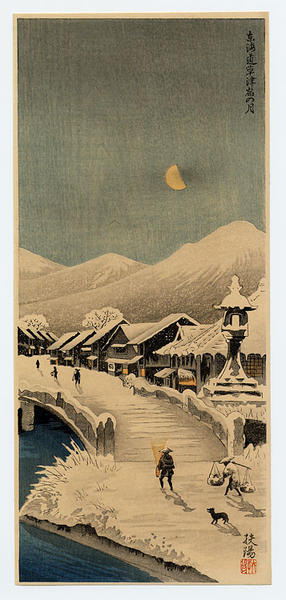
Tokaido Kusatsu Night Moon
1930
Woodblock print
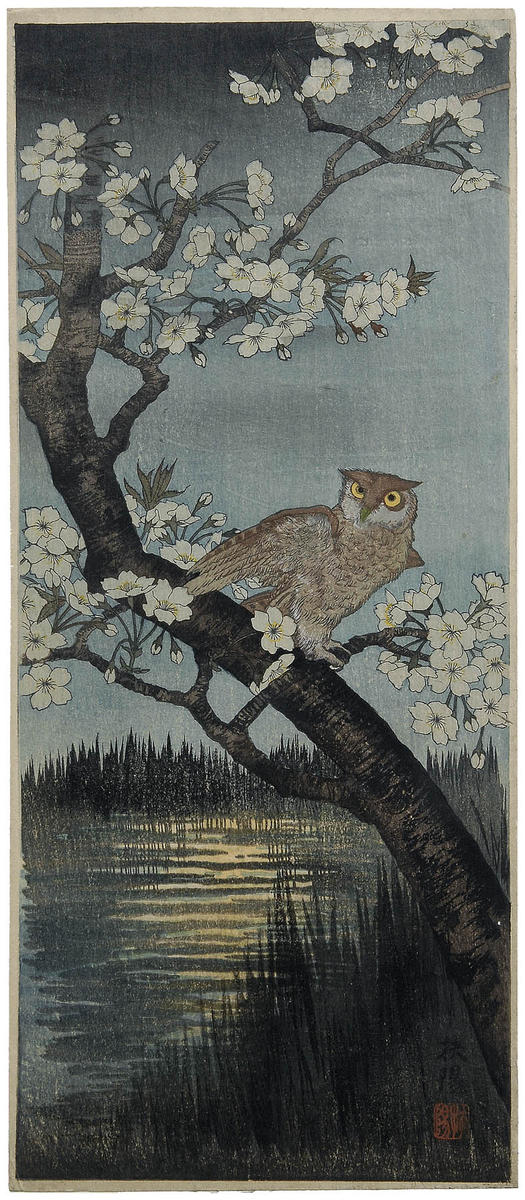
Owl and Cherry
1930
Woodblock print
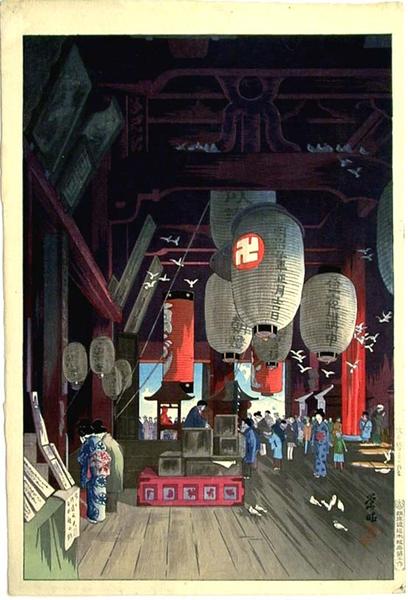
Asakusa Kanzeon Temple
1932
Color woodblock print
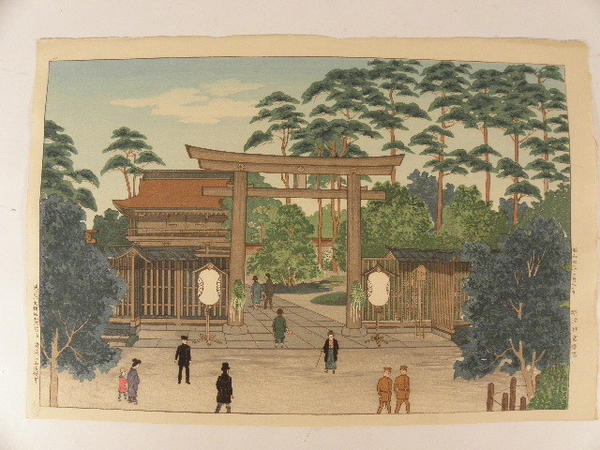
Meiji Shrine
1932
Woodblock print
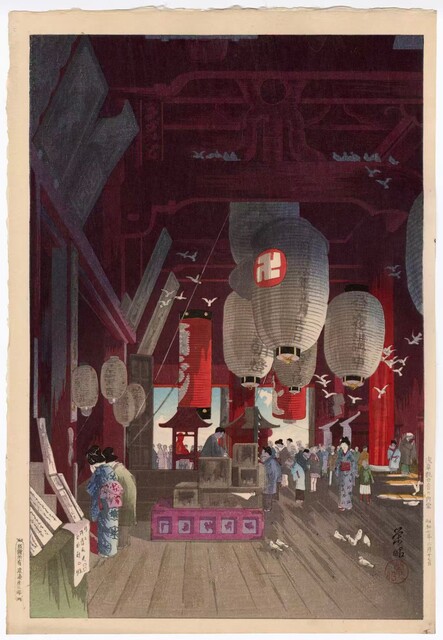
The Inner Hall of Asakusa Kannon/浅草観世音の内堂
1932
Woodblock Print
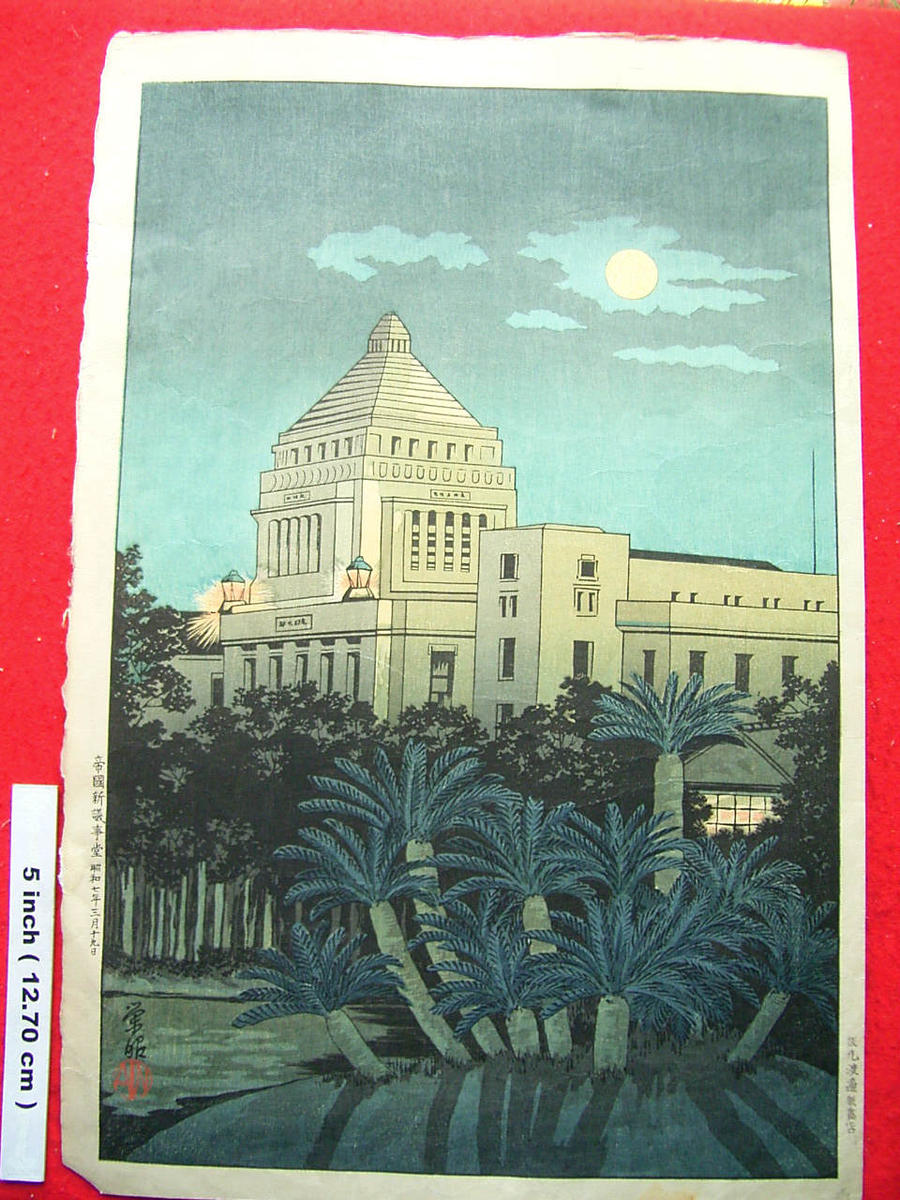
Teikoku Shin-Gijido - New Imperial Diet
1932
Woodblock print
Print 1
Woodblock print
Kingfisher on Snowy Reeds
Woodblock print
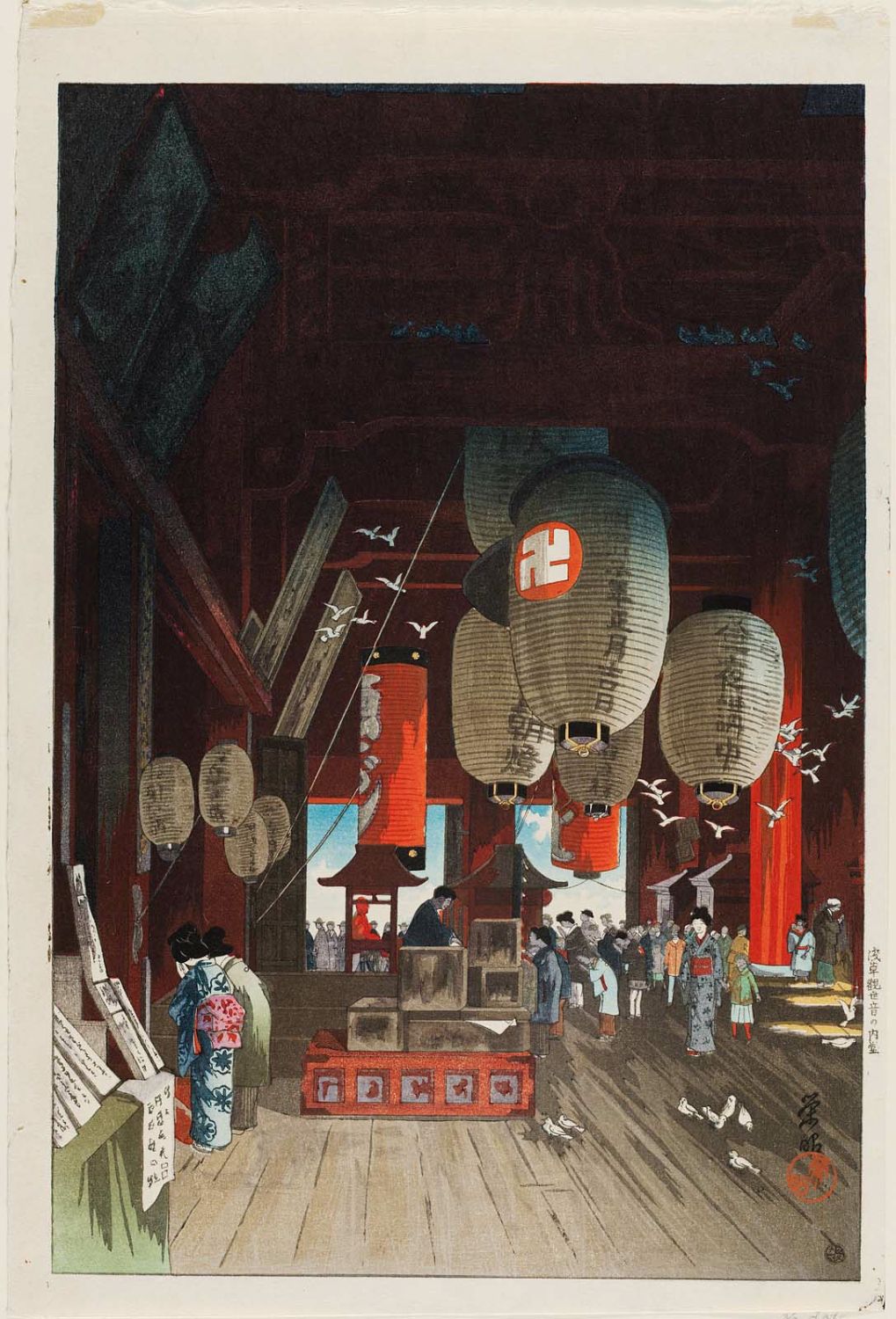
Interior of the Kannon Temple at Asakusa (Asakusa Kannon-dô no naidô)
Japanese, Taishô era–Shôwa era, 20th century
Woodblock print
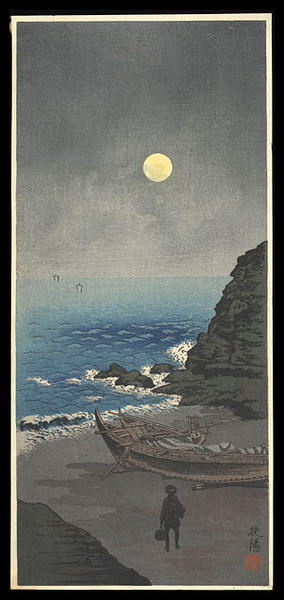
Traveler on Moonlit Shore
Not set
Woodblock print
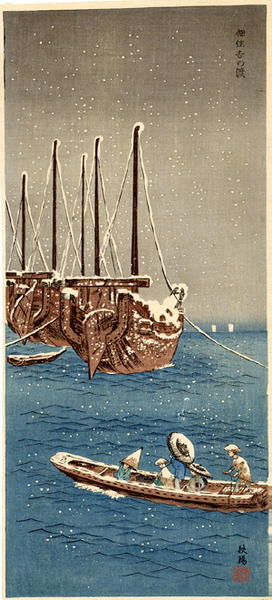
Ferry in Snow
Not set
Woodblock print
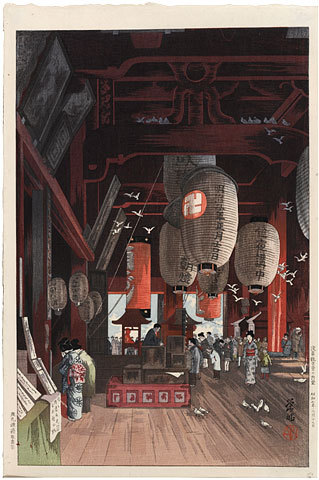
Interior of Asakusa Kannon Temple (Asakusa Kanzeon no Naido)
Woodblock print

Interior of Asakusa Kannon Temple (Asakusa Kannon no naidô), Shôwa period, dated 1932
