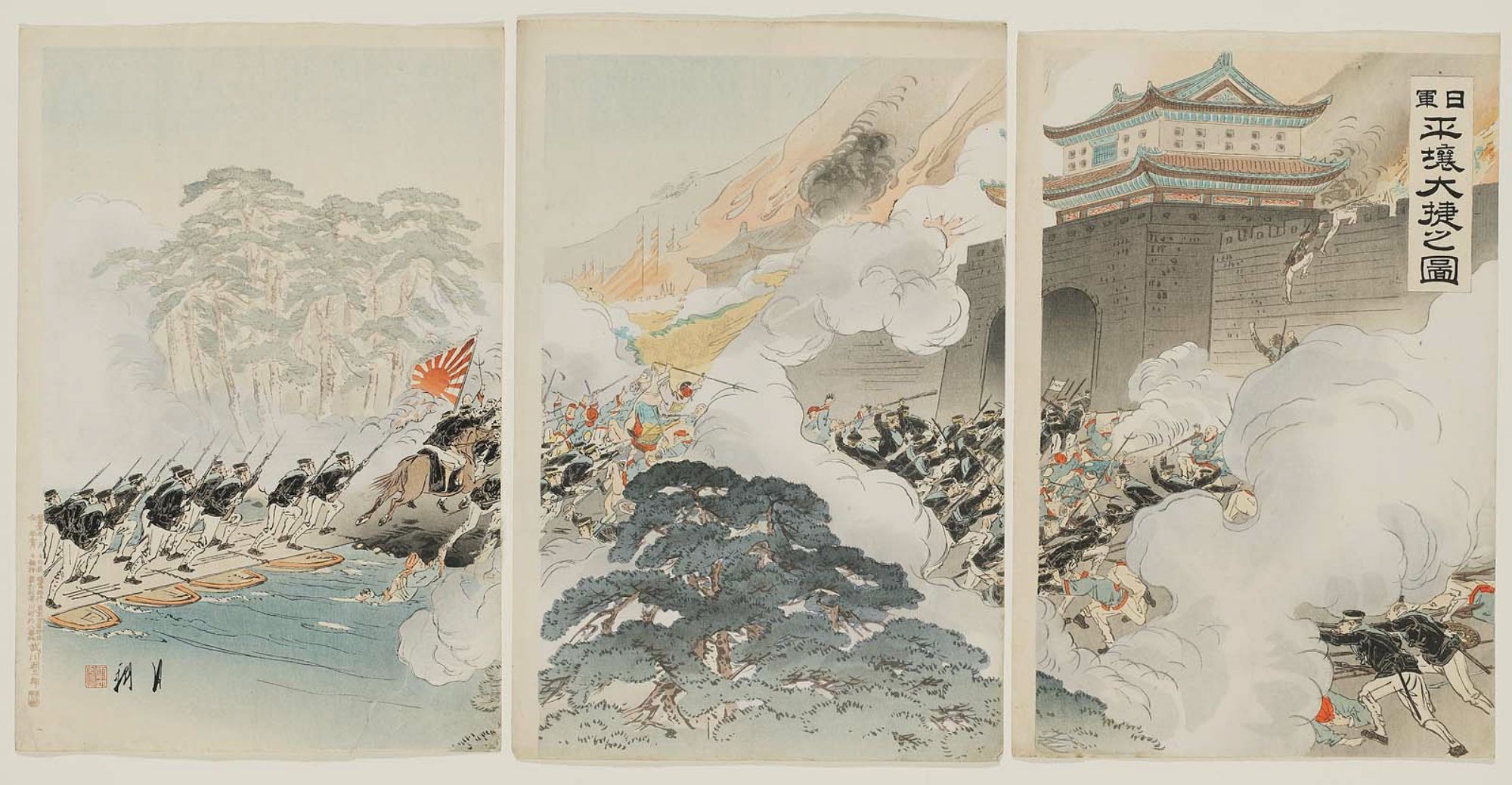
Illustration of the Great Battle of the Japanese Army at Pyongyang (Nichigun Heijô daishô no zu)
by Ogata Gekko
- Medium:
- Woodblock print
- Source:
- Museum of Fine Arts Boston
- Image courtesy of
- Museum of Fine Arts Boston
Description
This war print by Ogata Gekko (1859–1920) depicts the Battle of Pyongyang in September 1894, when Japanese forces defeated Chinese and Korean troops defending the city during the First Sino-Japanese War. Meiji-era senso-ga (war prints) were typically issued as triptychs across three oban sheets, produced rapidly in response to battlefield dispatches. Gekko's composition likely shows Imperial Japanese Army infantry in Meiji-period Western-style uniforms advancing through artillery smoke and fire, with Pyongyang's architecture visible in the background. The nishiki-e technique was applied at speed to meet wartime publishing demand, sometimes resulting in simplified figure draftsmanship and emphatic tonal contrasts — red for fire and regimental flags set against smoke-darkened buildings and uniforms. These prints simultaneously served propagandistic and documentary functions, providing civilian audiences with visualizations of engagements occurring far from Tokyo. Gekko was among the established print designers who contributed to the genre alongside Kobayashi Kiyochika, who was producing the most technically ambitious war prints of the conflict.
More Prints by Ogata Gekko
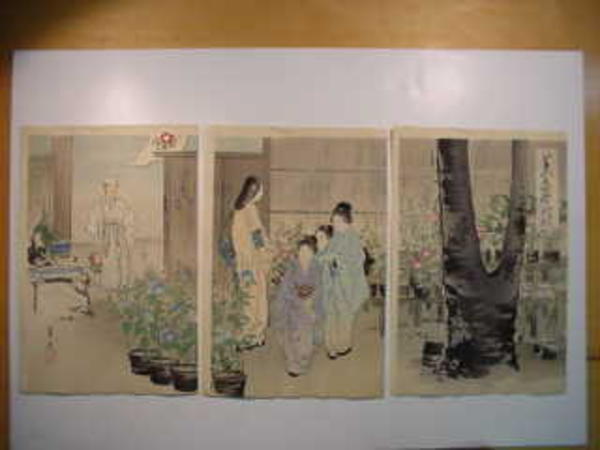
MORNING GLORIES AT IRIYA, TOKYO
Woodblock print

Nippon-damashii, Kyokaku 日本魂 侠客 / Gekko zuihitsu 月耕随筆
Woodblock print
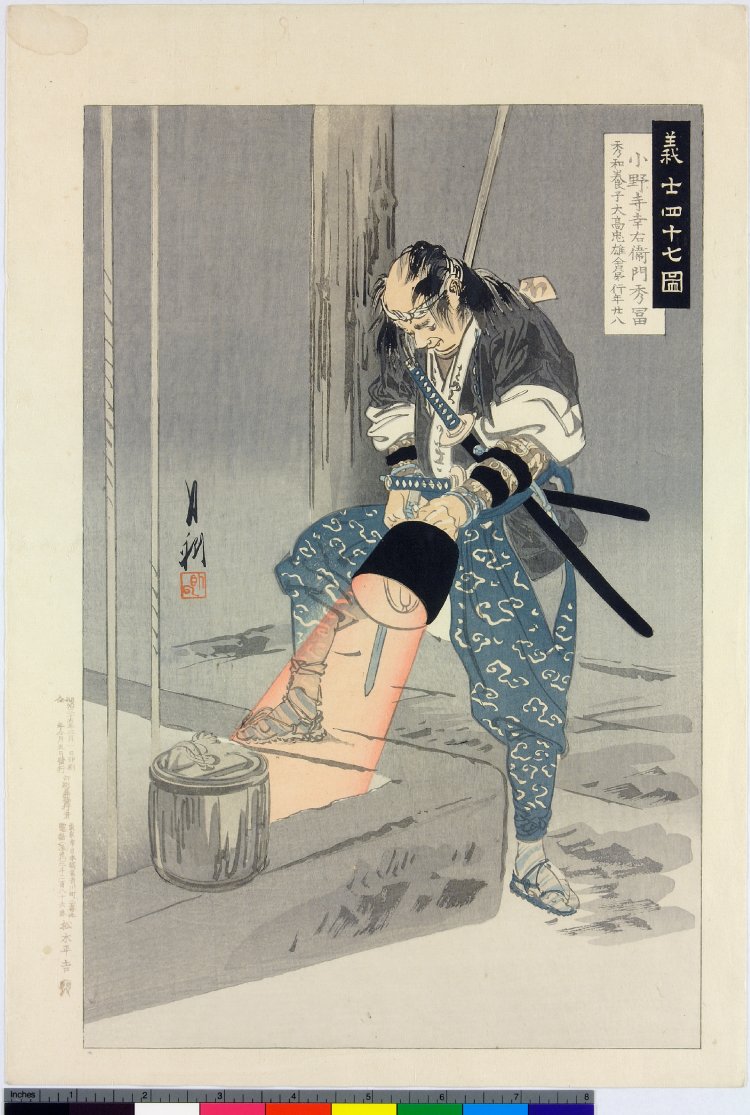
Onodera Koemon Hidetomi 小野寺幸右衛門秀富 / Gishi shijushichi zu 義士四十七図
Woodblock print
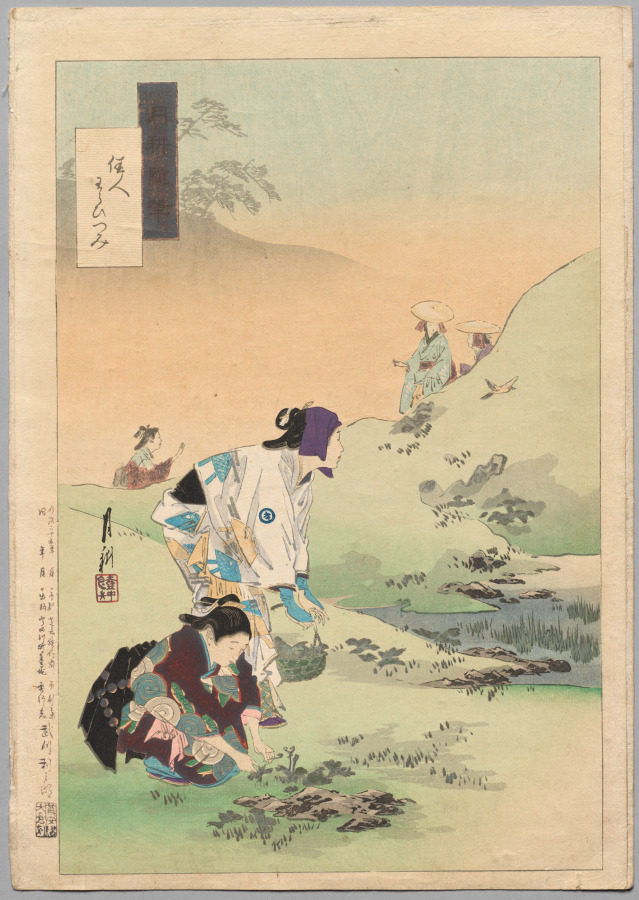
Beauties Harvesting Bracken, from the series Gekkō’s Miscellaney
c. 1886–1899
Woodblock print, ink and color on paper
More Warriors Prints
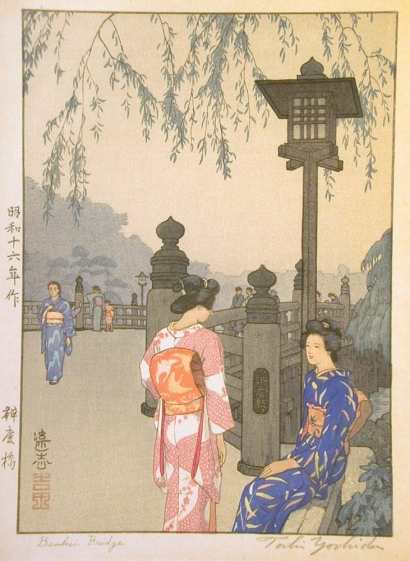
Benkei Bridge
Woodblock print

Saishin, from the series "Fashionable Women as the One Hundred and Eight Heroes of the Water Margin (Fuzoku onna Suikoden, ippyakuhachinin no uchi)"
c. 1828/30
Color woodblock print; surimono
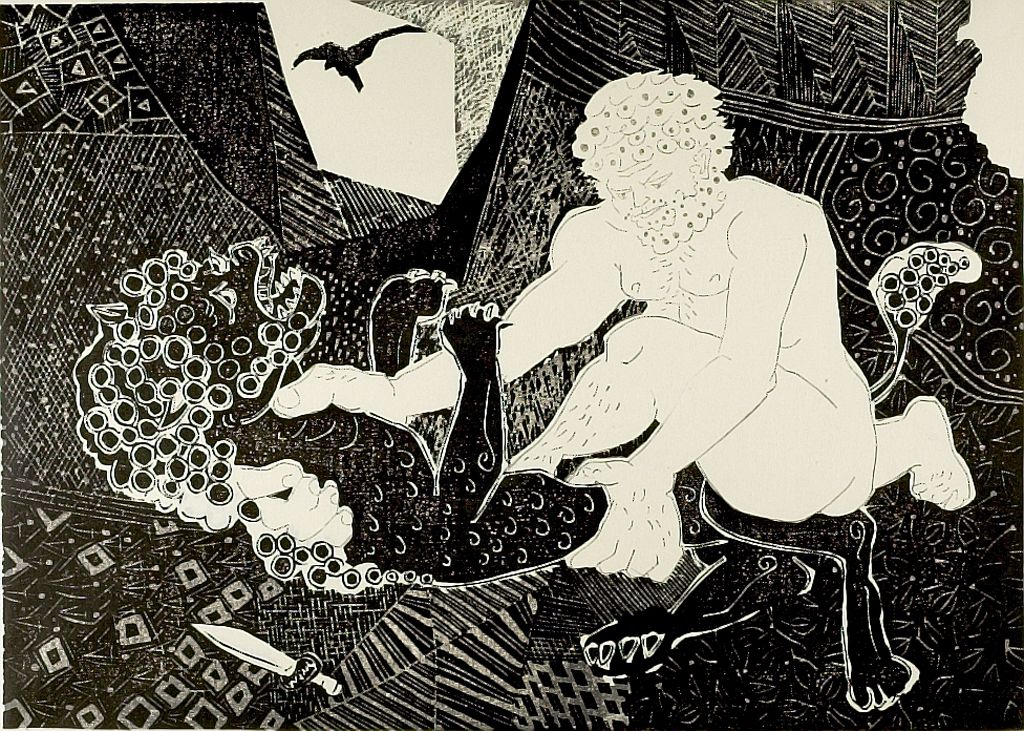
Herakles, Shôwa period, dated 1965?
Woodblock print
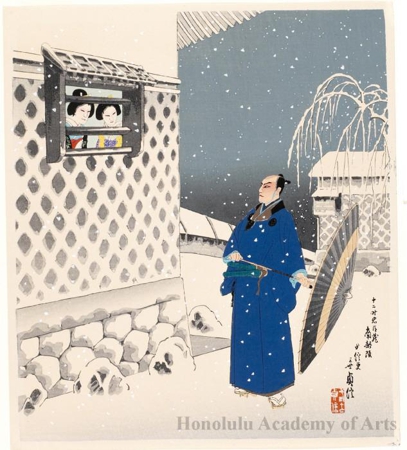
Chüshingura in Twelve Months
Woodblock print
Featured in Collections
Curated cross-cuts that include this print.
Frequently Asked Questions
Illustration of the Great Battle of the Japanese Army at Pyongyang (Nichigun Heijô daishô no zu) was created by Ogata Gekko (尾形月耕).
Illustration of the Great Battle of the Japanese Army at Pyongyang (Nichigun Heijô daishô no zu) depicts warriors.