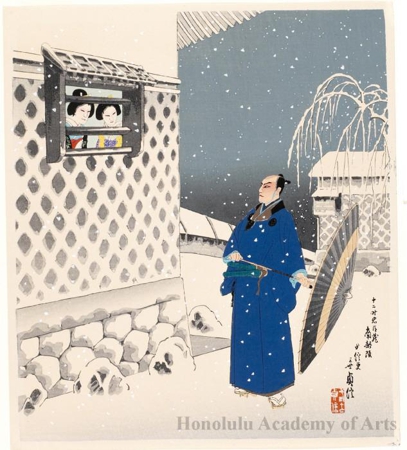
Chüshingura in Twelve Months
- Medium:
- Woodblock print
- Source:
- Honolulu Museum of Art
- Image courtesy of
- Honolulu Museum of Art
Description
Chushingura, the dramatization of the forty-seven ronin who avenged their lord Asano Naganori in 1703, was among the most frequently depicted narratives in Japanese popular culture. A series organized around twelve months would map scenes from the vendetta narrative onto the seasonal calendar, pairing each act or episode with a corresponding month's visual motifs — cherry blossoms, summer heat, autumn foliage, or winter snow. This format allowed Sadanobu III to blend historical drama with meisho-e sensibility, grounding the familiar story in seasonal atmosphere. As an Osaka artist, he worked within a region where Chushingura was deeply embedded in kabuki and bunraku culture, lending the series particular local resonance. The twelve-sheet format is consistent with Meiji and Taisho-era print publishing conventions.
More Prints by Hasegawa Sadanobu III
More Figures Prints
Featured in Collections
Curated cross-cuts that include this print.
Frequently Asked Questions
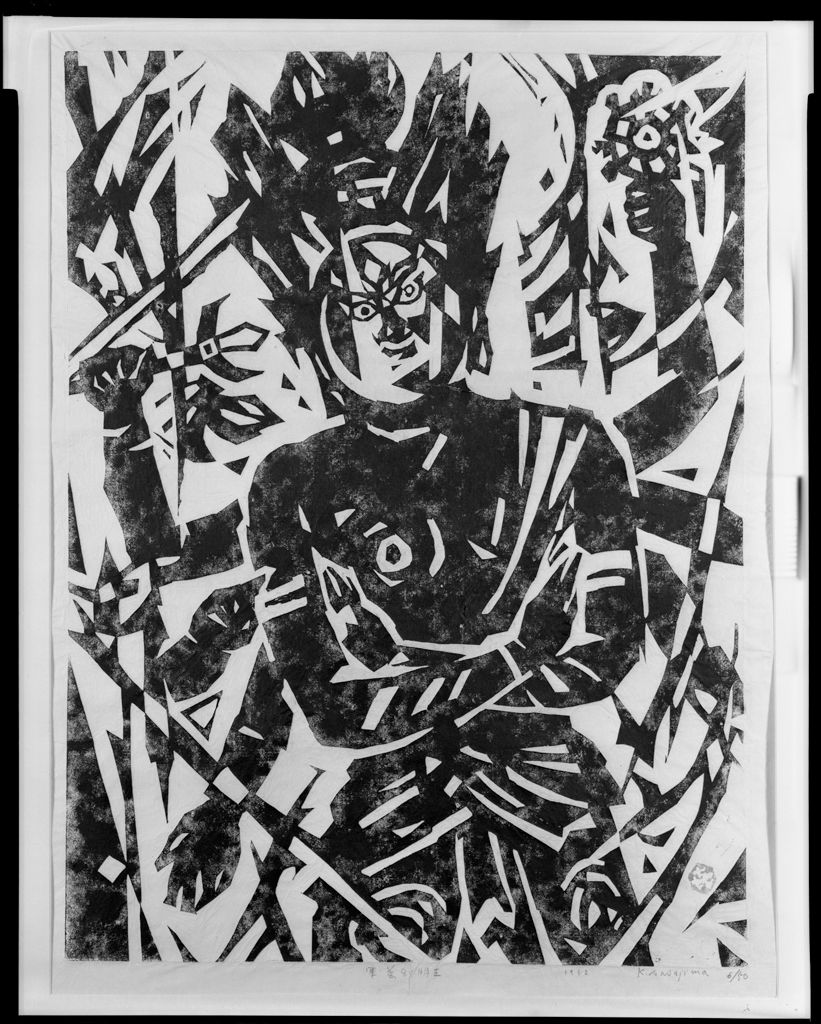
Chüshingura in Twelve Months was created by Hasegawa Sadanobu III (長谷川貞信三世).
Chüshingura in Twelve Months depicts figures, kabuki, and warriors.