
Rocks and Flowers
- Date:
- 1817
- Medium:
- Hanging scroll, ink and color on paper
- Source:
- Minneapolis Institute of Art
Description
Rocks and Flowers, dated 1817, is a hanging scroll by Okada Beisanjin (岡田米山人, 1744-1820), held by the Minneapolis Institute of Art (accession recorded at https://collections.artsmia.org/art/117381). The pairing of rocks with flowering plants belongs to a venerable strand of Chinese literati painting — the kind of subject explored at length in late Ming and Qing scholar-painter manuals, where rock and bloom together stage a meditation on permanence and ephemerality, on the unmoving substance of stone against the seasonal display of flowers. The Chinese taste for the strangely shaped scholar's rock (gongshi) is itself a long-running theme in literati culture, from the rock-collecting habits of Song scholar-officials such as Mi Fu to the elaborate Ming and Qing connoisseurship of garden stones, and rocks paired with seasonal flowers carry that whole cultural inheritance into the painted composition. Beisanjin, a self-trained Osaka rice merchant who became a foundational figure of Kansai bunjinga, took his bearings from those imported sources and from the example of earlier Japanese literati painters such as Ike no Taiga (1723-1776) and Yosa Buson (1716-1784); his treatment of even small subjects insists on the deliberately untutored brush that the Chinese literati ideal associated with the amateur scholar's hand. The composition treats rock and bloom as occasions for that brushwork: the rock as a vehicle for the dragged texture strokes and dotted moss of the literati vocabulary, the flowers as occasions for more concentrated linear and color work. The 1817 date places the sheet in the final three years of his life, during which his son Okada Hankō (1782-1846) was already an established painter in his own right and the most important channel by which the Beisanjin manner would pass to the next generation. The Minneapolis source confirms attribution and date.
More Prints by Okada Beisanjin

Landscape
19th century
Hanging scroll, ink and color on paper

A Tale of Mom and Dad in Olden Times
1793
Hanging scroll, ink and color on paper

Landscape with Pines in the Manner of Wang Hui
first half 19th century
Hanging scroll, ink and color on paper
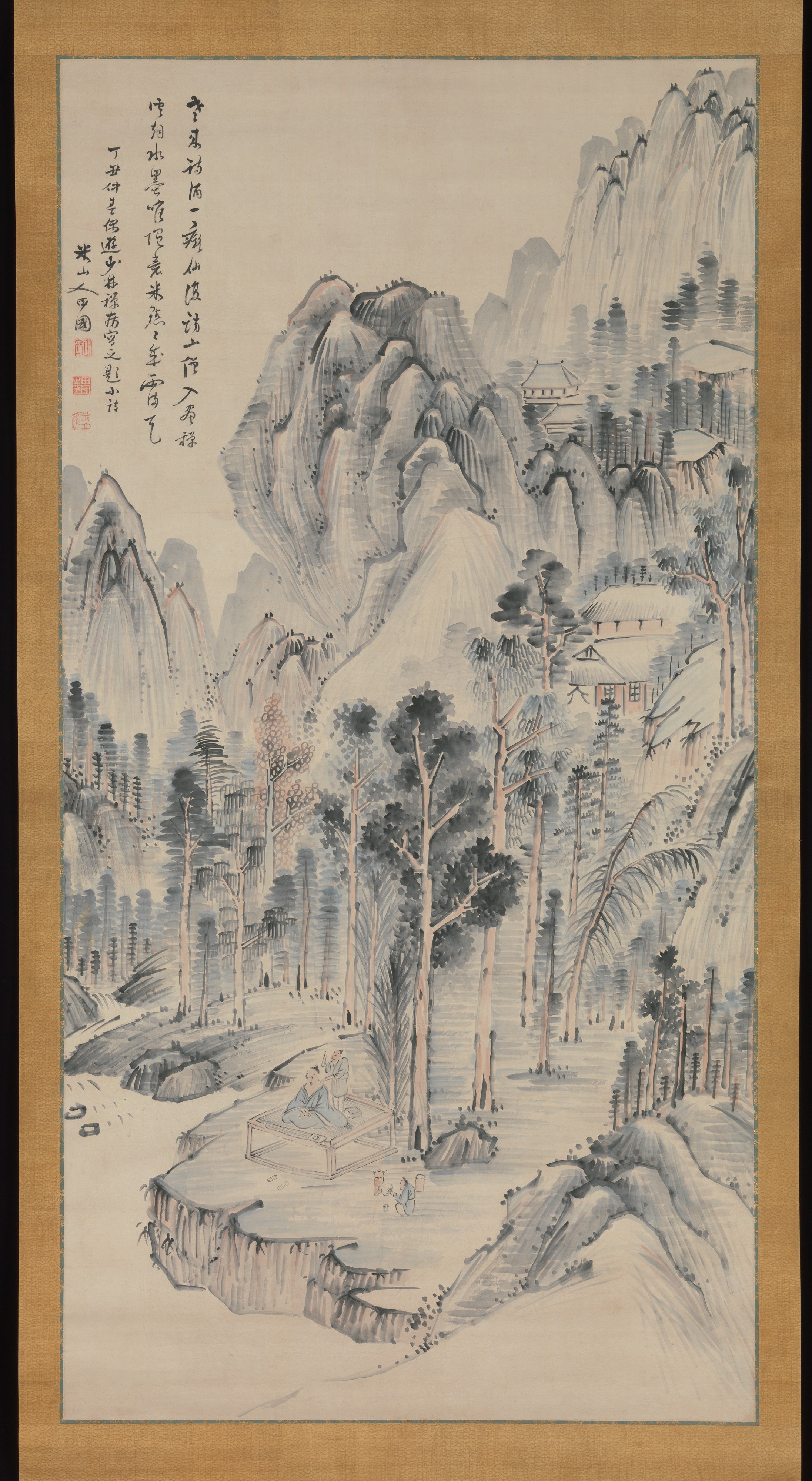
Shorinji Temple
1817
Hanging scroll; ink and color on paper
More Birds & Flowers Prints
Frequently Asked Questions
Rocks and Flowers was created by Okada Beisanjin (岡田米山人) in 1817.
Rocks and Flowers depicts birds & flowers.