
Bamboo forest and garden of Shisendo pavilion in Kyoto
- Medium:
- Mokuhanga (Japanese woodblock)
- Image courtesy of
- Saru Gallery
Description
Shisendo is a villa and hermitage in the Ichijoji district of northeastern Kyoto, built in 1641 by the poet and garden designer Ishikawa Jozan. Its garden combines clipped azalea mounds, a raked sand terrace, and a bamboo grove that screens the approach path — a composition of contrasting textures between dense vertical culms and sculpted, rounded shrubbery. Hashimoto's print focuses on the bamboo forest and garden together, a subject demanding the carver's attention to repetitive vertical form: each culm rendered with subtle tonal variation, the leaves handled through abbreviated, directional cut marks. The architectural pavilion may appear as a framing element at the composition's edge. Shisendo is a recognized meisho of Kyoto, connecting Hashimoto's work to the classical Japanese tradition of depicting celebrated named places. The garden's intimacy and enclosed scale distinguish this print from his more monumental castle subjects, demonstrating his range within architectural and landscape printmaking within the sosaku-hanga movement.
More Prints by Okiie Hashimoto

More Gardens Prints
![[Garden of] Taj Mahal, No. 1 (Taji Maharu no niwa, dai ichi) by Hiroshi Yoshida](https://www.artic.edu/iiif/2/230993a7-d4f0-c979-c267-127d48e1ef1c/full/843,/0/default.jpg)
[Garden of] Taj Mahal, No. 1 (Taji Maharu no niwa, dai ichi)
Taji Maharu no niwa, dai ichi
1931
Color woodblock print; oban

Kiyozumi Garden in Moonlight
January 1938
Woodblock print, ink and color on paper

Moon over Kiyosumi Garden (Tsuki no Kiyosumien)
1938
Color woodblock print; oban
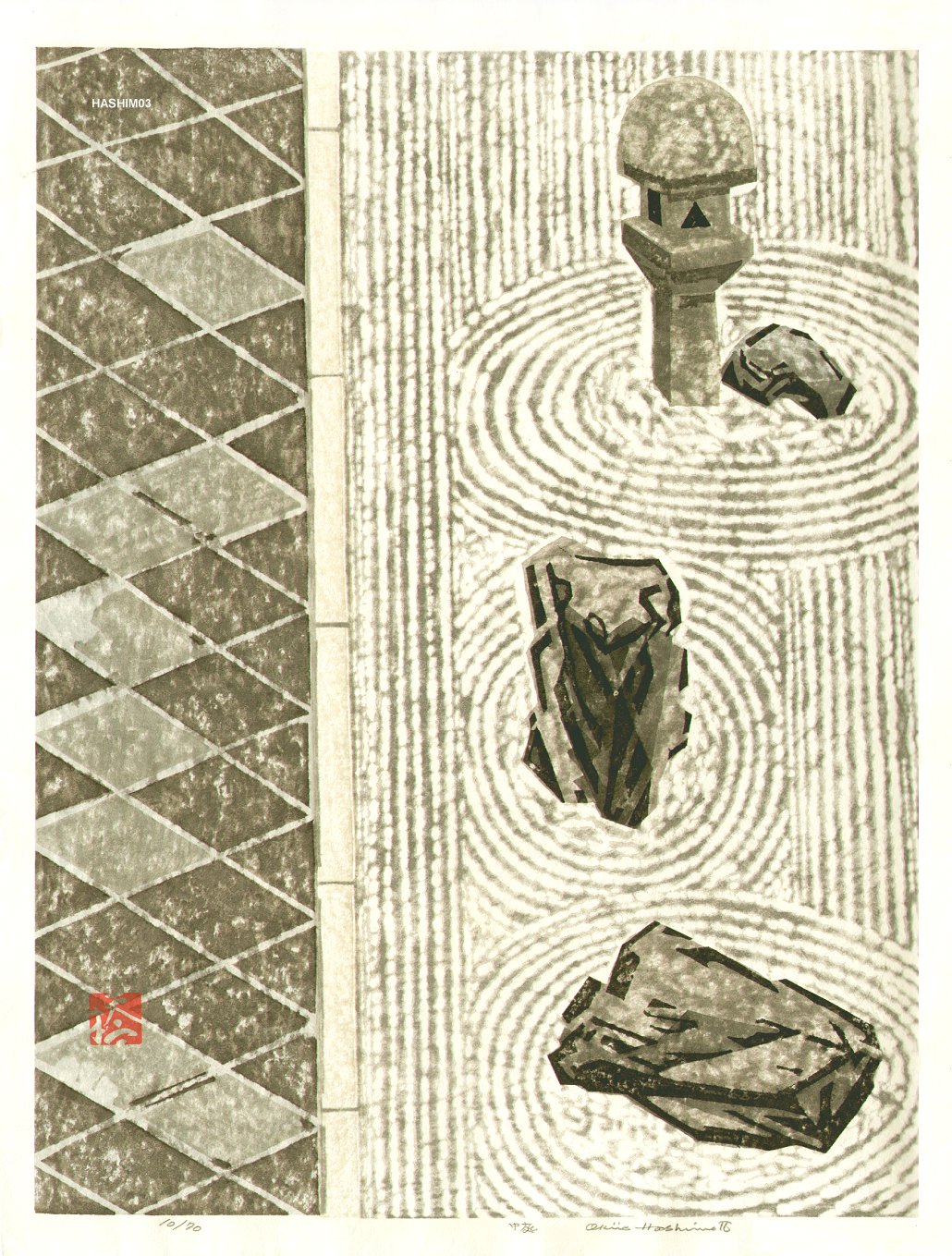
Rock garden
10/70, 1966
Woodblock print
Featured in Collections
Curated cross-cuts that include this print.
Frequently Asked Questions
Bamboo forest and garden of Shisendo pavilion in Kyoto was created by Okiie Hashimoto (橋本興家).
Bamboo forest and garden of Shisendo pavilion in Kyoto depicts gardens and trees.