
Red garden
- Medium:
- Mokuhanga (Japanese woodblock)
- Image courtesy of
- Saru Gallery
Description
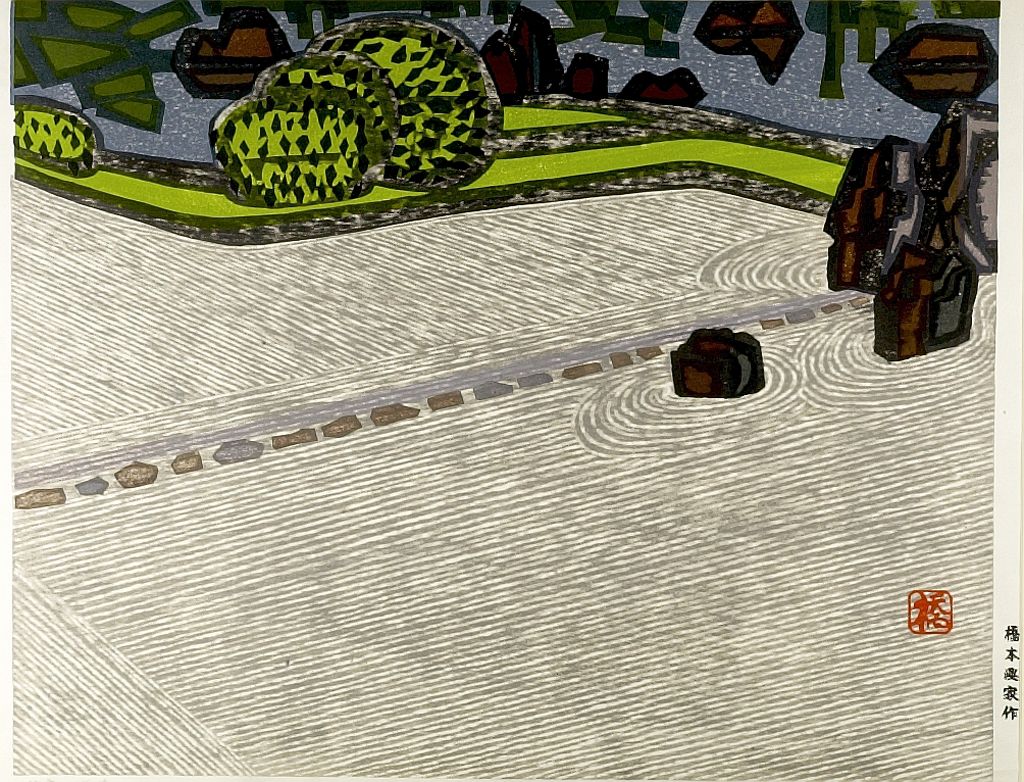
Red garden likely depicts a Japanese garden scene saturated with the vermilion and rust tones of autumn maple (momiji), a subject Hashimoto returned to repeatedly alongside his architectural prints. The composition would typically pair foliage with structural elements — a stone path, garden wall, or pavilion roofline — characteristic of his interest in how built form meets cultivated nature. Hashimoto worked in the sosaku-hanga tradition, designing, carving, and printing each block himself, and his garden subjects often demonstrate the deliberate registration and flat color planes that distinguish self-carved prints from earlier ukiyo-e production. The red palette would be built through overprinting of pigmented blocks, with bokashi gradations softening the transitions between leaf masses and ground. While Hashimoto is best remembered for castle towers and temple architecture, his garden views form a parallel body of work in which the same structural eye is applied to landscape rather than masonry, treating rocks, hedges, and lanterns as architectural components within a designed space.
More Prints by Okiie Hashimoto

More Gardens Prints
![[Garden of] Taj Mahal, No. 1 (Taji Maharu no niwa, dai ichi) by Hiroshi Yoshida](https://www.artic.edu/iiif/2/230993a7-d4f0-c979-c267-127d48e1ef1c/full/843,/0/default.jpg)
[Garden of] Taj Mahal, No. 1 (Taji Maharu no niwa, dai ichi)
Taji Maharu no niwa, dai ichi
1931
Color woodblock print; oban

Kiyozumi Garden in Moonlight
January 1938
Woodblock print, ink and color on paper

Moon over Kiyosumi Garden (Tsuki no Kiyosumien)
1938
Color woodblock print; oban
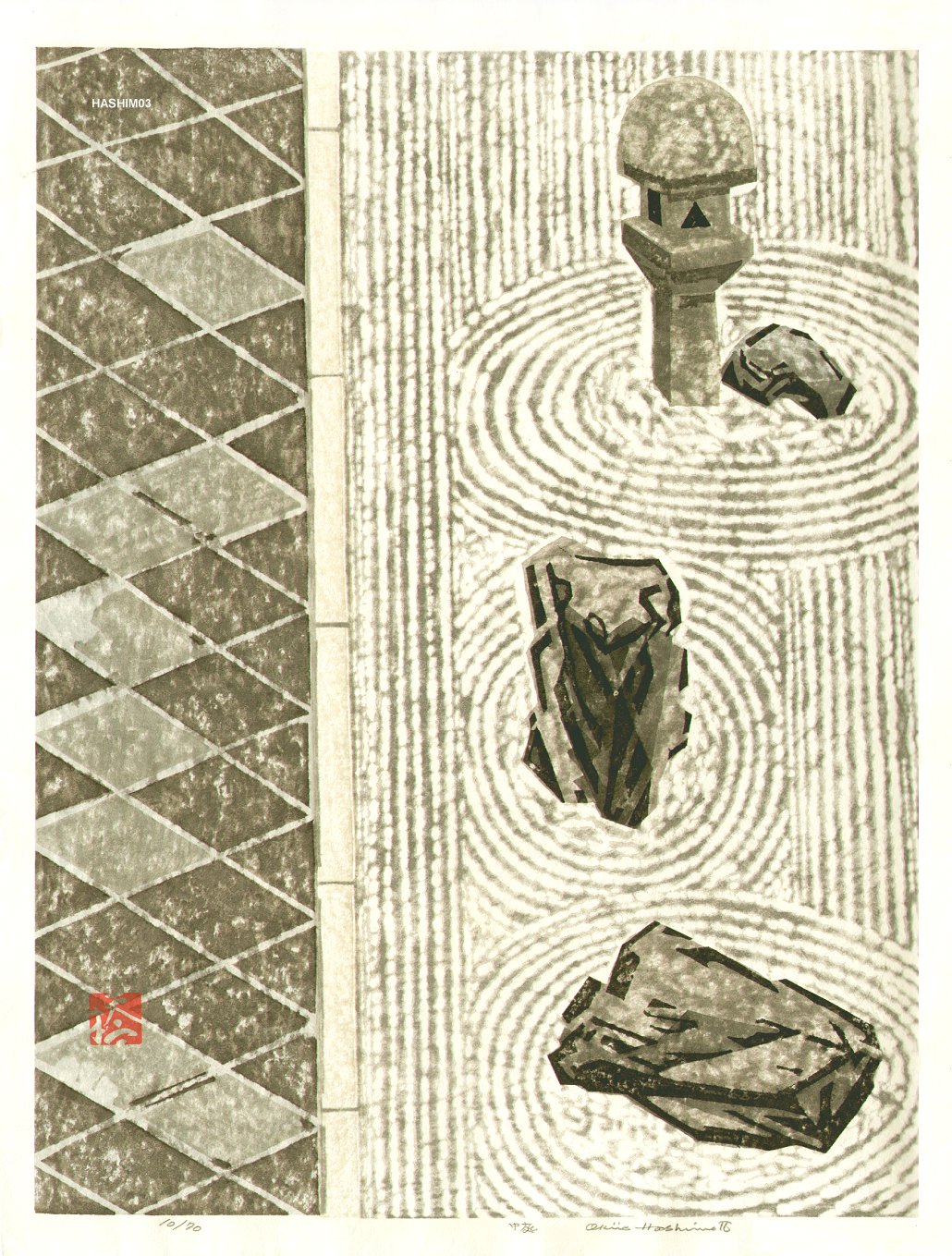
Rock garden
10/70, 1966
Woodblock print
Featured in Collections
Curated cross-cuts that include this print.
Frequently Asked Questions
Red garden was created by Okiie Hashimoto (橋本興家).
Red garden depicts gardens.