
Dice (Utamaro)
by Ouchi Makoto
- Date:
- 1970
- Medium:
- Color intaglio
- Source:
- Art Institute of Chicago
Description
"Dice (Utamaro)" from 1970 is a color intaglio print that stages a dialogue between Ouchi Makoto and the legendary ukiyo-e master Kitagawa Utamaro. By pairing the randomness of dice with a reference to one of Japan's most celebrated print artists, Ouchi creates a work that meditates on chance, tradition, and artistic inheritance. The intaglio process involves incising an image into a metal plate and filling the grooves with ink, producing rich tonal variations distinct from relief printing. Ouchi's decision to invoke Utamaro within this Western printmaking technique highlights the cross-cultural exchange that defined postwar Japanese art, where artists freely combined native references with European methods to forge something genuinely new.
More Prints by Ouchi Makoto

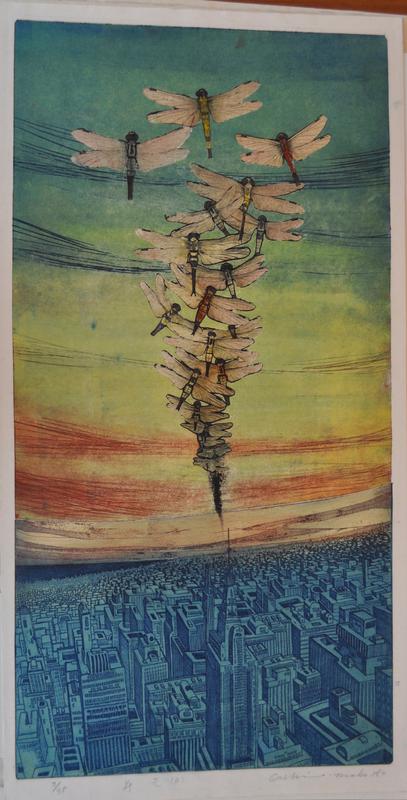


More Snow Scenes Prints
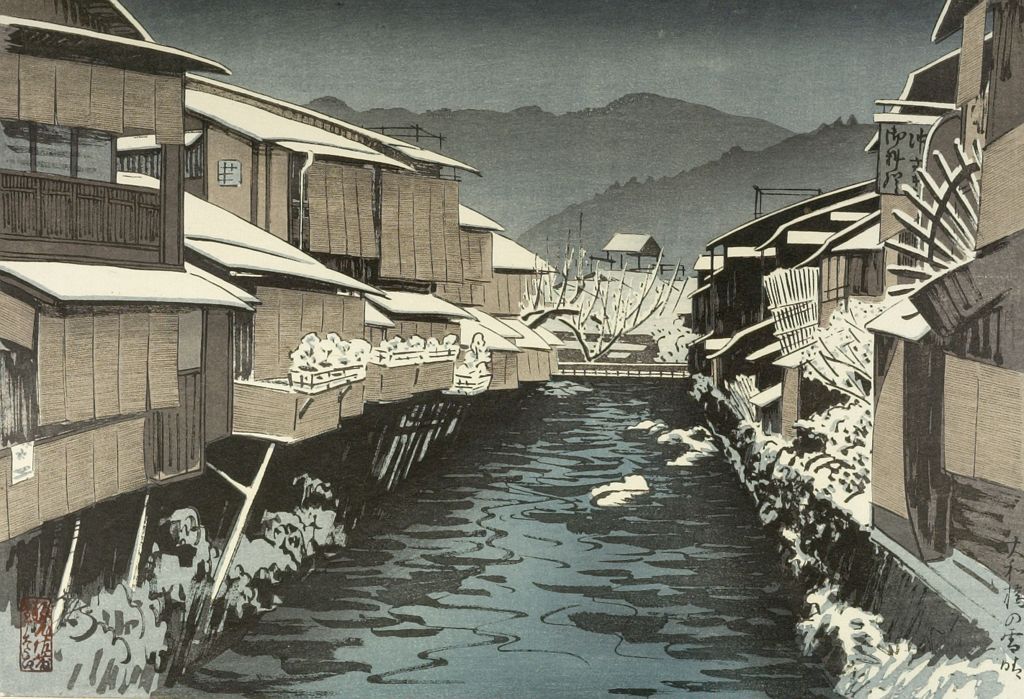
Fair Weather After Snow at Yamato Bridge, Kyoto (Yamato bashi no yukibare), Taishô period, dated 1924
Woodblock print

The Compound of the Tenman Shrine at Kameido in the Snow (Kameido Tenmangu keidai no yuki), from the series "Famous Places in the Eastern Capital (Toto meisho)"
c. 1832/38
Color woodblock print; oban

Miyajima in Snow (Yuki no Miyajima)
Yuki no Miyajima
1929
Color woodblock print; oban
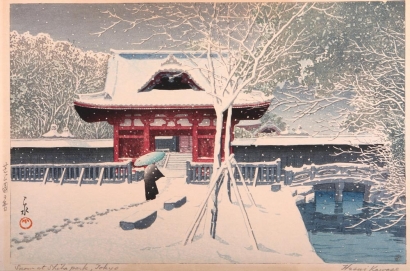
Evening Snow at Shiha Park, Tokyo
1932
Woodblock print
Frequently Asked Questions
Dice (Utamaro) was created by Ouchi Makoto (大内マコト) in 1970.
Dice (Utamaro) uses Etching, on color intaglio.
Dice (Utamaro) depicts snow scenes.