Child In Aizu
- Medium:
- Mokuhanga (Japanese woodblock)
- Image courtesy of
- Saru Gallery
Description
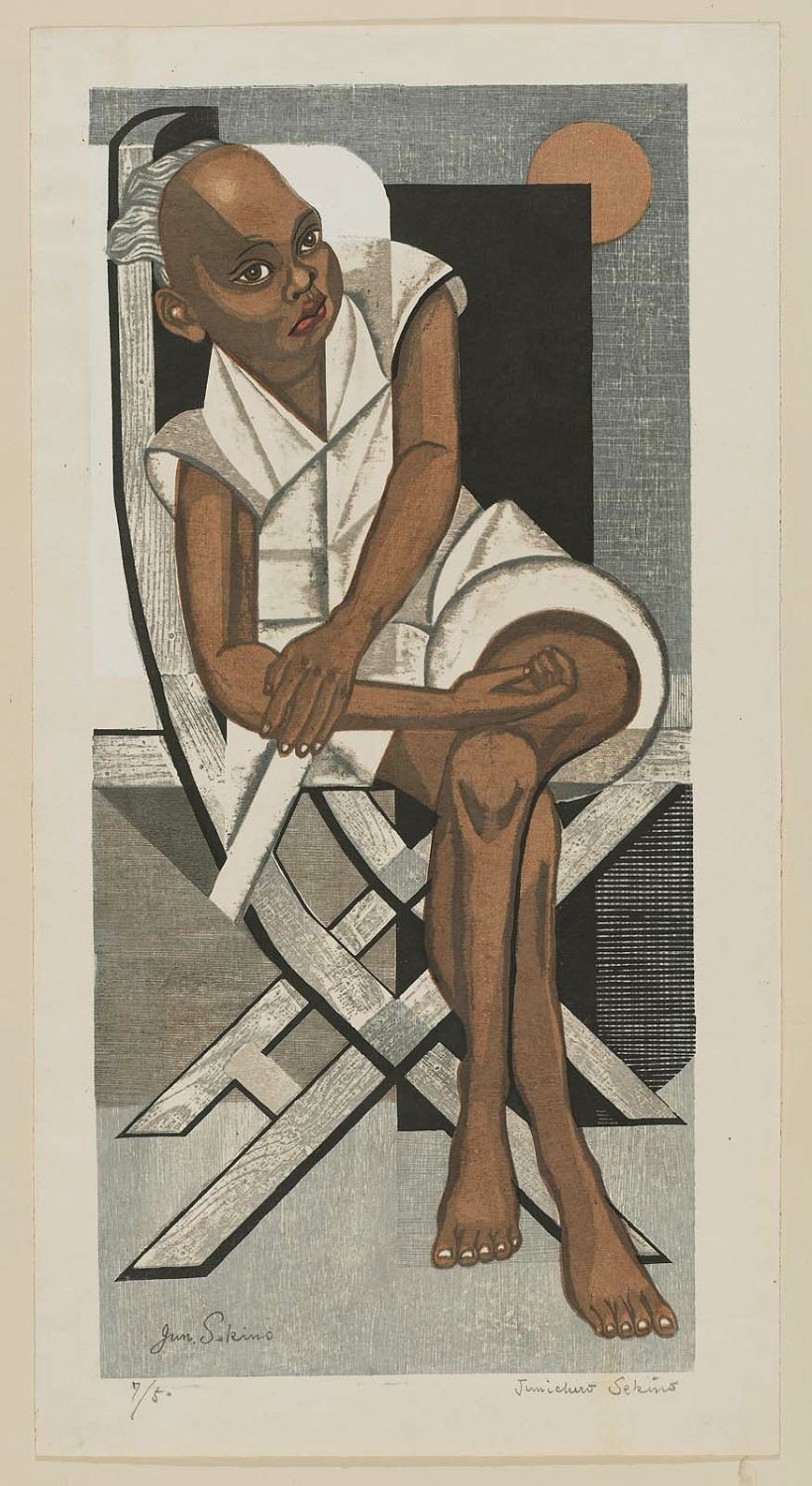
A second composition within Saito's Aizu children sequence, probably depicting a different child or a variant pose within the same iconographic territory. Saito returned repeatedly to this subject across decades, treating it less as illustration than as a recurring motif refined through accumulation. The figure is typically isolated against a flat, almost abstract field of negative space, with the child's contour drawn by sharp, clean cuts in the cherry block. Saito's printing favored chromatic restraint — limited palettes of indigo, ink black, soft ochre, and the natural off-white of [washi](/glossary/washi) — and the grain of the wood was permitted to show through, an aesthetic shared with Munakata Shiko and pushed further in his hands. In contrast to the workshop division of labor in Edo-period [ukiyo-e](/glossary/ukiyo-e), Saito worked entirely alone, and prints like this exemplify the [sosaku-hanga](/glossary/sosaku-hanga) ethos of jiga, jikoku, jizuri (self-drawn, self-carved, self-printed). The Aizu children remain among his most widely collected motifs.