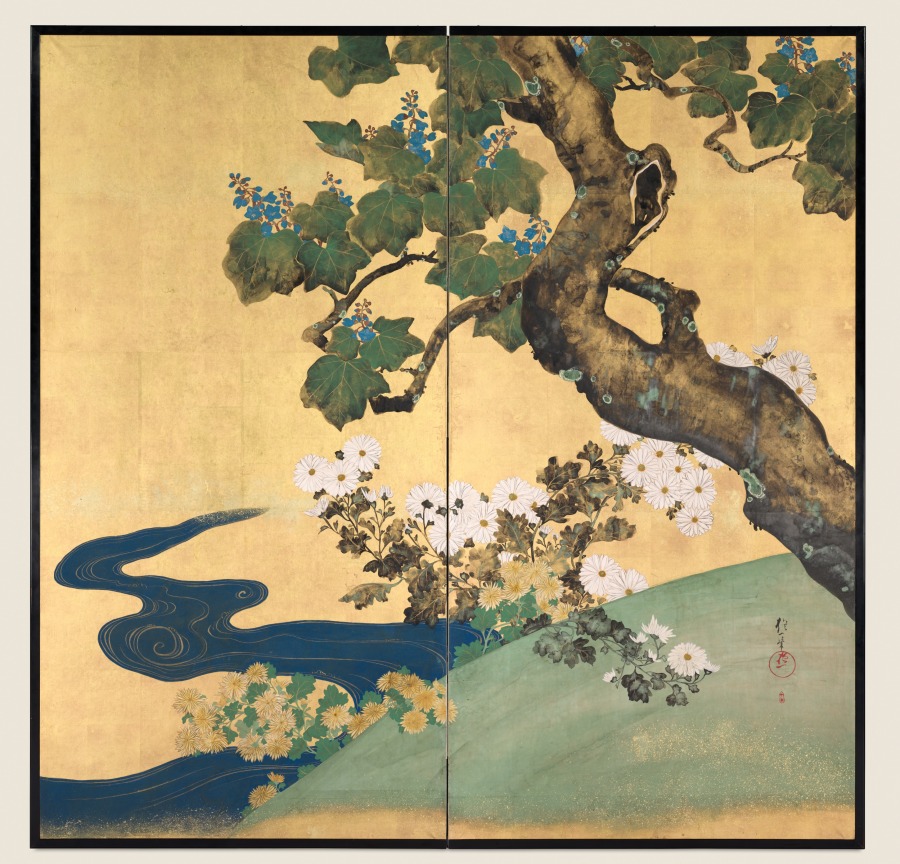
Paulownias and Chrysanthemums
by Sakai Hōitsu
- Date:
- early 1800s
- Medium:
- Two-panel folding screen; ink and color on gilded paper
- Source:
- Cleveland Museum of Art
Description
Paulownias and Chrysanthemums, a two-panel folding screen in ink and color on gilded paper from the early 1800s, is held by the Cleveland Museum of Art (accession 1964.386). The screen pairs two of the most heavily coded plant motifs in Japanese visual culture: the paulownia (kiri), historically associated with imperial authority and used as one of the principal Japanese imperial crests, and the chrysanthemum (kiku), the autumn flower long emblematic of literati refinement and the senior imperial crest. Painted in Sakai Hōitsu's mature Edo Rinpa manner, the composition spreads the paulownia leaves and chrysanthemum blossoms across the gold ground in the boldly asymmetric Kōrin idiom, with the foliage built up in soft tarashikomi pooling that lets pigment puddle and dry into the mottled surface characteristic of the school. The Cleveland Museum's catalogue dates the screen to the early 1800s, placing it within the first decade after Hōitsu's 1797 Buddhist ordination — the period when he was actively studying Kōrin's surviving works and consolidating the Edo Rinpa idiom that would define the school's nineteenth-century revival. The screen's combination of opulent gold ground and refined seasonal observation became one of the most influential conventions of late Edo decorative painting.
More Prints by Sakai Hōitsu
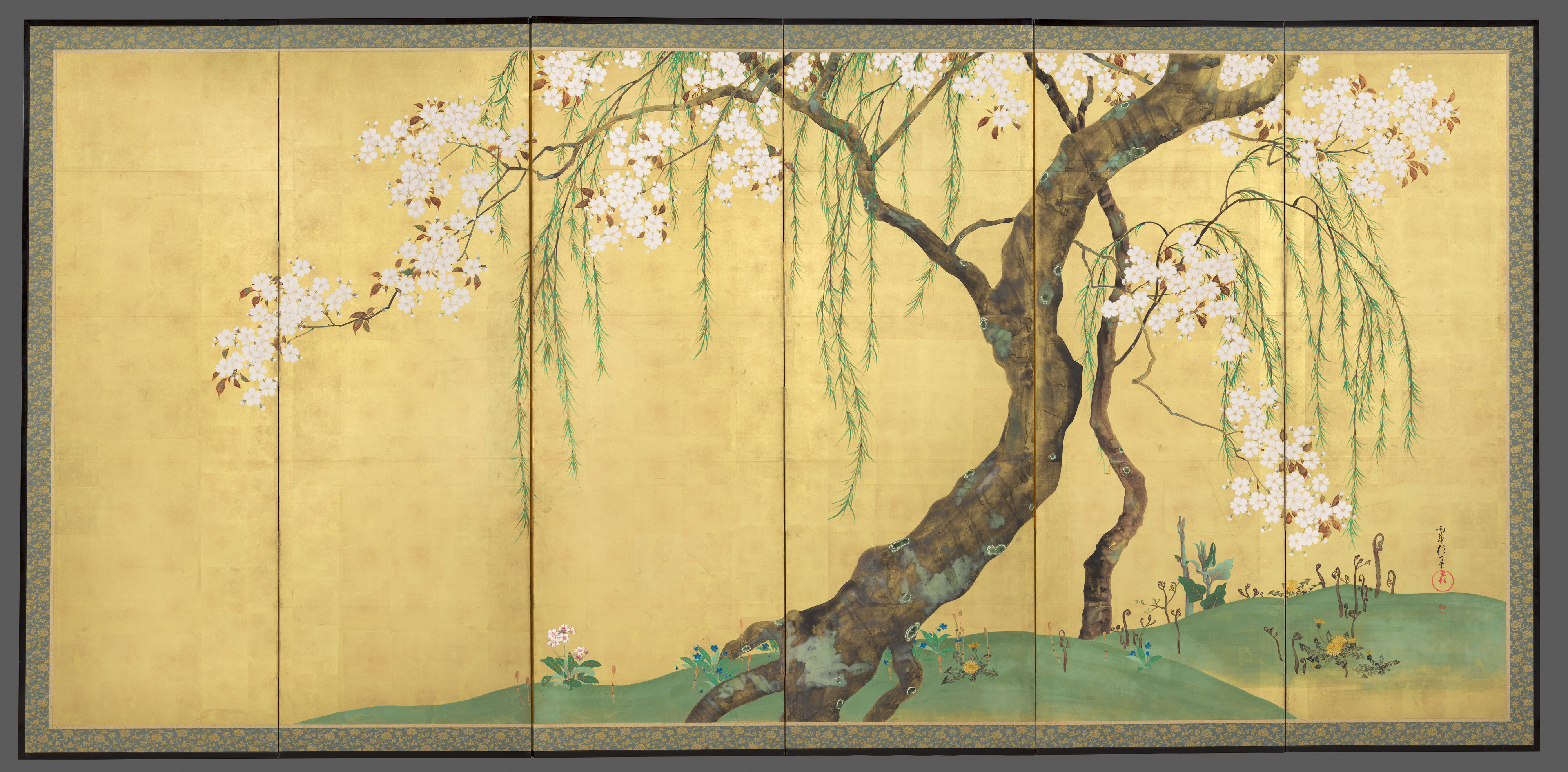
Cherry and Maple Trees
Early 1820s
Pair of six-panel folding screens; ink, color, and gold leaf on paper
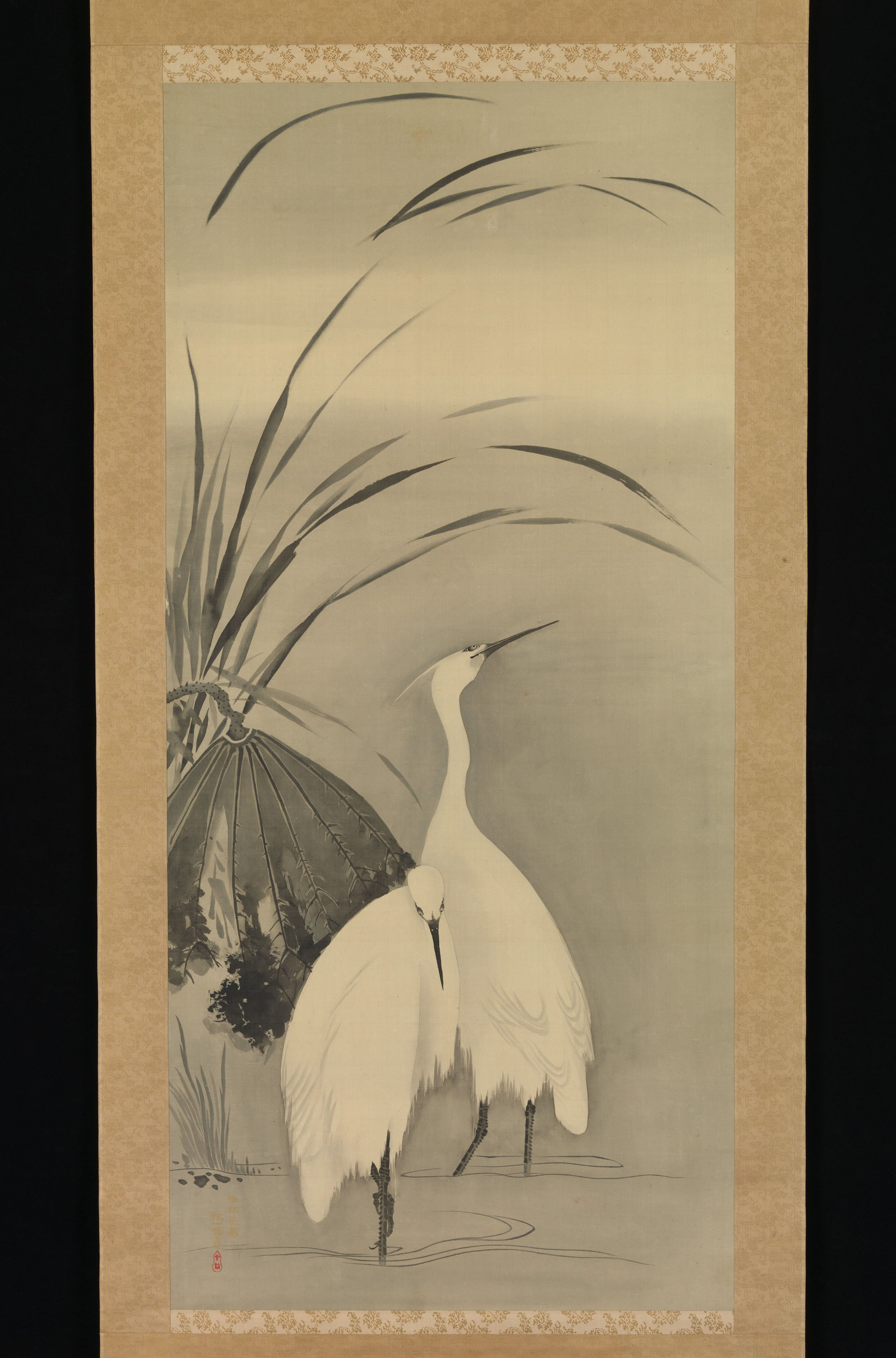
Two Egrets and Lotus
Early 19th century
Hanging scroll; ink on silk
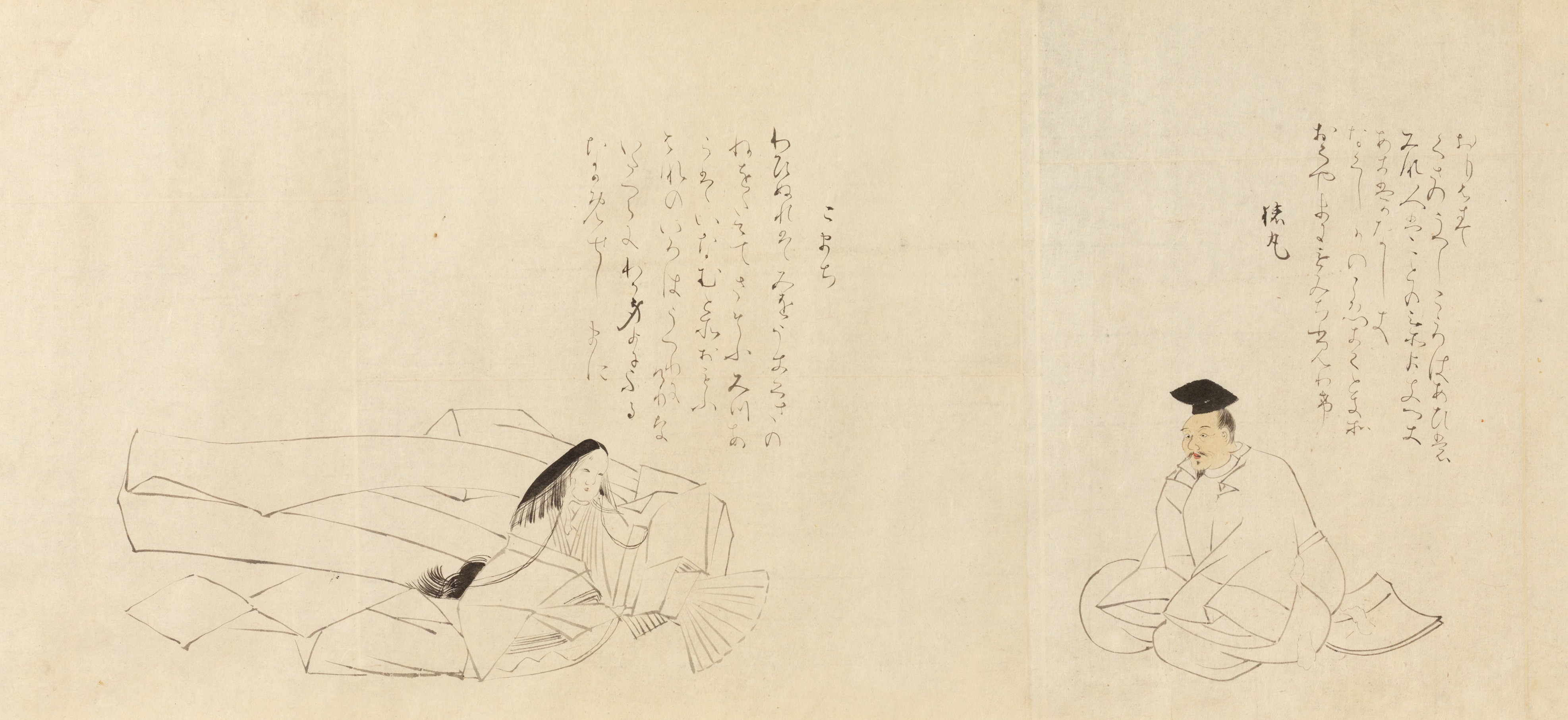
The Thirty-Six Poetic Immortals
1824
Handscroll; ink and color on paper
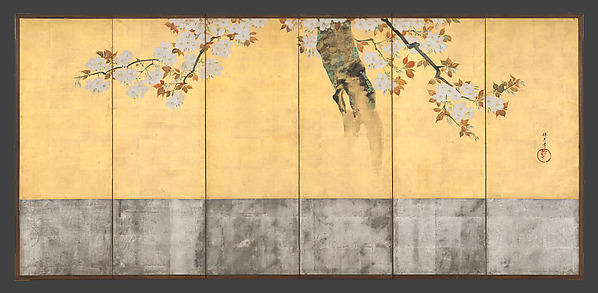
Blossoming Cherry Trees
ca. 1805
Pair of six-panel folding screens; ink, color, and gold leaf on paper
Frequently Asked Questions
Paulownias and Chrysanthemums was created by Sakai Hōitsu (酒井抱一) in early 1800s.