Sakai Hōitsu
酒井抱一
1761–1828
Japan
Biography
Sakai Hōitsu (酒井抱一, 1761–1828) was the Edo-period painter who almost single-handedly revived the Rinpa (琳派) school for the nineteenth century, recasting the bold decorative idiom of Ogata Kōrin (1658–1716) into a refined, lyrical manner that would define the school's late phase. Born in Edo in 1761 with the given name Tadanao, he was the second son of Sakai Tadamochi, heir of the Sakai clan — the daimyō house that ruled the Himeji Domain and one of the wealthiest and most cultured fudai daimyō families in the realm. From childhood he received the elite education of his caste: classical Chinese letters, calligraphy, kyōka and haikai poetry, the tea ceremony, and the full curriculum of Edo painting traditions. He trained first in the Kanō school, then studied ukiyo-e under Utagawa Toyoharu, and also absorbed the Maruyama manner of Watanabe Nangaku and the nanga (literati) style of Sō Shiseki, before devoting himself above all to the Rinpa idiom of Kōrin. Throughout, he cultivated close personal ties to the Edo bunjin world of poets, kyōka authors, and connoisseurs.
In 1797, at thirty-six, he formally retired from secular life and took Buddhist vows, becoming a priest of the Nishi Honganji — a temple of the Jōdo Shinshū school in Kyoto — following the high priest Monnyo. The tonsure freed him from clan obligations and allowed him to devote the rest of his life to painting, poetry, and the study of earlier Japanese masters. Settling in the Negishi district of Shitaya in Edo, where his hermitage was known as Ukean, he gathered a circle of pupils, poets, and patrons, founding what is sometimes called the Edo Rinpa school to distinguish it from the original Kyoto-centered Rinpa of Sōtatsu, Kōetsu, and Kōrin.
Hōitsu's central artistic project was the conscious recovery and reinterpretation of Kōrin. He systematically collected, copied, and studied Kōrin's surviving paintings, producing meticulous tracings and pattern records. In 1815, marking the centennial memorial of Kōrin's death, he organized a major memorial exhibition in Edo and published the woodblock-printed catalogue Kōrin hyakuzu (One Hundred Paintings by Kōrin) — a work that fixed Kōrin's reputation for the modern era and remains a primary source for Rinpa studies. He also issued his own picture albums, including Ōson gafu (Ōson Picture Album), disseminating his pictorial idiom through the woodblock-book trade; Ōson (鶯邨) was another of his art-names, appearing on many of these published works.
As a painter, Hōitsu translated Kōrin's flat, bold, gold-ground compositions into something cooler, more atmospheric, and more delicately observed. His characteristic works depict seasonal flora and birds against pale silver or restrained gold grounds, with a refined botanical accuracy and an emphasis on subtle ink wash that softens Kōrin's heraldic outlines. The grandest expression of this manner is the pair of folding screens known as “Summer and Autumn Grasses” (Natsu-aki kusa-zu byōbu, Tokyo National Museum, an Important Cultural Property), painted on the reverse of Ogata Kōrin's celebrated “Wind God and Thunder God” screens — a literal physical dialogue between the two masters. Hōitsu's late screen pairs of cherry, maple, paulownia, and seasonal flowers, his hanging scrolls of birds and flowers, his Buddhist images of Kannon, and his elegantly inscribed handscrolls all share this distinctive Edo Rinpa sensibility: opulent yet restrained, decorative yet lyrical, deeply nostalgic for an earlier golden age yet entirely a product of late Edo connoisseurial culture. He died in Edo in 1828 at the age of sixty-seven. His direct pupil Suzuki Kiitsu (1796–1858), together with other followers such as Ikeda Koson, carried the Edo Rinpa idiom forward into the mid-nineteenth century, and the school's influence on subsequent Japanese design, ceramics, and lacquer is incalculable.
Key Facts
- Active Period
- 1761–1828
- Nationality
- 🇯🇵Japan
- Subjects
- Autumn FoliageWinter
- Works Indexed
- 10
Frequently Asked Questions
Sakai Hōitsu (酒井抱一, 1761–1828) was the Edo-period painter who almost single-handedly revived the Rinpa (琳派) school for the nineteenth century, recasting the bold decorative idiom of Ogata Kōrin (1658–1716) into a refined, lyrical manner that would define the school's late phase. Born in Edo in 1761 with the given name Tadanao, he was the second son of Sakai Tadamochi, heir of the Sakai clan — the daimyō house that ruled the Himeji Domain and one of the wealthiest and most cultured fudai daimyō families in the realm. From childhood he received the elite education of his caste: classical Chinese letters, calligraphy, kyōka and haikai poetry, the tea ceremony, and the full curriculum of Edo painting traditions. He trained first in the Kanō school, then studied ukiyo-e under Utagawa Toyoharu, and also absorbed the Maruyama manner of Watanabe Nangaku and the nanga (literati) style of Sō Shiseki, before devoting himself above all to the Rinpa idiom of Kōrin. Throughout, he cultivated close personal ties to the Edo bunjin world of poets, kyōka authors, and connoisseurs.
Sakai Hōitsu was active from 1761 to 1828.
Sakai Hōitsu's prints frequently feature autumn foliage, winter.
Original prints by Sakai Hōitsu can be found in collections including Metropolitan Museum of Art, Cleveland Museum of Art.
Woodblock Prints by Sakai Hōitsu (10)
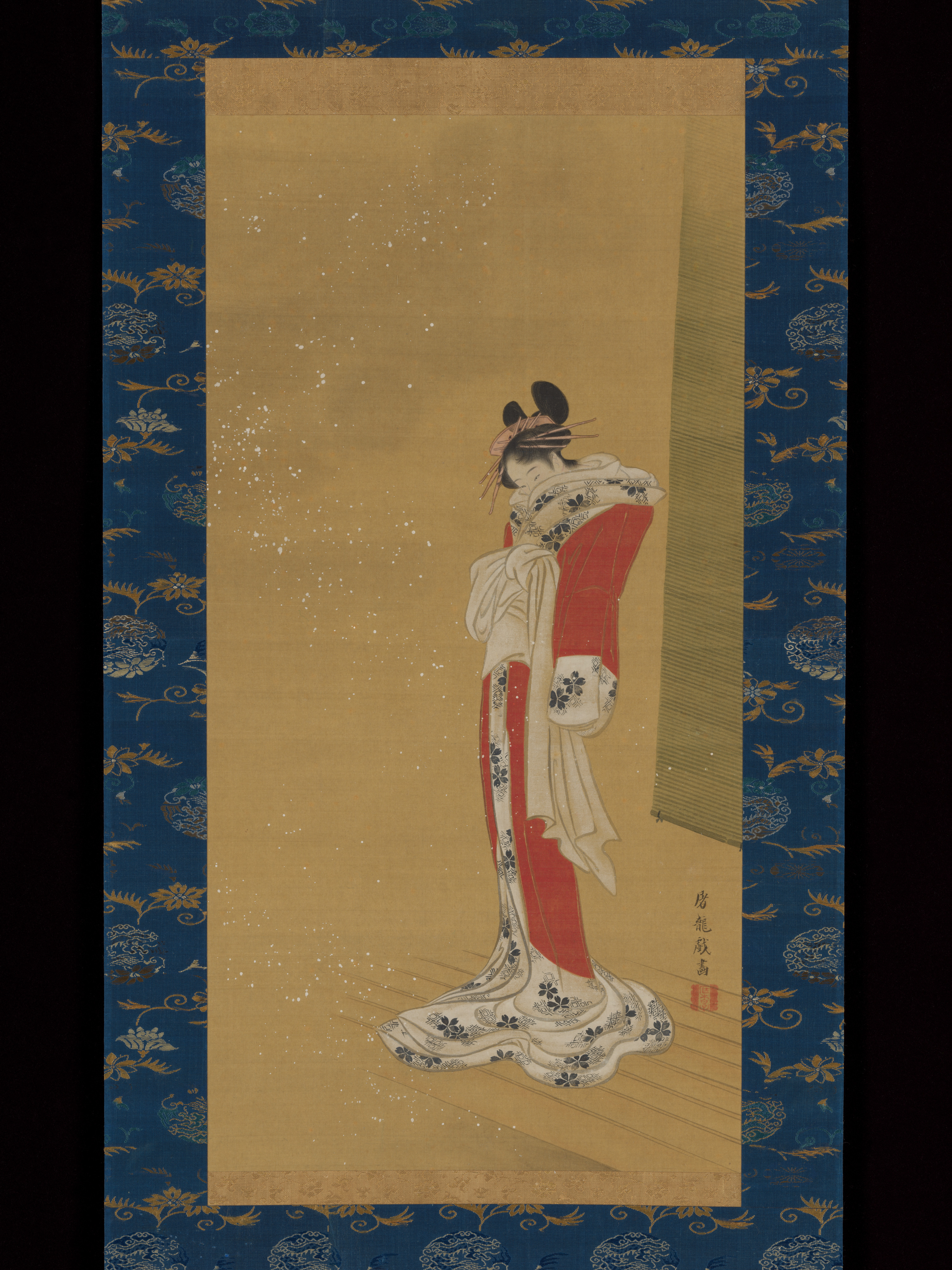
Beauty on a Veranda in Snow
ca. 1794-95
Hanging scroll; ink and color on silk
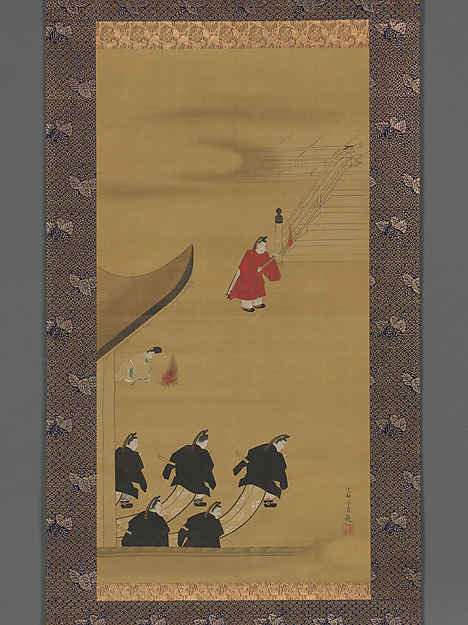
Activities of the Twelve Months
Late 1790s
Eleven hanging scrolls from a set of twelve; ink and color on silk
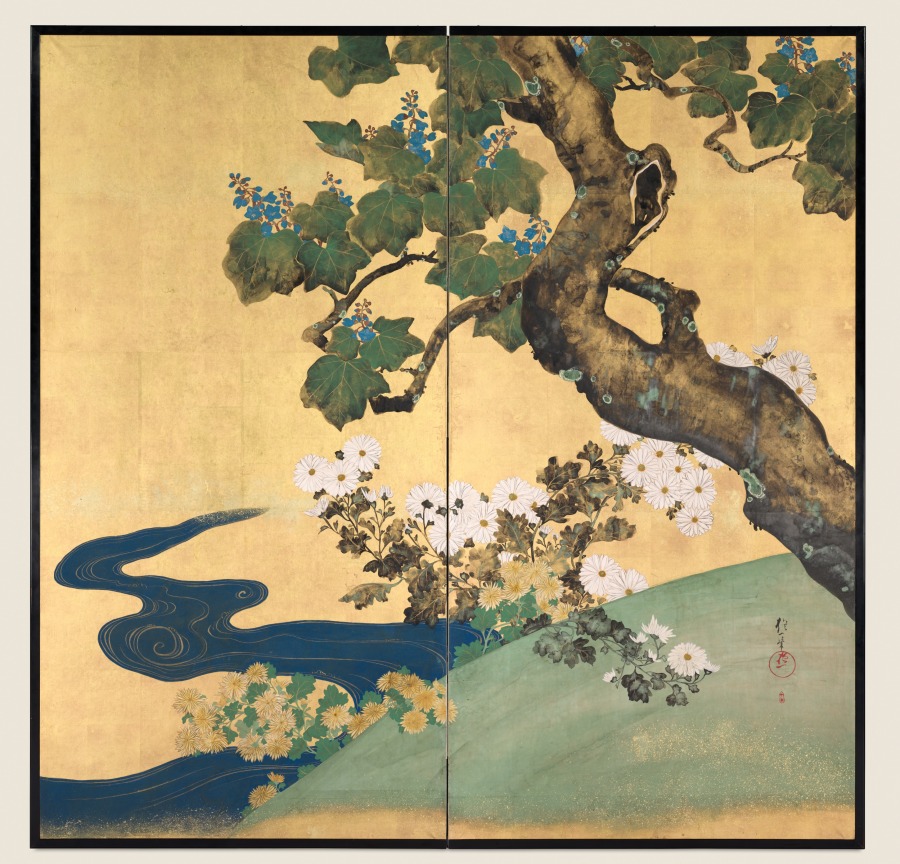
Paulownias and Chrysanthemums
early 1800s
Two-panel folding screen; ink and color on gilded paper
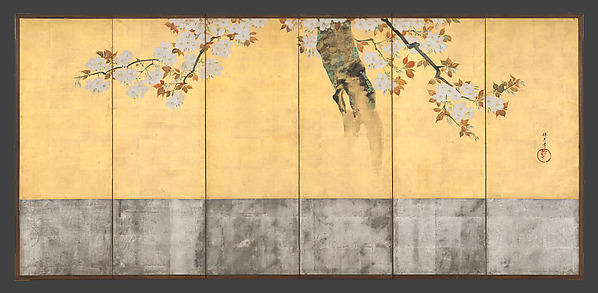
Blossoming Cherry Trees
ca. 1805
Pair of six-panel folding screens; ink, color, and gold leaf on paper
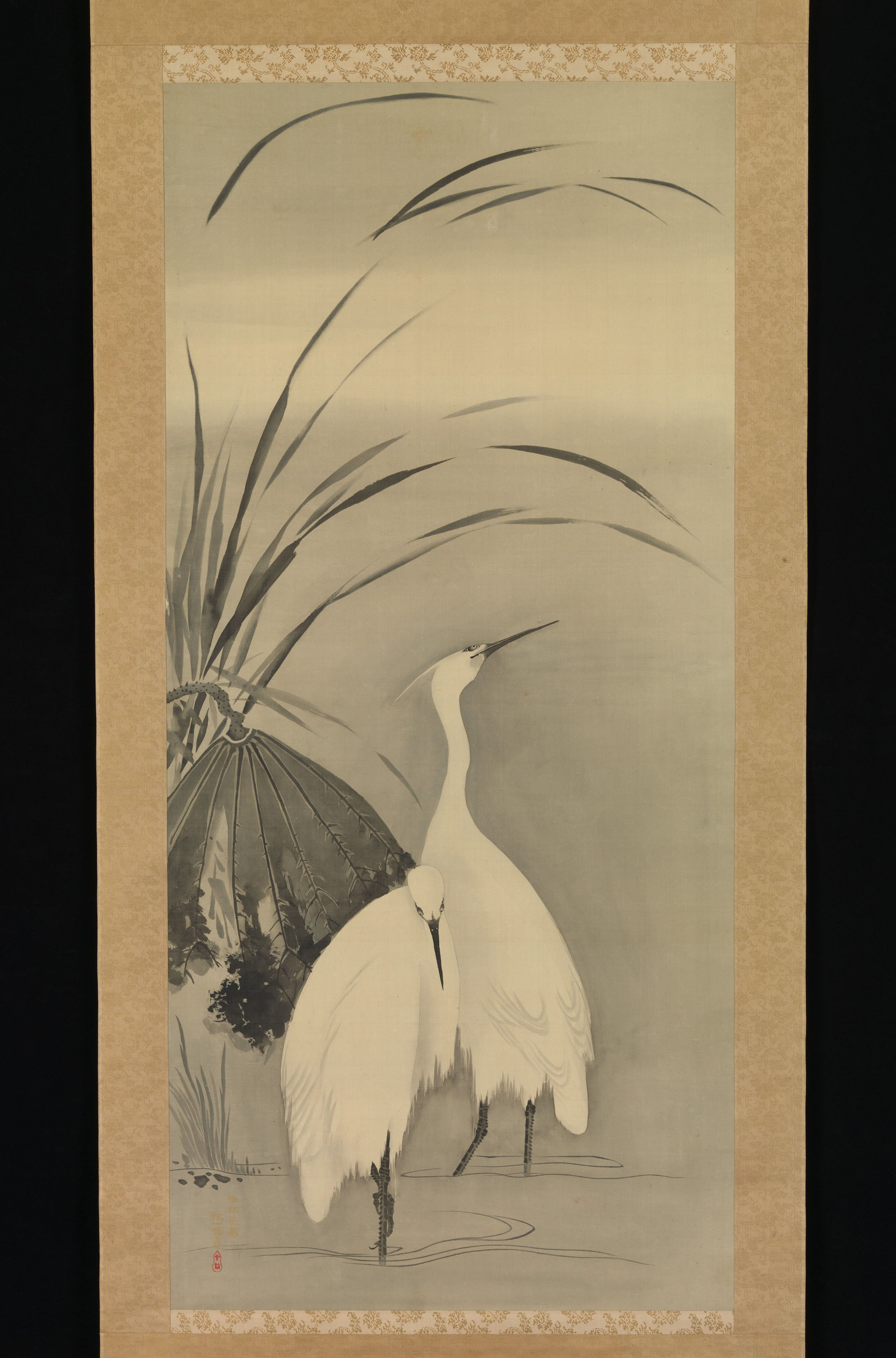
Two Egrets and Lotus
Early 19th century
Hanging scroll; ink on silk
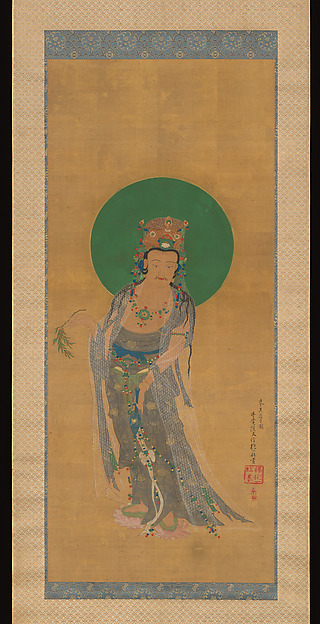
Willow Kannon
1810s
Hanging scroll; ink, color, and gold leaf on silk
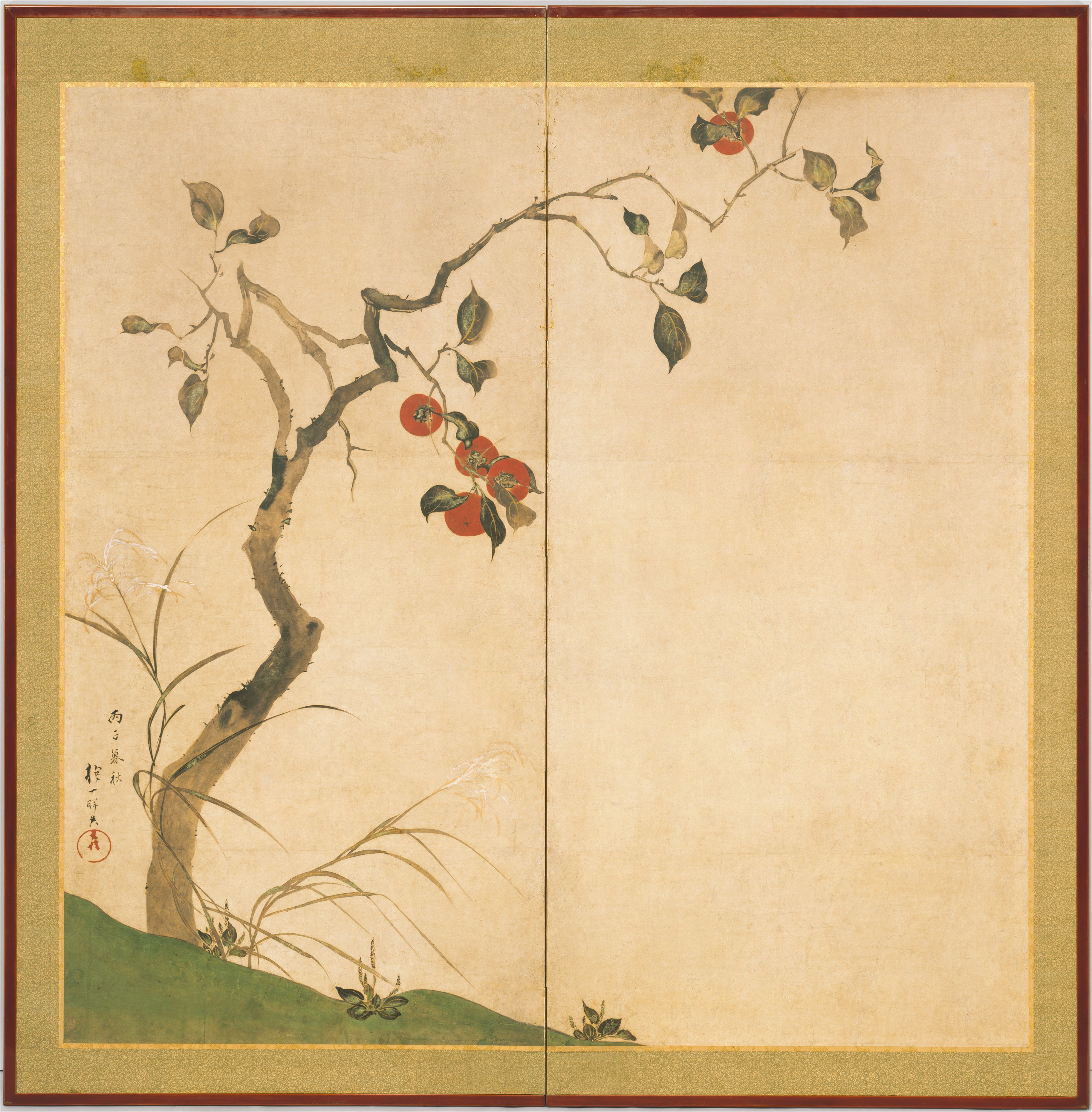
Persimmon Tree
1816
Two-panel folding screen; ink and color on paper
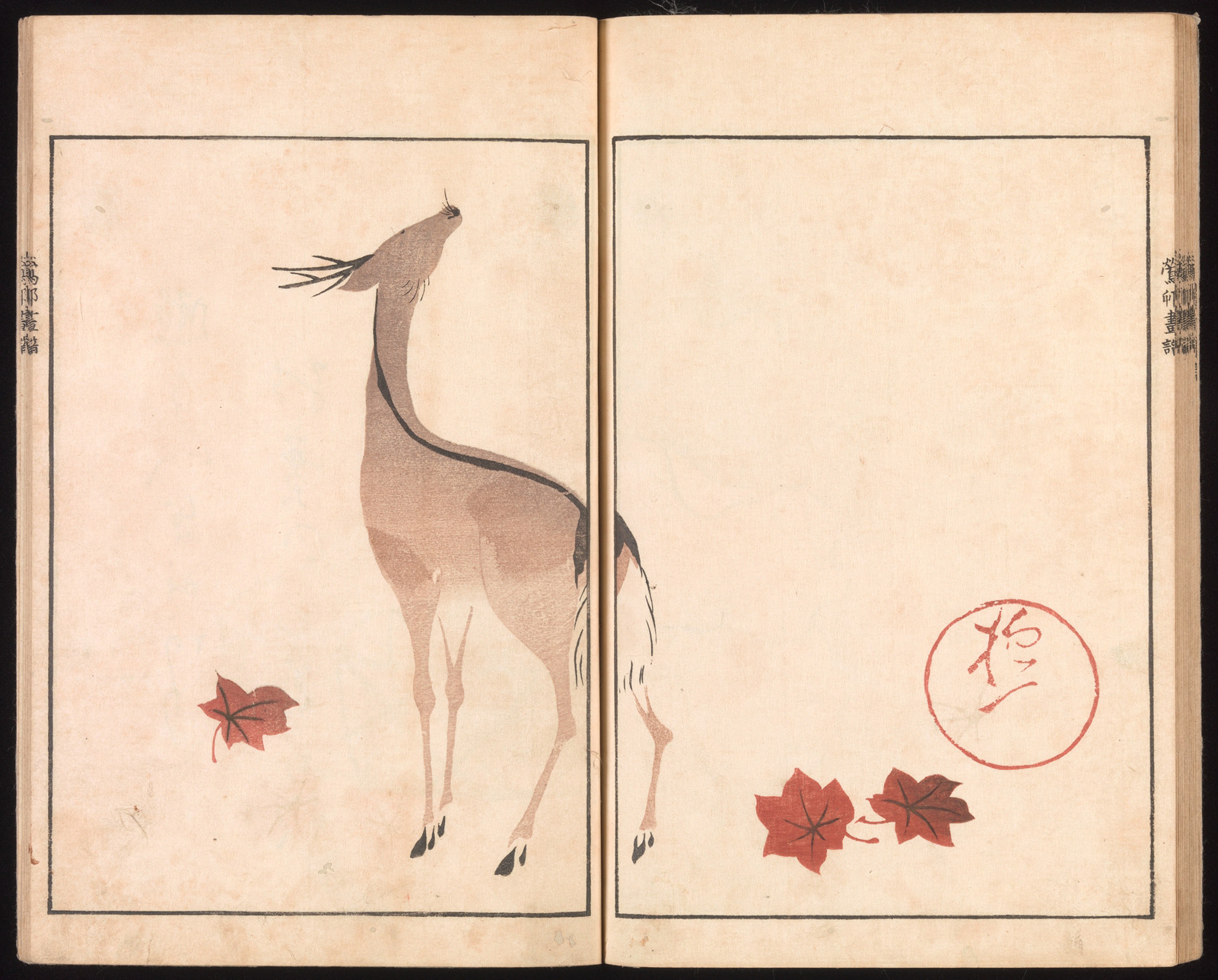
Ōson (Hōitsu) Picture Album (Ōson gafu)
鶯邨画譜
1817
Woodblock printed book; ink and color on paper
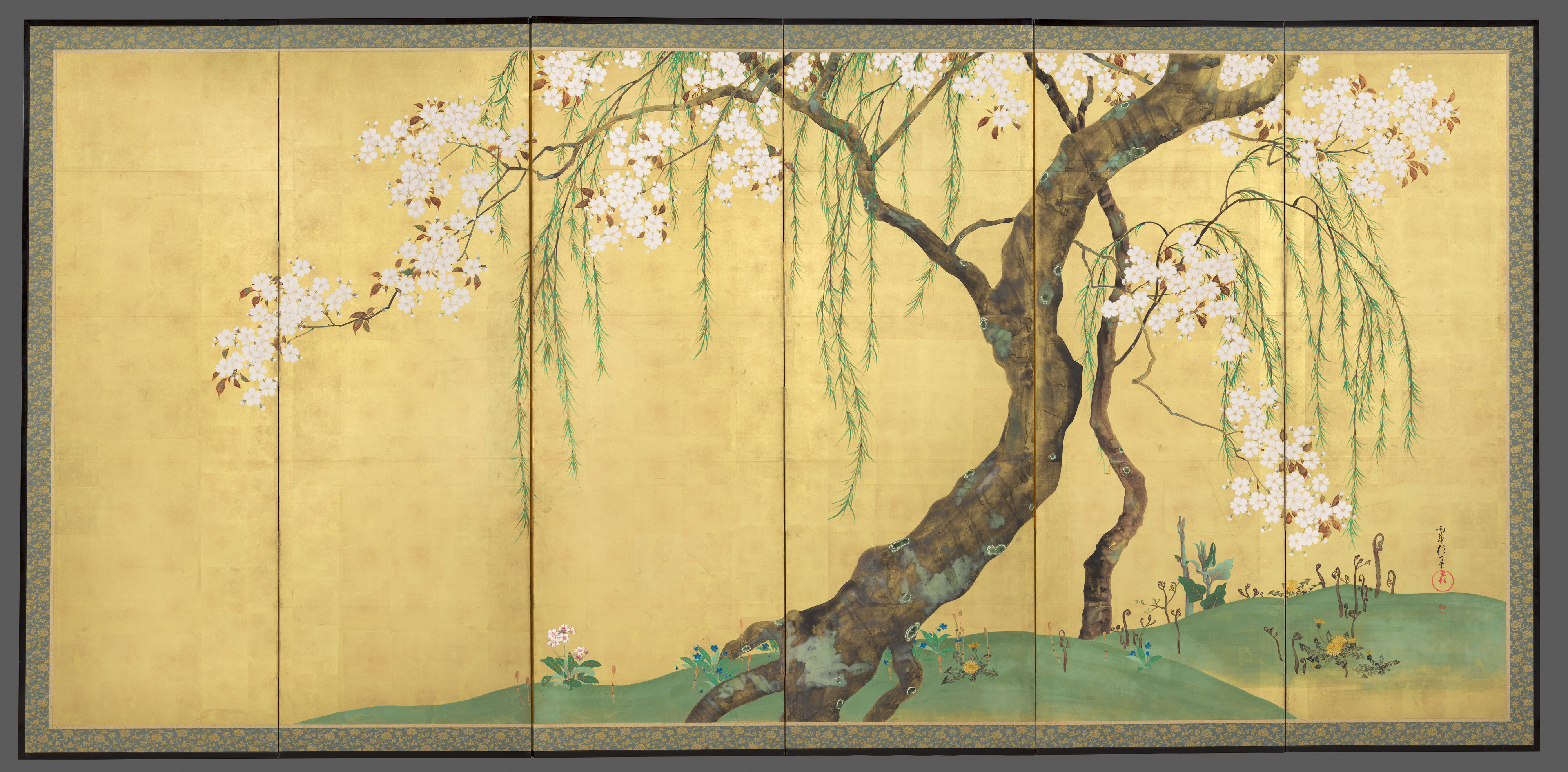
Cherry and Maple Trees
Early 1820s
Pair of six-panel folding screens; ink, color, and gold leaf on paper
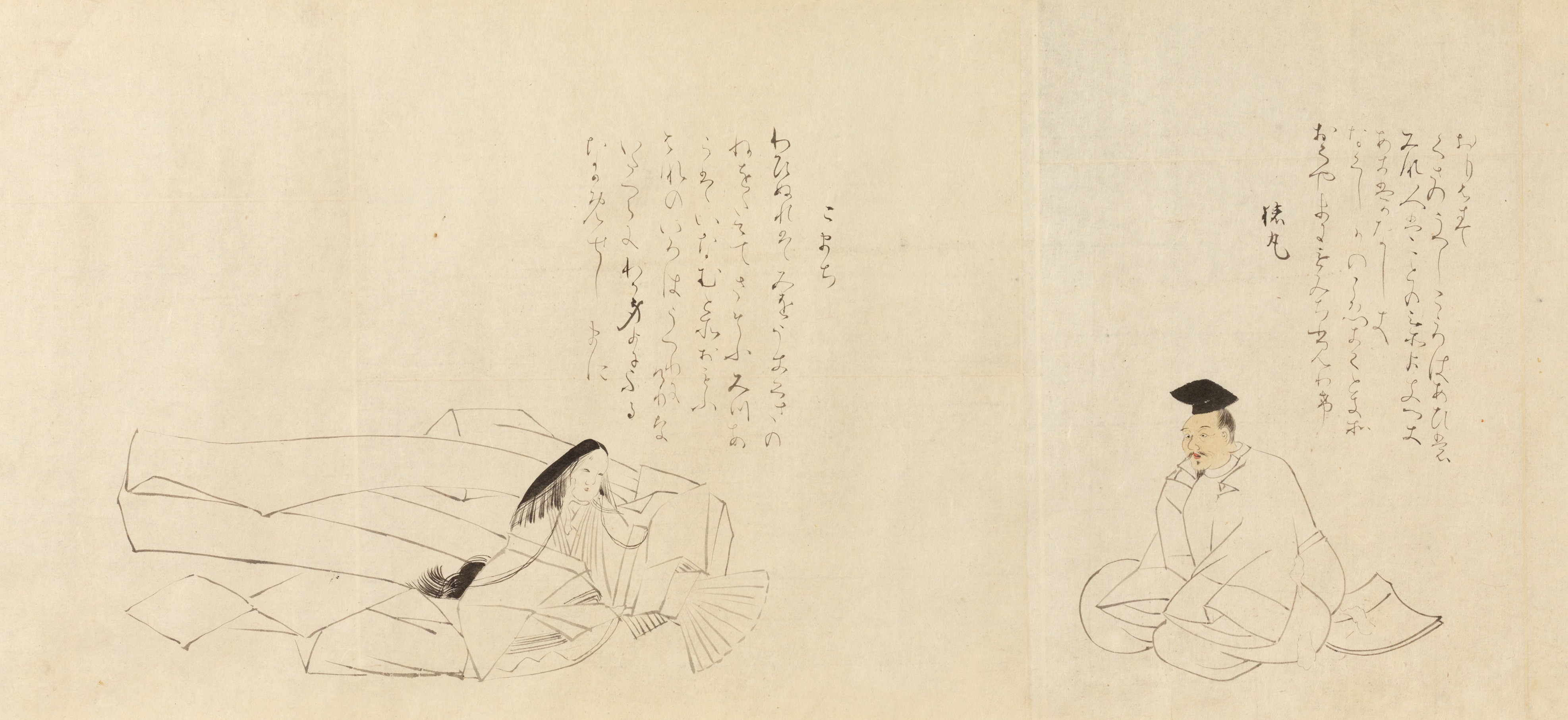
The Thirty-Six Poetic Immortals
1824
Handscroll; ink and color on paper