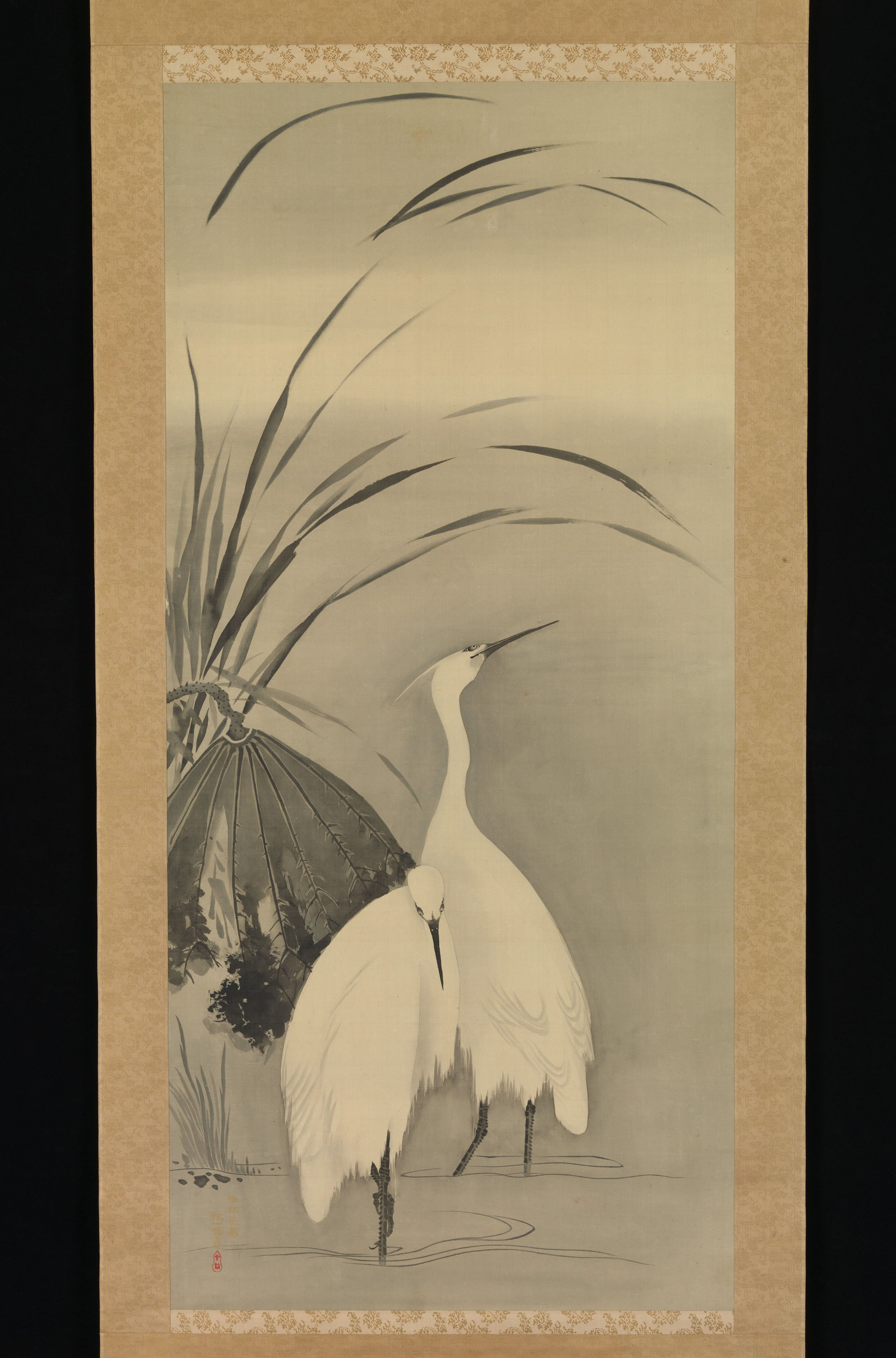
Two Egrets and Lotus
by Sakai Hōitsu
- Date:
- Early 19th century
- Medium:
- Hanging scroll; ink on silk
- Source:
- Metropolitan Museum of Art
Description
Two Egrets and Lotus is a hanging scroll in ink on silk by Sakai Hōitsu, held by the Metropolitan Museum (accession 2015.500.9.13) and dated within the painter's lifetime (1761-1828). The pairing of white egrets and summer lotus is a classic East Asian bird-and-flower subject, descending through Song-dynasty Chinese painting into the Japanese kachō-ga tradition and treated by every major school from Kano to ukiyo-e. Hōitsu's contribution is to render the subject in a sparingly chromatic Rinpa manner — monochrome ink on silk, the egrets defined by reserved silhouette against soft ink wash, the lotus leaves built up in fluid tarashikomi pooling that lets pigment puddle and dry into the characteristic mottled surface he inherited from Sōtatsu and Kōrin. Without color, the work shows the underlying brush discipline of Hōitsu's decorative paintings: the same careful botanical observation, the same calibrated asymmetric composition, the same sensitivity to the relationship between figure and ground that characterize his gold-ground screen pairs. The Metropolitan's catalogue places the scroll firmly within Hōitsu's Edo Rinpa corpus and demonstrates the range of his bird-and-flower practice across both monochrome and full-color formats.
More Prints by Sakai Hōitsu
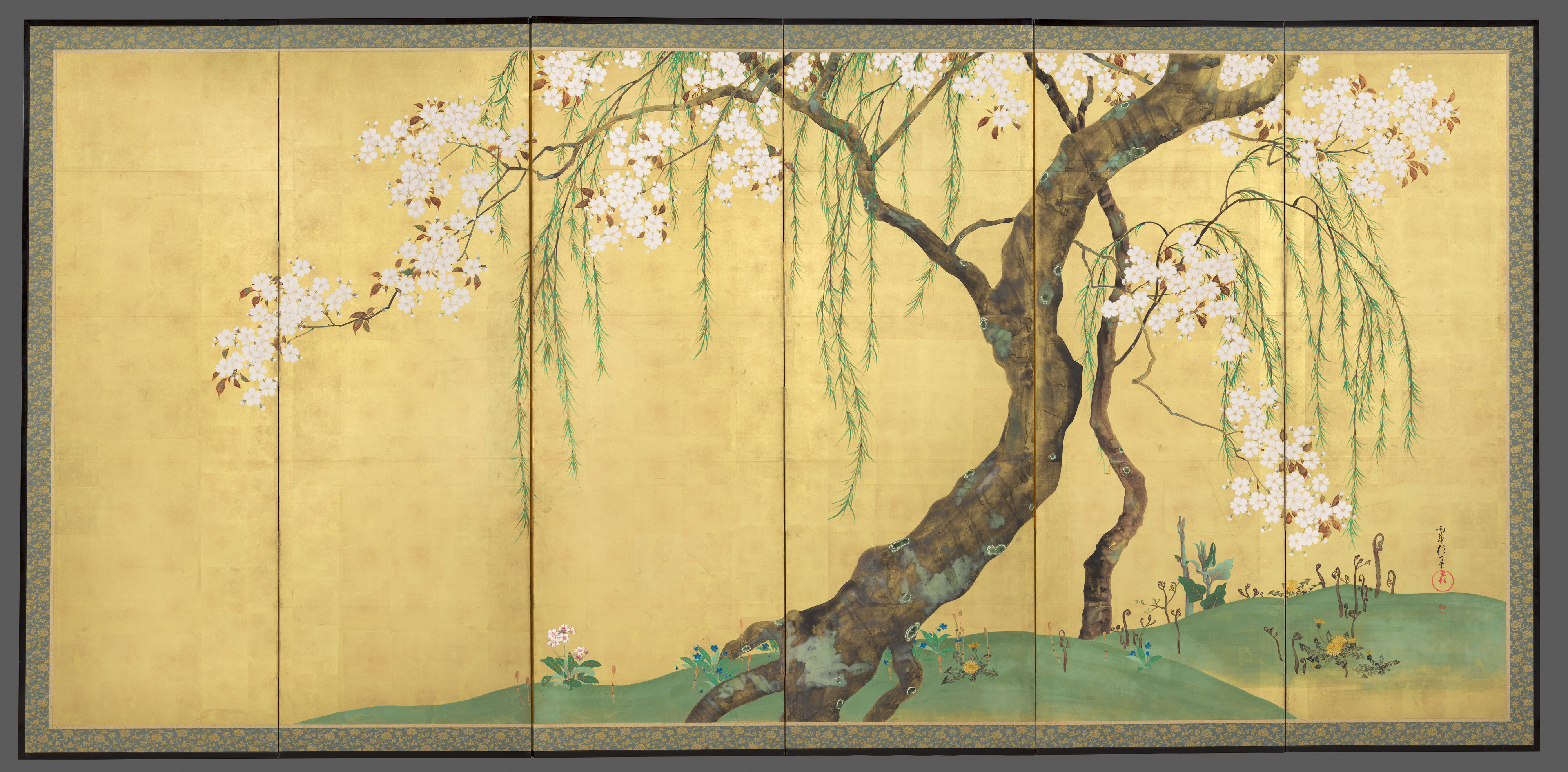
Cherry and Maple Trees
Early 1820s
Pair of six-panel folding screens; ink, color, and gold leaf on paper
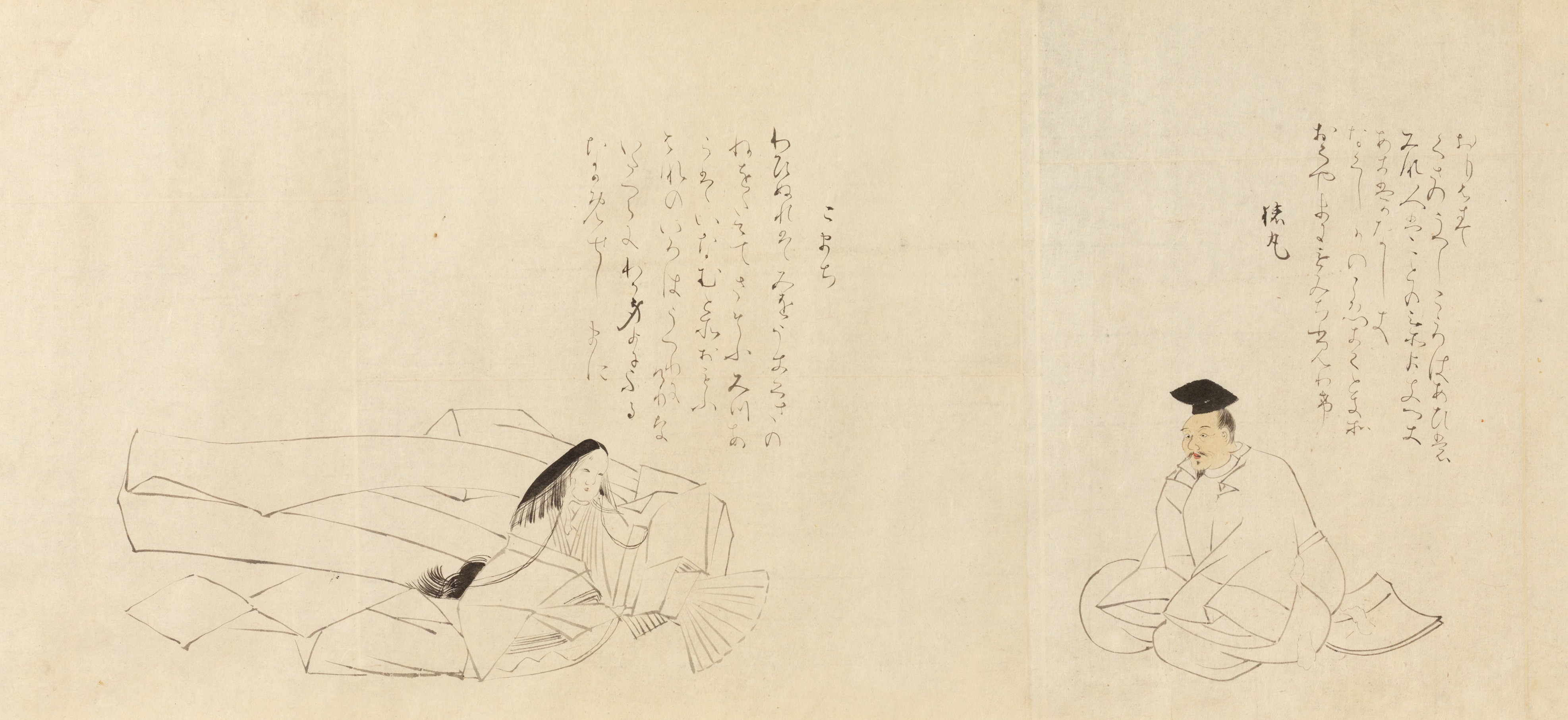
The Thirty-Six Poetic Immortals
1824
Handscroll; ink and color on paper
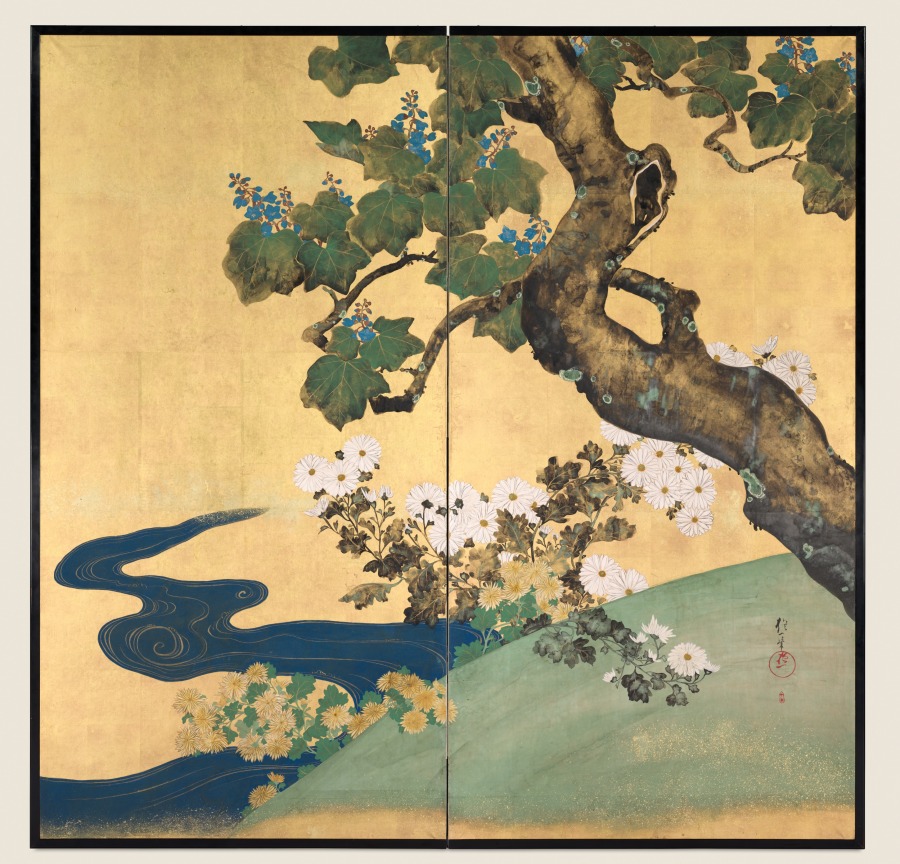
Paulownias and Chrysanthemums
early 1800s
Two-panel folding screen; ink and color on gilded paper
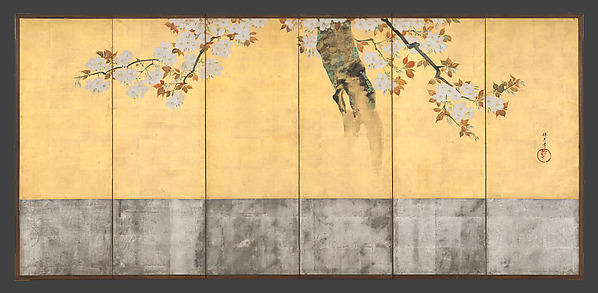
Blossoming Cherry Trees
ca. 1805
Pair of six-panel folding screens; ink, color, and gold leaf on paper
Frequently Asked Questions
Two Egrets and Lotus was created by Sakai Hōitsu (酒井抱一) in Early 19th century.