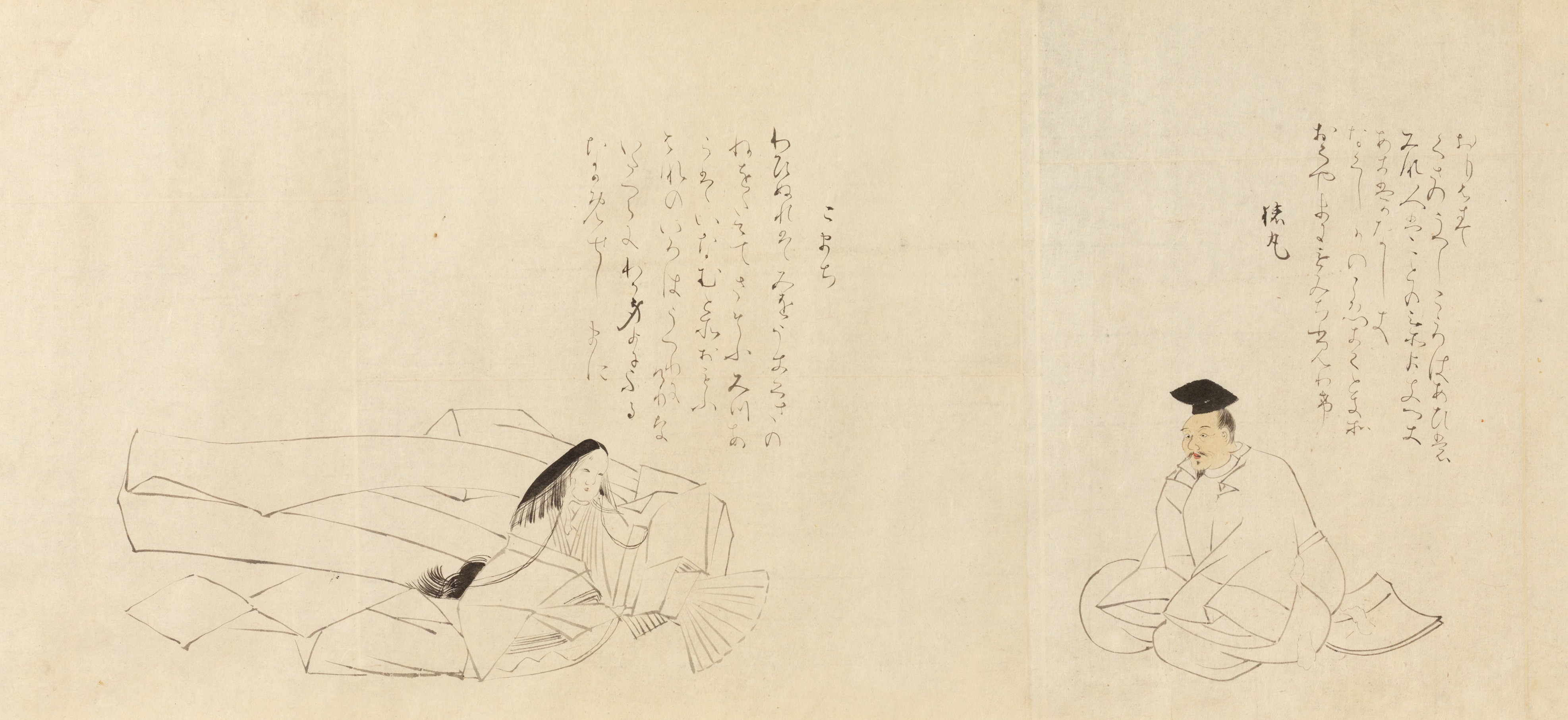
The Thirty-Six Poetic Immortals
by Sakai Hōitsu
- Date:
- 1824
- Medium:
- Handscroll; ink and color on paper
- Source:
- Metropolitan Museum of Art
Description
The Thirty-Six Poetic Immortals, a handscroll in ink and color on paper signed and dated 1824, is held by the Metropolitan Museum (accession 2015.300.94) and entered the collection with the Mary Griggs Burke gift. The subject — the canonical group of thirty-six classical Japanese poets compiled in the eleventh century by Fujiwara no Kintō, including Kakinomoto no Hitomaro, Ono no Komachi, and Ariwara no Narihira — was a foundational theme of the Yamato-e tradition that the Rinpa school self-consciously inherited and updated. Hōitsu's 1824 handscroll reworks the subject in his fully mature late style, painting each immortal in a brief portrait inscribed with one of their canonical poems, the figures rendered in the delicate combination of ink wash, restrained pigment, and tarashikomi pooling that defines his Edo Rinpa idiom. As a commission produced just four years before Hōitsu's 1828 death, the scroll demonstrates his late confidence in synthesizing the courtly Heian poetic-portrait tradition with his school's signature decorative manner, and stands as one of the best-documented examples of his work in the handscroll format.
More Prints by Sakai Hōitsu
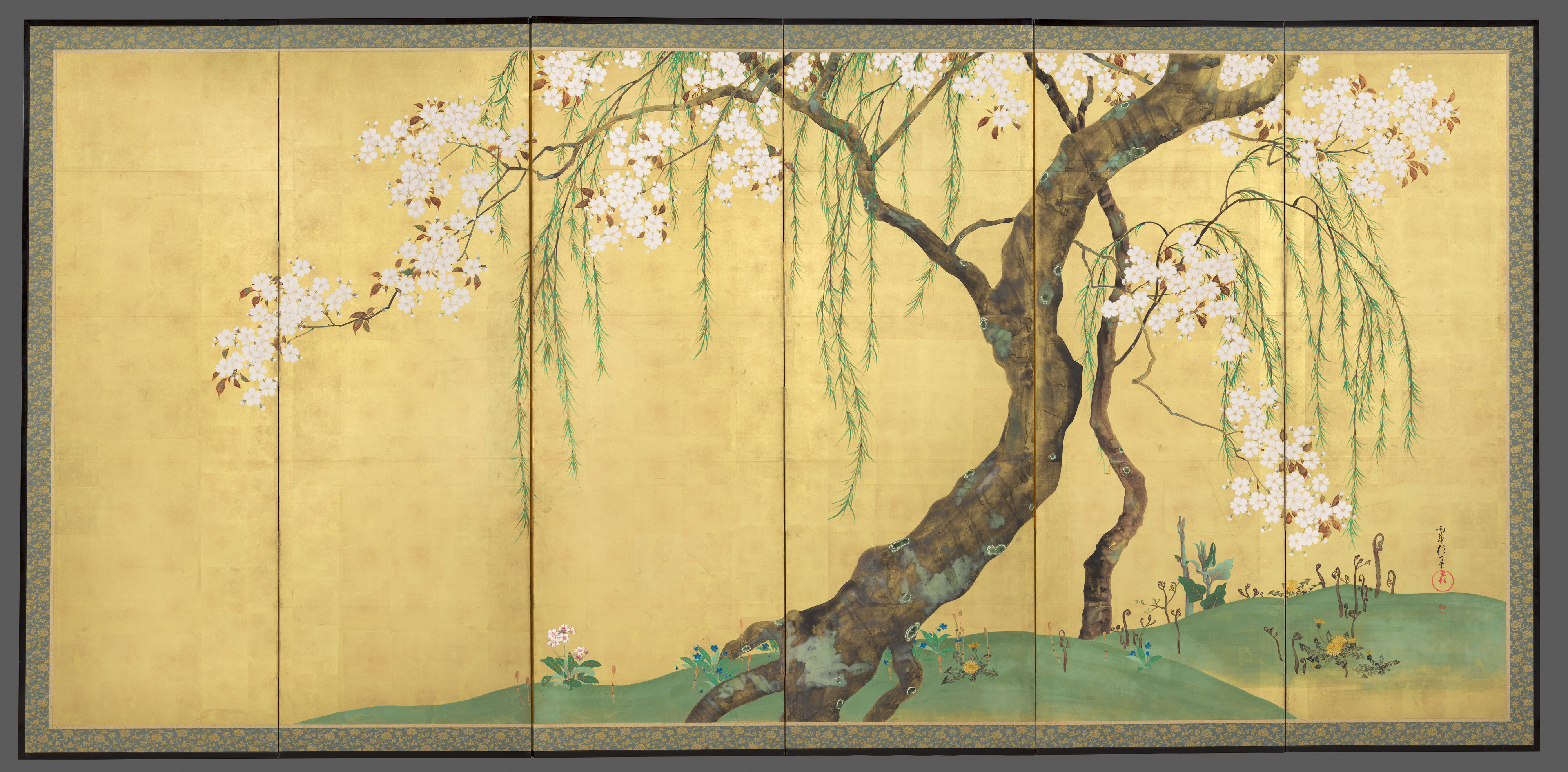
Cherry and Maple Trees
Early 1820s
Pair of six-panel folding screens; ink, color, and gold leaf on paper
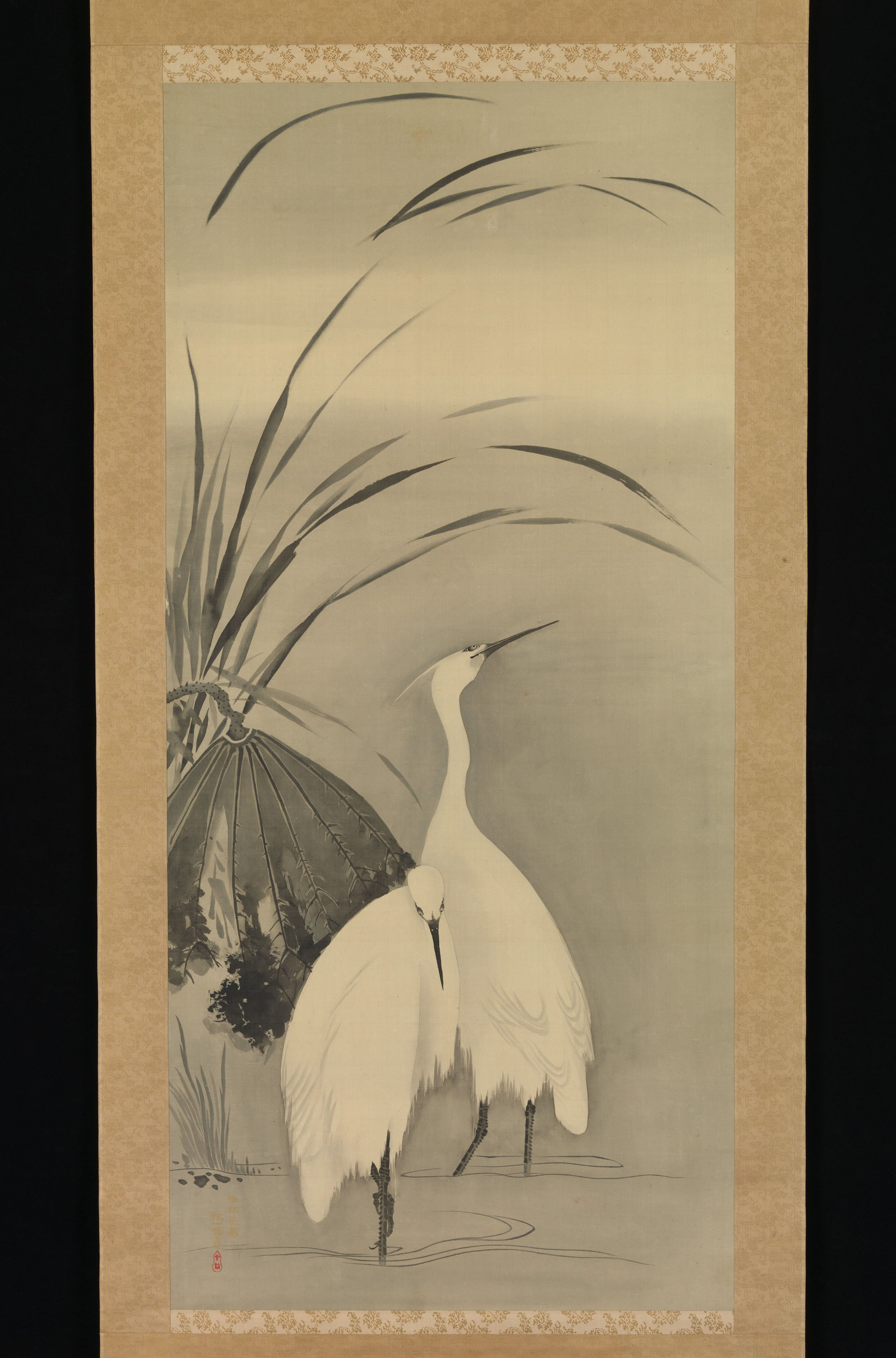
Two Egrets and Lotus
Early 19th century
Hanging scroll; ink on silk
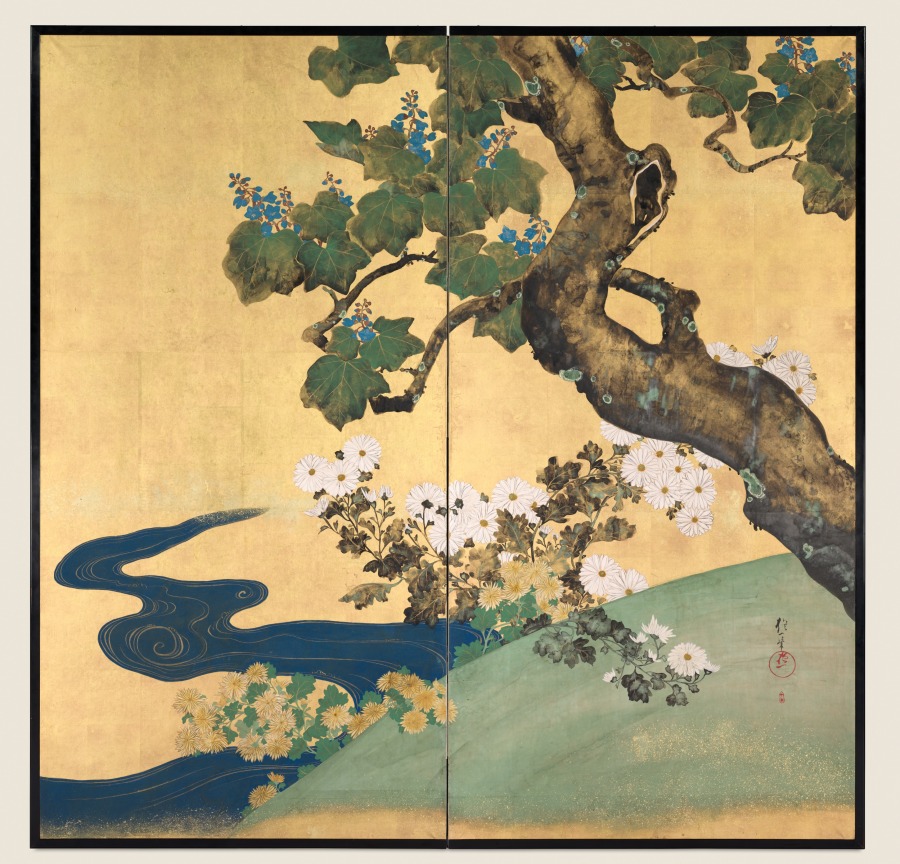
Paulownias and Chrysanthemums
early 1800s
Two-panel folding screen; ink and color on gilded paper
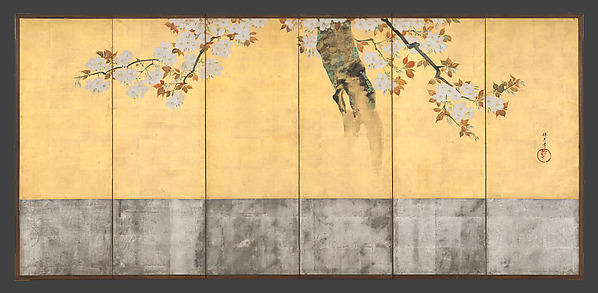
Blossoming Cherry Trees
ca. 1805
Pair of six-panel folding screens; ink, color, and gold leaf on paper
Frequently Asked Questions
The Thirty-Six Poetic Immortals was created by Sakai Hōitsu (酒井抱一) in 1824.