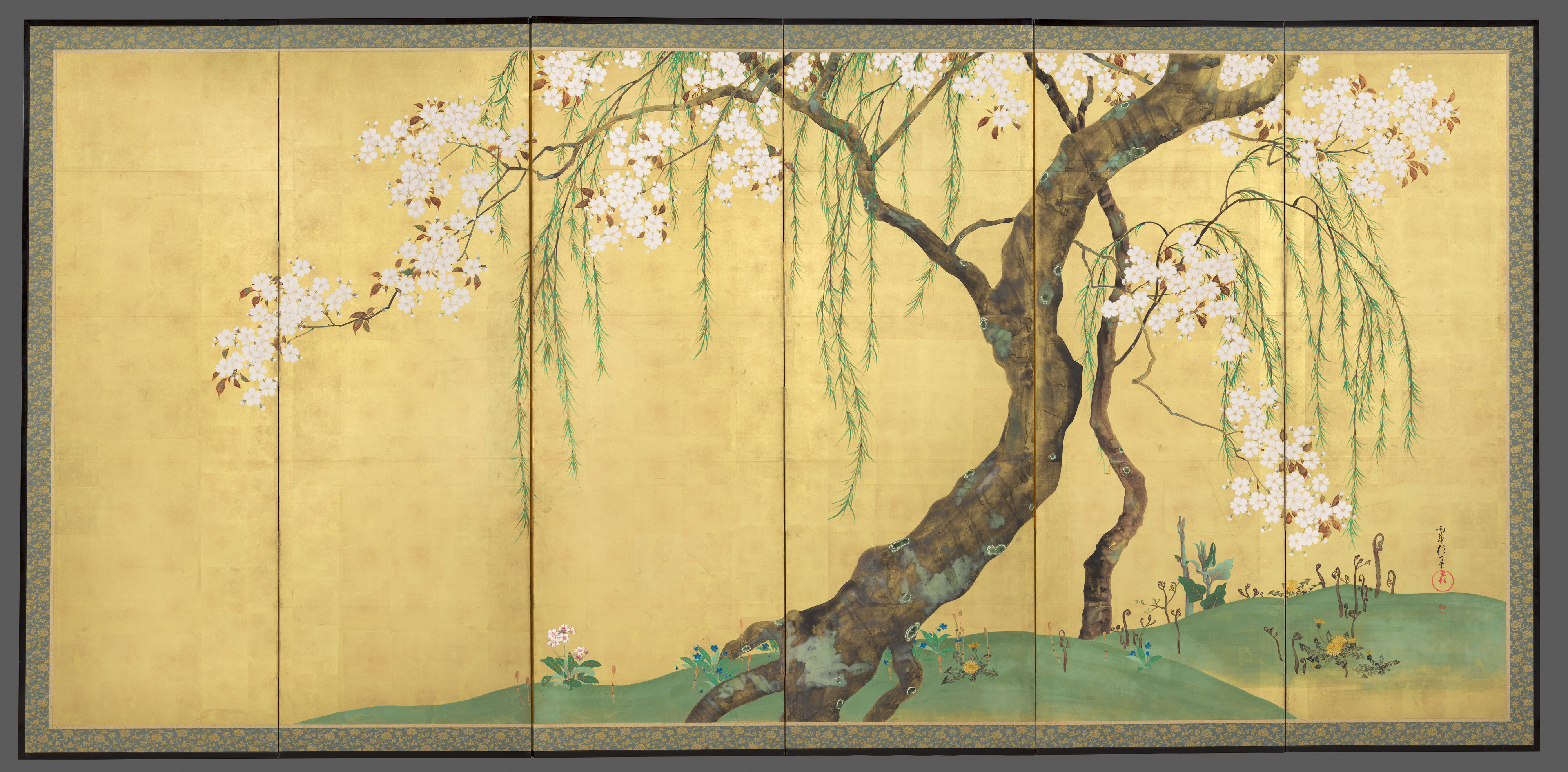
Cherry and Maple Trees
by Sakai Hōitsu
- Date:
- Early 1820s
- Medium:
- Pair of six-panel folding screens; ink, color, and gold leaf on paper
- Source:
- Metropolitan Museum of Art
Description
Cherry and Maple Trees, a pair of six-panel folding screens in ink, color, and gold leaf on paper from the early 1820s, is one of Sakai Hōitsu's most accomplished late screen compositions and is held by the Metropolitan Museum of Art (accession 2018.55.1, .2). The pairing of spring cherry blossom and autumn maple — sakura and momiji — is one of the oldest and most evocative seasonal juxtapositions in Japanese art, treated by Hōitsu here in his fully developed Edo Rinpa idiom. Across each screen the trees rise from low ground in the bold diagonal Rinpa compositional habit, their trunks rendered in the wet-on-wet tarashikomi ink-pooling technique that Hōitsu inherited from Ogata Kōrin and Sōtatsu and refined into a hallmark of the Edo school. Against an unbroken gold leaf ground the blossoms and maple leaves are tipped with carefully observed pigment, each branch carrying a precise botanical attention drawn from Hōitsu's bunjin studies. Painted in the years just before Hōitsu's 1828 death, the screens distil the mature Edo Rinpa sensibility: opulent yet restrained, decorative yet lyrical, openly conversing with Kōrin's century-earlier idiom while remaining unmistakably a product of late Edo connoisseurial culture.
More Prints by Sakai Hōitsu
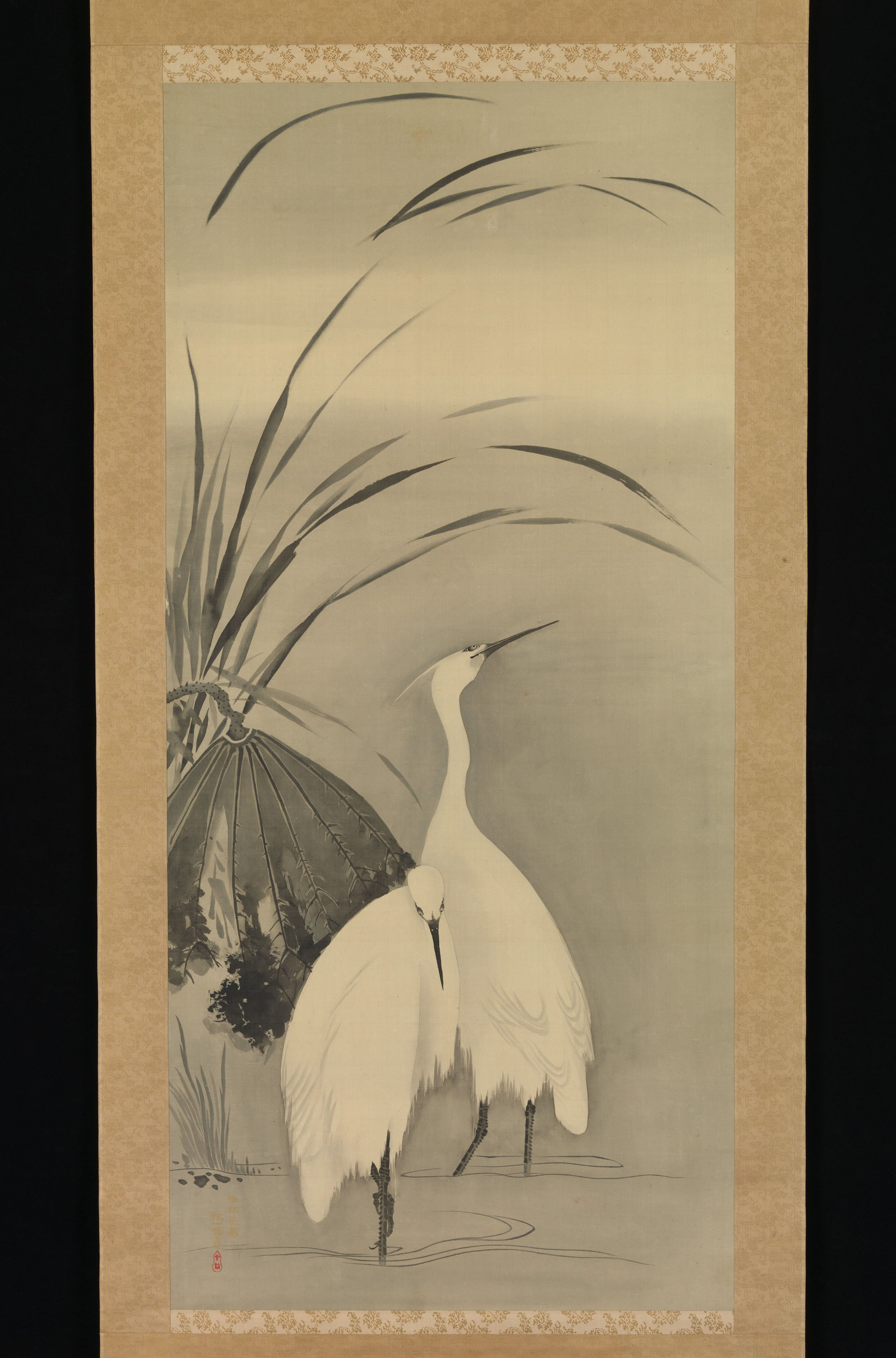
Two Egrets and Lotus
Early 19th century
Hanging scroll; ink on silk
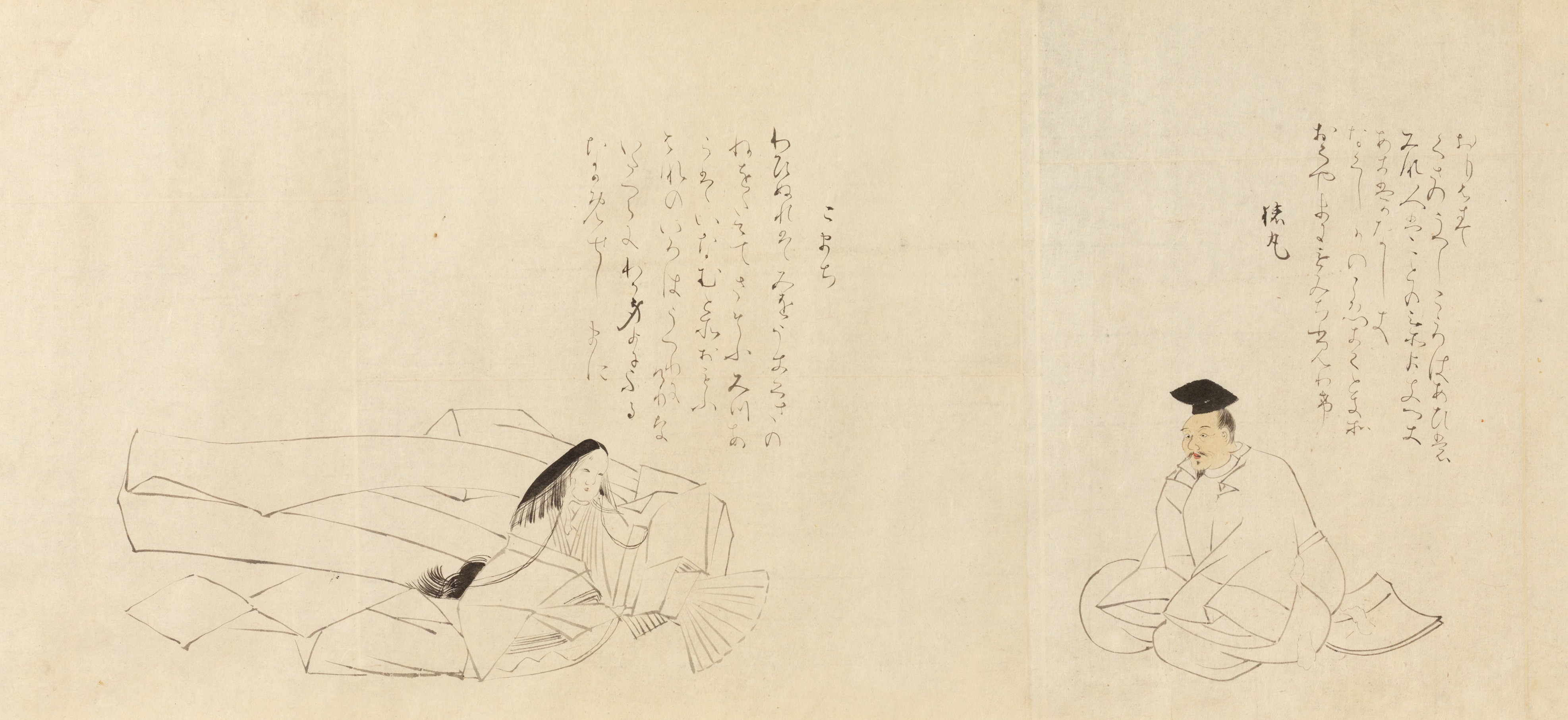
The Thirty-Six Poetic Immortals
1824
Handscroll; ink and color on paper
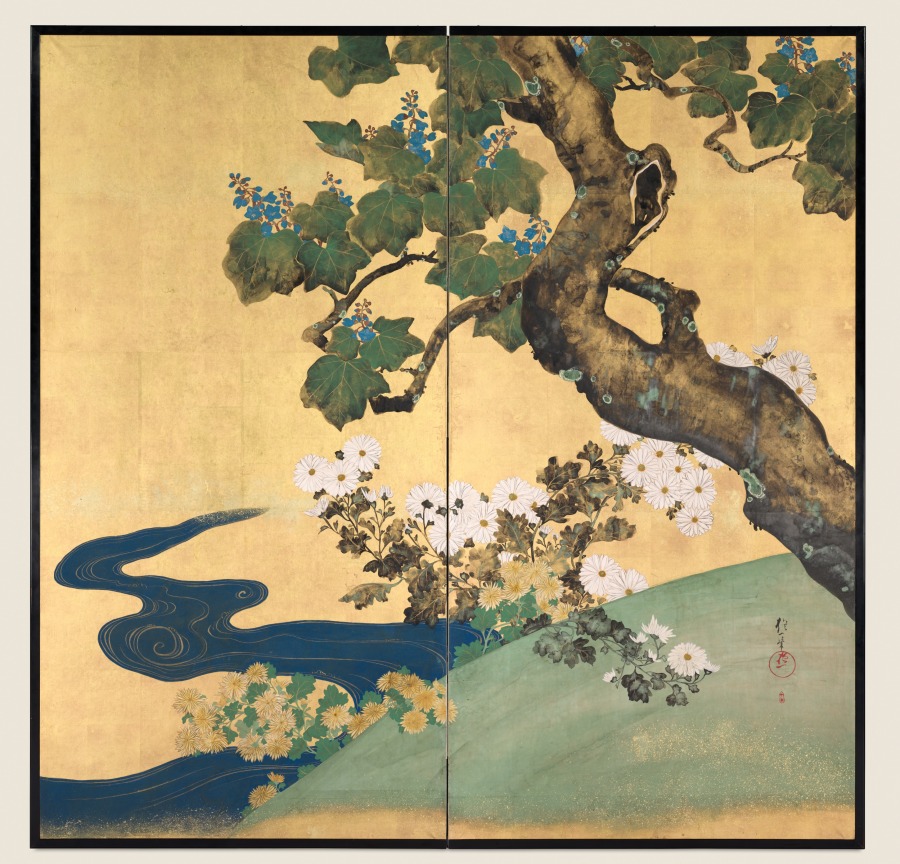
Paulownias and Chrysanthemums
early 1800s
Two-panel folding screen; ink and color on gilded paper
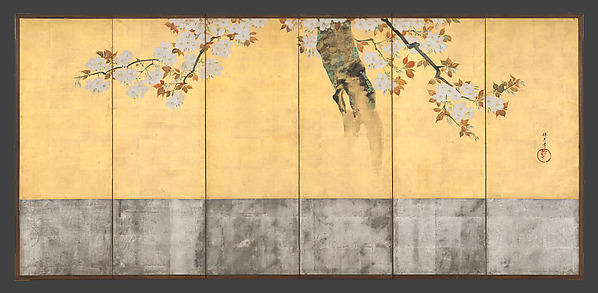
Blossoming Cherry Trees
ca. 1805
Pair of six-panel folding screens; ink, color, and gold leaf on paper
More Autumn Foliage Prints

A Farmhouse in Autumn, Ayashi, Miyagi Prefecture (Noka no aki (Miyagi ken Ayashi)
Noka no aki (Miyagi ken Ayashi
1946
Color woodblock print
Yoro Waterfall in Mino Province (Mino no kuni Yoro no taki), from the series Tour of the Waterfalls in Various Provinces (Shokoku Takimeguri)
Woodblock print

Tengui Rock, Autumn in Shiobara (Shiobara no aki (Tenguiwa))
1950
Color woodblock print

Autumn at the Arayu Hot Spring, Shiobara
Autumn 1920
Woodblock print, ink and color on paper
Frequently Asked Questions
Cherry and Maple Trees was created by Sakai Hōitsu (酒井抱一) in Early 1820s.
Cherry and Maple Trees depicts autumn foliage.