
Actor Ichikawa Ebijūrō I as Tōken (China Dog) Jūbei, in the play Red and Purple, Rich Dyes of Osaka (Benimurasaki ai de someage)
- Source:
- Cleveland Museum of Art
Description
Held by the Cleveland Museum of Art (https://clevelandart.org/art/1975.66), this 1816 yakusha-e by Shunkosai Hokushu shows Ichikawa Ebijuro I as Token (China Dog) Jubei in the play Red and Purple, Rich Dyes of Osaka (Benimurasaki ai de someage), an earlier Osaka staging of the same rogue-warrior role that Hokushu would later portray in the 1822 Metropolitan impression of the related composition. Ichikawa Ebijuro I, who had relocated from Edo to Osaka to become one of the leading tachiyaku of the Kamigata stage, here appears at an earlier point in his Osaka career in the character of Token Jubei, the chivalrous-commoner rogue whose nickname Token (literally China Dog) signaled an outsider toughness within the Osaka kabuki's distinctive otokodate repertoire. The 1816 staging belongs to the earlier Bunka-era period in which Hokushu was building his Osaka yakusha-e practice in the wake of the founding kamigata-e masters Ryukosai Jokei and Shokosai Hanbei, with the artist consolidating the half-length single-figure portrait format that would define mature Osaka yakusha-e through the 1830s. Hokushu renders Ebijuro I with the personal-likeness quality characteristic of Kamigata-e portraiture, the actor's distinctive features preserved beneath the role's makeup and the specific warrior costume of the Token Jubei character documented with attention. The oban composition isolates the figure against a plain ground in the manner that would become standard for Osaka workshop production. The kamigata-e tradition of Osaka, distinct from Edo ukiyo-e in its emphasis on individual likeness over flattering convention and in its more restrained color palette, here finds an early-career expression in Hokushu's hand. The Cleveland Museum of Art impression preserves the careful color registration of Osaka workshop production. The print's relationship to the later 1822 Metropolitan impression of the same actor in the same role, also titled Benimurasaki ai de someage, indicates that the Token Jubei character belonged to Ebijuro I's recurring repertoire across multiple seasons of the late 1810s and early 1820s, with Hokushu documenting the role's successive stagings as a regular feature of his commemorative yakusha-e production.
More Prints by Shunkōsai Hokushū

The Actor Arashi Koroku IV in the Final Farewell Performance of His Career (Shōgai onagori kyōgen) as the Female Bandit Hotei Oichi
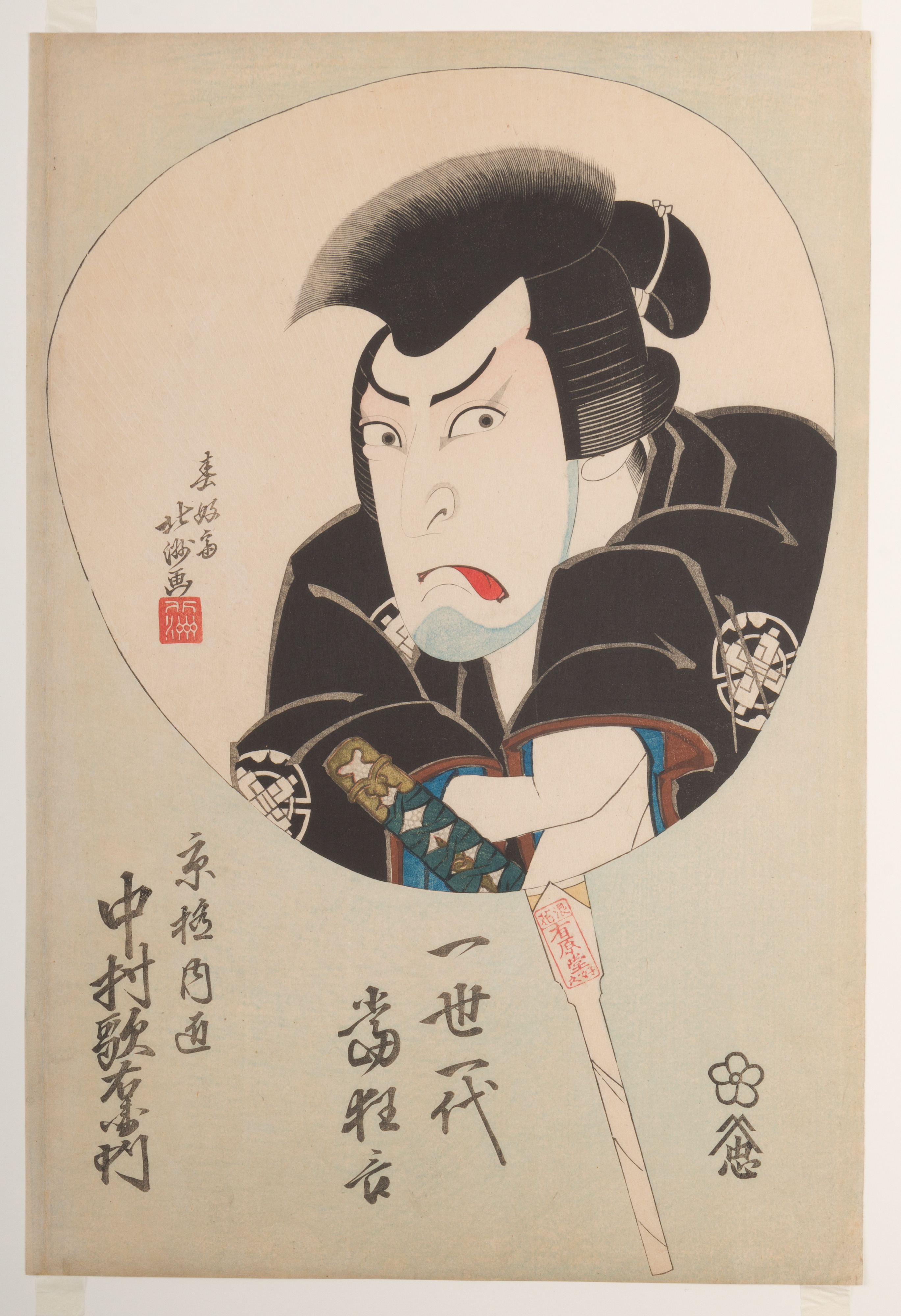
Kabuki Actor Nakamura Utaemon III as the Sword Master Kyōgoku Takumi, from the series Issei ichidai atari Kyōgen (Hits of a Lifetime of Kyōgen)
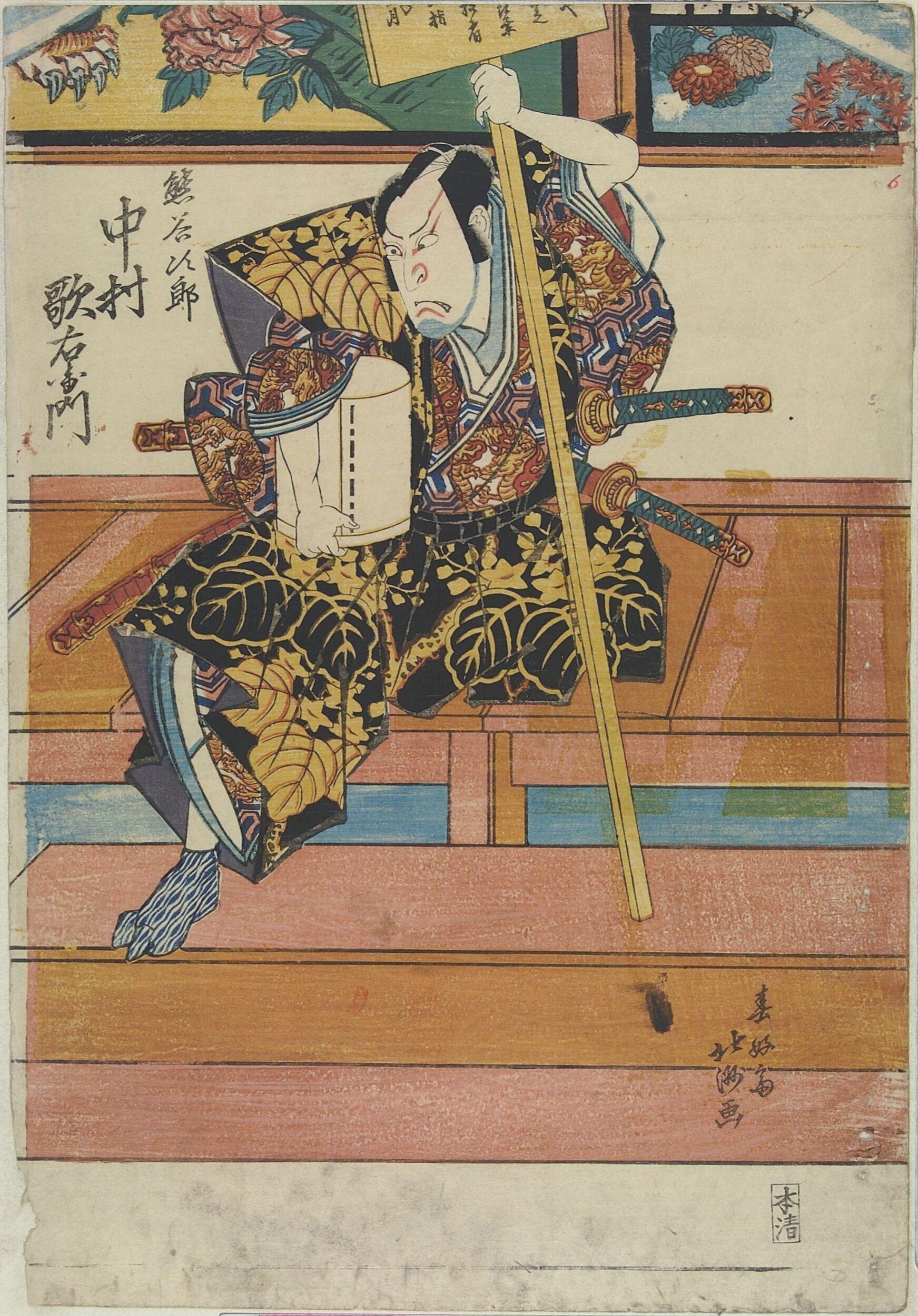
Actor Nakamura Utaemon III as Kumagae Jirō
1825
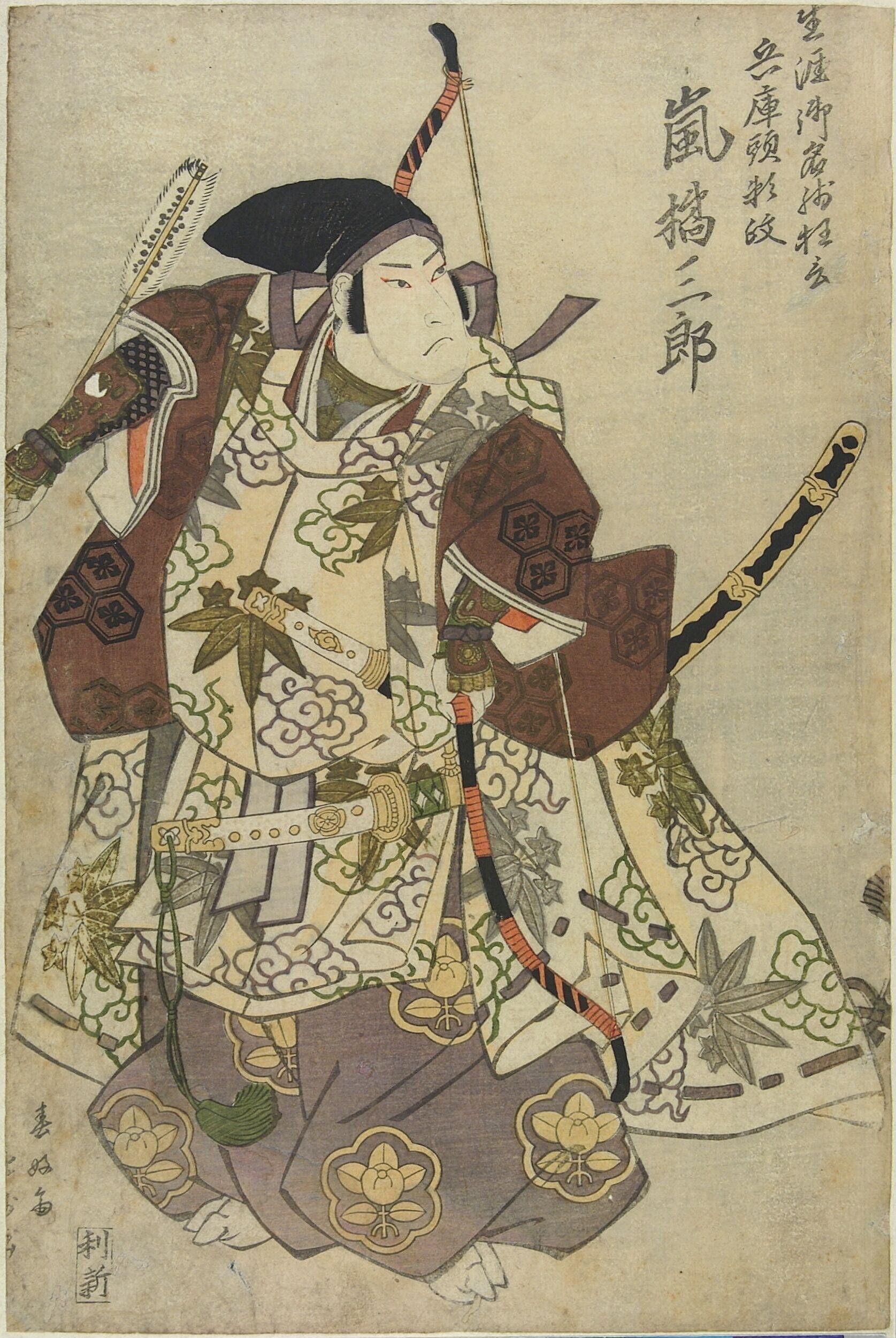
Untitled
19th century
Frequently Asked Questions
Actor Ichikawa Ebijūrō I as Tōken (China Dog) Jūbei, in the play Red and Purple, Rich Dyes of Osaka (Benimurasaki ai de someage) was created by Shunkōsai Hokushū (春好斎北洲).