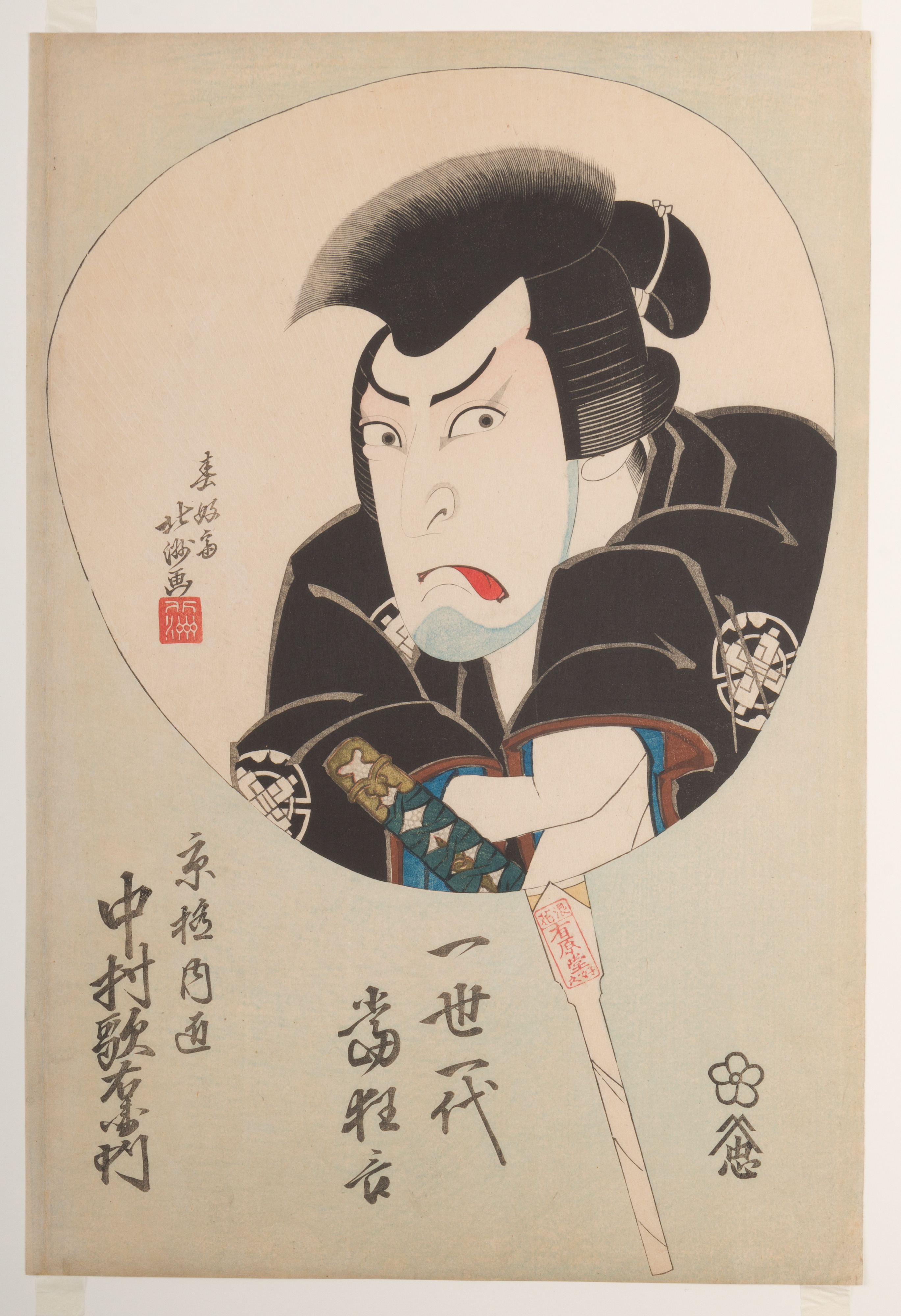
Kabuki Actor Nakamura Utaemon III as the Sword Master Kyōgoku Takumi, from the series Issei ichidai atari Kyōgen (Hits of a Lifetime of Kyōgen)
- Source:
- Metropolitan Museum of Art
Description
Held by the Metropolitan Museum of Art (https://www.metmuseum.org/art/collection/search/76560), this 1825 yakusha-e by Shunkosai Hokushu shows Nakamura Utaemon III in the role of the sword master Kyogoku Takumi, from the series Issei ichidai atari Kyogen (Hits of a Lifetime of Kyogen). Nakamura Utaemon III, the dominant Kamigata tachiyaku of the Bunka-Bunsei era and the central figure of Osaka kabuki through the 1810s and 1820s, had by 1825 accumulated a substantial signature repertoire of roles that the series title acknowledged as the hits of a lifetime of kyogen. The Issei ichidai atari Kyogen project, conceived as a retrospective compilation of Utaemon III's celebrated parts, allowed Hokushu and the publishing workshops of Osaka to document the actor's mature interpretive achievement across a single coherent print series, with each sheet identifying a particular role within the actor's developed repertoire. The Kyogoku Takumi character belongs to the swordsman-instructor sub-type within the tachiyaku tradition, a role requiring the disciplined posture and grave bearing appropriate to a master of martial arts, with the formal upper garment and the swords thrust through the obi providing the visual identifying marks. Hokushu renders Utaemon III with the personal-likeness quality that defined mature Kamigata-e yakusha-e, the actor's distinctive features preserved beneath the role's makeup in the single-figure half-length composition that became standard for the artist's mature oban production. The kamigata-e workshop tradition of Osaka emphasized actor likeness over flattering convention, distinguishing the print from the broader Edo Utagawa-school yakusha-e of the same years. The Metropolitan impression preserves the careful color registration of premium Osaka workshop output. As one of the lifetime-of-kyogen series sheets, the print belongs to an important documentary moment in which the Kamigata ukiyo-e workshops codified the visual record of Utaemon III's career at the height of his interpretive authority, with Hokushu's series providing the template on which later Osaka yakusha-e portraitists would build.
More Prints by Shunkōsai Hokushū

The Actor Arashi Koroku IV in the Final Farewell Performance of His Career (Shōgai onagori kyōgen) as the Female Bandit Hotei Oichi

Actor Ichikawa Ebijūrō I as Tōken (China Dog) Jūbei, in the play Red and Purple, Rich Dyes of Osaka (Benimurasaki ai de someage)
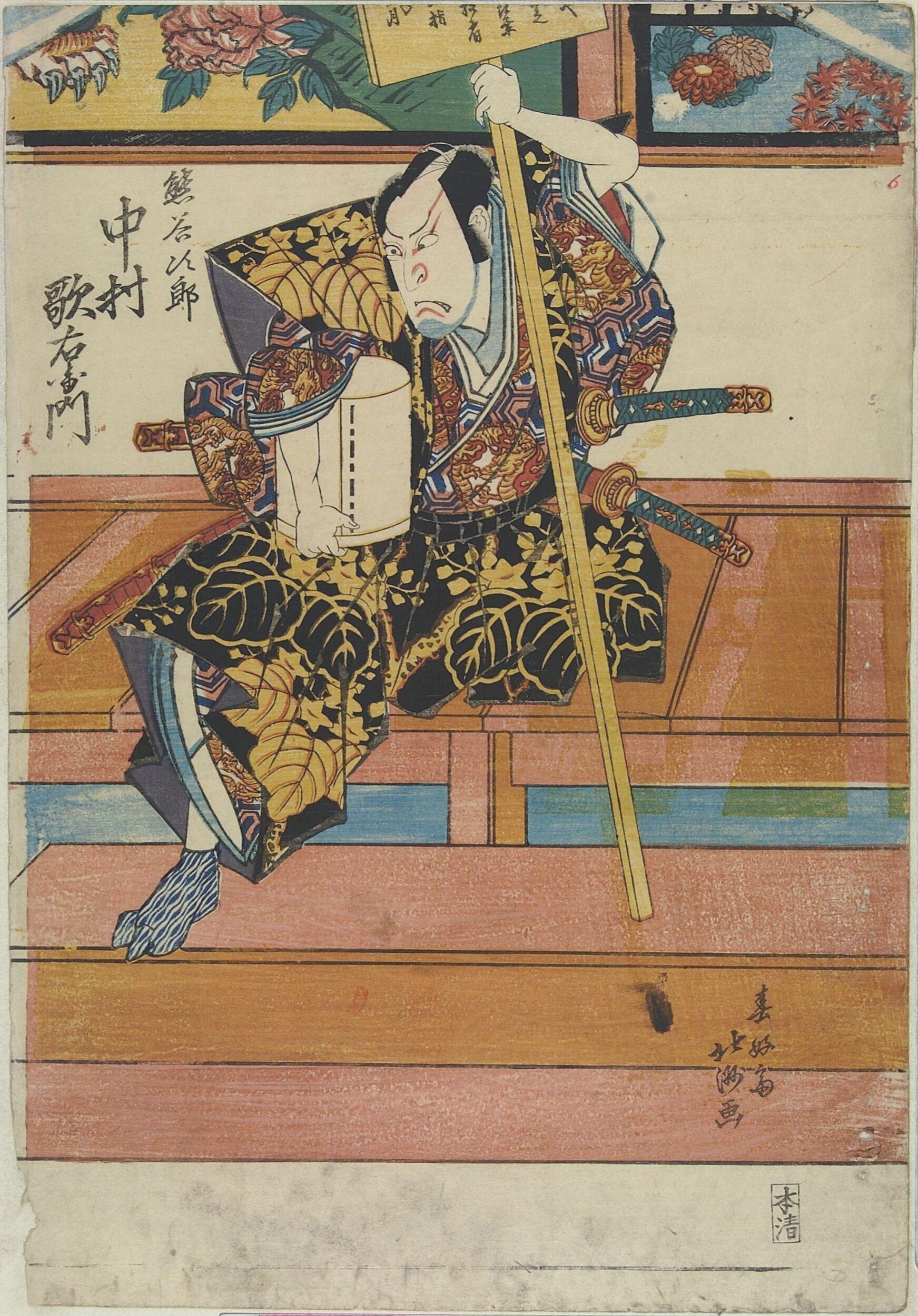
Actor Nakamura Utaemon III as Kumagae Jirō
1825
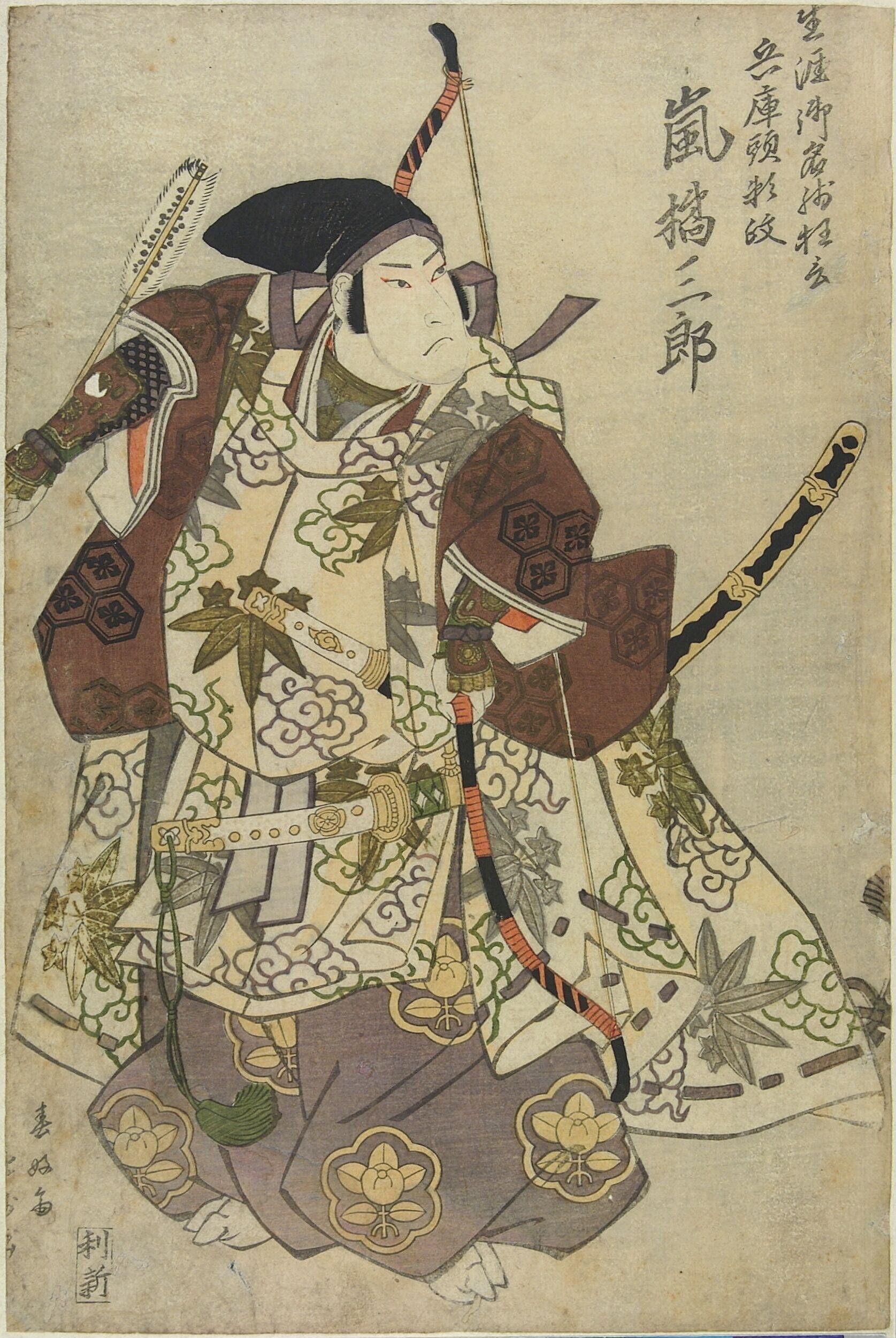
Untitled
19th century
Frequently Asked Questions
Kabuki Actor Nakamura Utaemon III as the Sword Master Kyōgoku Takumi, from the series Issei ichidai atari Kyōgen (Hits of a Lifetime of Kyōgen) was created by Shunkōsai Hokushū (春好斎北洲).