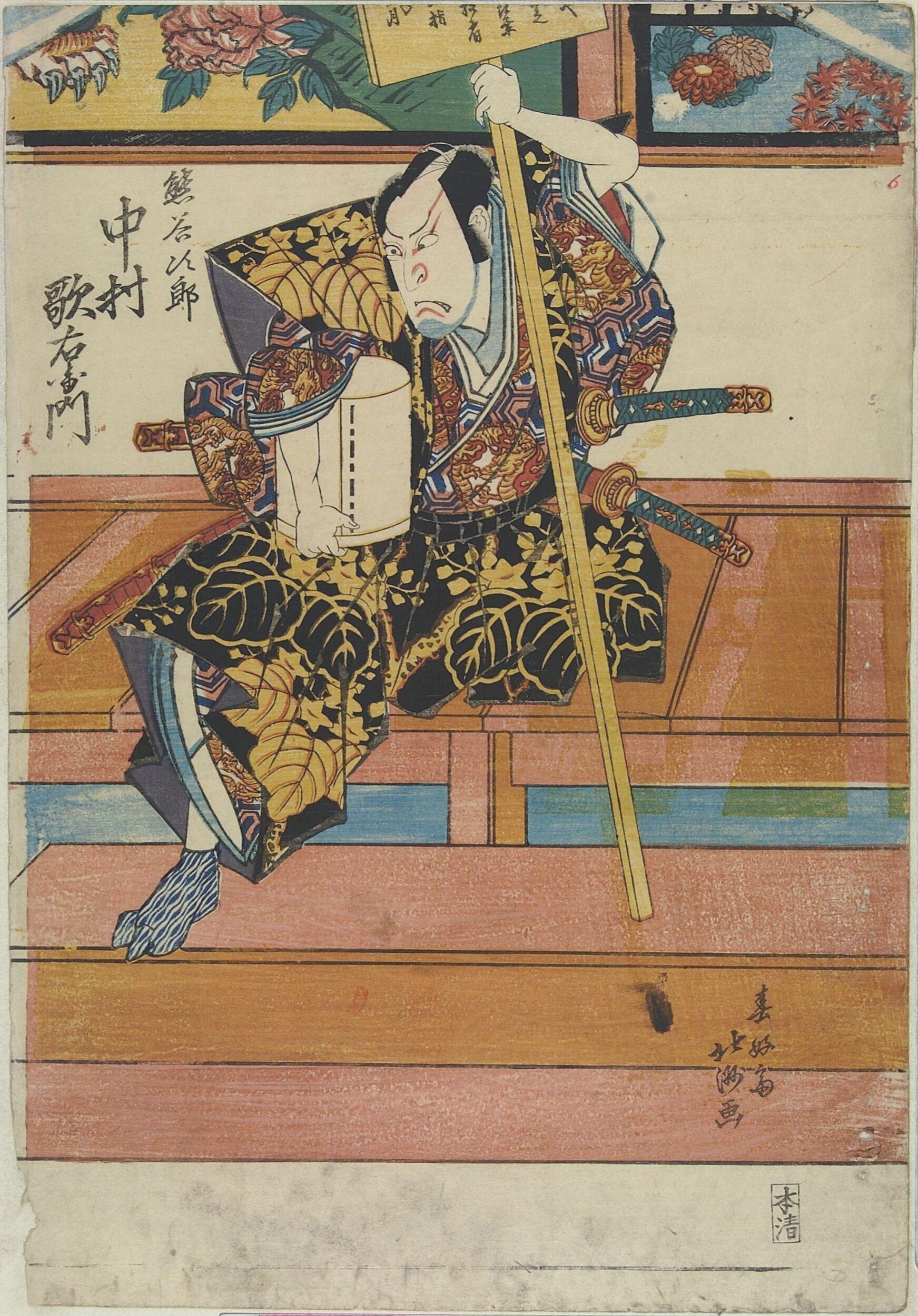
Actor Nakamura Utaemon III as Kumagae Jirō
- Date:
- 1825
- Medium:
- Source:
- Victoria and Albert Museum
Description
This 1825 yakusha-e by Shunkosai Hokushu, held by the Victoria and Albert Museum (accession O420025), depicts Nakamura Utaemon III in the role of Kumagae Jiro, a samurai character drawn from the Heike war cycle. The Kumagae role, a warrior who reluctantly kills the youthful Atsumori and later renounces the world, is one of the great moral roles of the kabuki repertoire, and Utaemon III's interpretation was celebrated across Osaka. Hokushu's portrait captures the role's tragic register through tight cropping and intense facial focus, with the warrior costume rendered in restrained line. The composition belongs to the mid-1820s phase of his career when his Utaemon III portraits had become the canonical Osaka kamigata-e images of the star, and the V&A's preservation of the print reflects the broader nineteenth-century European interest in kamigata-e yakusha-e as a distinct regional school. The print is held by the Victoria and Albert Museum (accession O420025) and dates from 1825. The Kumagae Jiro role, drawn from the great Genpei War cycle and especially from the play Ichinotani futaba gunki (Chronicle of the Battle of Ichinotani), is one of the moral peaks of the kabuki repertoire: a warrior who reluctantly kills a youthful enemy who reminds him of his own son and who later renounces the warrior life in remorse. Hokushu's portrait of Utaemon III in the part documents one of the actor's late-career emotional showcases and exemplifies the Osaka yakusha-e tradition's commitment to character study over decorative spectacle, anchored to a specific kamigata-e production.
More Prints by Shunkōsai Hokushū

The Actor Arashi Koroku IV in the Final Farewell Performance of His Career (Shōgai onagori kyōgen) as the Female Bandit Hotei Oichi
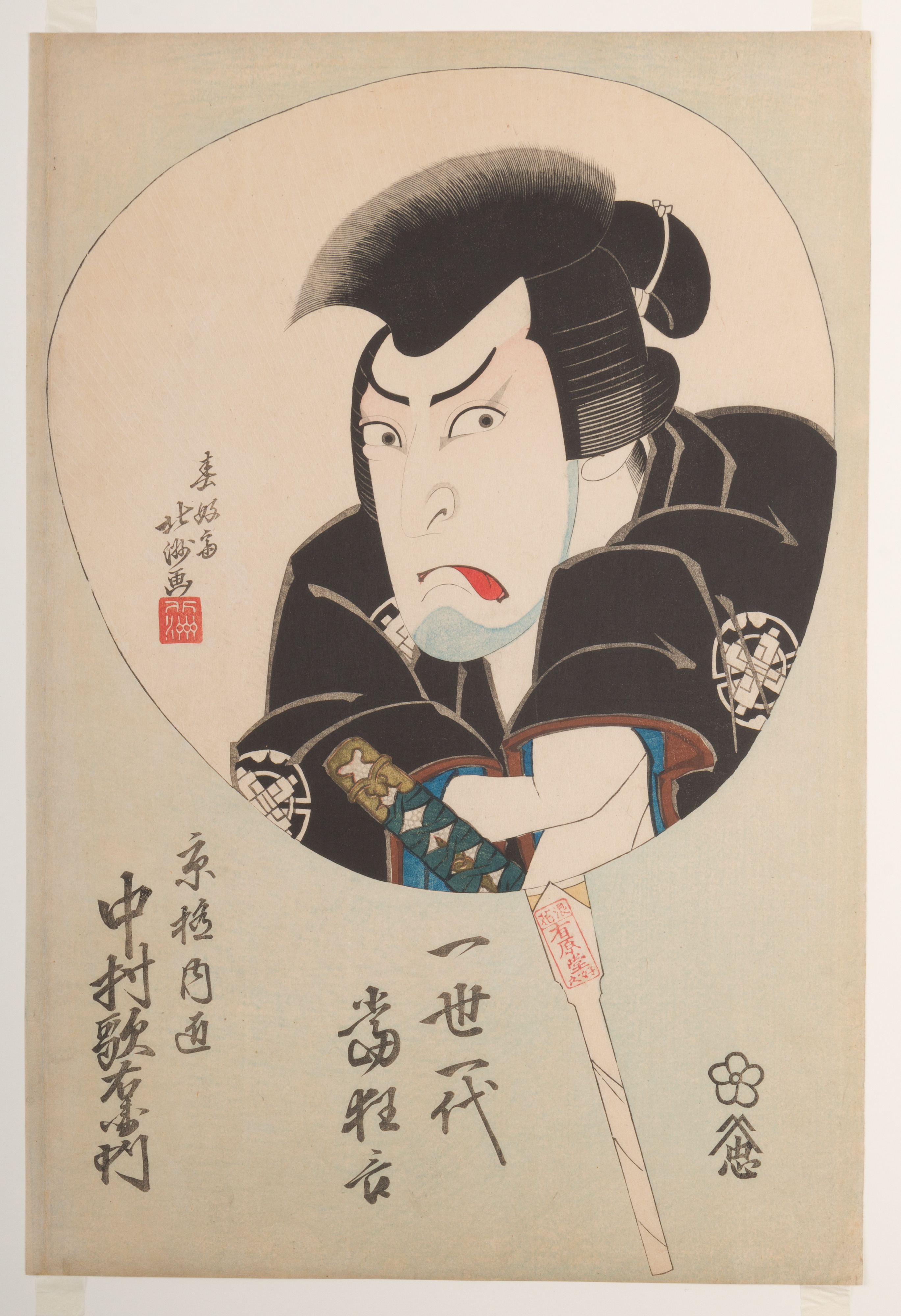
Kabuki Actor Nakamura Utaemon III as the Sword Master Kyōgoku Takumi, from the series Issei ichidai atari Kyōgen (Hits of a Lifetime of Kyōgen)

Actor Ichikawa Ebijūrō I as Tōken (China Dog) Jūbei, in the play Red and Purple, Rich Dyes of Osaka (Benimurasaki ai de someage)
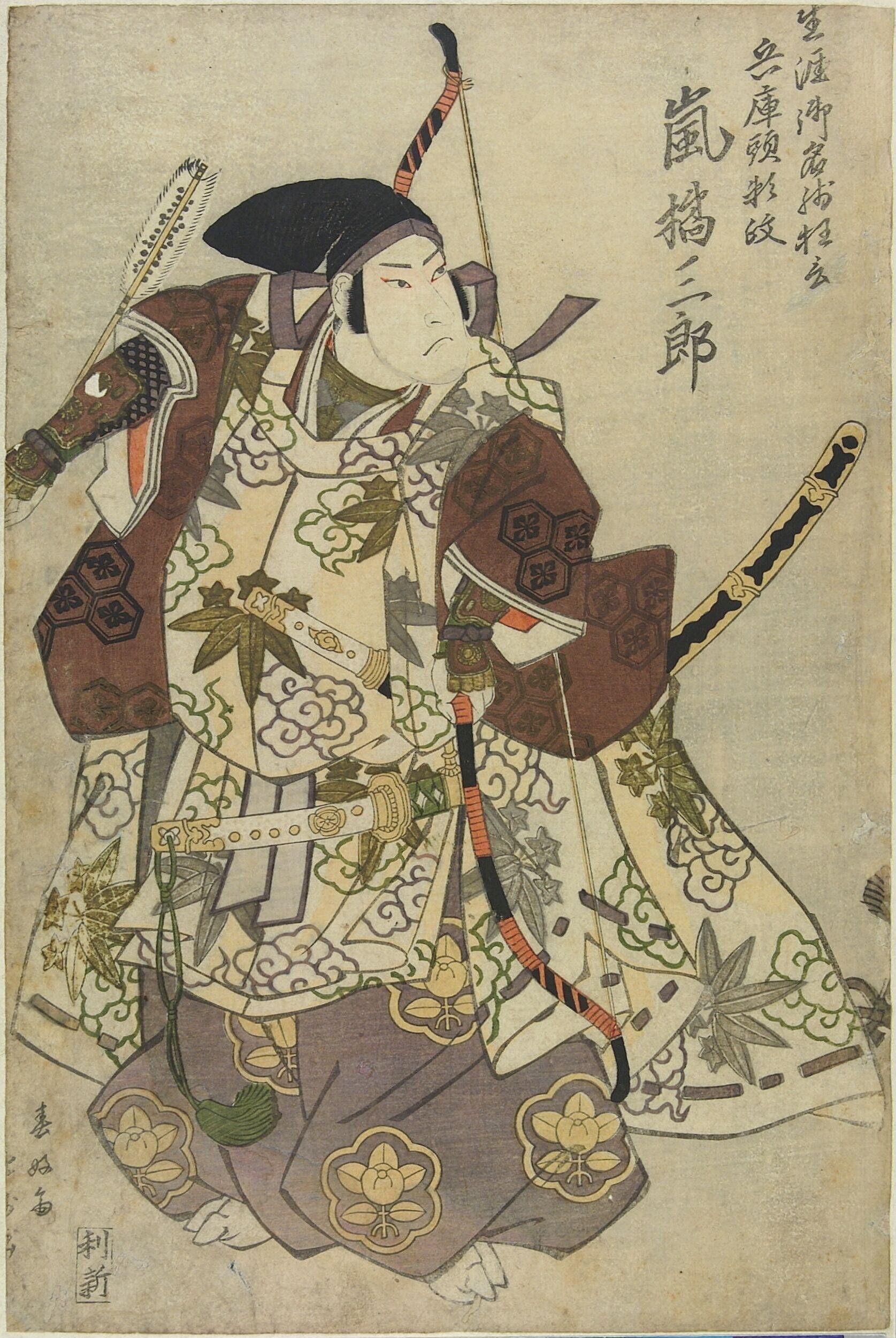
Untitled
19th century
Frequently Asked Questions
Actor Nakamura Utaemon III as Kumagae Jirō was created by Shunkōsai Hokushū (春好斎北洲) in 1825.