
Shoki (Chinese: Zhong Kui), the demon queller, standing on a bridge
- Date:
- c. 1765/70
- Medium:
- Woodblock print; hashira-e, sumizuri-e
- Source:
- Art Institute of Chicago
Description
Suzuki Harunobu's print of 'Shoki, the demon queller, standing on a bridge,' dated to about 1760, depicts the bearded martial deity known in Chinese as Zhong Kui, who guards households from malevolent spirits. Standing on a wooden bridge with sword in hand and his characteristic broad hat and beard, Shoki appears in Harunobu's hand stripped of the swaggering ferocity that other Edo artists tended to emphasize. The figure is more contained, almost ceremonial, in keeping with Harunobu's characteristic restraint. The subject was popular for Boys' Day prints and for talismans against illness and misfortune, and woodblock images of Shoki were eagerly purchased for household display. The Art Institute of Chicago, the museum source for this record, dates the impression to roughly 1760 and treats it as part of Harunobu's pre-nishiki-e period, before the 1765 advent of full polychrome printing transformed the commercial possibilities of his designs. Even so, the sheet is a useful counterweight to the familiar story that Suzuki Harunobu worked exclusively in delicate Edo bijin-ga: here he engages with a robustly masculine, protective subject. Collectors of Harunobu often value such genre departures because they show how the artist moved across the full range of contemporary print demand, from amatory and literary parody to apotropaic figural imagery, while keeping the careful linework and disciplined composition that link the body of his work together.
More Prints by Suzuki Harunobu

Two Women Washing Their Hair
c. 1767/68
Color woodblock print; chuban

Parody of Kawachi-goe from "Tales of Ise"
1765
Color woodblock print; right sheet of chuban diptych (left sheet: 1925.2025)

Young Man Holding Umbrella Beside a Fence
c. 1767/68
Color woodblock print; chuban

Going to the Theater
c. 1770/71
Color woodblock print; chuban
More Bridges Prints
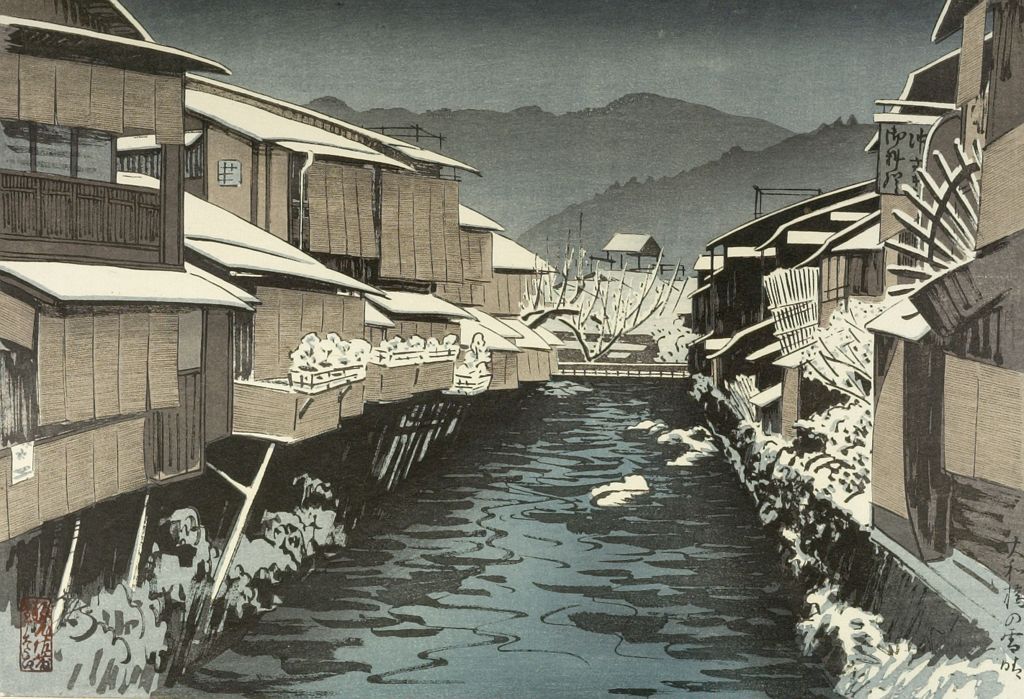
Fair Weather After Snow at Yamato Bridge, Kyoto (Yamato bashi no yukibare), Taishô period, dated 1924
Woodblock print
![Mount Fuji on a Moonlit Night, Kawai Bridge (Tsukiyo no Fuji [Kawaibashi]), from the series "Selection of Views of the Tokaido (Tokaido fukei senshu)" by Kawase Hasui](https://www.artic.edu/iiif/2/d0960668-1e73-339a-b182-fb995a54bff0/full/843,/0/default.jpg)
Mount Fuji on a Moonlit Night, Kawai Bridge (Tsukiyo no Fuji [Kawaibashi]), from the series "Selection of Views of the Tokaido (Tokaido fukei senshu)"
1947
Color woodblock print; oban

Shin Ohashi Bridge (Shin Ohashi), from the series "Twenty View of Tokyo (Tokyu nijukkei)"
1926
Color woodblock print; oban

Sacred Bridge in Nikko (Nikko Shinkyo)
1930
Color woodblock print; oban
Frequently Asked Questions
Shoki (Chinese: Zhong Kui), the demon queller, standing on a bridge was created by Suzuki Harunobu (鈴木春信) in c. 1765/70.
Shoki (Chinese: Zhong Kui), the demon queller, standing on a bridge depicts bridges.