
Behind the market square
- Medium:
- Mokuhanga (Japanese woodblock)
- Image courtesy of
- Saru Gallery
Description
A curving street pavement, rendered in angular blue-gray flagstones, sweeps through a dense row of half-timbered wooden buildings whose dark brown crossbeams frame panels of olive-green and mauve. Two utility poles with wires rise against a flat turquoise sky near a taller building at the right, while the composition's heavy black outlines and faceted, fractured planes give the empty street a stark, geometric mood. The print is signed "T. ONO" in red at the lower left, consistent with the attribution to Tadashige Ono, titled *Behind the Market Square*, a mokuhanga (Japanese woodblock print).
More Prints by Tadashige Ono


More Market Scenes Prints
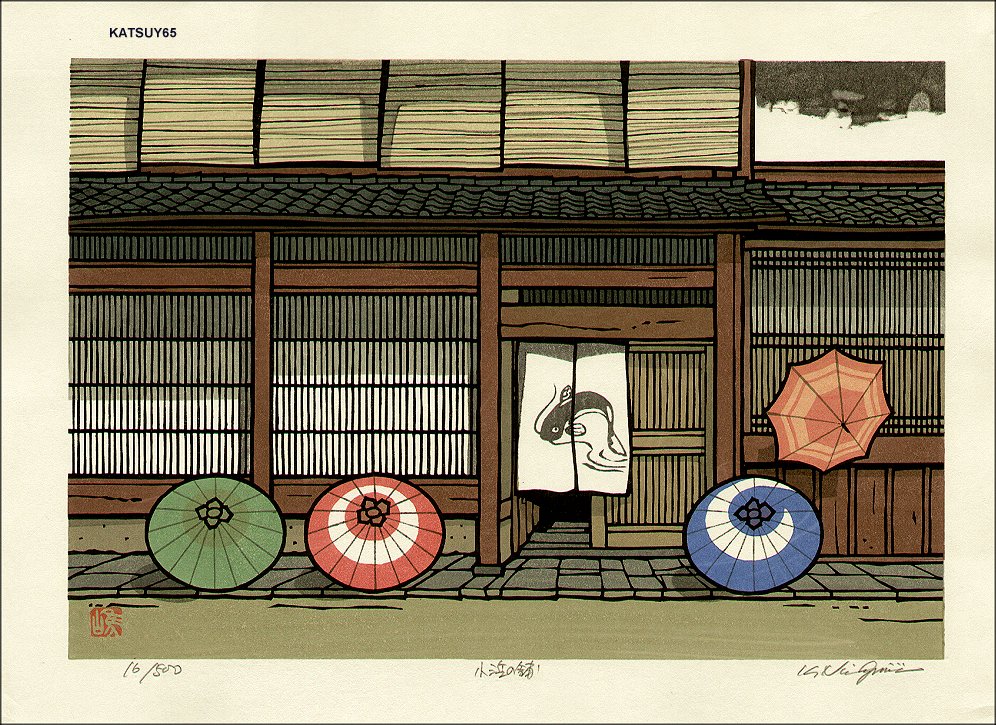
Shop in Obama, Fukui Prefecture
Woodblock print

Mariko: Famous Tea Shop (Mariko, meibutsu chamise), from the series "Fifty-three Stations of the Tokaido Road (Tokaido gojusan tsugi no uchi)," also known as the Hoeido Tokaido
c. 1833/34
Color woodblock print; oban
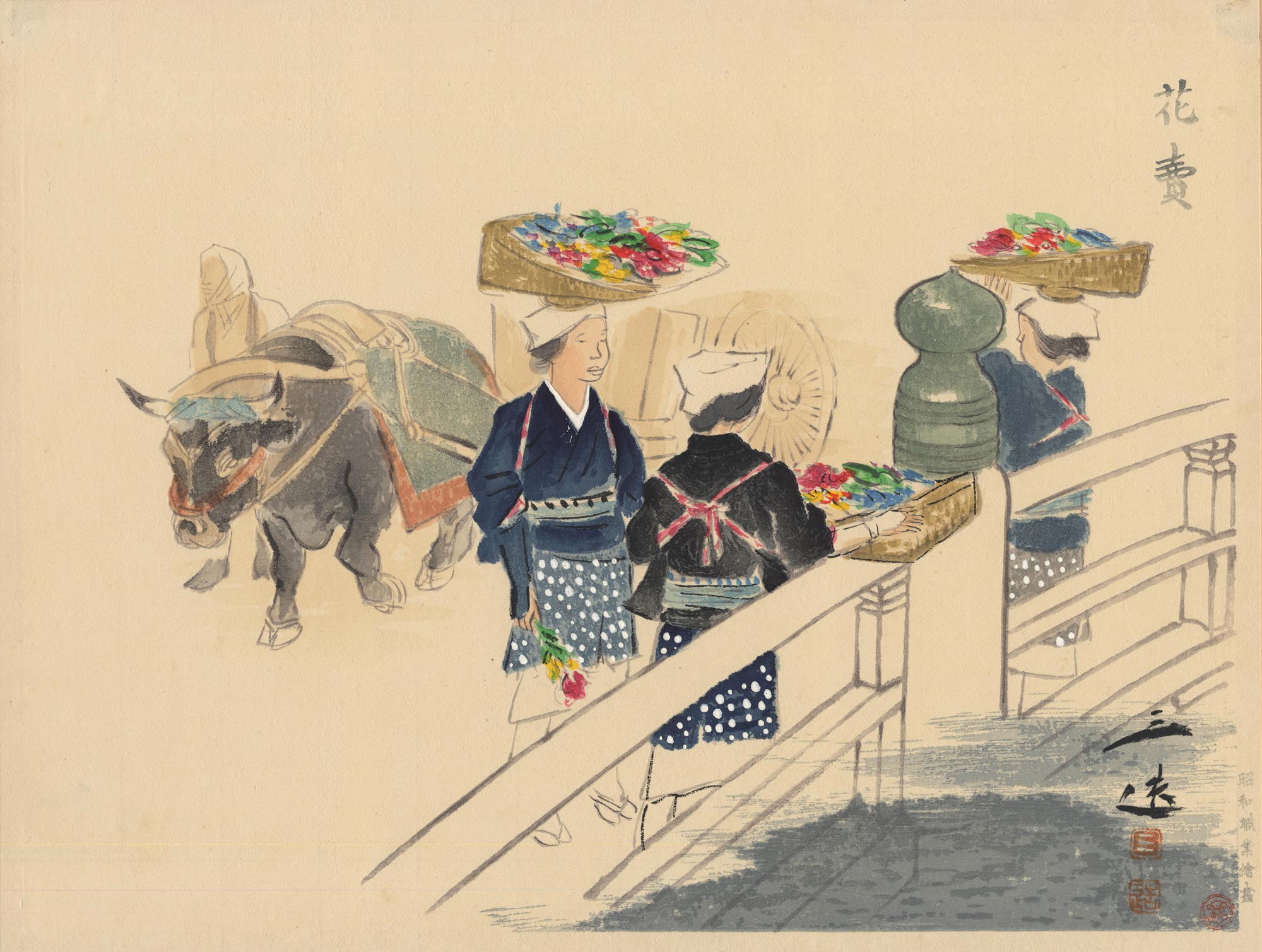
Street Vendor
行商人
c. 1940
Color woodblock print
Corner Shop
Shōwa period, 1977
Woodblock print; ink and color on paper
Featured in Collections
Curated cross-cuts that include this print.
Frequently Asked Questions
Behind the market square was created by Tadashige Ono (小野忠重).
Behind the market square depicts market scenes and geometric.